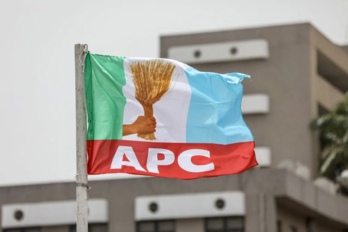
The All Progressives Congress has effectively fired the opening shot of the 2027 political season, and it has done so with the discipline of a party that already sees itself as the governing machine to beat. Its revised timetable fixes the presidential primary for 23 May 2026, sets the sale of forms for 25 April to 2 May, and schedules screening between 6 and 9 May.
It also publishes designated bank accounts for payment and, according to reports of the schedule, prices the presidential nomination package at ₦100 million while governorship forms go for ₦50 million.
That is a political signal, not merely an administrative update. The APC is moving early, tightening its internal calendar and forcing aspirants to choose between ambition and arithmetic.
By fixing dates, costs and payment channels, the party is telling its members that it intends to control the pace of succession politics long before the national campaign season formally begins.
APC spokesman Felix Morka said the party had adjusted its timetable for screening, appeals and primaries, while the schedule also preserves a 50 per cent fee concession for female aspirants, youths and persons with disabilities.
Yet there is a deeper institutional wrinkle. APC says its timetable aligns with the Constitution and INEC’s revised schedule, but INEC has publicly stated that it has not released any 2027 timetable and warned that any schedule outside its statutory framework cannot emanate from the Commission.
That tension matters, because it shows how the ruling party is trying to dominate the narrative of preparedness while the electoral umpire insists it alone sets the official calendar.
The political meaning of this is unmistakable. APC is not simply preparing primaries. It is consolidating advantage. Last year, the party endorsed President Bola Tinubu for a second and final term in 2027, with then party chairman Abdullahi Ganduje declaring him the sole APC presidential candidate.
Reuters also noted that Tinubu’s reforms have won praise from investors and the IMF, even as critics blame them for a severe cost-of-living crisis and say insecurity remains unresolved.
That dual reality is what makes the APC’s timetable politically potent. On one hand, it benefits from the machinery of incumbency, a unified party structure at the top and a growing confidence that defections will continue to weaken rivals.
On the other hand, it still has to defend a record that has drawn heavy criticism over inflation, insecurity and the burdens of economic reform. The ruling party is banking on organisation, not sentiment, and in Nigerian politics that often counts more than slogans.
The opposition, meanwhile, has at least understood the scale of the challenge. At a summit in Ibadan, major opposition figures agreed to work towards a single presidential candidate for 2027, with former Senate President David Mark warning that the coalition would stop Nigeria from becoming a one-party state.
The communiqué from the gathering accused the APC of trying to impose Tinubu as sole candidate and vowed to resist that political design.
That response is necessary, but it is not yet sufficient. The old opposition disease remains visible: too many leaders, too many ambitions, too many platforms and too little binding discipline.
AP reported that the new coalition brings together figures such as Atiku Abubakar and Peter Obi, and a political analyst quoted by the agency put the matter bluntly: “You cannot remove a sitting government if the opposition is disunited.” That is not rhetoric. It is electoral math.
This is why the opposition must put its house in order now, not later. It needs a credible mechanism for candidate selection, a clear understanding on zoning and power rotation, a disciplined message on the economy and insecurity, and a legal strategy that prevents internal litigation from eating up momentum before the campaign even starts.
The APC has shown that it intends to run a scheduled, controlled race. Any opposition that responds with chaos, vanity projects and inconsistent alliances will be doing the ruling party’s work for it.
There is also the issue of money, which cannot be ignored. When a ruling party places a presidential form at ₦100 million, it is not only raising funds. It is setting a barrier to entry that favours established power, deep pockets and elite networks.
Premium Times has already described the fee structure as “exorbitant” and questioned what it says about access, integrity and internal democracy. That criticism deserves attention because the cost of politics in Nigeria has become one of the most reliable filters against fresh leadership.
In practical terms, the APC has done three things at once. It has locked in an internal timetable, signalled presidential continuity around Tinubu, and turned the 2027 race into an early test of opposition competence.
The opposition still has time, but not much. If it cannot convert summit language into a functioning coalition, then the APC’s confidence will not be bravado. It will be strategy. And strategy, in Nigerian politics, usually beats outrage.
The hard truth is that the 2027 contest is already being shaped by organisation, timing and discipline. The APC understands this. The opposition says it does too. The difference will be whether it can prove it before the primaries begin.
Follow us on our broadcast channels today!
- WhatsApp: https://whatsapp.com/channel/0029VawZ8TbDDmFT1a1Syg46
- Telegram: https://t.me/atlanticpostchannel
- Facebook: https://www.messenger.com/channel/atlanticpostng