Lagos’s ₦3.37 trillion 2025 budget promises sustainability and growth, but rising debt, inequities, and policy gaps spark critical questions. Will the vision hold?
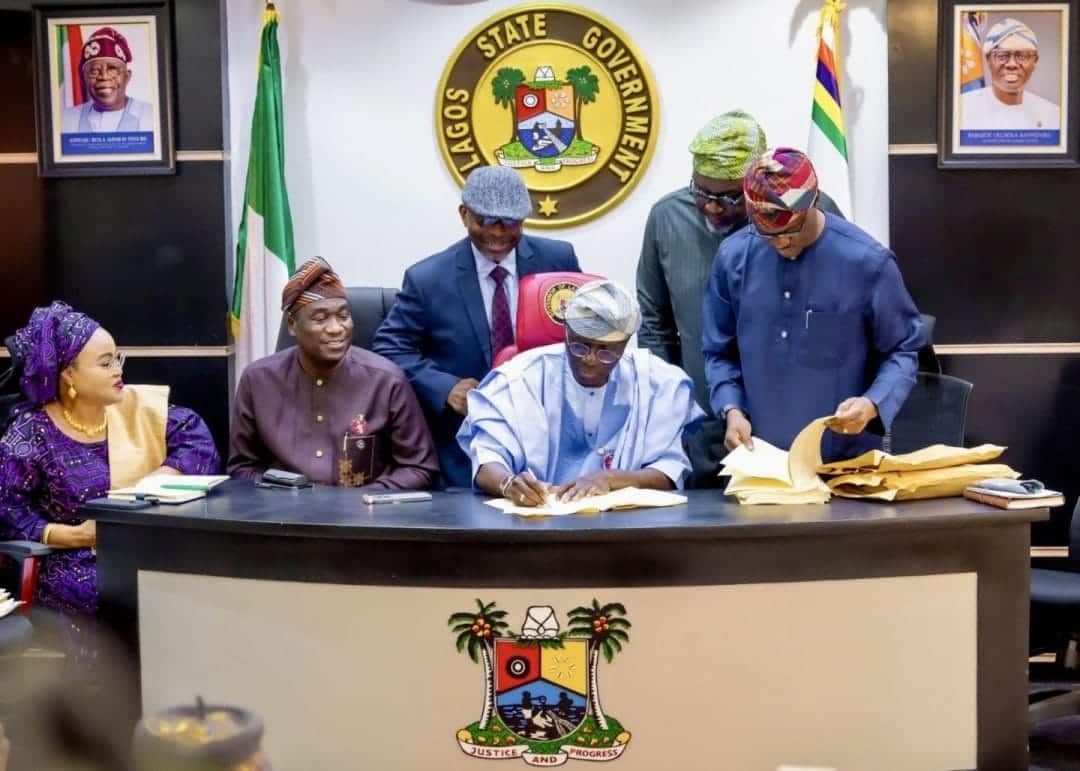
Lagos State has once again captured the national spotlight with the recent signing of the 2025 Appropriation Bill into law by Governor Babajide Sanwo-Olu. Dubbed the ‘Budget of Sustainability,’ the ₦3.37 trillion fiscal plan has been lauded by its proponents as a progressive roadmap for economic transformation and sustainable development. Yet, as with any monumental financial blueprint, it has also sparked critical questions about feasibility, prioritisation, and the real beneficiaries of such an ambitious agenda.
In his announcement, Governor Sanwo-Olu framed the budget as a strategic consolidation of past gains while laying the groundwork for future growth. His rhetoric resonated with optimism, describing the financial plan as a “blueprint for solidifying past gains while preparing for the future.” However, a closer examination reveals that the realities of achieving these lofty goals may be more complex than the polished statements suggest.
The Vision of a ‘Greater Lagos’
The ‘Budget of Sustainability’ allocates a significant ₦2.07 trillion—or about 61.4% of the total—to capital expenditure. This focus on long-term investments in infrastructure, innovation, and sustainable development is commendable and aligns with the administration’s ‘Greater Lagos’ vision. Projects in transportation, housing, and environmental management are expected to headline this expenditure, promising to transform the state’s economic landscape.
The recurrent expenditure, pegged at ₦1.30 trillion, reflects a commitment to maintaining the efficient operation of the government while addressing critical sectors such as education, healthcare, and security. Sanwo-Olu’s declaration of fiscal responsibility and service delivery is a welcome assurance, particularly in a state as economically vibrant and socially diverse as Lagos.
Infrastructure Push: A Double-Edged Sword?
Sanwo-Olu’s emphasis on infrastructure development is not without merit. Lagos, often dubbed the economic nerve centre of Nigeria, suffers from chronic infrastructural deficits that have hampered growth and quality of life for decades. The state’s roads, bridges, and housing stock are often overwhelmed by its booming population, now estimated at over 20 million.
However, critics argue that this perennial focus on infrastructure raises several questions. How will Lagos fund these transformative projects without plunging the state deeper into debt? The Lagos State Government’s 2025 budget is heavily reliant on internally generated revenue (IGR) and federal allocations, but the increasing debt profile—which stood at ₦5.77 trillion by mid-2024—casts a shadow over the sustainability of these plans.
Moreover, past projects touted as “transformative” have often fallen short of expectations. For instance, the much-publicised Blue Line Rail, though a step in the right direction, faced years of delays and budget overruns before becoming operational. Will the 2025 budget’s promises follow a similar trajectory, or will they finally deliver the “Greater Lagos” that residents have long been promised?
Recurrent Expenditure: Sustaining or Constraining?
The allocation of ₦1.30 trillion to recurrent expenditure underscores the state’s operational needs and commitment to essential services. Education and healthcare, two critical pillars of development, are expected to receive substantial funding. Yet, skeptics question whether these allocations are sufficient to address systemic challenges.
In education, for example, Lagos grapples with overcrowded classrooms, inadequate teacher training, and subpar facilities—issues that demand more than token investments. Similarly, the healthcare sector—despite its critical role in public welfare—faces challenges ranging from underfunding to staff shortages. While the budget’s provisions are a step forward, the devil lies in the details of implementation.
The Political Undertones
No budget exists in a vacuum, and Lagos’s 2025 fiscal plan is no exception. With the general elections just a year away, some analysts view the budget as a politically motivated document designed to solidify support for the ruling party. The language of “sustainability” and “progress” resonates well with voters, but whether these words translate into tangible benefits remains to be seen.
Moreover, the timing of the budget signing—early in the year—suggests a calculated effort to project an image of competence and readiness. Governor Sanwo-Olu’s administration, which has faced criticism over issues ranging from traffic gridlocks to rising living costs, appears keen to rebrand itself as a champion of sustainable progress.
Analysing the Structural and Policy Implications


While the ‘Budget of Sustainability’ presents an ambitious financial framework, its structural and policy implications demand closer scrutiny. One of the most pressing concerns is the state’s revenue-generation strategy, which serves as the foundation for actualising the proposed expenditures. Lagos State has long prided itself on its robust Internally Generated Revenue (IGR) system, which accounts for a significant portion of its annual budget. Yet, the sustainability of this revenue model is increasingly under question.
Internally Generated Revenue: A Double-Edged Sword
Lagos State’s IGR, estimated to exceed ₦1 trillion annually, is fuelled by a combination of taxes, levies, and fees. While this revenue stream has enabled the state to maintain a level of financial autonomy, it has also drawn criticism for its regressive nature. Small and medium-sized enterprises (SMEs), which constitute the backbone of Lagos’s economy, often bear the brunt of these tax policies. This has led to complaints about over-taxation, stifling business growth and discouraging entrepreneurship.
Moreover, the reliance on IGR raises questions about equity and fairness. Critics argue that the burden of sustaining the state’s ambitious projects often falls disproportionately on the lower and middle classes, who already struggle with rising living costs. For the 2025 budget to truly embody sustainability, the government must address these disparities and explore more progressive tax policies.
Debt Sustainability: Walking a Tightrope
Another critical issue is Lagos State’s growing debt profile. By mid-2024, the state’s total debt stood at ₦5.77 trillion, raising alarms about its fiscal health. While borrowing is often necessary for funding large-scale infrastructure projects, the question remains: At what cost? High debt levels can constrain future budgets, limiting the state’s ability to invest in critical sectors such as education and healthcare.
The 2025 budget’s reliance on borrowing to finance capital expenditure—coupled with its ambitious spending plans—places Lagos in a precarious position. Debt servicing already accounts for a significant portion of the state’s recurrent expenditure, leaving less room for developmental projects. Without a clear strategy for managing and reducing this debt, the ‘Budget of Sustainability’ risks becoming a burden on future administrations.
Policy Implementation: Bridging the Gap Between Plans and Reality
A recurring challenge for Lagos State has been the gap between policy formulation and implementation. While the 2025 budget outlines a comprehensive plan for sustainable development, its success hinges on effective execution. Past experiences suggest that bureaucratic inefficiencies, corruption, and mismanagement often derail even the best-laid plans.
For instance, the state’s housing projects—designed to address the chronic housing deficit—have been plagued by allegations of corruption and favouritism. Similarly, transportation initiatives, such as the Bus Rapid Transit (BRT) system, have faced criticism for poor maintenance and service quality. To avoid repeating these mistakes, the Sanwo-Olu administration must prioritise transparency, accountability, and stakeholder engagement in the implementation of the 2025 budget.
Federal-State Relations: Navigating a Complex Landscape
Lagos State’s financial independence is both a strength and a challenge. While its robust IGR allows it to fund ambitious projects, the state remains reliant on federal allocations for a portion of its budget. This dependence creates a complex dynamic, particularly given Nigeria’s fraught federal-state relations. Any delays or reductions in federal allocations could jeopardise the execution of the 2025 budget, highlighting the need for a more self-reliant revenue model.
Additionally, Lagos’s position as Nigeria’s economic hub often places it at odds with the federal government, particularly on issues such as resource control and taxation. The Sanwo-Olu administration must navigate these challenges carefully, leveraging its economic clout to secure favourable policies while avoiding unnecessary conflicts.
Looking Ahead
The ‘Budget of Sustainability’ is a bold statement of intent, but its success will depend on the state’s ability to address these structural and policy challenges. Going further, let us delve deeper into the social implications of the budget, examining its potential impact on Lagosians and the broader implications for governance and accountability.
The Social and Long-Term Implications of Lagos’s 2025 Budget
The Lagos State Government’s 2025 budget presents a bold vision, but its social implications deserve equal scrutiny. At its core, the ‘Budget of Sustainability’ aims to create a Lagos that works for all, yet the realities of implementation may not align with this ideal.
The Social Impact: Benefits and Disparities
A significant portion of the capital expenditure focuses on transformative infrastructure projects, which are expected to boost economic activity and create jobs. However, the benefits may not be evenly distributed. Urban renewal projects, often lauded for their potential to revitalise the state, have a history of displacing vulnerable populations without adequate compensation or resettlement plans.
Housing initiatives, for example, aim to address the chronic deficit but have historically failed to cater to the low-income demographic that makes up a large percentage of Lagos’s population. Affordable housing remains out of reach for many, raising concerns about the inclusiveness of these projects.
Similarly, investments in transportation infrastructure, while necessary, often prioritise the needs of the urban elite over those of the average Lagosian. The expansion of the rail and bus systems must be accompanied by measures to ensure accessibility and affordability for all.
Education and Healthcare: A Mixed Bag
The budget’s allocation to education and healthcare signals a commitment to social welfare, but systemic issues remain. In education, the focus appears to be on physical infrastructure rather than quality improvements. Teacher training, curriculum development, and digital learning tools are areas that require urgent attention to ensure that Lagos’s youth are equipped for the future.
In healthcare, the challenges are even more pronounced. While the budget promises improved facilities and services, it must also address the chronic shortages of medical staff and the inequitable distribution of healthcare resources. Rural areas, in particular, often lack access to basic medical care, highlighting a gap that the 2025 budget must bridge.
Long-Term Sustainability: Building a Resilient Lagos
The 2025 budget’s emphasis on sustainability is commendable, but Lagos faces existential threats that require urgent attention. Climate change, in particular, poses severe risks to the state’s future. Rising sea levels and increasing flood incidents have already displaced thousands and destroyed infrastructure. Yet, the budget’s provisions for climate resilience appear insufficient to address these challenges comprehensively.
Investments in renewable energy, waste management, and coastal defences are critical for building a sustainable Lagos. However, these efforts must go beyond mere rhetoric. The government must partner with private entities, international organisations, and local communities to develop innovative solutions that prioritise environmental preservation and sustainability.
Economic Diversification: Breaking Free from Oil Dependency
While Lagos is less dependent on oil revenues than many other Nigerian states, its economy remains vulnerable to fluctuations in global markets. The 2025 budget provides an opportunity to accelerate diversification by investing in technology, creative industries, and agriculture. These sectors have the potential to generate jobs, foster innovation, and reduce dependence on volatile revenue streams.
The government’s emphasis on infrastructure development can support this diversification, but it must also create enabling environments for small and medium-sized enterprises (SMEs) and startups. Access to credit, business-friendly policies, and capacity-building initiatives will be critical in this regard.
Empowering the Informal Sector
Lagos’s informal sector is the lifeblood of its economy, yet it often operates on the margins of formal planning. From street vendors to artisans, millions of Lagosians depend on the informal economy for their livelihoods. However, this sector faces significant challenges, including harassment, lack of access to credit, and inadequate infrastructure.
The 2025 budget must address these issues by formalising the informal sector through supportive policies and infrastructure development. Programmes that provide training, financial inclusion, and legal protections can help integrate this vital sector into the broader economy, enhancing its contribution to the state’s growth.
Social Equity: Bridging the Gap
Lagos remains a city of stark contrasts, where opulence coexists with abject poverty. The 2025 budget presents an opportunity to bridge these divides by prioritising inclusive policies. Social protection programmes, affordable housing, and universal healthcare can help reduce inequalities and provide a safety net for the most vulnerable populations.
The Role of Civil Society
Civil society organisations (CSOs) have a crucial role to play in monitoring and advocating for the effective implementation of the budget. Their involvement can ensure that the government remains accountable and responsive to the needs of its citizens. Collaborative efforts between the government and CSOs can also enhance public awareness and participation in governance.
Conclusion: A Budget of Promise and Peril
The Lagos State 2025 ‘Budget of Sustainability’ is an ambitious attempt to address the state’s pressing challenges while laying the foundation for a brighter future. Its focus on infrastructure, sustainability, and economic growth is laudable, but the success of these initiatives will depend on effective implementation, transparency, and inclusivity.
For Lagosians, the budget represents both promise and peril. If executed wisely, it could transform Lagos into a model of sustainable urban development. However, if past mistakes are repeated, the lofty ambitions of the ‘Budget of Sustainability’ may remain just that—ambitions.
Mark Olise
Atlantic Post Special Correspondent