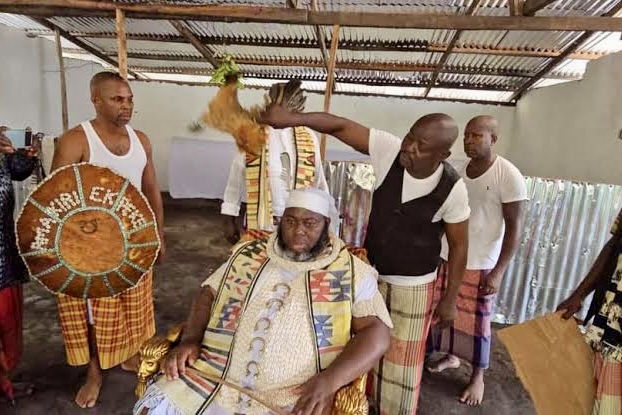
A month after a Hausa language video in which Suleiman Babagana, better known as Ali Kwara, complained that young APC foot soldiers in Borno were being sidelined, the grassroots leader found himself in Maiduguri Maximum Prison.
The charge sheet that followed was not, on the face of it, one typically reserved for a tactical counterinsurgency squad. Yet sources and court papers seen by this news outlet allege that the very crack unit established to tackle kidnappers and armed robbers was deployed to effect his arrest.
The development raises a stark question. Has a force designed for existential security in Borno been repurposed to silence political dissent.
The sequence is not complex but it is blunt. Ali Kwara recorded a short video in Hausa in which he urged Borno youths to remain calm even as he warned that patience was wearing thin and that loyal supporters felt ignored.
The video criticised how supporters who mobilised for Governor Babagana Zulum had been excluded from appointments and projects.
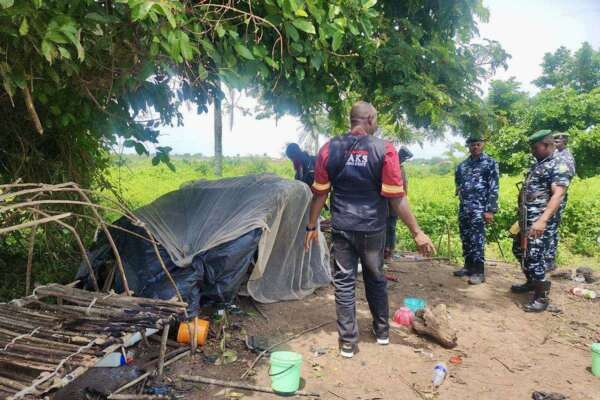
Within days, Kwara was arrested by a Maiduguri crack unit and arraigned before Magistrate Court 5. He pleaded not guilty. His bail application was opposed by the police prosecutor and an adjournment followed.
Then the Attorney General of the state signalled it would take over the prosecution under the constitutional power in Section 211. The result is that Kwara has spent days behind bars while the case waits to be reassigned.
Plainly the facts now in the public domain are allegations and the state has a right to investigate what it considers intimidation or threats. But three elements of this episode are troubling and demand scrutiny.
First, the use of a special tactical squad, whose remit is capital and violent offenders, to arrest an unarmed man for a social media lament.
Second, the alleged intervention of the Attorney General immediately after arraignment, a move that, while legal under Section 211, carries obvious political optics when timed as it was.
And third, the pattern. This is not the first time in Borno that the state’s security apparatus has been accused of acting against critics rather than against violent criminals.
From Maiduguri to Abuja human rights groups have documented a worrying trend. In the last 18 months Amnesty International documented lethal police responses to protests and a pattern of arbitrary arrests and detentions across states.
The global rights organisation warned that Nigeria’s security services have, at times, used excessive force against peaceful protestors and detained organisers without due process.
Those findings are not abstract. They provide national context to what in Borno looks like an escalation from political disagreement to criminalisation.
A second Borno case amplifies the alarm. In June two tricycle operators and APC members, Mohammed Bukar and Ibrahim Mohammed, were convicted and sentenced to five years on the back of a WhatsApp group said to be organising a demonstration.
The swift move from social media to incarceration, and the use of tactical policing resources in that context, invites an uncomfortable hypothesis.
Are policing priorities in Borno shifting from countering Boko Haram and kidnappers to policing political speech and assembly.
Legally, the state’s Attorney General enjoys wide prosecutorial discretion. Section 211 of the 1999 Constitution permits a state AG to institute or take over criminal proceedings.
Constitutional scholars point out the power, which is broad by design, is aimed at centralising public prosecutions for consistency and state interest.
But the power is not unfettered in practice. The timing and purpose of its exercise are scrutinised in the courts, particularly where there are allegations of political interference in law enforcement.
In Kwara’s case, family lawyers told reporters that no written application had been served before the AG team appeared in court and that the magistrate was under pressure from several officials when she granted the request to hand the matter over.
That sequence, if confirmed in court records, is precisely the kind of procedural irregularity that erodes public confidence.
This is the political context in which the story sits. Governor Babagana Zulum rode to office on a reputation for reconstruction and an academic record in engineering.
He has overseen reconstruction projects and has been a visible figure in the often lethal security environment of north east Nigeria. That profile makes the allegations all the more combustible.
Zulum is a popular national figure whose administration has repeatedly emphasised the restoration of normalcy in the face of insurgency.
Yet accusations that his government is selectively directing counterinsurgency units against critics could be the most corrosive internal security threat of all — a collapse of civil liberties under the cover of security.
Who is Saina Buba, the official widely named by sources as the conduit for these arrests. Public records show Hon. Saina Buba serves as Commissioner for Youth and Sports Development in Borno and is an active public figure in state programmes for youth empowerment.
The allegation that a political commissioner is directing arrests is explosive. If true, it points to the blurring of executive and policing roles. If false, it is an allegation that must be forcefully and publicly rebutted.
At present the available reporting identifies him as the official whom sources say coordinated some of the arrests, but independent verification remains the imperative of good journalism.
What do the laws, the courts and precedent say. The constitution gives state attorneys general a clear power to take over prosecutions. Courts have repeatedly held that AGs may intervene to protect public interest.
Yet case law also insists on due process. A takeover after a bail ruling has been reserved risks placing politics ahead of law.
Jurisprudence warns that the mere existence of constitutional power does not legitimise any and all actions by a state law officer when those actions are used to frustrate judicial processes or prolong detention without cause.
Legal practitioners interviewed by this news outlet urge transparency; a written motion from the AG, dated and filed in the record, would remove suspicion.
Beyond law there are human consequences. Sources say Ali Kwara has now spent more than a week in maximum security custody.
Prison conditions in the region for non-violent detainees are harsh and prolonged pre-trial detention is a recognised driver of radicalisation, not rehabilitation.
For a state still grappling with reintegration and deradicalisation from Boko Haram, pushing disaffected youth toward grievance via perceived injustice risks playing into the hands of the very insurgents the crack squads were formed to defeat. That is an irony that will not be lost on many Borno residents.
This investigation has sought comment from the Borno State government, the state police command and the Attorney General. At the time of publication none had given a substantive reply to the specific allegations of misuse of the crack unit in the Ali Kwara case.
The silence in the face of such an allegation only deepens the urgent need for independent oversight by the judiciary and where appropriate, federal agencies.
The public interest in secure communities cannot be used as a blanket to extinguish dissent. Nor can the noble task of counterinsurgency be diminished by transactional politics.
What next. First, an order from the court delivering a prompt ruling on bail and a transparent record of the AG’s written motion would be the minimum step to restore faith in the process.
Second, the Nigeria Police Force should clarify the mandate and chain of command for its crack squads, and publish standard operating procedures when tactical units are to be deployed on matters that do not involve violence or capital offences.
Third, human rights monitors and legal NGOs should be granted access to court records and the detainee, to ensure basic rights to counsel and speedy hearing are respected.
Finally, the federal Ministry of Justice might consider guidelines on the exercise of Section 211 powers so that prosecutorial discretion does not become a cudgel for political ends.
This is an unfolding story. The government has a legitimate duty to protect public order and to investigate any credible threat. But the rule of law demands that such powers be exercised in ways that are demonstrably fair, proportionate and open to scrutiny.
Where security forces trained for the worst of violence are redirected to police speech, a democracy teeters.
Borno cannot afford to let the instruments that saved it from terror become instruments that erode the freedoms its citizens need to rebuild.
Journalists will continue to follow the court record, file by file, phone call by phone call, until the truth is in the open and the people of Borno can see that justice was neither bought nor circumvented.
Follow us on our broadcast channels today!
- WhatsApp: https://whatsapp.com/channel/0029VawZ8TbDDmFT1a1Syg46
- Telegram: https://t.me/atlanticpostchannel
- Facebook: https://www.messenger.com/channel/atlanticpostng