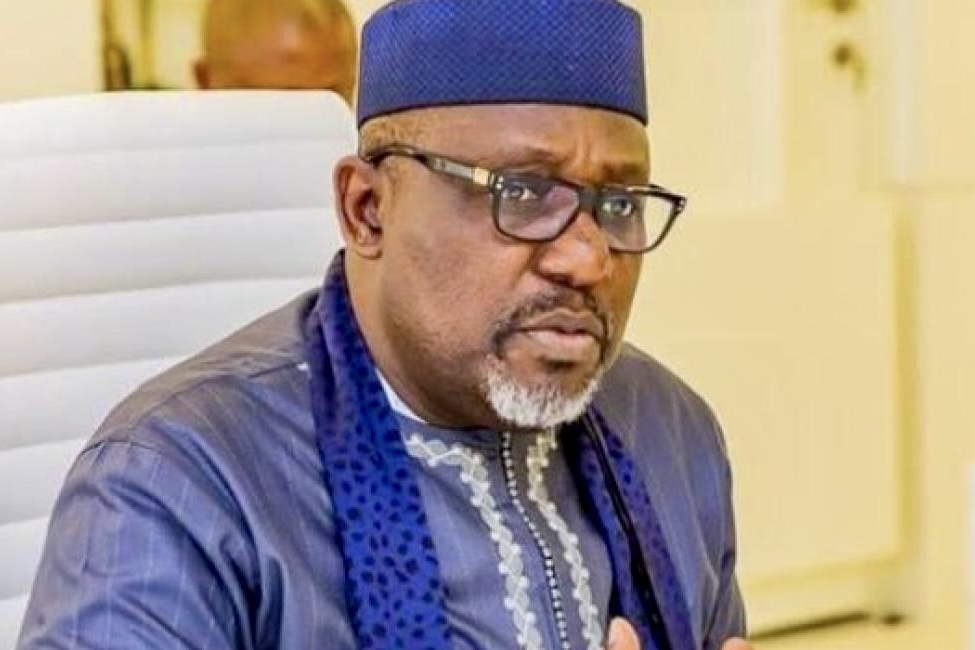
The Federal Capital Territory (FCT) Minister, Barrister Ezenwo Nyesom Wike, has flagged off the construction of a cutting-edge bus terminal in Abuja’s Central Business District (CBD). August 26, 2024. FILE 1. 
The Federal Capital Territory (FCT) Minister, Barrister Ezenwo Nyesom Wike, has flagged off the construction of a cutting-edge bus terminal in Abuja’s Central Business District (CBD). August 26, 2024. FILE 2.


Peter Jene, Senior National Correspondent
Introduction: The Dawn of a New Era in Abuja’s Transportation?
In a move that has set tongues wagging and political pundits scrambling to decode its implications, the Federal Capital Territory (FCT) Minister, Barrister Ezenwo Nyesom Wike, recently flagged off the construction of a cutting-edge bus terminal in Abuja’s Central Business District (CBD). On August 26, 2024, the nation watched as Wike took centre stage, heralding this development as not just a leap forward in transportation infrastructure but also a critical step in tackling the pervasive insecurity plaguing Nigeria’s capital.
The event, which was marked by a symbolic tape-cutting ceremony, has been widely celebrated as a landmark moment in the FCT’s journey towards modernisation. However, beyond the fanfare lies a complex web of political motivations, security challenges, and the ever-present question of whether this project will truly deliver on its promises or merely become another white elephant in Nigeria’s vast landscape of abandoned projects.
Wike’s Vision: A Transport Revolution or Political Theatre?
Wike’s announcement was laced with a blend of optimism and political rhetoric. As he stood at the site of the proposed terminal, the Minister did not just talk about buses and taxis. He painted a picture of a future where the FCT’s transportation system would rival those of major cities around the world, complete with modern facilities that cater to the needs of residents and visitors alike. “What we are trying to do is to integrate and improve our transport system,” Wike declared, his words carefully crafted to resonate with a populace weary of the daily grind of traffic jams and the constant threat of “one chance” robberies.
But beneath the surface, one cannot ignore the political undertones of Wike’s grand pronouncement. As a former Governor of Rivers State and a key player in the People’s Democratic Party (PDP), Wike’s appointment as FCT Minister by President Bola Ahmed Tinubu, a stalwart of the All Progressives Congress (APC), raised more than a few eyebrows. The question on everyone’s mind: Is this bus terminal project a genuine effort to improve Abuja’s infrastructure, or is it a strategic move in a larger political chess game?
Tackling Insecurity: Can a Bus Terminal Be the Silver Bullet?
At the heart of Wike’s pitch for the new bus terminal is the promise of enhanced security. The FCT Minister was unequivocal in his assertion that the terminal would help address the alarming rise in insecurity within the capital. By centralising bus and taxi operations in a controlled environment, Wike argues that it would be easier to monitor and identify vehicles, thereby reducing the prevalence of “one chance” robberies—a notorious form of crime where unsuspecting passengers are robbed by criminals posing as taxi drivers.
However, this raises a critical question: Can the construction of a bus terminal genuinely solve the deep-rooted security issues in Abuja? Security experts are divided. While some agree that a well-organised transport system could indeed deter petty criminals, others are more skeptical, pointing out that the root causes of insecurity in the FCT go far beyond transportation. Issues such as poverty, unemployment, and the proliferation of illegal arms are not going to be solved by a bus terminal, no matter how state-of-the-art it may be.
The Renewed Hope Agenda: A Convenient Narrative?
Wike’s framing of the bus terminal project as a “practical demonstration of the Renewed Hope Agenda of President Tinubu” is another aspect that has sparked debate. The Renewed Hope Agenda, a cornerstone of Tinubu’s administration, promises to revitalise Nigeria’s economy, tackle insecurity, and improve infrastructure. By aligning the bus terminal project with this agenda, Wike is not only seeking to legitimise his efforts but also to cement his relevance within the Tinubu administration.
Critics, however, see this as nothing more than political grandstanding. They argue that while the bus terminal may be a step in the right direction, it is far from the transformative project that Wike and his supporters claim it to be. The question remains: Is this project truly about providing a better quality of life for Abuja’s residents, or is it a carefully orchestrated move to score political points?
The Role of the National Assembly: Rubber Stamp or Genuine Support?
During the flag-off ceremony, several members of the National Assembly, including Hon. Muktar Aliyu Betara, Chairman of the House of Representatives Committee on FCT, and Hon. Abdulrahman Ajiya, the member representing the Abuja South Federal Constituency, heaped praise on Wike for his “efforts in modernising transportation infrastructure in the FCT.” Their speeches were filled with assurances of continued support for the FCT Administration’s projects.
But behind the scenes, questions are being raised about the true nature of this support. Is the National Assembly genuinely committed to the success of the bus terminal project, or are they merely playing their part in a political script? It is no secret that infrastructural projects in Nigeria have often been used as a means to secure political favours and channel funds into the coffers of well-connected contractors. The involvement of the National Assembly in the flag-off ceremony could be seen as an endorsement of Wike’s project, but it could just as easily be interpreted as a rubber stamp on yet another politically motivated venture.
The FCT Administration’s Track Record: A Cause for Concern?
While Wike’s ambition for the FCT’s transportation system is commendable, it is essential to examine the track record of the FCT Administration when it comes to project execution. Over the years, Abuja has been littered with incomplete or poorly executed projects, many of which started with similar fanfare. The bus terminal project, with its promises of modern facilities and improved security, is at risk of joining this list if not handled with the utmost care.
The FCT Administration’s ability to deliver on its promises has been a subject of intense scrutiny. Despite numerous projects being launched with much enthusiasm, the reality on the ground often falls short of expectations. Delays, budget overruns, and allegations of corruption have plagued many past initiatives, leading to widespread public skepticism. As such, Wike’s assurances of “quality and timely delivery” must be taken with a grain of salt until it is realised.
The Role of the Private Sector: A Partnership or a Sellout?
One of the key players in the bus terminal project is the contractor, Engr. Biodun Otunola, who has promised to deliver an “iconic and befitting” structure for Abuja. The involvement of private contractors in public projects is nothing new, but it often comes with its own set of controversies. Critics argue that the reliance on private companies for public infrastructure projects can lead to a lack of accountability, with profit often being prioritised over quality.
Moreover, the history of public-private partnerships (PPPs) in Nigeria is fraught with examples of projects that have either failed to meet expectations or have been abandoned altogether. The bus terminal project’s success will depend largely on the transparency and integrity of the partnership between the FCT Administration and its private sector partners. Wike’s ability to navigate this complex relationship will be crucial in determining whether the project will become a symbol of Abuja’s modernisation or another failed venture.
The Broader Implications: What Does This Mean for Abuja’s Future?
The bus terminal project, while significant in its own right, is just one piece of a much larger puzzle. Abuja, as Nigeria’s capital, is a city that represents the nation’s aspirations and challenges in equal measure. The success or failure of this project could have far-reaching implications for the FCT’s development trajectory and for Wike’s legacy as FCT Minister.
If successful, the bus terminal could serve as a model for future infrastructure projects in Abuja and beyond. It could demonstrate that with the right leadership and a commitment to transparency, it is possible to deliver public services that genuinely improve the lives of citizens. On the other hand, if the project falls short of expectations, it could reinforce the perception that Abuja’s leaders are more interested in grandstanding than in delivering tangible results.
Conclusion: A Project Laden with Promises and Pitfalls
As the construction of the bus terminal in Abuja’s Central Business District gets underway, the eyes of the nation are on Wike and his team. The project is laden with promises—of improved transportation, enhanced security, and a step towards the realisation of President Tinubu’s Renewed Hope Agenda. But it is also fraught with pitfalls, from the risk of political interference to the challenges of ensuring quality and timely delivery.
Wike’s legacy as FCT Minister will be shaped, in part, by the outcome of this project. Will it be remembered as a turning point in Abuja’s development, or as yet another example of good intentions derailed by Nigeria’s complex political and economic realities? Only time will tell.
As the dust settles from the flag-off ceremony, one thing is clear: the construction of this bus terminal is about much more than just buses and taxis. It is a microcosm of the broader struggles and aspirations that define Abuja, and indeed, Nigeria as a whole.
The Political and Security Implications of the Abuja Bus Terminal Project
Wike’s bus terminal project is emblematic of the intersection between infrastructure development, politics, and security in Nigeria. As Abuja’s residents wait to see whether the Minister’s promises will translate into reality, the project serves as a critical test of the FCT Administration’s ability to deliver on its commitments. The coming months will reveal whether Wike’s ambitious plan will indeed bring the much-needed change to Abuja’s transportation system or whether it will become yet another footnote in Nigeria’s long history of unfulfilled promises.