Nigeria’s US$603m USAID freeze sparks chaos—Senate summons security chiefs amid terror-funding claims. Vital services now at risk!
ABUJA, Nigeria — In a dramatic twist that has rattled both political and security circles across Nigeria, the nation now finds itself teetering on the brink of missing out on a US$602.95m USAID grant for 2025. The grant—integral to bolstering Nigeria’s healthcare, economic development, governance and security sectors—is currently under threat following a 90‑day suspension of all USAID programmes.
The move, set in motion by an executive order from President Donald Trump upon his January 2025 return to office, is now the subject of a fierce debate both domestically and on the international stage.
The Funding Freeze: A Strategic Reassessment or a National Setback?
The suspension of USAID programmes has been framed as part of a comprehensive review of American foreign assistance. The Trump administration has been adamant that this review is necessary to eliminate waste and ensure that every dollar aligns with US national interests. Yet, for Nigeria—a nation heavily reliant on external funding for critical sectors—the repercussions could be severe.
According to the proposed USAID budget for 2025, a staggering 89.27 per cent of the total US$602.95m was earmarked for health-related initiatives. The allocation includes a colossal US$368m for HIV/AIDS programmes, subdivided into US$322m under the Global Health Program (GHP-State) and US$46m under GHP-USAID.
Additional sums are designated for tuberculosis (US$22m), malaria control (US$73m), maternal and child health (US$33.25m) and family planning and reproductive health (US$22.5m). Alarmingly, a meagre US$2.5m was set aside for water supply and sanitation, highlighting stark vulnerabilities in essential service provision.
For a country grappling with endemic challenges in its health infrastructure, this funding freeze threatens to derail years of progress. In response, the Nigerian government has already scrambled to secure emergency measures, approving US$200m to sustain healthcare services.
The funds are being directed towards essential vaccine procurement, antiretroviral drug distribution and maternal health services—a temporary bulwark against what could become a public health crisis.
Senate Summons and Explosive Allegations
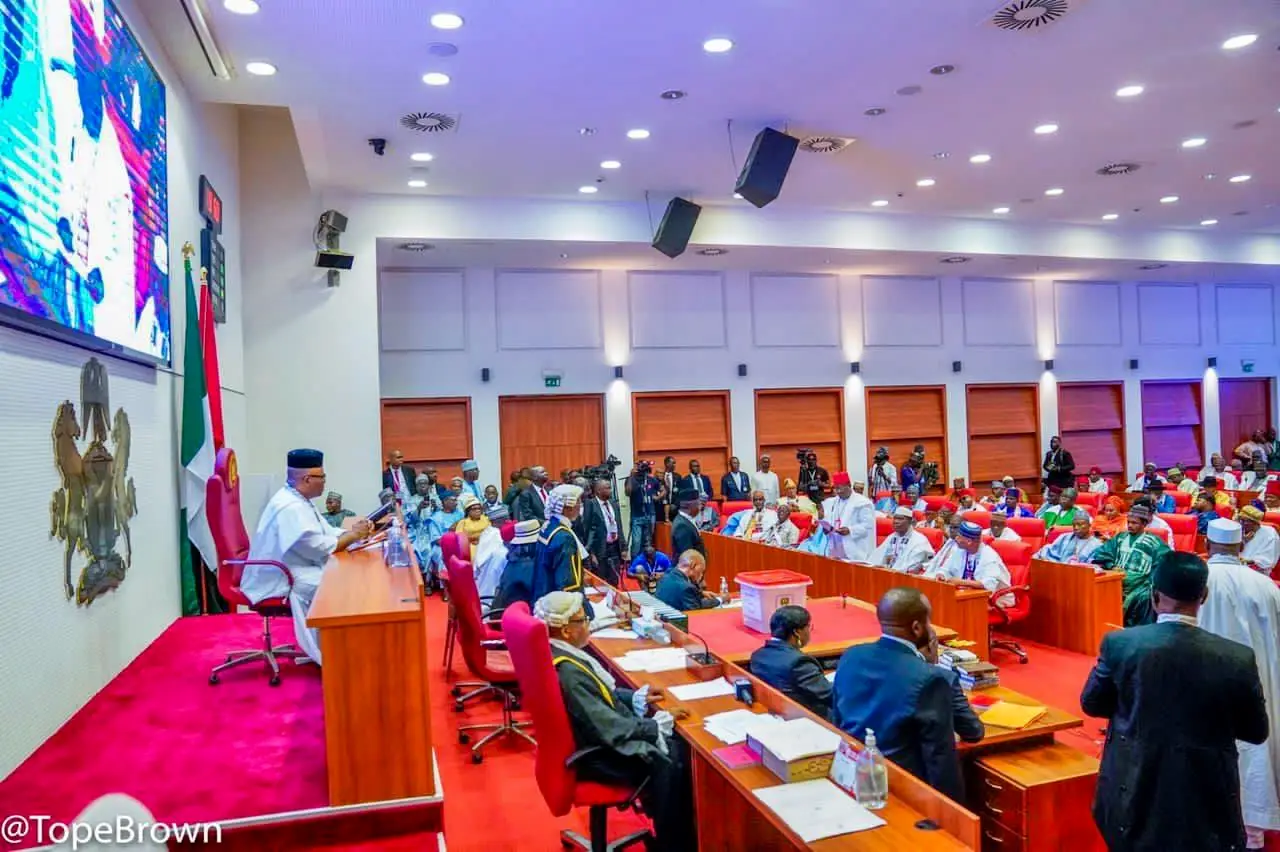
Amid the chaos, a new development has further inflamed tensions. The Nigerian Senate, acting on an Order of Urgent National Security raised by Borno South Senatorial District’s representative, Ali Ndume, has summoned top intelligence and security chiefs.
The summons comes on the heels of explosive allegations by US Congressman Perry Scott, who controversially claimed that USAID funds may have been diverted to terrorist organisations, including the notorious Boko Haram.
In a high‑profile session, heads of the National Intelligence Agency, the Defence Intelligence Agency, the Department of State Services and National Security Adviser Nuhu Ribadu were called upon to provide a closed‑door briefing.
Senator Abdul Ningi, a co-sponsor of the motion, argued that such a briefing was essential for a candid discussion on the pressing security challenges facing Nigeria.
“We need facts,” he asserted, underscoring the urgency of investigating these claims, which, if true, could spell disaster for both national security and international aid credibility.
Congressman Perry’s allegations have not only ignited fierce debates in Washington but have also added a layer of international embarrassment to Nigeria’s domestic challenges.
In a now-viral video clip, Perry questioned, in no uncertain terms, the destination of US$697m in annual funds and the possibility that they were funnelling into extremist activities.
While the United States Embassy in Nigeria swiftly dismissed these claims—reaffirming that robust monitoring systems were in place to ensure proper fund utilisation—the damage to public confidence has been significant.
Implications for Nigeria’s Key Sectors
Health Sector: On the Brink of a Crisis
The suspension of US$602.95m in aid jeopardises vital healthcare interventions. Nigeria’s heavy reliance on this funding—especially for HIV/AIDS programmes, malaria control and maternal health services—cannot be overstated.
The government’s emergency approval of US$200m, while welcome, is merely a stopgap measure. With a sharp reduction in funds, the potential for service disruption looms large, threatening to reverse gains in critical health indicators.
Governance and Democracy
Beyond health, the freeze also casts a long shadow over governance initiatives. USAID’s proposed US$7.5m allocation for the rule of law, good governance, civil society engagement and human rights programmes is now in limbo.
With Nigeria already grappling with issues of corruption and institutional inefficiency, the delay or reduction in these funds could further undermine public trust and impede progress on democratic reforms.
Security and Counterterrorism
Perhaps most concerning is the impact on Nigeria’s peace and security apparatus. USAID had earmarked US$7.6m for security-related programmes, including conflict mitigation (US$2.8m), military partnerships (US$1m) and citizen security and law enforcement (US$3.05m).
This funding is critical in a country where terrorism, notably from Boko Haram and the Islamic State-West Africa Province, remains a constant threat.
The controversy has brought into sharp focus the longstanding challenges of insurgency financing. Nigeria’s Chief of Defence Staff (CDS) Gen Christopher Musa has repeatedly highlighted that, despite numerous military offensives, Boko Haram has managed to sustain its operations, partly due to dubious foreign financial inflows.
In recent statements, Gen Musa questioned the logistics behind the insurgents’ access to hard currency and advanced weaponry—pointing fingers at a network of non‑governmental organisations operating under the guise of humanitarian aid.
Economic Development and the Future of USAID Support
Economic growth initiatives, though receiving the next largest allocation outside health (US$39.6m), are also at risk. With US$29.1m earmarked for agriculture, US$1.5m for private sector productivity and US$5m for clean energy projects, the funding freeze raises concerns about Nigeria’s long‑term economic sustainability.
If the review extends beyond the initial 90‑day period, the country might need to turn increasingly to domestic revenue or seek assistance from other international partners such as the World Bank or the African Development Bank.
Historical data underscore the depth of the dependency on USAID. Between 2022 and 2024, USAID allocated approximately US$2.8bn to Nigeria, with recent years witnessing allocations of US$780m in 2024, US$1bn in 2023 and US$970m in 2022.
This trend highlights not only Nigeria’s reliance on external aid but also the substantial role that US foreign assistance has played in shaping national policy across multiple sectors.
Government Response: A Balancing Act Amid Turbulence
In the wake of the funding suspension and the explosive allegations, the Nigerian government has embarked on a multifaceted response strategy. The emergency approval of US$200m for healthcare is indicative of a broader effort to mitigate the immediate impact on critical services.
Furthermore, the Federal Executive Council’s allocation of N4.5bn for the procurement of HIV treatment packs is a clear sign that the government is prepared to step in where international support might waver.
Coordinating Minister of Health and Social Welfare, Ali Pate, has reiterated the government’s commitment to taking ownership of the healthcare sector.
With plans to engage 28,000 health workers—formerly on the USAID payroll—the message is unequivocal: Nigeria will not be held hostage by the shifting sands of US foreign policy.
Yet, as the government mobilises its resources, questions remain. Can these domestic measures sufficiently offset the gap left by the USAID funding freeze?
What will be the long-term implications for Nigeria’s health and security sectors if the review leads to permanent reductions or a redirection of funds?
Such questions underscore the urgency of the Senate’s investigation and the need for transparent, fact‑based deliberations.
A Critical Analysis: The Geopolitical Underpinnings
The current controversy is symptomatic of broader geopolitical tensions that have been simmering for years. The Trump administration’s recalibration of foreign assistance priorities is not an isolated incident; it reflects a growing scepticism towards multilateral aid structures and a shift towards prioritising US national interests.
This realignment is particularly pronounced in Africa, where strategic interests are increasingly dictating the flow of international support.
For Nigeria, the implications are twofold. First, there is the immediate concern of funding shortfalls in critical sectors, which could exacerbate existing vulnerabilities in healthcare, governance and security.
Second, there is the longer‑term risk of becoming overly reliant on a volatile international aid landscape. As the United States rethinks its role in global development, Nigeria may need to explore alternative partnerships and invest more robustly in domestic resource mobilisation.
Moreover, the explosive allegations linking USAID funds to terrorist financing have added a layer of international scrutiny. While the US Embassy in Nigeria has dismissed such claims, the fact that these allegations have gained traction is telling.
They reveal deep-seated concerns about accountability and transparency in the management of foreign aid—a matter that resonates far beyond Nigeria’s borders.
Conclusion: Uncertain Futures and the Call for Accountability
As Nigeria stands on the precipice of a potential US$603m funding crisis, the stakes could not be higher. The suspension of USAID programmes, coupled with sensational allegations of terrorist financing, has not only imperilled vital development initiatives but has also ignited a fierce debate on accountability in international aid.
With the Senate summoning top intelligence and security chiefs for a closed‑door briefing, all eyes are now on the unfolding investigation.
For Nigeria, the coming weeks will be critical. The government’s ability to cushion the impact of the funding freeze, restore public confidence and ensure that essential services remain uninterrupted will be a testament to its resilience.
At the same time, the international community will be watching closely, as the outcome of this controversy could well signal a broader shift in how foreign aid is administered and scrutinised in the 21st century.
In these turbulent times, one thing remains clear: the need for transparent, fact‑based investigations is more urgent than ever.
As Nigeria navigates this complex maze of domestic imperatives and international geopolitics, the path forward will require not only swift action but also a renewed commitment to accountability and strategic self‑reliance.
Atlantic Post will continue to monitor this developing story and provide comprehensive coverage on the implications for Nigeria’s national security, economic stability, and international standing.