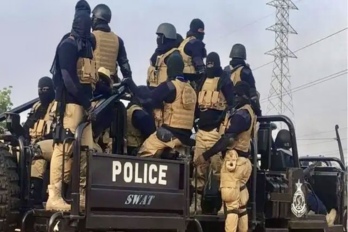
The sudden decision by the United States to designate Nigeria as a Country of Particular Concern has sparked diplomatic ripples. Washington vows accountability and possible sanctions. Beijing rebukes what it calls foreign interference. Abuja rejects the charge. Regional and continental bodies urge restraint. This investigation unpacks the law, the facts, the politics and what comes next.
The United States decision to designate the Federal Republic of Nigeria as a Country of Particular Concern under the International Religious Freedom Act signals an escalation. This escalation reflects Washington’s approach to a longstanding security and human rights crisis in West Africa’s most populous state.
The measure was announced publicly by President Donald Trump on social media. It was also taken up in official channels. This measure is more than rhetorical. It opens a legal and diplomatic toolbox. This toolbox can impose targeted sanctions and restrict assistance. In exceptional circumstances, it can justify other presidential actions aimed at curbing systematic violations of religious freedom.
The designation was hailed in Washington by the chair of the United States Commission on International Religious Freedom. It has provoked a fierce response in Abuja. There was also a strong reaction from Nigeria’s strategic partners, most notably China.
At stake is more than the fate of a single country. The US move challenges the boundaries of American moral diplomacy. This comes in an era of fraught great power competition and fragile regional security. It forces Nigeria to answer pointed and legal questions about domestic governance, justice and the rule of law. It also pushes partners and neighbours to decide between supporting a sovereign African state. They must also consider adherence to international human rights norms.
This report examines the legal basis for the US action. It looks at the factual record invoked by Washington. It also investigates the congressional manoeuvres in the US Senate. Additionally, it considers the domestic and international reactions. These factors will decide whether this episode becomes a turning point or a prolonged rupture.
The legal framework and what a CPC designation means in practice
The Country of Particular Concern designation is not an empty label. It is embedded in the International Religious Freedom Act of 1998 and its implementing mechanisms. The Act obliges the US president to identify governments that have “engaged in or tolerated particularly severe violations of religious freedom.” It empowers the executive to adopt a range of measures in response.
Those responses may include diplomatic démarches, restrictions on certain types of assistance, and targeted penalties against responsible individuals or entities. The measure also heightens congressional scrutiny and can precipitate extra legislative actions.
Washington’s move in late October and early November 2025 came after repeated recommendations. These recommendations were from the independent US Commission on International Religious Freedom.
USCIRF has tracked Nigeria as a country of serious concern for many years. In its recent country update, it documented the combination of violent attacks by non-state actors. It also highlighted state tolerance or enforcement of laws that, according to the commission, restrict freedom of belief and expression.
USCIRF’s July 2025 country update restated a long standing recommendation that Nigeria be designated a CPC. The commission’s public endorsement of the President’s decision makes Washington’s action appear to be the product of a sustained bureaucratic process. It also seems to result from political pressure.
A practical consequence of the designation is that the US government may now deploy “presidential actions” authorised under IRFA. Those actions range from economic measures and visa restrictions to conditions on security assistance.
In parallel, the US Congress has moved to codify further penalties. Proposed legislation would target officials and institutions responsible for enforcing discriminatory laws. It would also focus on those tolerating violence. The legal architecture thus offers both immediate administrative measures and a route for more durable congressional sanctions.
The facts on which Washington relied
The US designation referenced a catalogue of violent incidents. It mentioned a pattern of alleged governmental tolerance for laws that criminalise religious expression. Independent reporting and human rights monitors document a grim series of attacks across Nigeria in 2024 and 2025.
Among the incidents cited by advocates and watchdogs were the massacre of internally displaced persons sheltering at a Catholic mission in Benue State in June 2025 and a mosque attack in Katsina State in August 2025 in which dozens of worshippers were killed.
Those events are emblematic of a broader rise in attacks by armed groups and bandits. These groups have targeted rural communities, clergy, and places of worship. Reporters, nongovernmental groups and religious leaders have testified repeatedly to the scale of suffering and the uneven government response.
USCIRF and sympathetic lawmakers characterised the problem as not only attacks by non-state actors. They also identified government failure to curtail laws in a dozen states. These laws punish perceived blasphemy and, according to critics, create space for persecution.
In the commission’s view these state statutes and prosecutions may amount to systematic restrictions on freedom of religion or belief. USCIRF’s vice chair and other commissioners urged the US administration to act quickly. They stressed the importance of ensuring accountability and protecting vulnerable communities.
It is important to be candid about nuance. The pattern of violence in Nigeria is complex. Attacks fall into multiple categories. Islamist extremist insurgents like Boko Haram, ISWAP and imported Fulani Ethnic Militia operate in the northeast and central states.
The imported militiamen run banditry and large scale organised criminal attacks that target christian majority communities in the northwest and central states. Those attacks have taken on ethnic and sometimes religious dimensions in the Middle Belt.
Reports from regional bodies and some international observers underline that victims have included Muslims and Christians. The violence is not always the product of a campaign directed at a single faith. That complexity is significant. It forms the basis of many diplomatic objections to characterising the phenomenon as “genocide.” They are also the basis of objections to labelling it as a blanket persecution of Christians.
Whatever the case, the solution remains them same. The attackers must be rooted out swiftly and brought to justice. Also, the conditions that makes Northern Nigeria a safe haven for terrorism and religious extremism must be removed.
Congressional pressure and S.2747
The political backdrop in Washington amplifies the significance of the CPC decision. In September 2025 Senator Ted Cruz introduced S. 2747, the Nigeria Religious Freedom Accountability Act.
The bill, which was read twice and referred to the Senate Foreign Relations Committee, would require the Secretary of State to designate Nigeria a Country of Particular Concern. It would impose targeted sanctions on officials who facilitate violence. It would also target those who enforce blasphemy or sharia laws. The bill aims to take other steps to hold perpetrators accountable.
The Cruz bill explicitly contemplates penalties against governors, judicial officers and law enforcement personnel found complicit in abuses. The text highlights a growing transatlantic conservative coalition. The sponsor’s press materials support a hard line on Nigeria’s religious freedom record.
If enacted S. 2747 would give Congress a legislative anchor to compel a suite of measures that go beyond administrative discretion. Even without enactment the bill shapes executive politics by signalling that bipartisan support may exist for punitive measures.
For Abuja, the prospect of sanctions that name individuals such as governors, magistrates, or prison officials is a direct challenge to domestic governance. It is also a challenge to the independence of state judicial processes.
Abuja answers Washington
Nigeria’s Federal Government immediately rejected the US characterisation. Officials described the designation as inconsistent with facts. They insisted that the government is committed to protecting citizens of all faiths.
President Bola Tinubu’s information minister said the President was calm. He focused on strengthening national security. This included recent changes to military leadership. The presidency signalled that it would pursue measured diplomacy while engaging international partners to correct what it calls false narratives.
The Federal Government is not without policy responses to point to. Abuja has announced security sector changes, new appointments and ongoing engagement with religious leaders.
Those steps are defensible as sincere attempts to stabilise volatile regions. Yet critics argue that top level appointments are not enough. They believe these appointments do not substitute for effective rule of law prosecutions. Intelligence reform and the political will to confront criminal networks and complicit officials are also necessary.
The legal friction now concerns if the concrete measures on the ground are adequate. It also questions whether they are sustained enough to meet international standards for revoking a CPC designation.
Beijing’s intervention and the geopolitics of human rights
China’s response added an unmistakable great power dimension to the dispute. The People’s Republic publicly backed President Tinubu and denounced the US action as interference in Nigeria’s internal affairs.
A spokesperson at the Chinese Ministry of Foreign Affairs said Beijing opposed using religion for political pressure. They also opposed using human rights as tools for political pressure. The spokesperson reaffirmed China’s partnership with Nigeria.
The official language echoed Beijing’s long standing principle of non-interference. It deepened the diplomatic contest over narratives, norms, and influence in Africa.
China’s stance is predictable. Beijing is a major infrastructure and security partner for Nigeria and has sought to strengthen strategic ties across Africa.
The Chinese rebuttal does two political jobs at once. It offers Nigeria diplomatic cover in multilateral fora. It emphasises that human rights should not be weaponized to justify pressure.
For many African governments, China’s position resonates with a historical sensitivity to conditionality. For human rights advocates, nevertheless, Beijing’s posture is a reminder that geopolitical alliances can blunt international accountability.
Regional voices and the risk of fragmentation
Regional actors reacted forcefully to the US posture. ECOWAS dismissed claims about recent violence constituting a genocide of Christians. They warned against narratives that seek to sow division in West Africa.
The regional body urged international partners to support member states in fighting terrorism rather than blame a single community.
The European Union offered a more measured note. The EU affirmed its commitment to protecting religious freedom while cautioning against attributing Nigeria’s violence solely to religion.
The bloc underlined the multiplicity of factors behind the crisis and pledged continued cooperation on peacebuilding and assistance to victims.
Domestically some influential Nigerian civic and political groupings described Washington’s action as a wake-up call.
Leaders from the Southern and Middle Belt Forum urged the Federal Government to prosecute armed militias and killers. They also called for the government to hasten land restitution for displaced communities.
Other commentators warned the government not to slide into retaliatory rhetoric that would further inflame tensions.
The debate is now between two groups. One interprets the US move as a protective intervention. The other sees it as an overreach that risks polarising Nigeria at home and abroad.
Voices on the ground and the evidentiary record
Any external sanction regime or judicial process must rest on careful evidence. The events cited by Washington are subject to independent verification, and elements of the record are unequivocal.
Credible international outlets and human rights groups corroborated the mass killing of civilians in Benue state in June 2025 and the mosque attacks in Katsina in August 2025.
The tolls and the nature of the assaults have been documented by organisations with long experience of conflict reporting. Yet attribution of motive and state complicity is more fraught.
Local security failures are a mix of capacity, corruption and political choices. Establishing deliberate state policy to persecute a religious group is a high legal bar that demands precise investigation.
The task before prosecutors or sanctioning authorities is to distinguish criminality from state policy. Arrests, prosecutions, and credible court records can show complicity by officials. This approach would shift the debate from contested narratives to enforceable legal facts. That is the essential difference between moral condemnation and legal accountability.
The argument over military intervention and bases
President Trump’s public warning alarmed regional leaders. He suggested that the United States might take decisive measures, including possible military intervention, if Nigeria failed to protect Christians. This warning prompted speculation about US strategic motives.
A senior retired Nigerian general, Lt Gen Abdulrahman Dambazau, warned about the rhetoric on “Christian genocide.” He suggested that it might mask an American interest in establishing military facilities in Nigeria.
Dambazau recalled that US presence in neighbouring Niger did not prevent insecurity there. He cautioned against allowing foreign powers to exploit Nigerian divisions.
The claim underscores a central anxiety among many African strategists. They are concerned that humanitarian rhetoric has been used in the past to justify forceful interventions.
There is an empirical question about American military footprints in the Sahel. It asks whether new bases in Nigeria would materially improve security outcomes.
Experience in the region suggests that bases alone do not erase local governance deficits. Counterterrorism is as much about politics, economic opportunity and the rule of law as it is about kinetic capacity.
Moreover any deployment on Nigerian soil would demand consent and careful diplomatic management. It would also test Nigerian sovereignty in ways that risk broad political backlash.
The politics in Washington and the role of faith groups
The CPC designation and the Cruz bill reflect domestic politics in the United States. Faith constituencies have pressed for more muscular action. Additionally, conservative legislators support this push.
Influential advocacy groups and some members of Congress frame the issue as protection for persecuted Christians globally. That framing carries electoral weight and it shapes executive decision making. It also raises the danger of selective advocacy where geopolitical allies are treated differently depending on strategic interest.
For US policy to be credible, Washington must apply standards consistently and support investigations conducted by independent bodies.
What accountability could look like
If the United States and international partners seek accountability, it should be effective and fair. They should pursue a three-track approach.
First, robust independent investigations. That requires protecting witnesses enabling forensic documentation of attacks and ensuring prosecutorial independence. International partners can help by deploying fact finding missions technical expertise and legal assistance without dictating outcomes.
Second, targeted accountability. Where evidence links named officials or entities to abuses, the international community should use visa restrictions, targeted financial measures, and judicial cooperation. These measures help prevent impunity. However, they should avoid collective punishments that harm ordinary citizens.
Third, capacity building. A sustained long term strategy must enhance Nigeria’s criminal justice institutions. It must improve border security and intelligence capabilities. This will help prevent further attacks and bring perpetrators to swift justice.
These three tracks can be pursued concurrently with diplomatic engagement. They are not mutually exclusive and together they would offer a path from confrontation to constructive partnership.
Risks and second order consequences
Sanctions and punitive measures risk unintended consequences. Economic pressure can impoverish vulnerable communities and fuel narratives of foreign meddling. Heavy handed measures empower hardliners and reduce incentive for domestic reform.
Conversely, failing to act when credible evidence shows state tolerance of severe violations risks eroding international norms. It also undermines the credibility of human rights advocacy.
The art of diplomacy is to calibrate pressure so that it encourages corrective behaviour rather than polarisation.
Comparative lessons from past CPC cases
In earlier CPC cases, the United States has joined designation with diplomacy and assistance. These episodes show mixed results. In some instances targeted measures, when coupled with credible monitoring, produced legal reforms and better protection for minorities.
In others, the effect was to harden resistance and to produce rhetorical defiance. The Nigerian case will decide if the instruments of the International Religious Freedom Act can be applied precisely. This is crucial in a complex internal conflict.
The inclusion of congressional measures like S. 2747 elevates the stakes by making punitive options more durable.
What happens next
The immediate months will decide whether the designation becomes a lever for constructive change or a trigger for diplomatic fallout.
Key developments to follow include whether the United States moves to implement Presidential Actions under IRFA. It also includes whether S. 2747 advances in the Senate committee.
Additionally, it matters whether Nigerian authorities agree to transparent international monitoring. Finally, whether regional partners mediate a de-escalation is significant.
Abuja’s best response is to match rhetoric with verifiable action. That means investigations that lead to arrests and prosecutions and a clear timetable to reform state laws that promote discrimination.
Washington’s best response is to prioritise evidence based measures that protect victims while limiting collateral harm to the Nigerian people.
Final thoughts
The US decision to name Nigeria a Country of Particular Concern is a moment of truth for all parties. It tests the capacity of institutions to translate moral concern into effective action. It also tests Nigeria’s political leadership to show credible reform and real protection for its citizens. It examines whether the international community can act as a partner in justice. The focus is to avoid acting as a judge motivated by politics.
At the heart of the dispute remain human beings. These are families bereaved by massacres and communities displaced by violence. Citizens are asking for security and equal protection under the law. Whatever the diplomatic theatre the practical work is painfully local.
Success will demand sober legal inquiry, disciplined diplomacy and a sustained commitment to rule of law. Anything less will mean that accusations and counter accusations displace justice. Terrible stories will be repeated in the months to come.
Follow us on our broadcast channels today!
- WhatsApp: https://whatsapp.com/channel/0029VawZ8TbDDmFT1a1Syg46
- Telegram: https://t.me/atlanticpostchannel
- Facebook: https://www.messenger.com/channel/atlanticpostng