The Federal Government of Nigeria published Press Release No: MFA/PR/2025/103 on 1 November 2025. It noted the United States statement on religious freedom. Abuja reiterated its commitment to protect citizens of all faiths. It also blamed “special interests” for fuelling division across the Sahel and West Africa. The terse tone underlines an uneasy diplomatic moment between two long standing partners.
Two days earlier the US president moved to designate Nigeria a Country of Particular Concern. This is a formal signal under the International Religious Freedom Act. It opens the door to targeted measures and diplomatic pressure.
The move follows sustained advocacy by the US Commission on International Religious Freedom and members of Congress. Washington framed it as a response to documented attacks on religious communities. It also addressed repeated failures to protect vulnerable civilians.
This investigation asks three hard questions. First, does the designation show documented reality on the ground. Second, does Abuja have a coherent endgame to defeat the radical Islamist groups that aim to carve out territory. Third, what are the consequences for security cooperation and humanitarian relief.
A catalogue of violence
Independent monitors and humanitarian agencies show the violence is both chronic and widening. Conservative tallies show conflict deaths since 2009 are in the tens of thousands. They also count millions displaced inside Nigeria and across neighbouring states.
As of mid 2025, some 2.9 million people remained internally displaced in the Lake Chad basin alone. Regional dashboards reported more than 6 million people affected across Cameroon, Chad, Niger, and Nigeria.
The pattern is one of recurring mass casualty events punctuated by cycles of displacement and food insecurity.
Field reporting corroborates the statistics. Survivors and witnesses told journalists of massacres in Borno villages where men, women and children were killed and bodies left in the bush.
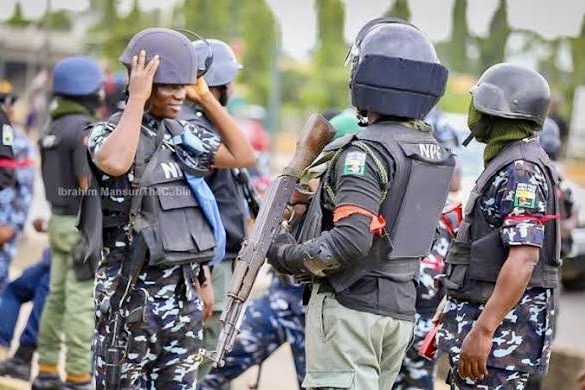
The Nigerian military published accounts of recent operations that killed scores of fighters, but such tactical successes have not stemmed the wider trend of raids, bombings and abductions.
Voices from the ground
Church and civil society leaders have been explicit in their warnings. Bishop Matthew Hassan Kukah told the president in April 2025 that Nigeria was “reaching a breaking point.” He described the country as “gradually becoming a huge national morgue.” This was a pastoral indictment that captured public anxiety and frustration with state responses.
Washington’s independent monitors echoed those concerns. The US Commission on International Religious Freedom’s 2025 findings documented systematic failures by state and local authorities. These authorities failed to stop attacks justified by religious rhetoric. They also did not sufficiently investigate these attacks.
USCIRF recommended renewed CPC designation and urged accountability and protective measures.
Abuja’s defensive play
The Ministry of Foreign Affairs statement rejects what it describes as an external misreading of Nigeria’s complex security environment. It pledges continued partnership with allies who support “genuine peace, stability, freedom and democracy.” It also shifts blame to opaque “special interests” operating across the Sahel.
That rhetorical choice is significant. It reframes domestic governance and security failures as externally aggravated problems and avoids a granular accounting of policy shortfalls.
Security analysts say the government’s public posture is only part of the picture. Behind the scenes Abuja continues to pursue kinetic operations, intelligence sharing and cooperation with regional and international partners.
Those efforts have delivered episodic victories. Yet the insurgent challenge has become an ecosystem. Militias, criminal networks, ethnic militias and jihadist factions exploit local grievances, youth unemployment and porous borders. This complexity disables purely military solutions.
What an endgame should look like
Policymakers and practitioners were interviewed in published reporting and official briefings. They point to a three strand approach. Abuja has so far struggled to implement it in full.
First, intelligence led counterterrorism operations that respect human rights and are paired with transparent accountability for abuses.
Second, sustained local governance and livelihoods programmes that deny militants the social base they exploit.
Third, robust regional diplomacy to cut sanctuaries and choke transit routes across the Sahel. International actors including the UN, humanitarian agencies, and regional armies can help. Yet, they must have long-term political commitments to back field interventions.
The US designation is a diplomatic prod. It is meant to increase the political cost of inaction. The designation aims to compel reforms, like improved protection of religious minorities. It also seeks the prosecution of perpetrators and clearer transparency about security sector conduct.
Abuja’s response will be watched closely in Washington. It will also be monitored in capitals across Europe and Africa. These regions provide funding and operational support for counterinsurgency and aid.
Humanitarian and diplomatic knock on effects
There is a real risk that punitive diplomatic measures will further constrict already tight humanitarian funding channels. Some forms of designation can prompt reductions in non humanitarian assistance, impose visa restrictions on officials, or complicate security cooperation.
At the same time, failure to tackle root causes will deepen the crisis. It will raise the prospect of more refugees and cross border instability. Humanitarian actors warn that aid shortfalls are already affecting relief operations.
Accountability and public trust
For many Nigerians the political question is not whether violence exists but why it persists. Civil society and victim groups demand transparent investigations into both militant atrocity and alleged abuses by security forces.
Without credible, independent mechanisms to investigate, prosecute and remedy violations the cycle of grievance and recruitment will endure.
USCIRF and human rights organisations have repeatedly underscored an important point. Protection of religious freedom requires rule of law reforms. It also requires defensive measures.
A narrow path forward
Abuja faces a constrained set of choices. It can treat the US designation as an affront and harden diplomacy. Or it can accept the designation as a catalyst for reform. It can then engage with international partners on a program. This program couples security, justice, and economic recovery for affected communities.
The delay in adopting rigorous, verifiable metrics of progress will increase problems. External actors are more likely to decouple assistance and leverage. This decoupling, in turn, could make local political settlement and counterinsurgency harder.
Boxed timeline of major attacks and policy responses
Timeline
• 2009 Emergence of Boko Haram in north east Nigeria. Jihadist insurgency escalates.
• 2014 Kidnapping of more than 200 schoolgirls from Chibok focuses global attention and intensifies military campaigns.
• 2015–16 Splintering of Boko Haram and the rise of Islamic State West Africa Province ISWAP. Insurgency expands.
• 2020 US State Department designates Nigeria a Country of Particular Concern citing systematic violations of religious freedom. Waivers later limited sanctions.
• 2021 Nigeria omitted from CPC list amid diplomatic recalibration. USCIRF and some NGOs expressed alarm.
• 2023–25 Violence and displacement continue. Humanitarian dashboards record millions affected in the Lake Chad basin. Recent mass killings prompt renewed US scrutiny.
• 31 Oct 2025 US president announces renewed CPC designation for Nigeria.
• 1 Nov 2025 Nigerian Ministry of Foreign Affairs issues Press Release MFA/PR/2025/103 responding to the US statement.
Concluding judgement
The designation and the ministry’s rebuttal expose a strategic gap. The security challenge is not merely a law enforcement problem. It is a test of state capacity, social contract, and international partnership strategy.
If Abuja wishes to rebut accusations of complicity or neglect, it must produce credible results. These results should be independently verifiable.
There must be fewer civilian deaths, fewer displaced people, and demonstrable prosecutions of perpetrators, including any complicit officials.
Otherwise, the label imposed in Washington will become part of the diplomatic landscape. It will complicate the very cooperation that Abuja says it values.
Follow us on our broadcast channels today!
- WhatsApp: https://whatsapp.com/channel/0029VawZ8TbDDmFT1a1Syg46
- Telegram: https://t.me/atlanticpostchannel
- Facebook: https://www.messenger.com/channel/atlanticpostng