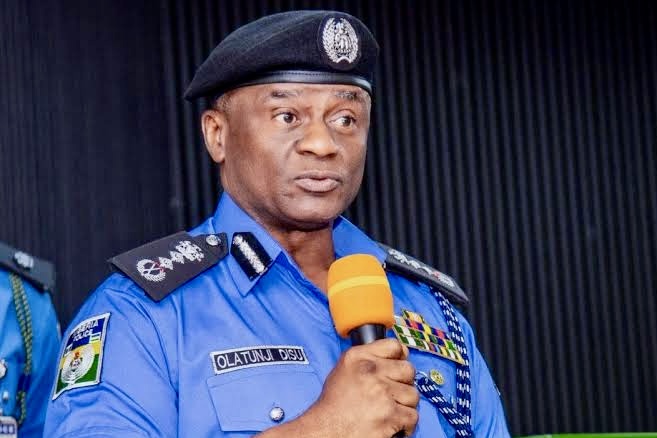
There is sudden churn at the top of the federal police. This has produced a concentrated burst of movement within the senior ranks. Deputy Inspector General Frank Mba has formally left the Nigeria Police Force. There is a wider leadership reset. Tunji Disu was sworn in as the 23rd inspector general. Seven assistant inspectors general were shortlisted for promotion to DIG.
What happened
Sources at Force Headquarters say the departures were expected. A number of senior officers had already cleared their offices. They moved personal items in readiness for retirement.
A serving source shared information with our correspondent. Many DIGs were prepared to go. They were awaiting a clear signal from the centre about timing and succession.
The broader trigger for this flurry of exits and promotions was the exit of the immediate past IGP. The appointment of a new head of the force followed.
Former inspector general Kayode Egbetokun bowed out amid an administrative handover. This transition culminated in the swearing in of Disu by the president.
Observers say that the change at the very top has naturally cascaded through the command structure. This shift has produced a tranche of retirements. It has also led to a compressed promotional timetable.
Who is leaving and who may replace them
DIG Frank Mba leaves a long record of service. Mba is a trained lawyer who read law at the University of Lagos. He was called to the bar in 2002. Mba later obtained a master’s degree in law with distinction from the University of Dundee.
His CV includes spells as a state commissioner of police. He held area commander roles in Lagos. Additionally, he commanded the Border Patrol Force at Force Headquarters.
Mba’s exit marks the departure of a senior officer with both operational and academic credentials.
The Police Service Commission is reported to have slated seven assistant inspectors general for promotion examinations.
The officers named are Margreth Ochalla, Kenechukwu Onwuemelie, and Ishiaku Mohammed. Others include Zachariah Fera, Zango Ibrahim, Umar Shehu Nadada, and Muhammed Abdul Sulaiman.
Those promotions, if confirmed, will create the vacancies the current retiring DIGs will formally vacate.
A spokesman for the commission did not confirm or deny the schedule when contacted. The force’s inside sources suggest this silence is standard practice during discreet promotional screenings.
The PSC’s procedural opacity often fuels speculation about political influence and the pace of internal reforms.
What this means for the force
Institutionally the rapid turnover is a test of resilience. Senior leadership transitions can be stabilising if transparent, meritocratic and swift.
They can also unsettle units and impair continuity if conducted in haste or seen as partisan.
The appointment of Disu as the national police chief will place immediate pressure on middle management. The simultaneous retirement of seasoned DIGs will also contribute to this pressure. Middle management must preserve operational momentum on priority security fronts.
There are three immediate fault lines to watch.
First, the integrity and technical rigour of the PSC promotion exercise.
Second, the capacity of promoted officers to step into DIG roles with minimal disruption.
Third, the political dynamics of appointments under the administration that confirmed the IGP.
Each could shape whether the transition becomes a platform for reform or a cause of fragmentation in the weeks ahead.
Questions and red flags
Our reporting flagged a number of questions that require urgent answers from the force and the PSC.
Was the sequence of retirements planned as part of a coordinated leadership renewal? Or did it result from an abrupt political decision at the top?
The timing, immediately after an IGP change, has aroused suspicion. Some serving officers worry about patronage. They also fear abrupt resets in command policy.
There is also the human factor. Senior officers approaching statutory retirement often hold key institutional memory on investigations, border operations and specialised units.
The loss of that memory needs active mitigation through handover protocols and rapid knowledge transfer. Without it the force risks shortfalls in complex operations that require continuity.
Voices inside and outside the force
One serving official spoke on condition of anonymity. The exits are not just personal decisions. They are calculated responses to a new chain of command.
“The DIGs are very ready to leave but they are waiting for signals. Many of them had moved their belongings from their offices in anticipation of their retirement. Maybe when the AIG slated for promotion comes, they will leave,” the source said.
That remark captures the mixture of resignation and tactical patience among the senior ranks.
Independent analysts welcome the opportunity for fresh leadership but warn against rapid churn without an accountability framework.
A former senior police commander noted that promotions must be accompanied by clear benchmarks on conduct. There should also be clear measures on anti-corruption and operational performance. Otherwise the reshuffle risks perpetuating old defects under new insignia.
What to watch next
The outcome of the PSC promotion exams and the official gazette that will formalise any appointments.
Whether the newly promoted DIGs will be posted to commands that leverage their experience or used as political placemen.
How the force navigates ongoing security crises while managing an internal personnel transition.
Editorial take
Leadership transitions present rare opportunities. If the PSC conducts the promotions transparently, the change can become a catalyst for reform. New DIGs must step into roles defined by performance objectives. If not, the shake up will be remembered as yet another administrative jolt that left more questions than answers.
Follow us on our broadcast channels today!
- WhatsApp: https://whatsapp.com/channel/0029VawZ8TbDDmFT1a1Syg46
- Telegram: https://t.me/atlanticpostchannel
- Facebook: https://www.messenger.com/channel/atlanticpostng