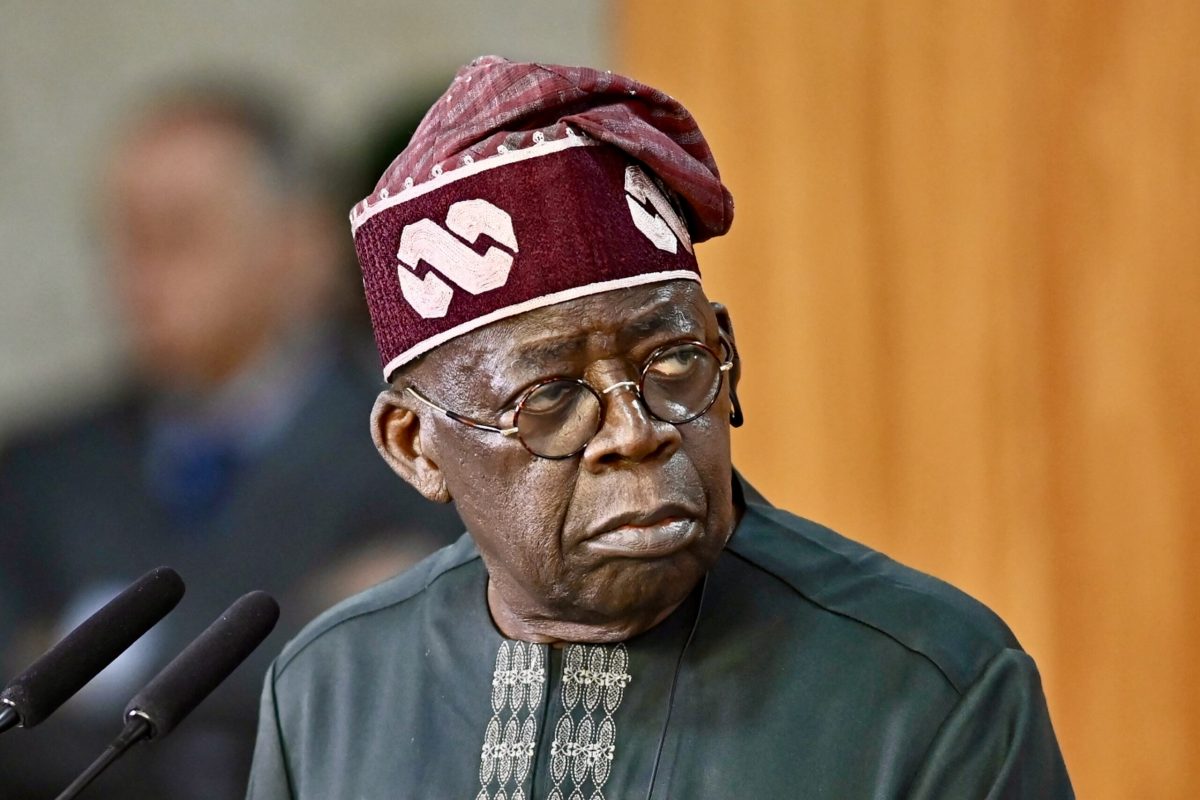
ABUJA, Nigeria — President Bola Ahmed Tinubu has approved a new regulatory and fiscal framework for Nigeria’s deep offshore oil and gas industry, in what the Federal Government says could unlock up to US$50 billion in new investmentand revive a generation of offshore projects that have remained stranded by cost pressures, regulatory uncertainty and prolonged negotiations.
The announcement, made on Tuesday, 11 August 2026, marks a significant change in Abuja’s approach to attracting capital into some of Nigeria’s most expensive petroleum developments.
Rather than negotiating fiscal incentives separately for individual projects, the Presidency says the new framework will establish transparent eligibility requirements, implementation procedures and a more predictable investment architecture for qualifying deep offshore developments.
Reuters independently reported that the new framework is designed to replace project-specific negotiations with a rules-based system intended to give international investors greater certainty. The government’s immediate priority is the long-delayed Bonga South West project, which Reuters described as an approximately $10 billion development expected to reach a final investment decision in 2027.
The reform is therefore bigger than Bonga South West.
The central question is whether Nigeria has finally learnt that possessing large oil reserves is not enough to attract capital in a global industry where investors can move billions of dollars between competing jurisdictions.
From bespoke bargains to a rules-based system
For years, Nigeria’s deepwater petroleum industry has been caught in a difficult cycle.
International oil companies have complained about project economics, regulatory uncertainty, high operating and development costs, contract delays and the time required to secure approvals. At the same time, successive Nigerian governments have struggled to balance the need for competitive fiscal terms with public pressure to protect the country’s share of petroleum revenues.
Tinubu’s latest initiative attempts to change that equation.
According to the Presidency, the Deep Offshore Oil and Gas Projects Incentives (Tax Remission) Order, 2026establishes a framework under which eligible projects can qualify for incentives according to defined rules rather than relying on prolonged negotiations with government officials.
That distinction matters.
An investment decision on a deepwater project can involve billions of dollars and a development timeline stretching over decades. Investors therefore require more than a favourable announcement by a government; they want confidence that the fiscal and regulatory assumptions underpinning their models will survive changes in personnel, politics and administrative interpretation.
That is precisely the certainty Tinubu says Nigeria is attempting to provide.
“The countries that attract long-term investment are not necessarily those with the greatest natural resources. They are the ones that provide the greatest certainty.”
The President added:
“This reform reflects our determination to build an investment environment defined by clear rules, strong institutions and enduring partnerships.”
His argument goes to the heart of Nigeria’s upstream investment problem: the country has never suffered from a shortage of hydrocarbons. Its problem has increasingly been converting geological potential into commercially bankable projects.
The $50 billion question
The headline figure is enormous.
The Presidency says the framework has the capacity to support up to $50 billion in new deep offshore investment. Reuters also reported the government’s $50 billion estimate, while noting that Nigeria has struggled to attract new upstream capital because of regulatory uncertainty, high project costs and competition from other producing jurisdictions.
But $50 billion should not be interpreted as $50 billion of immediately committed cash.
That distinction is crucial.
The figure represents the potential investment pipeline the government hopes the new framework will unlock. It is not equivalent to signed financing agreements, final investment decisions or actual capital expenditure already committed to Nigerian fields.
The first major test remains Bonga South West.
And that is where the numbers become particularly interesting.
In January 2026, Shell Chief Executive Wael Sawan indicated that Bonga South West could involve up to $20 billion in total spending if the project reached FID, with roughly half associated with capital expenditure and the remainder with operating and other expenditure over time. Reuters also reported that Shell had invested around $7 billion in Nigerian projects during the Tinubu administration, including Bonga North and the HI gas project.
The current Presidency statement, meanwhile, identifies Bonga South West as an approximately $10 billion project.
The apparent difference is not necessarily contradictory.
The $10 billion figure can be understood as a development-scale estimate, while Shell’s earlier $20 billion figure included broader spending over the life of the project. But Abuja will need to communicate the distinction clearly because headline investment figures can easily create unrealistic expectations among Nigerians.
Bonga South West: the project that became a symbol of delay
Bonga South West-Aparo has become one of the most recognisable examples of Nigeria’s inability to rapidly turn offshore resources into production.
The project involves the development of resources in the deepwater Bonga South West-Aparo area and is designed around a major floating production, storage and offloading system.
Industry reporting in January showed that Shell had restarted preparatory procurement activity, including work associated with a planned 150,000 barrels-per-day FPSO. The restart was significant because the project had remained stalled for years, but the procurement activity did not itself amount to a final investment decision.
President Tinubu subsequently made his expectation explicit during his January meeting with Sawan:
“My expectation is clear: Bonga South West must reach a final investment decision within the first term of this administration.”
The State House had already announced on 22 January that the President approved targeted, investment-linked incentives for the project and directed his energy adviser, Olu Verheijen, to facilitate their gazetting.
The January incentives were described by Tinubu as:
“not blanket concessions”
The President said they were instead:
“ring-fenced and investment-linked, focused on new capital and incremental production, strong local content delivery, and in-country value addition.”
The August framework appears to take that philosophy one step further by establishing a wider mechanism that can potentially be applied to multiple qualifying developments rather than negotiating every project separately.
The tax issue that could define the reform
This is also where the most important scrutiny of the new framework begins.
Nigeria has spent years trying to make its upstream fiscal regime competitive without conceding too much of the state’s petroleum revenue.
In 2025, Tinubu signed the Upstream Petroleum Operations (Cost Efficiency Incentives) Order, which introduced performance-linked tax credits for operators achieving prescribed cost reductions. The framework was designed to reward efficiency while protecting government revenues, with tax credits capped at 20 per cent of annual tax liability under that order.
Bonga South West subsequently became the subject of intense debate over another production-linked incentive.
A July 2026 report citing Bloomberg said Nigeria had agreed to a $11.50-per-barrel tax incentive associated with the Bonga South West project. Nigerian reporting around the announcement described the measure as a significant fiscal support mechanism designed to push the project towards FID.
That is why the details of the new Tax Remission Order matter enormously.
The government is asking investors to see Nigeria as a more predictable place to commit long-term capital. But Nigerians are equally entitled to ask a different question:
How much revenue is the country giving up in exchange for the investment, and what will the country receive in return?
That is not an argument against incentives.
It is an argument for transparency.
Every dollar of tax relief should ultimately be assessed against the additional production, foreign exchange inflows, employment, local procurement, government revenue and wider economic activity that the project generates.
The relevant test is therefore not whether an incentive looks generous in isolation.
The test is whether Nigeria is better off with a producing project under a transparent incentive regime than with a commercially stranded field producing nothing.
Tinubu’s bigger gamble: making Nigeria competitive for mobile capital
The deep offshore reform comes at a critical moment for Nigeria’s petroleum economy.
The country’s traditional oil industry has been under pressure from declining investment in mature assets, oil theft, operational difficulties, increasingly demanding development economics and competition from newer petroleum provinces.
Capital is mobile.
An oil company does not have to develop every promising field simply because the geological resource exists. It compares fiscal terms, execution risk, security, infrastructure, political stability, contracting timelines, taxation and expected returns across countries.
Nigeria is competing not merely against Angola.
It is competing against Guyana, Brazil and other emerging or established offshore provinces that have attracted major international capital.
That is why the Tinubu administration has increasingly focused on reducing project delays and improving upstream economics.
The 2025 cost-efficiency order, for example, explicitly recognised the need to reduce the sector’s high operating costs and improve Nigeria’s competitiveness. The order requires benchmarking of operating costs across onshore, shallow-water and deep offshore terrains.
The new deep offshore framework builds on that direction.
The objective is not simply to persuade Shell to invest.
It is to convince the global petroleum industry that Nigeria has become sufficiently predictable to justify multi-billion-dollar commitments.
NNPC gets a critical role
Another important provision of the new framework is its treatment of NNPC Limited.
The Presidency says NNPC, as the government’s nominated counterparty under the Production Sharing Contracts, has been authorised to proceed with amendments to eligible PSCs needed to implement the framework.
That gives the national oil company an unusually important execution role.
A weak implementation process could undermine the very certainty the new framework is designed to create.
Contract amendments will have to be handled with precision. Eligibility rules will need to be applied consistently. Tax authorities, regulators and petroleum institutions must interpret the framework in the same manner, while investors will expect government agencies to honour the terms approved under the new regime.
The greatest danger is therefore no longer simply designing a good policy.
It is bureaucratic inconsistency after the policy has been announced.
Local content: the promised Nigerian dividend
The Presidency has also placed Nigerian industrial participation at the centre of the reform.
Olu Arowolo-Verheijen, the President’s Special Adviser on Energy, said qualifying developments will be expected to maximise execution within Nigeria wherever commercially and technically feasible.
She said:
“Projects qualifying under the framework will maximise execution within Nigeria wherever commercially and technically feasible, strengthening domestic engineering, fabrication, marine logistics, technical services and project management.”
She added:
“The objective is not only to increase investment and production, but also to create skilled jobs, deepen local supply chains and position Nigeria as Africa’s regional hub for deep offshore project execution.”
This could become one of the most economically important parts of the policy.
Nigeria has often attracted major oil projects while importing significant amounts of the sophisticated equipment and expertise required to execute them.
The real industrial test will therefore be whether more of the engineering, fabrication, subsea services, marine logistics, project management and technical work associated with billions of dollars of offshore investment can be captured by Nigerian companies.
Local content should not become a slogan attached to imported projects.
It should become a mechanism for transferring industrial capability into Nigerian businesses.
What can go wrong?
The temptation in Abuja will be to celebrate the $50 billion figure.
The more difficult work begins now.
First, the government must make the rules genuinely transparent.
Second, the framework must be stable enough for investors to incorporate it into project economics.
Third, regulators must move at the speed required by global energy investment decisions.
Fourth, the promised Nigerian content must be measurable.
And fifth, Nigerians must be able to establish how much government revenue is being sacrificed for each dollar of investment attracted.
There is also a timing issue.
Shell’s January commitment was still conditional upon achieving FID, with 2027 identified as the likely target.
That means Nigeria has not yet reached the finish line.
It has created a potentially more favourable road to it.
Why this announcement matters beyond oil
If the framework works, the consequences could extend far beyond crude production.
Large offshore developments generate demand for engineering companies, fabrication yards, shipping and marine services, logistics providers, financial institutions, insurance companies, telecommunications firms, hospitality businesses and thousands of skilled workers.
They also generate government revenues over long project lifecycles and can increase foreign exchange earnings.
But history also warns against celebrating before the cash begins to flow.
Nigeria has announced major petroleum investment initiatives before. Some have delivered. Others became casualties of shifting policies, contract disputes, financing difficulties and bureaucratic delays.
That is why Bonga South West has become such an important benchmark.
If the project reaches FID in 2027, advances into construction and ultimately delivers new production, the Tinubu administration will have a powerful case that its upstream reforms are beginning to work.
If another deadline slips, contractors withdraw, fiscal disputes return or the framework becomes trapped in administrative implementation, the $50 billion announcement could eventually be remembered as another ambitious Nigerian investment promise.
The real verdict will come from the barrels
President Tinubu has framed the reform around certainty.
That is probably the correct strategic diagnosis.
Nigeria does not need another announcement promising that it is “open for business”. International oil companies have heard that message repeatedly.
What investors need is a system in which the rules are clear, the economics are competitive, contracts are enforceable, approvals are predictable and government institutions operate consistently.
And what Nigerians need is equally clear: investment must translate into actual production, government revenue, jobs, industrial capacity and foreign exchange.
Tinubu put the challenge plainly:
“We are creating the conditions for capital to flow, for Nigerian businesses to grow, for our people to prosper and for our natural resources to deliver lasting national value.”
That is a powerful promise.
But for Nigeria’s deep offshore industry, the accounting starts now.
The $50 billion is still a target.
The tax incentives are still a policy instrument.
Bonga South West is still awaiting its decisive investment milestone.
The ultimate evidence of success will not be found in the size of the Presidential press release.
It will be found offshore — in drilling rigs, subsea infrastructure, Nigerian fabrication yards, new jobs, rising production and, ultimately, the revenue that reaches the Nigerian Treasury.
That is where the Tinubu deepwater gamble will finally be judged.
Follow us on our broadcast channels today!
- WhatsApp: https://whatsapp.com/channel/0029VawZ8TbDDmFT1a1Syg46
- Telegram: https://t.me/atlanticpostchannel
- Facebook: https://www.messenger.com/channel/atlanticpostng