President Tinubu’s Abu Dhabi Visit Yields UAE Trade Pact, Investment Summit, and $30bn Green Finance Push
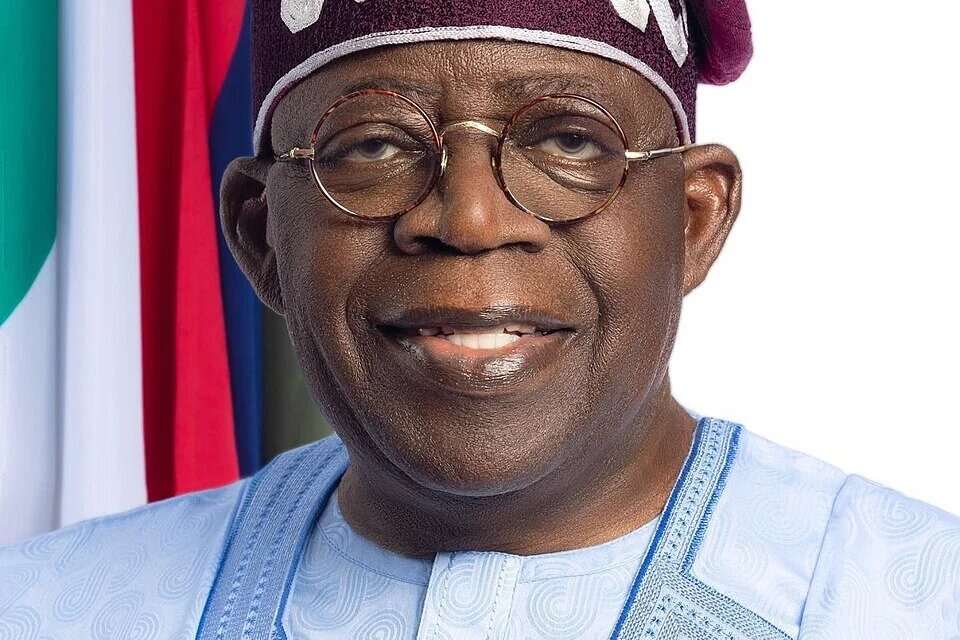
President Bola Ahmed Tinubu has returned to Nigeria after a high-profile visit to the Abu Dhabi Sustainability Week 2026 (ADSW 2026) in the United Arab Emirates (UAE), where he led Nigeria’s delegation and advanced several landmark initiatives.
During the summit, Nigeria secured a Comprehensive Economic Partnership Agreement (CEPA) with the UAE. This event is a global forum that convenes world leaders, investors, and policymakers. It aims to drive sustainable development and clean energy transition. Nigeria announced a joint investment forum to be hosted in Lagos. It also unveiled plans to mobilise an unprecedented $30 billion annually for climate and green industrial projects.
These outcomes mark a significant diplomatic and economic milestone for Nigeria. They align with President Tinubu’s agenda to attract foreign investment. The agenda also aims to create jobs and steer Africa’s largest economy toward sustainable growth.
Tinubu at Abu Dhabi Sustainability Week 2026
UAE President Sheikh Mohamed bin Zayed Al Nahyan invited President Tinubu to ADSW 2026 in Abu Dhabi. He attended the event from January 11–15, 2026. He was accompanied by senior ministers like Nigeria’s Industry & Trade Minister Dr. Jumoke Oduwole.
The summit, themed “The Nexus of Next: All Systems Go”, brought together heads of state, global CEOs, innovators, and civil society leaders. They aimed to tackle climate change, renewable energy, and inclusive development.
Tinubu’s active participation underscored Nigeria’s renewed engagement with international partners on sustainability and economic reform.
He delivered Nigeria’s national statement. He emphasised that climate action must go hand-in-hand with energy access. Job creation and social inclusion are also important. This is especially crucial for an emerging economy balancing “industrialisation and decarbonisation”.
Observers noted that Nigeria’s presence positioned it “directly before global financiers.” It was also seen by development institutions and technology leaders seeking bankable green projects in emerging markets.
The Nigerian delegation also showcased local clean-tech innovations at a country pavilion. This effort drew praise from industry figures. It signaled the country’s openness for green investment.
Crucially, Tinubu’s outreach in Abu Dhabi is already translating into concrete opportunities for Nigeria.
Climate advocate Sam Onuigbo noted that the unveiling of Nigeria’s new Carbon Market Activation Policy and National Carbon Registry at the summit sent a clear signal to investors. It showed that Nigeria is “open, ready and structured to attract climate finance” by monetising emission reductions.
He stressed that such platforms “where climate ambition meets funding”! help Nigeria access partners for large-scale renewable energy and climate-smart infrastructure – sectors vital to closing Nigeria’s vast energy gap.
Indeed, an estimated 85 million Nigerians (roughly 43% of the population) still lack access to grid electricity. This situation makes international investment in solar, wind, and off-grid solutions critical.
By engaging at ADSW with a clear message of aligning climate goals with development needs, Nigeria reinforced its credibility on the global stage. It gained diplomatic leverage to shape climate-finance policies that consider African realities like energy poverty and climate vulnerability.
Nigeria and UAE Seal Landmark Economic Partnership
On the sidelines of ADSW, Nigeria and the UAE consummated a historic Comprehensive Economic Partnership Agreement (CEPA). This is a wide-ranging trade and investment pact aimed at elevating bilateral economic relations.
The agreement was witnessed by President Tinubu. It was also witnessed by UAE’s President Sheikh Mohamed bin Zayed. Minister Jumoke Oduwole signed it for Nigeria and Dr. Thani bin Ahmed Al Zeyoudi, the UAE’s Minister of Foreign Trade.
CEPA is designed to significantly deepen cooperation, boost two-way trade flows, spur investments, and facilitate technology transfer across strategic sectors.
Key areas span energy (including renewables), infrastructure, agriculture, mining, manufacturing, logistics, aviation, and emerging green industries. This aligns tightly with Nigeria’s push to diversify its oil-dependent economy. The goal is to attract long-term foreign direct investment.

Officials describe the Nigeria–UAE CEPA as both “historic and strategic”. This is Nigeria’s first comprehensive trade pact with a Gulf nation. It comes after a period of mended relations. The UAE had recently lifted a 21-month visa ban on Nigerians in late 2023 and resumed flight links after resolving bilateral disputes.
The new agreement marks a fresh start. It positions the UAE as Nigeria’s top trading partner in the Gulf. It also positions Nigeria as a key West African gateway. This sets the stage for a deeper economic alliance.
Non-oil trade between the two countries was about $2.4 billion in 2022, indicating substantial room for growth. Under the CEPA, both sides will progressively eliminate import tariffs on thousands of goods to stimulate trade.
The UAE has agreed to duty-free access for over 7,000 Nigerian products. This agreement enables immediate tariff-free entry for Nigeria’s agricultural and industrial exports into the UAE market. These exports include fish, cereals, oil seeds, spices, chemicals, and pharmaceuticals.
Within 3–5 years, tariffs will also be lifted on Nigeria’s exports of machinery, vehicles, and textiles. This will give Nigerian manufacturers competitive access to one of the world’s busiest trading hubs.
Conversely, Nigeria will eliminate tariffs on about 6,000 UAE-origin products. This will focus largely on industrial inputs, capital goods and machinery. These can boost Nigeria’s productive capacity.
Sensitive items on Nigeria’s import prohibition list remain protected. However, crucial equipment and materials for industry will become cheaper. This change supports local businesses. Nigeria made commitments in 99 service categories. These span business, finance, ICT, transport, tourism, and more. The aim is to facilitate UAE investment in Nigeria’s service sectors.
Importantly, the pact provides assurances and clarity for investors, addressing longstanding impediments to UAE capital flows into Nigeria.
CEPA guarantees fair treatment and intellectual property protection. This is expected to bolster investor confidence. It will attract UAE investment into Nigerian industries, from agriculture and logistics to fintech and real estate.
Early signals are encouraging. UAE institutional investors have started increasing their involvement in Nigeria. First Abu Dhabi Bank is helping finance major infrastructure like the Lagos-Calabar coastal highway.
The agreement’s signing is set to accelerate several deals in the pipeline across agriculture, digital banking, real estate and transportation.
Dr. Oduwole noted that CEPA strategically positions Nigeria as a gateway for global investors. It provides access to the broader African market under the 1.4 billion-consumer AfCFTA (African Continental Free Trade Area).
Indeed, the UAE has pursued similar CEPAs with countries like India, Indonesia, Israel and Turkey in recent years. It sealed its first African CEPA with Mauritius and Congo in 2023.
The Nigeria–UAE deal – coming on the heels of a UAE–Kenya CEPA – marks the Gulf nation’s first such partnership in West Africa. This underscores Nigeria’s economic significance on the continent.
Analysts predict the pact will unlock new markets for Nigerian exporters. It will also open Nigeria’s doors to Emirati capital and technology. This could potentially create thousands of jobs in manufacturing and services as industries scale up for export.
Both governments have committed to swift implementation. Nigeria’s Customs Service, Export Promotion Council, and Investment Promotion Commission are preparing to ensure businesses can fully leverage the agreement’s benefits. This is done under a “Nigeria First” directive.
Investopia Lagos 2026: Joint Nigeria–UAE Investor Summit
President Tinubu announced an initiative to turn diplomatic gains into concrete investment inflows. Nigeria will co-host the UAE’s “Investopia” investment forum in Lagos this February.
Investopia is a global business conference platform founded in the UAE. It convenes investors, corporate leaders, and policymakers. They gather to explore emerging markets and opportunities. Hosting an Investopia Global event in Lagos in 2026 is significant. It’s the first ever on African soil. This event is a coup for Nigeria’s investment promotion efforts..
The forum is scheduled for early February at the Eko Convention Centre. It aims to showcase Nigeria as a premier destination for international capital. It also highlights innovation and partnerships in the post-pandemic era.
According to the Presidency, the Lagos Investopia will bring together stakeholders. The aim is to “transform opportunities into commitments and ideas into investment”. This will fast-track deals in sectors highlighted by the new CEPA and Nigeria’s reform agenda.
By co-hosting alongside the UAE, Nigeria hopes to tap into the Gulf nation’s network of financiers and industry captains. The initiative directly results from Tinubu’s talks in Abu Dhabi. It signals the UAE’s confidence in Nigeria’s economic direction.
Topics at the forum are expected to span renewable energy projects and tech startups. They will also cover agribusiness, mining, infrastructure PPPs, and Nigeria’s burgeoning digital economy. These topics dovetail with the CEPA’s focus areas.
Officials project that a successful Investopia Lagos could catalyse billions in new investment agreements. It also burnishes Lagos’s image as a rising global financial hub.
“We warmly invite our partners to join us and help build the next chapter of sustainable and shared prosperity for Nigeria, Africa, and the world,” Tinubu urged at the summit, extending an open hand to global investors.
Business analysts observe Nigeria’s government enacting bold economic reforms. These reforms have occurred in recent months. They include currency floatation and fuel subsidy removal. These changes aim to improve the business climate.
These reforms have posed short-term challenges at home. The government credits them with boosting investor interest. They cite a 21% growth in non-oil exports. There are also over $50 billion in new investment commitments across sectors since mid-2023.
The Investopia event will seek to capitalise on this momentum. If successful, it could become an annual fixture. It could channel foreign direct investment. This investment can spur job creation and technology transfer in Nigeria’s priority industries.
$30 Billion Climate Finance Ambition and Energy Transition Plans
During his ADSW address, President Tinubu made an ambitious declaration. He stated that Nigeria aims to mobilise up to $30 billion per year. This will be in climate finance and green investment to power its energy transition and industrial decarbonisation goals.
This target is roughly triple previous estimates of the country’s annual climate finance needs. It underscores the scale of Nigeria’s commitment to fighting climate change. This commitment also involves uplifting its economy.
Under Nigeria’s Energy Transition Plan, the country aims to achieve net-zero greenhouse emissions by 2060. It also plans to expand electricity access to all citizens.
The Nigerian Extractive Industries Transparency Initiative (NEITI) recently projected that about $1.9 trillion is required by 2060 (around $10 billion annually) for Nigeria to reach net-zero, highlighting a massive financing gap.
Some international analyses argue the figure may need to rise to $17–29 billion per year. This increase is necessary to fully fund Nigeria’s clean energy shift. It will also prevent stranded fossil-fuel assets.
Tinubu’s $30 billion-per-year rallying call signals an intent to meet these estimates. It also shows a desire to exceed them. He will likely leverage private capital alongside public funds to ensure Nigeria’s climate objectives are well-financed.
He used the ADSW platform to advocate a “fundamental shift” in how global climate finance is structured. He argued that current models relying on sovereign guarantees “unfairly penalise developing economies.”
Instead, Tinubu urged for blended finance and first-loss capital mechanisms. These mechanisms attract large-scale private investment into green projects without overburdening national budgets.
In this approach, development banks and donors would absorb initial risks, also known as junior capital. This action would incentivize private investors to fund renewable energy. It would also encourage investment in climate-resilient agriculture and green industrial ventures in countries like Nigeria.
Such mechanisms are increasingly seen as vital to closing the climate investment gap across Africa.
Nigeria is backing these words with concrete policy actions. Tinubu highlighted that his administration has strengthened Nigeria’s climate governance framework in the past year. This was achieved by adopting a National Carbon Market Activation Policy. Additionally, they launched a National Carbon Credit Registry.
These initiatives establish the infrastructure for Nigeria to sell carbon credits from emissions-reducing projects. Examples include reforestation, clean cooking stoves, or methane capture. This could potentially unlock new revenue streams for sustainable development.
Nigeria is one of the first African nations to set up a domestic carbon trading system. This aims to improve transparency. It also boosts investor confidence in emissions reduction efforts.
On the energy front, the Electricity Act 2023 was highlighted as a “central pillar” of Nigeria’s reforms. The new law overhauls Nigeria’s power sector. It decentralises electricity generation and distribution. This change empowers states and private players to develop independent grids. They can also create renewable projects to serve communities left off the national grid.
This is a critical step. Nigeria has chronic power shortages. Only 60% of Nigerians have reliable access to electricity. The remainder often rely on polluting generators.
Alongside the Electricity Act, Nigeria launched a $500 million fund for distributed renewable energy (DRE) projects. This fund is backed by the Sovereign Investment Authority. The goal is to support solar mini-grids and off-grid electrification.
An additional $750 million World Bank program (the DARES initiative) is expected to expand clean electricity access to 17.5 million Nigerians through solar and battery solutions.
These efforts not only cut carbon emissions. They also tackle energy poverty. Tinubu asserts that “the foundation of every modern economy is electricity”.
Tinubu reaffirmed that Nigeria will pursue industrial growth alongside its climate targets. These goals are encapsulated in the ethos of a “just and inclusive” transition.
He stressed that Nigeria will continue to develop strategic minerals. These include lithium and other critical minerals needed for clean technologies. There will be an emphasis on local processing and value addition to spur job creation at home.
Notably, Nigeria has drawn over $50 billion in investment pledges across sectors since mid-2023. The President’s economic reforms and climate initiatives are gaining traction.
“We are ready to work with partners across the world to ensure the next era of development is not only green and inclusive, but just and enduring,” Tinubu told the summit, underlining that Nigeria’s climate action will be people-centred and growth-oriented.
A New Chapter in Nigeria–UAE Relations and Sustainable Growth
President Tinubu’s Abu Dhabi trip and its outcomes signal a new chapter in Nigeria’s international economic diplomacy. The swift finalisation of the Nigeria–UAE CEPA, in particular, shows Abuja’s determination. They are eager to open up trade and investment opportunities. This can revitalise the economy.
It also solidifies ties with the UAE. The relationship just over a year ago was strained by flight suspensions and visa restrictions. Now, it has evolved into one of partnership and mutual opportunity.
The UAE gains a strategic foothold in Africa’s biggest market. It serves as a gateway to the continent. This complements its other recent CEPAs across Asia and the Middle East.
For Nigeria, the agreement is a tool to drive non-oil exports and earn forex. It aims to bring in new technology and skills from a globally connected trade hub.
If effectively implemented, it could help diversify Nigeria’s export basket. Historically, this export basket has been dominated by oil. It could also create hundreds of thousands of new jobs in agriculture. Additionally, manufacturing and services linked to export value chains could benefit.
Equally important is the momentum Nigeria is building in the sustainable development arena. Nigeria is proactively seeking $30 billion in climate financing annually. It is also instituting reforms to absorb such capital. Through these actions, Nigeria is presenting itself as a leader among developing nations. It strives for a balance between growth and green stewardship.
The country’s stance at ADSW emphasized fairness in climate finance. It also showcased readiness via domestic reforms. This approach resonated with many Global South delegates.
It reinforces Nigeria’s moral authority to advocate for Africa’s needs in global climate forums. This is crucial, especially as the continent receives only a small fraction of global climate investment relative to its population and needs.
Domestically, successful mobilisation of climate funds at the scale envisioned could be transformative. It would accelerate electrification for millions of households. It would also support electric public transport in cities and climate-proof agriculture for farmers. Additionally, it would stimulate green industries ranging from solar panel assembly to electric vehicle manufacturing.
Yet, experts caution that turning these grand announcements into reality will need diligent follow-through.
Trade agreements like the CEPA must be backed by effective policy implementation. This includes simplifying customs procedures and improving product standards. These measures will ensure that Nigerian businesses can truly access the UAE market.
Securing $30 billion in climate finance will need robust project pipelines. It also needs transparent governance and continued reforms to keep investor confidence.
The forthcoming Investopia Lagos 2026 forum will be an early litmus test of Nigeria’s ability. It will show how well Nigeria can convert international goodwill into actual investment deals on the ground.
Preparations are already underway in Lagos. Global investors will be watching closely. Nigeria needs to present a compelling case through bankable projects. It should also offer a favorable investment climate.
In summary, President Tinubu’s UAE engagement has yielded tangible gains. These include a major trade pact and an upcoming investment summit. There is also heightened global support for Nigeria’s climate ambitions.
The Nigerian public can expect benefits in several areas. These include potential new jobs and improved infrastructure. There will also be increased capital flowing into emerging sectors like renewables and technology.
While challenges persist, the tone of the visit was optimistic and forward-looking. As Special Adviser Bayo Onanuga put it,
Tinubu’s participation at ADSW “underscores Nigeria’s commitment to leveraging international platforms to advance climate resilience, economic reforms and investment-led development”.
Strategic partnerships are being forged. Homegrown reforms are taking root. Nigeria appears poised to turn these commitments into concrete progress. The nation is steering toward a more diversified, greener, and prosperous future in the years ahead.
Follow us on our broadcast channels today!
- WhatsApp: https://whatsapp.com/channel/0029VawZ8TbDDmFT1a1Syg46
- Telegram: https://t.me/atlanticpostchannel
- Facebook: https://www.messenger.com/channel/atlanticpostng