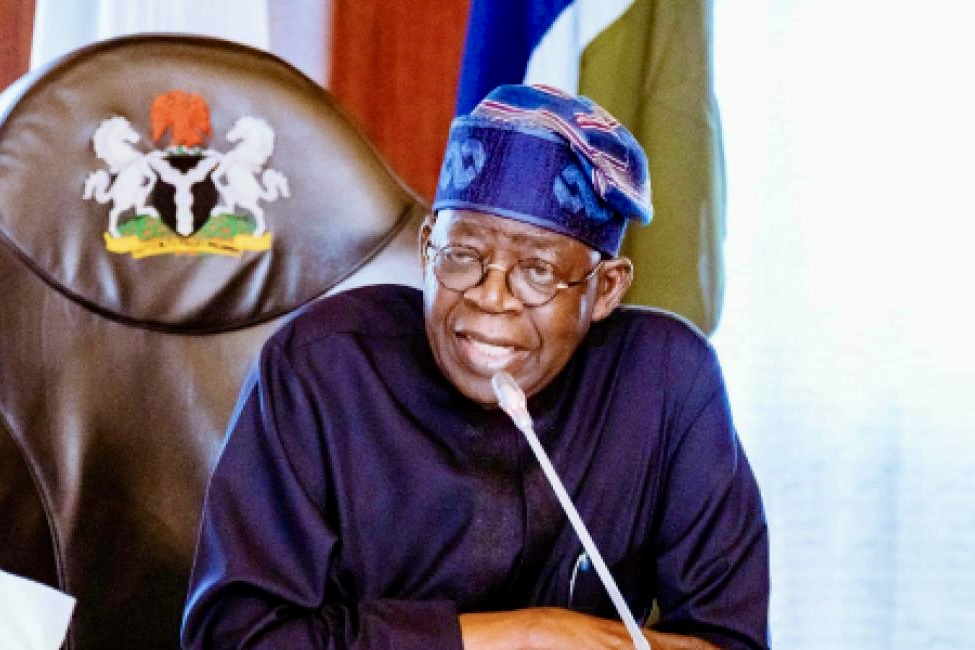
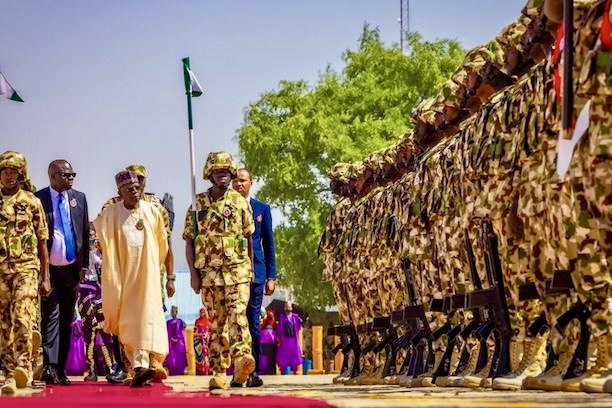
President Bola Ahmed Tinubu on Friday, October 24, 2025 announced a sweeping reshuffle of Nigeria’s military high command in a State House statement signed by Sunday Dare. The presidency named General Olufemi Oluyede as Chief of Defence Staff, Major-General W. Shaibu as Chief of Army Staff, Air Vice-Marshal S.K. Aneke as Chief of Air Staff, and Rear Admiral I. Abbas as Chief of Naval Staff. Major-General E.A.P. Undiendeye remains Chief of Defence Intelligence. All appointments, the release said, take immediate effect.
This is not a routine personnel change. The arrest of senior soldiers in an alleged plot to overthrow the civilian government occurred weeks ago. The timing highlights an administration under pressure. It needs to restore order and reassert control over the security apparatus. Premium Times reported the arrests and linked them to heightened unease at the heart of the military.
Why the shake up matters
Nigeria faces a multi-front security emergency. In the first half of 2025, insurgents and armed bandits killed more people than in all of 2024. This is according to widely cited monitoring data. In the first six months of 2025, the figure stood at 2,266 fatalities. This is an increase from 1,083 for the same period in 2024.
The military is stretched across counter-insurgency operations in the north east. It also addresses banditry and mass kidnappings in the north west. There is communal violence in the Middle Belt. Additionally, there is a rising separatist challenge in parts of the south east.
Those statistics frame the presidency’s explanation that the change is to “strengthen the national security architecture.” But effective leadership will need more than new names. It will demand operational reorientation, better intelligence and logistics, and a political will to reform command and control across services.
The country’s 2025 security and defence budget shows heavy personnel costs and limited capital spending. This is a structural constraint. The new chiefs must manage it while prosecuting a complex campaign against asymmetric threats. BudgIT’s breakdown of 2025 allocations highlights these competing pressures.
Who are the appointees
General Olufemi Oluyede is a career officer. He has a record of frontline commands. He also has past appointments inside the army high command. He was widely reported as a senior figure in recent operations. He served in domestic counterinsurgency roles. Additionally, he took part in international peacekeeping roles.
Christopher Musa, the outgoing Chief of Defence Staff, was appointed in June 2023. He led the armed forces during a prolonged period of intensified operations against insurgents and bandits.
Major-General W. Shaibu is the new Chief of Army Staff. He has served in theatre command roles. He is known within military circles for his operational experience in the northeast.
Air Vice-Marshal S.K. Aneke has an established service record in the Nigerian Air Force and Rear Admiral I. Abbas will inherit a navy tasked with protecting critical offshore assets and the gulf.
Major-General E.A.P. Undiendeye retains the Defence Intelligence brief, a signal from the presidency that continuity in military intelligence is regarded as crucial.
Legal and parliamentary constraints
Historically, presidents have announced service chiefs with immediate effect. Nonetheless, there is a constitutional and legal debate about the role of the National Assembly in confirmation.
Media and legal commentary after earlier reshuffles noted that nominations often need Senate confirmation. Newly appointed chiefs might serve in an acting capacity pending parliamentary endorsement.
Observers will watch whether the Senate summons the nominees for confirmation hearings and how quickly the legislature acts. The confirmation process matters not only for legality but for the legitimacy of command.
What the change does not solve
Personnel changes offer an organising narrative. Nevertheless, they will not by themselves close intelligence gaps. They can’t fix logistics shortfalls. They also can’t rewind the political and socioeconomic drivers of violence.
The military’s leadership problems are structural as much as personal. Past mass reshuffles under other administrations have sometimes produced short term morale effects without sustained operational improvement.
The Buhari era reshuffle in 2021 is an example where fresh faces faced the same entrenched challenges that preceded them. Analysts warn the new team must combine immediate tactical gains with reforms to sustain long term security outcomes.
Immediate tests and red flags
Within days the new chiefs will face hard tests. Restoring security in persistent flashpoints will be the first litmus test. It is equally urgent to set up a clear interface with civilian authorities. This is to make sure operations respect rule of law and human rights obligations.
Intelligence sharing across agencies must improve and procurement and maintenance chains must be fixed to turn policy into ability. If the presidency expects agility, the new leadership will need to move fast on operations.
At the same time, it must build institutional resilience. Reuters and global monitors warn that failure to stabilise the security picture will deepen humanitarian and governance crises.
What to watch next
- Whether the Senate moves quickly to confirm the appointees and the tenor of any confirmation hearings.
- Operational directives from the new Chief of Defence Staff and measurable changes in casualty or kidnapping trends.
- Any public explanation from the Ministry of Defence on changes to force posture, procurement or intelligence sharing.
President Tinubu’s October 24, 2025 decision is a high stakes reset of Nigeria’s armed forces leadership. The appointment of General Olufemi Oluyede is intended to signal renewed vigour. Appointing the new service chiefs also aims to strengthen the fight against insecurity. But appointment is the easy act.
Delivering security for citizens will need tactical competence, strategic reform, and political oversight. The country’s rising toll of violence sets a narrow margin for error. The incoming team must convert words of professionalism and vigilance into sustained, verifiable results.
Follow us on our broadcast channels today!
- WhatsApp: https://whatsapp.com/channel/0029VawZ8TbDDmFT1a1Syg46
- Telegram: https://t.me/atlanticpostchannel
- Facebook: https://www.messenger.com/channel/atlanticpostng