By Editor
Lt. Gen. Olufemi Oluyede’s confirmation as Nigeria’s 24th Chief of Army Staff sparks a whirlwind of political intrigue, security dilemmas, and hopes for military reform. Will his leadership bring the change Nigeria desperately needs, or will it entrench corruption and political manipulation in the Army?
Oluyede’s Confirmation: A Pivotal Moment in Nigeria’s Turbulent Security Landscape
In a historic move aimed at reshaping Nigeria’s military command, the House of Representatives on Thursday confirmed Lt. Gen. Olufemi Oluyede as the substantive Chief of Army Staff (COAS). The confirmation, a procedural yet powerful act of legislative endorsement, ushers in a new era of military leadership at a time when Nigeria grapples with an array of existential security challenges. The session, presided over by Deputy Speaker Benjamin Kalu, witnessed lawmakers unanimously affirm Oluyede’s appointment, a decision many analysts believe could be a double-edged sword for Nigeria’s embattled armed forces.
Lt. Gen. Oluyede’s elevation from acting Chief of Army Staff to a fully confirmed position follows a meticulous screening process by the Joint Committees on Defence and Army. The committee, chaired by Hon. Babajimi Benson of the Ikorodu Federal Constituency in Lagos State, conducted an exhaustive review of Oluyede’s credentials and leadership record. While the committee’s report highlights Oluyede’s strategic military expertise and commendable service record, critics argue that the confirmation was a political formality rather than a rigorous vetting of the Army’s top commander.
Benson’s presentation of the report was laden with praise for Oluyede’s qualifications and performance, portraying him as a seasoned military officer with the requisite skills to steer the Nigerian Army through its current crises. “Our observation is that General Olufemi Oluyede is fit and proper, as he gave a very good account of himself,” Benson declared on the House floor. Yet, beneath this veneer of approval lies a complex narrative that raises critical questions about the real motives behind Oluyede’s confirmation and the broader implications for Nigeria’s military apparatus.
A General’s Rise Amid Controversy
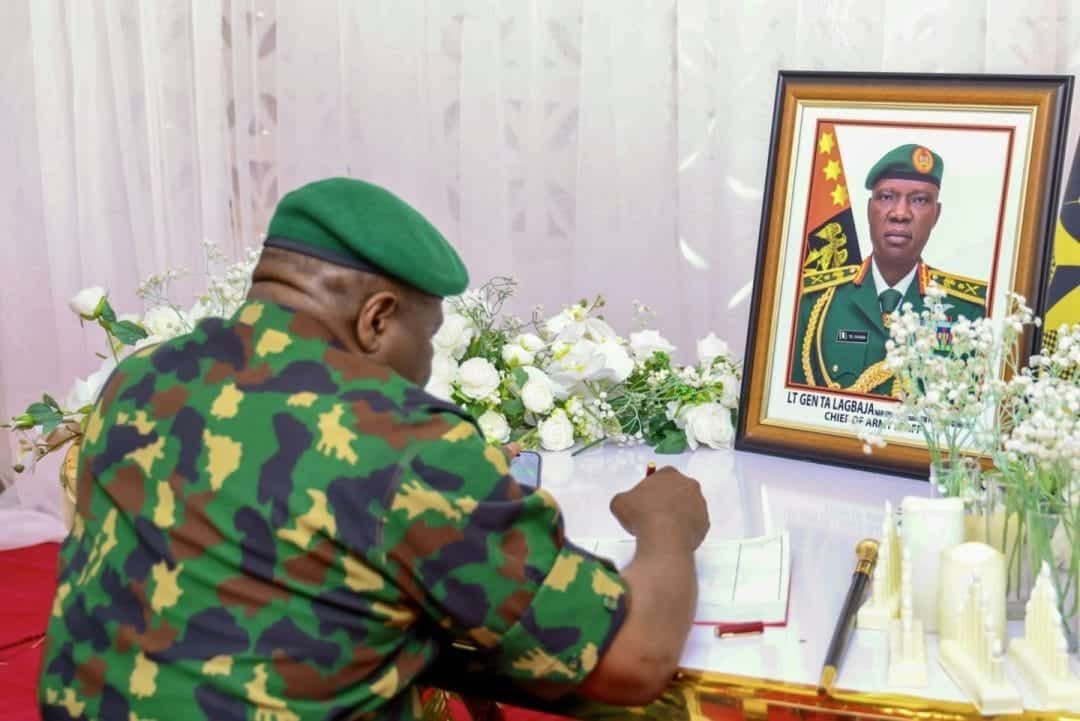
Oluyede’s rise to the pinnacle of military leadership is shrouded in both triumph and tragedy. His appointment as acting COAS earlier in November 2024 came in the wake of the sudden death of his predecessor, Gen. Taoreed Lagbaja, who succumbed to a protracted illness. The unexpected leadership vacuum at a time of heightened security threats—ranging from insurgency in the Northeast to escalating banditry in the Northwest—left Nigeria’s military apparatus in a state of flux. For many, Oluyede’s confirmation represents a desperate attempt by the Buhari-Tinubu administration to project stability and continuity in the military hierarchy.
However, Oluyede’s meteoric rise has not been without its detractors. Critics within military and political circles have expressed concerns over the opaque nature of his appointment process and the speed with which his confirmation was pushed through the House of Representatives. Some lawmakers privately questioned whether the Joint Committee on Defence and Army conducted a thorough and impartial assessment of Oluyede’s suitability for the role or merely rubber-stamped a decision orchestrated by the executive branch.
Strategic Expertise or Political Expediency?
At the heart of the debate surrounding Oluyede’s confirmation is the question of whether his leadership will be defined by strategic military acumen or political expediency. During his screening, Oluyede emphasised his vast experience in war zones and his commitment to leveraging this expertise to tackle Nigeria’s multifaceted security challenges. “I have served in critical war zones and have been exposed to situations similar to what Nigeria faces today. I am confident that these experiences will guide me in fulfilling my duties as Chief of Army Staff,” he reportedly told the ad-hoc committee.
While Oluyede’s military résumé is impressive, skeptics argue that experience alone is insufficient to address the systemic issues plaguing the Nigerian Army. The institution has long been criticised for corruption, lack of accountability, poor welfare for soldiers, and inadequate equipment—all of which have undermined its effectiveness in combating insurgency, terrorism, and internal unrest. Oluyede’s confirmation, therefore, raises the critical question: Can he navigate the entrenched bureaucracy and political interference that have historically hampered the Army’s operational efficiency?
Promises of Reform: A Hollow Rhetoric?
Oluyede’s promises to prioritise inter-agency collaboration, enhance civilian-military relations, and ensure transparency in the use of public resources were well-received by the Joint Committee. His vision for reforming the Army’s recruitment, training, and welfare systems also drew commendations from lawmakers during the plenary session. Yet, these pledges mirror those made by his predecessors—many of whom failed to implement meaningful change once in office.
The Nigerian Army’s track record of leadership failures and unfulfilled promises casts a long shadow over Oluyede’s confirmation. The recent allegations of misappropriation of defense funds under previous Army chiefs, coupled with the persistent reports of human rights abuses by military personnel, have eroded public trust in the institution. As such, Oluyede’s ability to restore credibility and foster a culture of accountability within the Army will be a litmus test for his leadership.
The Burden of Expectations
As Oluyede assumes the mantle of Chief of Army Staff, he inherits a military force stretched thin by a multitude of internal and external threats. The Boko Haram insurgency in the Northeast, the rise of Islamic State-affiliated groups, the proliferation of armed banditry, and the ongoing crisis in the Niger Delta region all pose significant challenges to national security. Moreover, the Army’s role in maintaining internal order during elections and civil unrest places additional pressure on its leadership.
The Nigerian public, weary of incessant security breaches and the government’s perceived inability to protect lives and property, will be watching Oluyede’s every move. His leadership style, strategic decisions, and ability to foster collaboration with other security agencies will be scrutinised not only by lawmakers and military analysts but also by a skeptical citizenry.
Oluyede’s Strategic Vision and the Fight for Nigeria’s Survival

As Lt. Gen. Olufemi Oluyede officially steps into his role as Nigeria’s 24th Chief of Army Staff, attention has swiftly shifted to his proposed strategic vision for the Nigerian Army. His confirmation speech and subsequent engagements with the Joint Committees on Defence and Army hinted at an ambitious roadmap aimed at transforming the military from a beleaguered institution into a formidable force capable of confronting Nigeria’s daunting security challenges. However, critics question whether Oluyede’s blueprint represents a genuine path to reform or a recycled collection of lofty aspirations that will ultimately collapse under the weight of political interference and systemic corruption.
Oluyede’s Vision: Tactical Strength or Empty Rhetoric?
During his screening, Oluyede articulated a multi-pronged strategy designed to enhance the operational effectiveness of the Nigerian Army. Central to this vision is the modernisation of military equipment and the overhaul of Nigeria’s security architecture to reflect the complexities of 21st-century warfare. Oluyede emphasised the need for advanced weaponry, improved surveillance systems, and cutting-edge intelligence capabilities to effectively combat insurgency, terrorism, and other asymmetrical threats.
“Our military must evolve,” Oluyede reportedly declared. “We can no longer rely on outdated tactics and obsolete equipment in a world where our adversaries are increasingly sophisticated and well-funded. I am committed to securing the necessary resources and partnerships to modernise our forces and restore our operational supremacy.”
While these promises resonate with lawmakers and security analysts alike, skepticism remains high. Nigeria’s military budget has long been a subject of controversy, with allegations of embezzlement and mismanagement frequently dominating headlines. Previous Army chiefs, despite similar pledges to modernise the force, left office with little to show in terms of tangible progress. The question now is whether Oluyede can break this cycle or if his vision will be another casualty of Nigeria’s entrenched corruption and bureaucratic inertia.
The Internal War: Corruption and Low Morale
One of the most formidable challenges Oluyede faces is the pervasive corruption within the Nigerian military establishment. The diversion of defence funds meant for procurement, training, and soldier welfare has severely undermined the Army’s operational capacity. Soldiers deployed to conflict zones often complain of inadequate supplies, insufficient ammunition, and dilapidated equipment—a situation that has left them vulnerable to ambushes and attacks by insurgent groups.
In 2023, a report by Transparency International ranked Nigeria’s defense sector among the most corrupt in the world, citing systemic embezzlement and lack of accountability as key drivers of the military’s inefficiency. This corruption has not only weakened the Army’s combat readiness but has also eroded the morale of its rank and file. Soldiers, disillusioned by poor living conditions and delayed salaries, are increasingly hesitant to put their lives on the line in defence of a nation that appears indifferent to their welfare.
Oluyede’s pledge to prioritise the health, welfare, and discipline of soldiers is a critical aspect of his leadership strategy. However, translating these promises into reality will require more than rhetoric. It will demand a radical shift in the Army’s culture—one that emphasises transparency, accountability, and the equitable distribution of resources. Whether Oluyede possesses the political will and administrative acumen to implement such a transformation remains to be seen.
Taming the Hydra: Insurgency, Banditry, and Internal Security
Nigeria’s security landscape is a hydra-headed monster, with multiple threats emerging from various regions of the country. In the Northeast, the Boko Haram insurgency continues to wreak havoc, despite repeated claims by the government that the group has been “technically defeated.” The Islamic State’s West Africa Province (ISWAP), a splinter faction of Boko Haram, has intensified its attacks on military installations and civilian populations, further destabilising the region.
In the Northwest, armed banditry has reached epidemic proportions, with criminal gangs engaging in mass kidnappings, cattle rustling, and village raids. The inability of security forces to contain these activities has led to widespread displacement and a humanitarian crisis that shows no signs of abating. Meanwhile, in the Niger Delta, militant groups continue to threaten Nigeria’s critical oil infrastructure, posing a significant risk to the nation’s economic stability.
Oluyede’s experience in conflict zones and his emphasis on inter-agency collaboration are seen as potential assets in addressing these challenges. During his screening, he underscored the importance of fostering synergy between the Army, the Nigeria Police Force, the Department of State Services (DSS), and other security agencies. “No single agency can address the security challenges we face today,” Oluyede remarked. “We must work together, share intelligence, and coordinate our operations to achieve a unified and effective response.”
However, the history of inter-agency cooperation in Nigeria is fraught with rivalries, bureaucratic infighting, and a lack of trust. Coordinated operations are often undermined by conflicting mandates and competition for limited resources. For Oluyede’s vision to succeed, he will need to navigate these institutional rivalries and foster a culture of collaboration that has eluded his predecessors.
Funding the War Machine: A Question of Priorities
Another critical issue that looms large over Oluyede’s tenure is the funding of Nigeria’s military operations. The war on terror, counter-insurgency campaigns, and internal security operations require substantial financial investment. Yet, Nigeria’s defense budget has often been criticised for being inadequate and poorly managed. The allocation of funds is frequently delayed, and when released, a significant portion is siphoned off by corrupt officials.
Oluyede’s confirmation comes at a time when Nigeria’s economy is under immense strain. Falling oil revenues, rising debt, and a depreciating currency have left the government with limited fiscal space to address pressing security needs. In this context, securing adequate funding for the military will be a herculean task. Oluyede’s ability to lobby the National Assembly for increased budgetary allocations and ensure the judicious use of available resources will be a critical determinant of his success.
Moreover, the international community’s role in funding Nigeria’s military operations cannot be overlooked. The United States, the United Kingdom, and the European Union have provided various forms of military assistance in recent years, ranging from equipment to training programs. Oluyede’s diplomatic skills and his ability to maintain and expand these partnerships will be crucial in bolstering the Army’s capabilities.
Public Perception and Civil-Military Relations
Perhaps the most delicate challenge Oluyede faces is the restoration of public trust in the Nigerian Army. The military’s reputation has been tarnished by allegations of human rights abuses, including extrajudicial killings, torture, and arbitrary arrests. These abuses have alienated the civilian population and fueled resentment in conflict-affected regions.
Oluyede has vowed to address these issues by promoting a culture of discipline and accountability within the Army. He has also emphasised the importance of community engagement and winning the hearts and minds of local populations. “The Nigerian Army must be seen as a protector, not a predator,” Oluyede stated during his screening. “We must build bridges of trust with the communities we serve and ensure that our actions are guided by respect for human rights and the rule of law.”
However, changing public perception will require more than statements of intent. It will necessitate a sustained effort to investigate and prosecute human rights violators within the military, provide adequate compensation to victims, and implement robust oversight mechanisms. Oluyede’s commitment to these reforms will be tested in the coming months as he seeks to rebuild the Army’s image and restore its legitimacy in the eyes of the Nigerian people.
Oluyede’s Confirmation: Political Undertones, Vested Interests, and the Future of Nigeria’s Security
The confirmation of Lt. Gen. Olufemi Oluyede as Chief of Army Staff is more than just a military appointment; it is a political statement, a calculated move by Nigeria’s ruling elite aimed at consolidating power, navigating fragile alliances, and managing the optics of security reform. In a nation where the military has historically played a pivotal role in shaping political outcomes, Oluyede’s rise to the top of the Army hierarchy is as much about politics as it is about military strategy. His leadership tenure will inevitably be influenced by the intricate web of vested interests, political calculations, and systemic challenges that define Nigeria’s governance.
The Executive’s Role: A Calculated Appointment
Oluyede’s confirmation comes under the administration of President Bola Ahmed Tinubu, a leader known for his deft political manoeuvring and ability to consolidate influence across Nigeria’s diverse political and regional landscape. Tinubu, whose presidency has been marked by growing discontent over economic stagnation, escalating insecurity, and allegations of nepotism, understands the symbolic and strategic importance of military appointments. The confirmation of Oluyede, therefore, must be viewed through the lens of Tinubu’s broader political agenda.
By appointing Oluyede—a Yoruba officer with extensive military experience—the Tinubu administration seeks to achieve several objectives. First, it reinforces Tinubu’s support base in the Southwest, where ethnic and regional loyalty often play a significant role in political calculations. Second, it projects an image of decisive leadership and commitment to security reform at a time when public confidence in the government’s ability to protect lives and property is at an all-time low. Third, it positions the Army under a leadership that is perceived to be aligned with the administration’s interests, ensuring that the military remains a stabilising force rather than a potential disruptor of the political order.
However, this calculated appointment has not escaped criticism. Opposition figures and civil society organisations have raised concerns about the lack of transparency in the selection process and the potential for Oluyede’s leadership to be compromised by political interference. They argue that the Nigerian military, which is constitutionally mandated to remain apolitical, risks becoming an instrument of the executive, used to suppress dissent and manipulate electoral outcomes in favor of the ruling party.
Vested Interests and the Military-Industrial Complex
The Nigerian Army is not just a security institution; it is also a significant player in the country’s political economy. The military-industrial complex—comprising defense contractors, arms dealers, and political actors with vested interests in the security sector—has historically influenced military appointments and decision-making processes. Oluyede’s confirmation, therefore, must be understood in the context of these entrenched interests.
One of the critical challenges Oluyede will face is navigating the influence of powerful individuals and entities that benefit from the status quo. Corruption in military procurement, for instance, has long been a lucrative enterprise for well-connected contractors and senior military officers who siphon off defense funds through inflated contracts and kickbacks. Reforming this system will require Oluyede to confront influential figures who have a vested interest in maintaining the current arrangement.
Furthermore, the Army’s involvement in lucrative security operations, such as protecting oil installations in the Niger Delta and providing security for high-profile political events, has created a parallel economy that fuels patronage and corruption. Oluyede’s ability to implement reforms aimed at enhancing transparency and accountability in the management of military resources will be a critical test of his leadership. However, doing so may put him at odds with powerful actors who have historically resisted efforts to disrupt their control over the military’s financial and operational assets.
Civil-Military Relations: Balancing Security and Democratic Governance
The relationship between the military and civilian authorities in Nigeria has been historically fraught with tension, marked by periods of military rule and a lingering perception of the Army as a potential threat to democratic governance. Oluyede’s confirmation as Chief of Army Staff comes at a time when Nigeria’s democracy is under strain, with increasing concerns about human rights violations, shrinking civic space, and the erosion of democratic institutions.
One of Oluyede’s most delicate tasks will be to strike a balance between fulfilling the Army’s security mandate and upholding democratic principles. The military’s involvement in internal security operations, particularly during elections and civil unrest, has often led to allegations of excessive use of force, intimidation of opposition figures, and suppression of dissent. These actions have fuelled public distrust in the military and raised questions about its commitment to protecting democratic freedoms.
Oluyede’s leadership will be closely watched for signs of whether he intends to perpetuate this pattern or steer the Army toward a more professional and impartial role in internal security matters. His ability to foster a culture of respect for human rights and the rule of law within the Army will be crucial in restoring public trust and enhancing civil-military relations. This will require not only internal reforms but also robust engagement with civil society organisations, human rights advocates, and the media to ensure transparency and accountability in military operations.
The Regional Dimension: Managing Ethno-Religious Tensions
Nigeria’s security challenges are deeply intertwined with the country’s complex ethno-religious dynamics. The rise of insurgent groups in the Northeast, the resurgence of secessionist movements in the Southeast, and the persistent banditry and communal violence in the North Central and Northwest regions are all manifestations of underlying ethno-religious tensions that have been exacerbated by years of neglect, marginalisation, and political manipulation.
Oluyede’s confirmation as Chief of Army Staff carries significant regional implications, particularly in a country where perceptions of ethnic and regional representation in military leadership are closely scrutinised. While his appointment may be seen as a strategic move to consolidate support in the Southwest, it also raises concerns about the representation and inclusion of other regions in the military hierarchy.
To address these concerns, Oluyede will need to adopt a leadership style that emphasises national unity and inclusivity. This includes ensuring that the Army’s recruitment, promotion, and deployment policies reflect Nigeria’s diversity and do not perpetuate perceptions of ethnic or regional bias. Moreover, Oluyede’s engagement with traditional leaders, community representatives, and religious institutions will be critical in fostering dialogue, addressing grievances, and building trust with local populations in conflict-affected regions.
The Road Ahead: Can Oluyede Deliver?
As Lt. Gen. Olufemi Oluyede assumes the mantle of leadership as Nigeria’s Chief of Army Staff, the expectations placed upon him are immense. He faces the daunting task of leading a military institution that is grappling with internal corruption, operational inefficiency, and a crisis of public confidence. At the same time, he must navigate the complex web of political interests, regional dynamics, and international partnerships that define Nigeria’s security landscape.
Whether Oluyede can rise to the occasion and deliver on his promises of reform, modernisation, and enhanced security remains to be seen. His leadership will be judged not only by his ability to achieve military victories on the battlefield but also by his capacity to transform the Nigerian Army into a professional, accountable, and people-centred institution.
Ultimately, Oluyede’s success—or failure—will have far-reaching implications for Nigeria’s security, democracy, and stability. In a country where the line between military and political power is often blurred, his tenure as Chief of Army Staff will be a critical chapter in the ongoing struggle to build a secure, united, and democratic Nigeria.
As the nation watches with a mix of hope and skepticism, one thing is certain: Oluyede’s leadership will be a defining test of Nigeria’s resolve to confront its security challenges and chart a new course for its military and its people.