A Friday attack on a prominent Islamic cleric in Sokoto has opened a dangerous new front in the city’s security crisis, after worshippers reportedly killed the man suspected of stabbing him shortly after Juma’at prayers.
Sheikh Musa Lukuwa was stabbed twice in the neck at his mosque in the Mabera area of Sokoto metropolis, according to reports. The cleric was taken to Specialist Hospital, Sokoto, where police said he was responding to treatment.
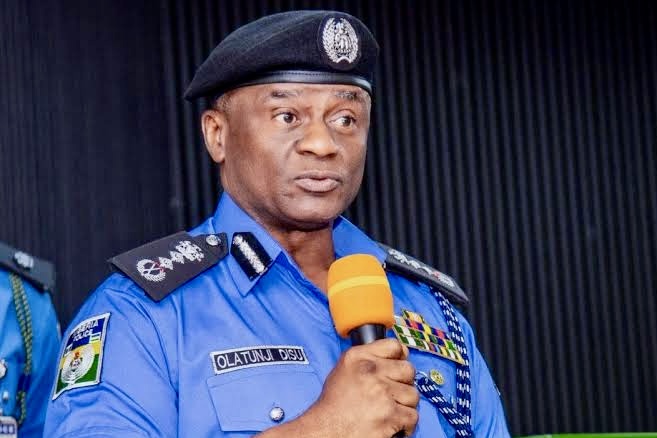
The suspect, identified in reports as Dahiru Mai Barewa, was overpowered and beaten to death by members of the congregation before police could intervene. Sokoto State Police spokesman DSP Ahmad Rufa’i confirmed the killing of the suspect and said no arrest had yet been made over the subsequent mob violence.
The incident is more than another violent confrontation in a state already battling banditry, killings and abductions. It exposes how a dispute that had already entered the police and court system was able to return to the streets with potentially wider consequences for public safety, religious freedom, commerce and livelihoods.
It also raises a critical question for authorities: what happens when a threat reported to the state is followed by an attack, and the response then gives way to mob justice?
Threats, court action and a fatal confrontation
The immediate background to Friday’s attack was not entirely new.
The PUNCH reported earlier this week that Mai Barewa was facing allegations of threatening to kill Lukuwa and another Islamic scholar, Malam Murtala Bello Assada. The allegations reportedly arose from videos in which Mai Barewa was said to have threatened the two clerics. The matter had already gone through the criminal justice system, with a court ordering his re-arrest and remand.
That legal process itself had triggered unrest.
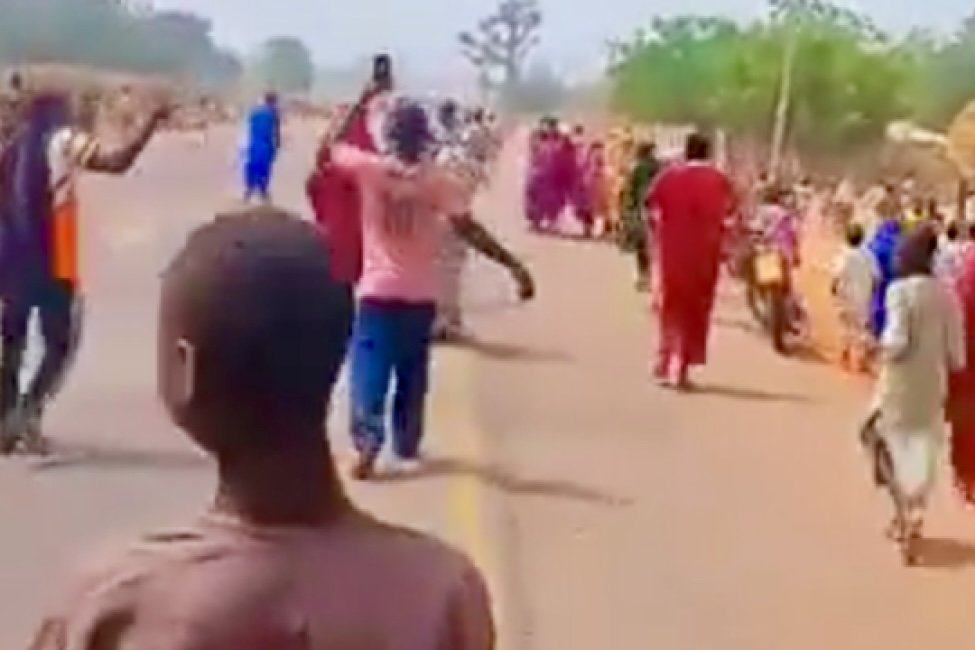
On September 7, youths in parts of Sokoto protested against Mai Barewa’s continued detention. Some roads were reportedly blocked and security personnel intervened after the demonstration became confrontational. Police later confirmed that about 20 people had been arrested and charged to court.
The chain of events is now central to the Friday investigation.
Reports indicate that Lukuwa and his followers had also submitted a written complaint to the Sokoto State Government House four days before the stabbing, warning about the alleged threats.
That detail will require particular scrutiny from investigators.
If such a complaint exists, investigators will need to establish when it was received, who handled it, what action was taken, whether the police and other relevant agencies were alerted and whether additional protection was considered.
Those questions are not academic. They go directly to whether the state had sufficient warning of a potential attack and whether the existing security response was proportionate to the reported threat.
A dispute over religious interpretation turns violent
The alleged motive is rooted in a dispute over a previous sermon by Lukuwa.
Reports say the cleric had cited a Hadith which some Islamic scholars, particularly those associated with the Tariqa tradition, regarded as disrespectful towards the parents of Prophet Muhammad.
The issue had already generated controversy before Friday’s attack.
On September 3, a coalition of Islamic groups in Sokoto called for investigation into statements attributed to Lukuwa. The groups said the remarks could contribute to tension and urged authorities to establish the facts and allow the law to take its course.
The dispute therefore moved through several stages: religious disagreement, public controversy, alleged threats, police action, court proceedings, street protest and finally a violent attack at a mosque.
That progression is precisely what makes the incident a wider public-safety warning.
Religious disagreement itself does not inevitably produce violence. The risk becomes much greater when allegations are amplified through social media, supporters become mobilised around personalities rather than institutions and people begin to believe that courts, police or government cannot resolve the dispute.
The bigger security question
Sokoto was already experiencing intense security pressure before Friday.
On September 8, The Guardian reported renewed attacks and abductions in parts of the state, while the police and security agencies were increasing protective measures around schools and other vulnerable locations.
On September 10, an attack in Girkau, Kebbe Local Government Area, was initially subject to uncertainty over casualties and abduction claims. By September 11, police confirmed that a resident had been killed and an INEC worker abducted.
The Friday incident in central Sokoto is fundamentally different from those attacks. It was not reported as a bandit or terrorist assault.
But the combined picture matters.
Security agencies are dealing simultaneously with armed attacks in rural communities, threats around religious figures, demonstrations, politically sensitive tensions and the possibility of spontaneous mob violence in urban areas.
That stretches police resources and increases the danger that a local dispute can rapidly become a wider public-order emergency.
The business cost begins before the statistics
The economic consequences may be felt long before any official assessment of damage is produced.
Reports following Friday’s stabbing said some youths took to the streets after news spread that Lukuwa had survived, while some shop owners shut their businesses because of fear of further attacks.
For a trader, shutting a shop for several hours may mean lost sales.
For a food seller, it can mean spoiled stock.
For a transport operator, it can mean fewer passengers.
For casual workers, security guards, delivery riders, artisans and other informal workers, unrest can mean a day without income.
That is an important distinction in Nigeria’s security debate. Violence does not have to destroy a factory or market to damage the economy. Fear can do it more quietly by keeping consumers indoors, interrupting transport and discouraging trading activity.
The wider Nigerian economy is particularly vulnerable to this effect because small and medium-sized businesses dominate employment and economic activity. The World Bank says Nigerian MSMEs account for most businesses, nearly half of GDP and a large share of jobs.
In Sokoto, the stakes are especially significant because the state is actively trying to expand small-business activity.
In July, the Sokoto State Small and Medium Enterprises Development Agency announced a ₦2.5 billion NG-CARES intervention for 14,000 nano, micro and small businesses across the state.
The state government has also highlighted market reconstruction and grants for traders as part of its effort to revive commercial activity.
Security instability can therefore undermine economic investment at the same time that government is spending money to stimulate enterprise.
That is the contradiction policymakers now face.
Opportunity: security itself is becoming an economic sector
The immediate lesson for businesses is not simply to spend more money on guards.
There is a growing market for professional risk management, early-warning systems, emergency communications, digital monitoring, physical-security audits and crisis-response services.
The Police Act 2020 places responsibilities on the Nigeria Police Force to prevent crime, protect lives and property and build partnerships with communities.
For private firms, that creates a practical demand for services that can help identify risks before they become crises.
Small businesses may need basic emergency plans.
Markets may need coordinated incident-response systems.
Religious institutions may require better access-control arrangements without turning places of worship into fortresses.
Schools, hospitals and transport operators may require emergency communication procedures.
There are also potential employment opportunities in security technology, community mediation, crisis communications, data analysis, CCTV monitoring, emergency logistics and professional private security services.
The crucial point is that such work must reinforce lawful public security rather than encourage vigilantism.
Mob justice is itself a security threat
Friday’s most troubling development was not only the stabbing of the cleric.
It was the killing of the suspect by members of the congregation.
The Constitution protects the right to life, while Nigeria’s legal framework provides for criminal investigation and adjudication rather than punishment by crowds. Section 33 of the Constitution guarantees the right to life, subject to narrowly defined exceptions.
Sokoto, as a northern state, operates within the framework of the Penal Code and related criminal procedure laws applicable in the region.
That means the death of the suspected assailant does not automatically end the investigation.
Police still have to establish exactly how he died, who participated, whether the force used against him continued after he had been subdued and whether other offences were committed during the violence.
The fact that police had not made arrests over the mob killing by the time of the initial report should not be treated as the end of the matter. Rufa’i said the command was investigating the full circumstances and seeking to identify others who may have been involved.
That investigation will be an important test of whether the authorities can prevent vigilante justice from becoming normalised.
What businesses and workers should watch now
The first priority is stability.
Businesses operating around Mabera and other sensitive areas will need reliable information before deciding whether to open, close or modify operating hours.
Workers who depend on daily movement through affected neighbourhoods will also need accurate security information to avoid unnecessary exposure.
For entrepreneurs, the incident offers another reminder that business continuity plans are no longer only for banks and multinational companies.
Even a small shop should have a basic plan covering emergency contacts, safe closure procedures, alternative communication channels, staff accountability and what to do when rumours of violence spread.
That is particularly important in an environment where unverified messages can travel faster than official information.
For younger Nigerians seeking jobs, the emerging opportunities are equally clear. Security is no longer limited to conventional uniformed employment. Businesses, schools, religious institutions, NGOs and technology companies increasingly need people trained in risk assessment, digital monitoring, emergency planning, communications and community engagement.
The World Bank has repeatedly identified insecurity as a constraint on private investment and business activity in Nigeria. It has also pointed to the importance of private-sector growth and employment in a country adding millions of people to its labour force each year.
The economic message is straightforward.
Every violent incident raises the cost of doing business.
Every peaceful resolution protects economic activity.
And every institution that successfully settles disputes before they spill onto the streets creates the conditions for more trade, more investment and more jobs.
The unanswered questions in Sokoto
For investigators, Friday’s incident should not end with the recovery of the knife or confirmation that the suspect is dead.
The public-interest questions are wider.
Who first received the alleged threats?
When was the complaint delivered to government?
What action followed?
Were the clerics assessed as vulnerable?
Was the suspect’s detention properly monitored?
How did a person previously linked to the dispute get close enough to the cleric inside the mosque?
Who killed him?
How many people participated in the mob?
Were any weapons used against him after he was restrained?
Were there plans for further violence?
And what intelligence is now being gathered to prevent retaliation?
The answers could determine whether Sokoto moves back towards calm or enters another cycle of protest, reprisals and economic disruption.
For now, police say Lukuwa is alive and receiving treatment, while the suspected attacker is dead and no one has yet been arrested over the mob killing.
That leaves Sokoto facing a difficult test: protect a wounded cleric, investigate an apparently preventable killing, enforce the law against mob violence and keep a tense city open for business.
The success or failure of that response will matter far beyond one mosque in Mabera.
Follow us on our broadcast channels today!
- WhatsApp: https://whatsapp.com/channel/0029VawZ8TbDDmFT1a1Syg46
- Telegram: https://t.me/atlanticpostchannel
- Facebook: https://www.messenger.com/channel/atlanticpostng