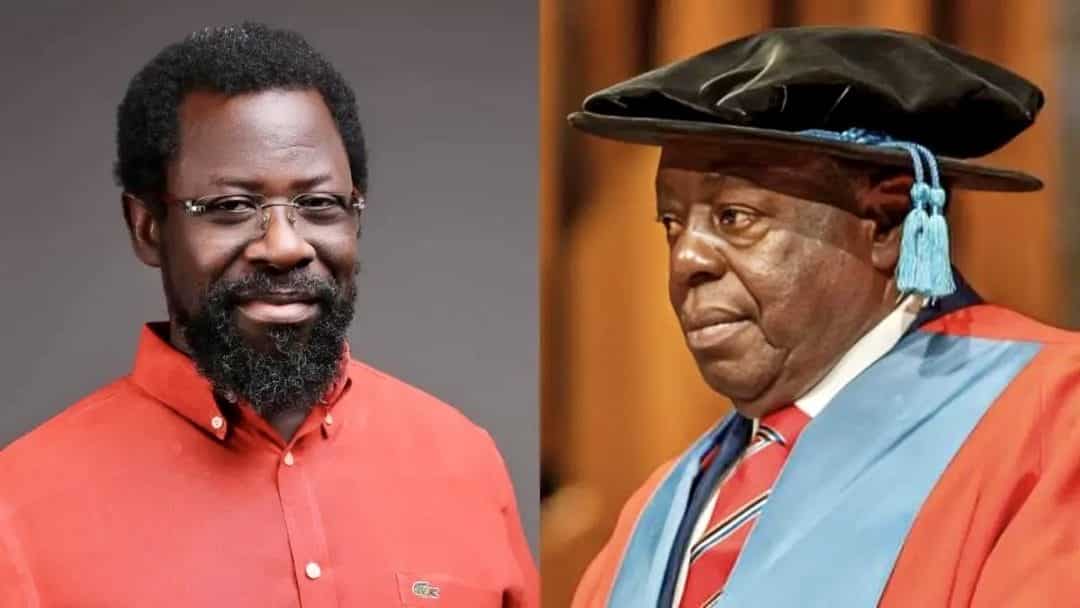
In a gripping defamation trial, activist Dele Farotimi faces legal icon Afe Babalola, challenging the boundaries of free speech and justice in Nigeria. Will this high-stakes courtroom clash redefine the nation’s legal landscape?
The Legal Storm Brewing Between Dele Farotimi and Afe Babalola: A Clash of Reputation and Allegation
The unfolding drama between Nigerian legal juggernaut Aare Afe Babalola, SAN, and the embattled human rights lawyer Dele Farotimi has gripped national attention, with layers of legal, ethical, and political dimensions demanding scrutiny. At the heart of this conflict lies a potent mix of accusations, the boundaries of free speech, and the sanctity of reputations painstakingly built over decades. The case, which has escalated from a book’s controversial publication to a criminal defamation trial, promises to test Nigeria’s judicial ethos and societal values.
On one side stands Afe Babalola, a revered elder statesman, renowned lawyer, and the founder of the prestigious Afe Babalola University in Ado Ekiti. With an illustrious career that spans decades, Babalola symbolises legal excellence and societal contribution. On the other side is Dele Farotimi, a firebrand activist and lawyer, known for his unapologetic critiques of Nigeria’s justice system. Farotimi’s publication, Nigeria and Its Criminal Justice System, has ignited this fierce battle, as Babalola claims that sections of the book constitute defamatory material aimed at maligning his reputation.
The Defamation Allegations: A Legal and Ethical Quandary
Babalola, represented by a formidable legal team including Owoseni Ajayi, Olakanmi Falade, and Lawrence Fasanmi, contends that Farotimi’s assertions in the book are not only false but maliciously crafted to undermine his legacy. Speaking at a press conference in Ado Ekiti, Ajayi emphasised that Babalola’s decision to petition the police and seek legal redress is a matter of principle, not personal vendetta. According to Ajayi, the statements in question cross the boundaries of permissible free speech and enter the realm of criminal defamation, as defined under Nigeria’s laws.
Ajayi’s remarks at the press briefing reflect the gravity with which Babalola’s camp views the allegations. He stated unequivocally, “All facts are verifiable. I urge Nigerians to verify and find out what the truth is first before picking a side.” His assertion underscores a broader appeal to the public and legal community to evaluate the matter based on evidence rather than sentiment.
The legal arguments hinge on the interpretation of Section 59 of the Criminal Code Act, which criminalises the publication of false information likely to cause public fear or harm. By framing the accusations within this statutory context, Babalola’s lawyers aim to demonstrate that the harm caused by Farotimi’s publication extends beyond personal injury to the destabilisation of public trust in the legal profession and institutions.
A Delicate Balancing Act: Free Speech Versus Defamation
Farotimi’s arrest in Lagos and subsequent arraignment in Ado Ekiti within 24 hours have sparked debates about the procedural fairness and jurisdictional propriety of the case. While Babalola’s legal team praises the police for their swift action, critics question whether the rapid escalation to a criminal proceeding aligns with the principles of justice.
At the centre of this legal maelstrom is a contentious issue: the fine line between free speech and defamation. Babalola’s lawyers argue that while Nigeria’s constitution guarantees the right to free expression, this right is not absolute and must be exercised responsibly. “The law allows free speech, but not one that is calculated to injure the good reputation of another,” Ajayi remarked. This position reflects a long-standing tension in democratic societies, where the protection of individual reputations often collides with the broader interest in preserving freedom of expression.
Farotimi, on the other hand, has consistently portrayed himself as a whistleblower seeking to expose systemic flaws in Nigeria’s judiciary. His defenders argue that the defamation charges are a thinly veiled attempt to silence dissent and shield the elite from accountability. This narrative has galvanised support from activist groups like the Take it Back Movement, which has planned nationwide protests to coincide with the next court hearing on December 10, 2024.
The Jurisdictional Debate and Its Implications
One of the most contentious aspects of the case is the decision to prosecute Farotimi in Ekiti State. Babalola’s lawyers argue that the cross-state nature of the alleged defamation justifies the Ekiti State High Court’s jurisdiction, as the book was distributed and accessed in the state. Critics, however, view this as forum shopping—a strategy to secure a favourable venue for prosecution.
Ajayi’s assertion that the arraignment adhered to due process does little to quell these concerns. “The mode of arraignment was in order,” he said, dismissing allegations of procedural irregularities. Yet, questions linger about whether the police’s actions, from the arrest to the court’s remand order, were driven more by the influence of a high-profile complainant than by impartial application of the law.
A Legacy Under Siege
For Babalola, the stakes extend beyond the courtroom. The allegations in Farotimi’s book threaten to tarnish a legacy built over decades of legal practice, philanthropy, and educational advancement. His lawyers argue that the claims are not only baseless but also designed to inflict irreparable harm to his reputation and that of his law firm, Afe Babalola & Co. “Those defamatory remarks made in the book cannot be remedied by the award of damages,” Ajayi insisted, highlighting the unique nature of the injury alleged.
Babalola’s insistence on seeking justice through legal channels reflects his broader commitment to the rule of law. However, the optics of a legal titan pursuing criminal charges against a vocal activist raise uncomfortable questions about power dynamics and access to justice in Nigeria. Can the judicial system fairly adjudicate a case involving two figures with vastly different levels of influence and resources? Or does the prosecution risk becoming a spectacle that deepens public cynicism about the impartiality of Nigeria’s courts?
The Activist’s Gambit
Farotimi’s strategy appears to hinge on transforming his legal battles into a platform for broader advocacy. By framing his prosecution as an attack on free speech, he has mobilised a growing base of supporters who view him as a martyr for justice. The planned protests, though banned by the Ekiti State Police Command, reflect the polarising effect of the case on public opinion. For Farotimi, the courtroom is not merely a venue for legal adjudication but a stage for challenging entrenched power structures.
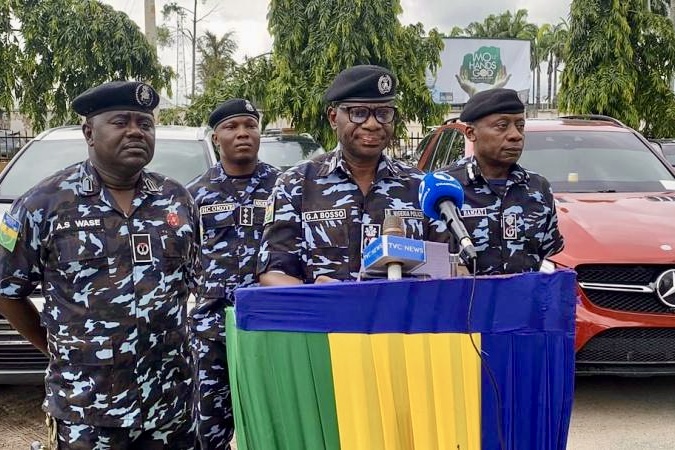
The police’s justification for banning the protests—citing security concerns and the risk of violence—adds another layer of complexity to the saga. While law enforcement has a duty to maintain public order, the suppression of peaceful demonstrations risks eroding public trust and fuelling perceptions of bias.
The Crossroads of Justice and Reputation in the Farotimi-Babalola Saga

The escalating legal battle between Dele Farotimi, an outspoken human rights lawyer, and Afe Babalola, a revered legal luminary, represents a microcosm of the tensions inherent in Nigeria’s justice system. It embodies the friction between the pursuit of accountability and the preservation of legacy, a conflict that resonates within the judiciary and among civil society activists.
Farotimi’s assertions in his book, Nigeria and its Criminal Justice System, are at the heart of the storm. His claims, which purportedly implicate Babalola in misconduct within the justice system, have sparked outrage among supporters of the elder statesman. To Babalola’s camp, these allegations are baseless fabrications aimed at tarnishing a career built on legal excellence and unwavering commitment to justice. For Farotimi and his allies, however, this case exemplifies the oppressive tactics used to stifle dissent and prevent public scrutiny of influential figures.
The courtroom drama that has unfolded in Ado Ekiti is as much about the law as it is about public perception. Babalola’s legal team has framed the matter as a straightforward defamation case, asserting that Farotimi’s failure to substantiate his claims invalidates his arguments. Owoseni Ajayi, a seasoned lawyer and former Attorney General of Ekiti State, has consistently reiterated that Babalola’s petition is not an attack on free speech but a defence of his client’s honour and credibility. Ajayi’s emphasis on due process and adherence to the rule of law underscores their strategy: shifting the narrative from one of repression to one of vindication.
Yet, this legal strategy faces challenges beyond the courtroom. Critics argue that the swift arrest and arraignment of Farotimi reflect a broader issue within Nigeria’s justice system: the unequal treatment of cases based on the socio-economic and political status of the parties involved. The efficiency demonstrated in Farotimi’s case contrasts starkly with the sluggishness that characterises the justice system for ordinary citizens. For many, this disparity underscores the perception of a judiciary that caters to the elite while leaving the masses to grapple with systemic neglect.
The Wider Implications of Defamation in Nigeria
Defamation, as defined under Nigerian law, is a complex tort that balances the protection of reputation against the right to freedom of expression. While the Nigerian Constitution guarantees free speech, it also sets limits to prevent harm to the reputations of individuals. Section 59 of the Criminal Code Act, invoked by Babalola’s legal team, criminalises the publication of false information that causes public fear or unrest. However, its application in this case has raised important questions about its interpretation and enforcement.
Critics argue that the use of criminal defamation laws, as opposed to civil remedies, sets a dangerous precedent. International human rights organisations have long decried criminal defamation laws as tools for silencing dissent and intimidating journalists and activists. The United Nations and other global watchdogs have urged nations to decriminalise defamation, contending that civil remedies, such as damages and retractions, suffice in protecting reputations.
Farotimi’s remand in a correctional facility pending trial exemplifies the punitive nature of criminal defamation proceedings. The court’s decision to adjourn the matter until December 10 has amplified concerns about the potential for pre-trial detention to be used as a means of intimidation. For human rights advocates, this case represents an opportunity to push for reforms that align Nigerian defamation laws with international best practices.
Public Sentiment: Divided and Polarised
The Farotimi-Babalola case has ignited a fierce debate within Nigerian society. On one hand, supporters of Babalola view the allegations as an affront to a man whose contributions to the legal profession and education sector are unparalleled. Babalola’s legacy, they argue, is sacrosanct and must be protected against baseless attacks. For them, Farotimi’s book represents a reckless disregard for the truth and a deliberate attempt to sow discord.
Conversely, Farotimi’s defenders see his prosecution as a manifestation of systemic oppression. For them, this is not just about Farotimi but about the broader struggle for transparency and accountability in governance. The Take It Back Movement and other activist groups have framed the case as a litmus test for freedom of expression in Nigeria. Their planned protests in Lagos, Abuja, Ado Ekiti, and even London highlight the international dimensions of this controversy, as they seek to draw global attention to what they perceive as judicial overreach.
The Ekiti State Police Command’s decision to ban protests and illegal gatherings has further polarised the public. While the police cite security concerns, critics view the ban as an attempt to stifle dissent and suppress public outcry. The prohibition of protests, coupled with the restriction on the sale and use of fireworks, reflects the authorities’ apprehension about maintaining order in the face of rising tensions.
Legacy vs. Accountability: The Stakes for Babalola and Farotimi
For Afe Babalola, the stakes go beyond the immediate legal battle. His reputation as a legal icon and philanthropist is intertwined with the credibility of his institution, Afe Babalola University, and his law firm. Any blemish on his character could have far-reaching implications for his legacy and the institutions he represents. Babalola’s insistence on pursuing legal redress underscores his determination to defend his name and uphold the principles he has espoused throughout his career.
For Dele Farotimi, this case is a crucible that will define his credibility as an activist and author. If he can substantiate his claims, he will emerge as a courageous whistleblower who exposed uncomfortable truths about Nigeria’s criminal justice system. However, failure to do so could damage his reputation and diminish his influence as a voice for the marginalised.
As the December 10 hearing approaches, the nation watches with bated breath. Will Farotimi present the evidence required to back his allegations, or will the court uphold Babalola’s claim of defamation? The outcome of this case will not only determine the fates of the two protagonists but also shape the broader discourse on free speech, accountability, and the rule of law in Nigeria.
The stage is set for a legal showdown that promises to be as dramatic as it is consequential.
A Legal Tipping Point and the Future of Justice in Nigeria
The Farotimi-Babalola legal saga has reached a point where its implications extend far beyond the individuals involved, raising critical questions about the integrity of Nigeria’s judicial system and the role of influential figures in shaping its trajectory. With the December 10 hearing on the horizon, the nation is poised for a reckoning that could redefine the boundaries of free speech, the application of defamation laws, and the influence of power in judicial proceedings.
Judicial Precedent and the Rule of Law
Nigeria’s judiciary, often criticised for its susceptibility to external influences, faces a unique test in adjudicating this high-profile case. The presiding judge must navigate a minefield of legal and societal expectations. Any ruling will inevitably set a precedent, either reinforcing the legitimacy of criminal defamation laws or exposing their limitations in a democratic society.
Legal analysts have pointed out the challenges inherent in proving criminal defamation. The prosecution must establish not only that Farotimi’s statements were false but also that they were made with malicious intent and caused measurable harm. This burden of proof places significant pressure on Afe Babalola’s legal team, which must produce evidence that the allegations in Nigeria and Its Criminal Justice System are not only baseless but also damaging beyond reasonable doubt.
On the other hand, Farotimi’s defence hinges on his ability to substantiate his claims. His legal team is expected to argue that his assertions fall within the purview of free speech, particularly as they pertain to matters of public interest. The defence may also challenge the jurisdictional propriety of the case, citing concerns about fairness and procedural irregularities.
The Role of Civil Society and Public Advocacy
As the case unfolds, civil society organisations have intensified their advocacy for judicial reforms. Groups, such as Amnesty International Nigeria, have condemned the use of criminal defamation laws as tools for silencing critics. They argue that cases like Farotimi’s highlight the urgent need to align Nigeria’s legal framework with international human rights standards.
Public opinion has also played a significant role in shaping the narrative. The polarised responses to the case reflect broader societal divisions regarding the balance between individual rights and collective responsibilities. While some view Farotimi as a reckless provocateur deserving of censure, others see him as a courageous activist challenging entrenched power structures.
The Broader Implications for Nigeria’s Justice System
Beyond the immediate legal proceedings, the Farotimi-Babalola case exposes systemic flaws in Nigeria’s justice system. The apparent disparity in the treatment of high-profile cases versus those involving ordinary citizens underscores the need for comprehensive reforms. Critics argue that the judiciary’s credibility depends on its ability to dispense justice impartially, irrespective of the socio-economic status of the parties involved.
The case also raises questions about the accessibility of legal remedies for defamation. While influential figures like Afe Babalola can afford top-tier legal representation, many Nigerians lack the resources to defend themselves against similar accusations. This disparity highlights the need for a more equitable system that ensures access to justice for all citizens.
What Lies Ahead: Scenarios and Predictions
As the trial resumes, several scenarios could unfold:
- Exoneration of Farotimi: If the court finds that Farotimi’s statements were not defamatory or were made in good faith, it would represent a significant victory for free speech advocates. Such a ruling could embolden activists and journalists to continue exposing corruption and malpractice without fear of reprisal.
- Conviction of Farotimi: A guilty verdict would reinforce the application of criminal defamation laws and potentially deter individuals from making unsubstantiated allegations. However, it could also fuel perceptions of judicial bias and deepen public skepticism about the impartiality of Nigeria’s courts.
- Out-of-Court Settlement: While unlikely, given the stakes involved, an amicable resolution would spare both parties the protracted legal battle and mitigate the risk of further reputational damage.
- Escalation of Protests: Regardless of the outcome, the case is likely to galvanise civil society groups and activists. Protests could intensify, particularly if the public perceives the proceedings as unfair or influenced by external pressures.
A National Inflection Point
The Farotimi-Babalola case encapsulates the contradictions and complexities of Nigeria’s legal and political landscape. It highlights the challenges of reconciling individual rights with societal values, the tensions between power and accountability, and the evolving role of the judiciary in a democratic society.
As Nigeria grapples with these issues, the outcome of this case will reverberate far beyond the courtroom. It will serve as a litmus test for the nation’s commitment to justice, equality, and the rule of law. Whether it leads to meaningful reforms or entrenches the status quo remains to be seen.
One response to “Showdown of Titans: Dele Farotimi’s Explosive Defamation Battle with Afe Babalola Exposes Nigeria’s Judicial Fault Lines”
[…] Senior Advocate of Nigeria (SAN) Aare Afe Babalola has formally accused activist-lawyer Dele Farotimi of defamation through statements published in a […]