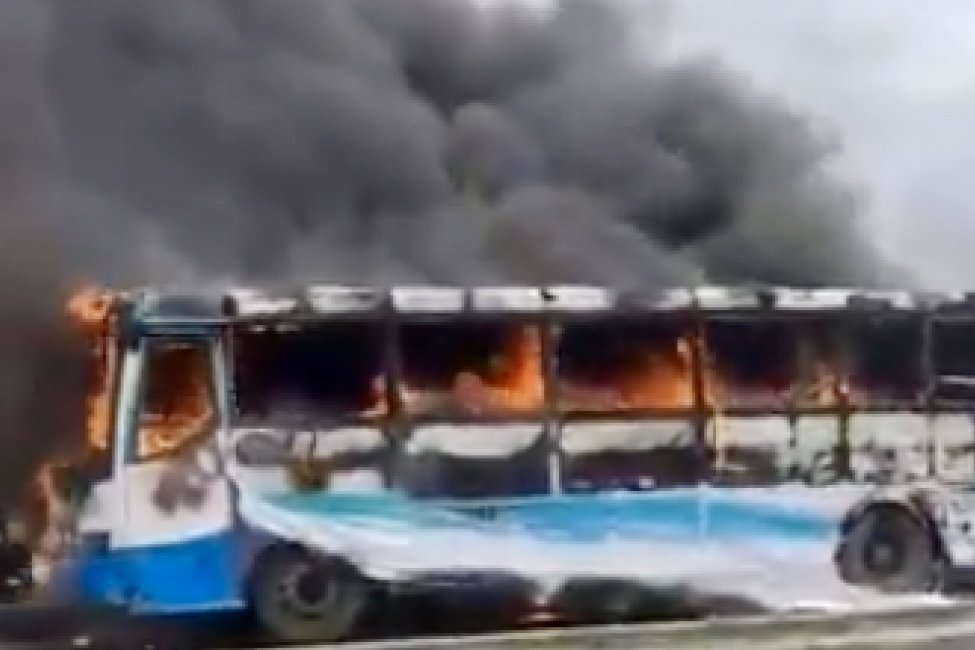
Donald Trump’s public re-designation of Nigeria as a Country of Particular Concern (CPC) was followed, within hours, by coordinated night raids that left at least 17 Christians dead along the Plateau-Kaduna border.
The killings targeted villages and an evening vigil, according to local authorities and eyewitnesses. These events sharpen the painful question. Can Nigeria’s security apparatus protect vulnerable communities in its volatile Middle Belt?
On Friday evening in Southern Kaduna’s Chawai chiefdom, gunmen entered the Damakasuwa community at about 8pm, opening fire and sending residents fleeing into surrounding bushland. Punch reported seven people were killed on the spot and two more later died of their wounds, with one person left injured.
Alhaji Yahaya Muhammad, the chief of Chawai, said military personnel later restored a measure of normality. He urged residents to remain calm. Security agencies are pursuing the perpetrators.
Across the state line in Plateau, separate assaults between Friday and Saturday killed a further 10 people. Local leaders in Riyom and Mangu local government areas reported seven fatalities in Kwi and three in Pushit, describing the assailants as “suspected Fulani militia.”
Survivors told rescuers the attacks were sudden and brutal, striking those gathered for an evening vigil before Sunday services. The Mwaghavul Development Association and other community groups have taken public action. They have named the incidents along a corridor long afflicted by communal violence.
International Christian Concern (ICC) condemned the twin sets of killings. They described them as part of a broader pattern of targeted violence against Christians in Nigeria’s Middle Belt.
ICC’s reporting and field research document repeated nocturnal raids. They also highlight displacement and a rising body count. Human rights monitors and church groups say this count runs into the thousands in recent years.
The organisation and allied observers warn that the frequency and brazenness of these attacks have increased. Denunciations and promises from Abuja remain routine.
Mr Trump used his Truth Social platform to declare that “Christianity is facing an existential threat in Nigeria.” He also announced the CPC designation. This move signals Washington’s willingness to place religious-freedom abuses at the centre of bilateral ties. It possibly conditions aid and cooperation.
The president directed congressional committees to investigate and urged an immediate response from the international community. Washington’s intervention, whether rhetorical or diplomatic, exposes a growing transatlantic impatience with Nigeria’s handling of communal insecurity.
This latest bloodletting must be seen against a grim recent history. ICC and allied monitors recorded multiple mass slaughters across Plateau, Benue, Kaduna and neighbouring states earlier this year. These include attacks that left dozens dead and thousands displaced during coordinated village raids this spring.
Analysts point to a confluence of factors that enable such violence. These include weak local policing and militarised criminal networks. There is also a proliferation of small arms. Politicised narratives reduce complex conflicts to “farmer-herder clashes.”
These labels, critics say, obscure the religious and ethnic targeting that victims and local civil society repeatedly describe.
Nigerian President Bola Tinubu condemned Mr Trump’s public assertions. He stated they do not show “reality.” A senior adviser said the president planned to meet with US officials in the coming days.
Such diplomatic sparring will matter little to families who bury children and spouses without clear accountability. Community leaders repeatedly complain. Security warnings from villagers go unheeded. Soldiers are sometimes unable or unwilling to intervene. This happens even when they are posted near attack sites.
Reuters and local reportage note instances where residents said security forces were nearby but did not stop the raids.
What action should follow? At a basic level, there must be transparent, immediate investigations that produce named suspects and prosecutions, not only ceremonial condemnations.
The CPC designation should be leveraged to press for targeted aid to displaced families. It should also be used for enhanced intelligence cooperation to disrupt militant chains of command.
Additionally, it should apply pressure on the Nigerian federal authorities. They need to allow constitutional review like the one proposed by the Nigerian Indigenous Nationalities Alliance for Self-determination (NINAS). This would empower state and local council authorities. They could then strengthen police presence in high-risk corridors.
International partners and Nigerian civil society must also push for disaggregated data on victims. This ensures that policy responses are evidence-based. They should not be impressionistic.
For now, villages mourn and demand a truth that has massed too long on the margins of national attention. If governments are judged by their capacity to protect the weakest, this week’s killings are a stark indictment.
The CPC label is a diplomatic alarm bell. Whether it provokes reform or merely incites more rhetoric will be the true test. This will test both Nigerian resolve and international credibility.
Follow us on our broadcast channels today!
- WhatsApp: https://whatsapp.com/channel/0029VawZ8TbDDmFT1a1Syg46
- Telegram: https://t.me/atlanticpostchannel
- Facebook: https://www.messenger.com/channel/atlanticpostng