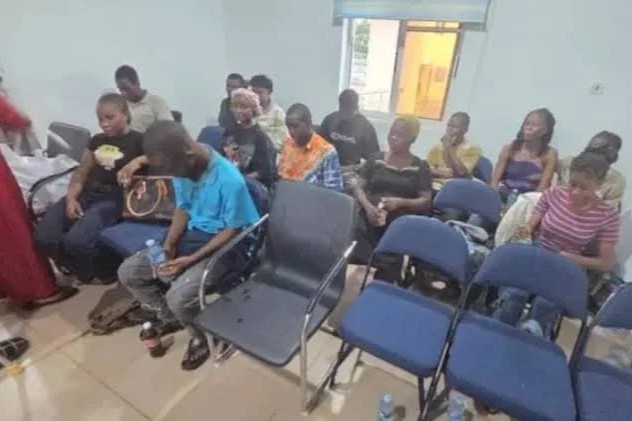
The Abigborodo and Sapele Okpe communities in Nigeria’s Niger Delta are embroiled in a dispute over land ownership and host community recognition related to SEPLAT Energy’s operations. The conflict, fuelled by historical grievances and allegations of bias, highlights the complexities of the Petroleum Industry Act’s implementation and the urgent need for equitable resolutions to prevent…

In the intricate tapestry of Nigeria’s Niger Delta, where oil wealth and ethnic identities intertwine, disputes over land ownership and host community status have long been a source of tension. The recent altercation between the Abigborodo and Sapele Okpe communities in Delta State, centred around SEPLAT Energy’s operations, exemplifies these enduring conflicts.
This report delves into the multifaceted dimensions of the dispute, analysing the historical context, the claims and counterclaims, and the broader implications for the region’s socio-economic and political landscape.
Historical Context: The Genesis of the Dispute
The Niger Delta, rich in oil reserves, has been a focal point of Nigeria’s economic activities since the discovery of oil in the 1950s. Communities in this region have often found themselves at odds over land rights, resource control, and recognition by oil companies.
The current dispute between Abigborodo and Sapele Okpe is deeply rooted in historical claims of land ownership and the quest for recognition as host communities—a status that brings with it both economic benefits and socio-political influence.
Abigborodo, an Itsekiri community in Warri North Local Government Area, asserts that it has been the rightful owner of the lands where SEPLAT operates, including areas like Ugbekoko, which hosts SEPLAT’s jetty and oil wells.
Hon. Misan Ukubeyinje, Chairman of the Abigborodo Management Committee, emphasised:
“Abigborodo has historically been the rightful owner of the lands where SEPLAT operates, including Ugbekoko, which hosts SEPLAT’s jetty and oil wells.”
On the other hand, the Sapele Okpe community, predominantly Urhobo, has laid claim to the same territories, leading to a protracted conflict over who should be recognised as the legitimate host community by SEPLAT Energy.
This recognition is not merely symbolic; under the Petroleum Industry Act (PIA) 2021, host communities are entitled to specific benefits, including development projects and a share of oil revenues.
The Crux of the Matter: Claims and Counterclaims
The dispute escalated when leaders from the Sapele Okpe community accused prominent figures from Abigborodo, including the Alema of Warri, High Chief Emmanuel Oritsejolomi Uduaghan, and the Special Adviser to the Delta State Governor on Peace Building and Conflict Resolution, Chief Edwin Uzor, of engaging in defamatory actions and spreading falsehoods.
They alleged that these individuals were orchestrating a campaign to undermine the Sapele Okpe community’s claims to the land.
In response, Abigborodo leaders refuted these allegations, asserting that the Sapele Okpe community was engaging in a campaign of misinformation.
They accused the Sapele Okpe leaders of concocting lies about High Chief Uduaghan and Chief Uzor, labelling such actions as defamatory and grossly disrespectful.
The Abigborodo community emphasised that all issues surrounding the Okpe Sobo forest reserve had been settled and documented in the Government White Paper Official Document No. 1 of 2021.
They contended that the current dispute was not about the forest reserve but rather SEPLAT’s operations in riverine areas that they claim as their ancestral lands.
Furthermore, Abigborodo leaders accused SEPLAT Energy of sidelining them as a host community and continuing operations on their land despite multiple protests. They argued that SEPLAT’s refusal to recognise them as a host community amounted to trespassing.
Hon. Ukubeyinje stated:
“We have written numerous letters and staged peaceful protests, yet our demands are ignored.”
SEPLAT Energy’s Role: A Catalyst or a Mediator?
SEPLAT Energy, a prominent player in Nigeria’s oil and gas sector, finds itself at the centre of this dispute. The company’s recognition of host communities is pivotal, as it determines which communities receive development projects and financial benefits.
Abigborodo leaders have expressed frustration over SEPLAT’s ongoing refusal to acknowledge them as a host community despite numerous appeals. They have sent multiple letters to SEPLAT asserting their legitimate claims, but the company continues to classify them as merely an “impacted community,” a designation that Abigborodo categorically rejects.
The situation is further complicated by allegations that SEPLAT is complicit in the land dispute. Ugbekoko leaders, another faction involved in the conflict, have accused SEPLAT of recognising the Sapele Okpe community as stakeholders in areas that belong to Ugbekoko, including key oil infrastructure.
They claim that SEPLAT’s actions amount to a deliberate and illegal incursion into their land, and they have vowed to resist this within the confines of the law.
SEPLAT’s involvement in these disputes raises critical questions about the company’s role in community relations and conflict resolution. As an operator in the Niger Delta, SEPLAT has a responsibility to engage with local communities transparently and equitably.
The company’s actions, whether perceived as impartial or biased, have significant implications for its social license to operate and for the stability of the region.
The Role of Government: Arbiter or Agitator?
The Delta State Government, under the leadership of Governor Sheriff Oborevwori, is tasked with the challenging role of mediating this dispute.
The government’s Peace Building and Conflict Resolution Committee, led by Chief Edwin Uzor, conducted a site visit on January 16, 2025, to assess the situation. However, the Sapele Okpe community has accused Chief Uzor of bias, alleging that the investigation was conducted unfairly.
In contrast, Abigborodo leaders have dismissed these claims, asserting that the site visit was conducted transparently with the participation of security and government officials. They argue that the accusations of bias against Chief Uzor are distractions meant to delay justice.
Critics argue that the Delta State Government’s interventions have often been marred by allegations of partiality and lack of political will to decisively resolve such disputes.
Some stakeholders claim that government officials exploit these conflicts to consolidate power or curry political favour with influential community leaders.
Abigborodo’s leadership has repeatedly called for Governor Oborevwori to act decisively, ensuring that SEPLAT adheres to the guidelines set forth in the Petroleum Industry Act (PIA) and respects documented land ownership rights.
Meanwhile, the Sapele Okpe community has urged the government to address what they describe as “a systematic attempt to erase their legitimate claims.”
These competing narratives underscore the need for an independent and impartial investigation to establish the facts and lay the groundwork for a resolution that aligns with the law.
Yet, the ability of the government to rise above political and ethnic biases remains a critical concern.
Broader Implications: A Case of National Interest
At its core, the Abigborodo-Sapele Okpe dispute highlights a larger issue plaguing the Niger Delta: a chronic lack of clarity in land ownership and host community policies.
The Petroleum Industry Act (PIA) was meant to address such issues by providing clear guidelines for host community recognition, but its implementation has been fraught with inconsistencies.
Oil companies like SEPLAT often find themselves navigating murky waters, where historical grievances, ethnic rivalry, and political interference create a complex operating environment. This not only hampers development in the Niger Delta but also deters potential investors who fear entanglement in local disputes.
If left unresolved, this conflict could escalate into violent confrontations, a common occurrence in the Niger Delta’s history. The stakes are high—not just for the Abigborodo and Sapele Okpe communities, but for Nigeria’s broader aspirations for peace, stability, and economic growth.
The Roots of Resource Conflict in the Niger Delta
At the heart of the Abigborodo and Sapele Okpe community feud lies a broader narrative of resource control, land ownership, and historical grievances that have defined the Niger Delta’s socio-political landscape for decades.
The region, while rich in oil and gas resources, has been a hotbed of violent conflict, fuelled by competing claims over land and host community status.
The Petroleum Industry Act (PIA), hailed as a transformative legal framework, was expected to resolve these tensions. However, its uneven implementation has left communities like Abigborodo and Sapele Okpe grappling with ambiguities in policy and enforcement.
In the current case, SEPLAT Energy’s operations have become a flashpoint, exposing the fragility of community relations and the inadequacies of government intervention.
The PIA’s failure to clearly delineate host community rights has left room for manipulation, with oil companies often accused of exploiting these ambiguities to their advantage.
SEPLAT’s Role: Corporate Responsibility or Community Exploitation?
SEPLAT Energy, one of Nigeria’s leading indigenous oil and gas companies, finds itself in the eye of this storm. While the company has publicly committed to sustainable and community-inclusive operations, its actions in the Abigborodo-Sapele Okpe dispute raise questions about its corporate responsibility.
The allegations levelled by the Abigborodo community against SEPLAT—ranging from trespass to complicity in fomenting conflict—paint a picture of a company prioritising operational efficiency over community harmony.
On the other hand, SEPLAT’s reported alignment with the Sapele Okpe community suggests a selective approach to host community recognition, potentially aimed at minimising financial obligations under the PIA.
Critics argue that SEPLAT’s refusal to recognise Abigborodo as a host community undermines the principles of equity and justice that should guide oil companies’ operations in the Niger Delta.
By allegedly favouring one community over another, SEPLAT risks deepening existing divisions and fueling further unrest.
Government’s Role: Neutral Arbiter or Partisan Actor?
The Delta State Government, tasked with maintaining peace and order, has been accused of failing to act as a neutral arbiter in this conflict.
Instead, community leaders from Abigborodo have pointed to a history of government complicity in land disputes, often to the detriment of less politically connected communities.
Governor Oborevwori’s administration has a unique opportunity to demonstrate its commitment to justice and conflict resolution. However, the government’s perceived inaction in addressing SEPLAT’s alleged transgressions and the Sapele Okpe community’s claims risks eroding public trust.
The Petroleum Industry Act: A Double-Edged Sword
The PIA was designed to transform the oil and gas sector by promoting transparency, community engagement, and equitable resource distribution. Yet, in practice, the Act’s provisions on host community recognition have become a source of contention.
For Abigborodo, being designated as an “impacted community” rather than a “host community” not only diminishes their financial entitlements but also undermines their historical claims to the land.
This distinction has significant implications, as host community status under the PIA comes with substantial benefits, including direct payments from oil companies and enhanced development initiatives.
The Sapele Okpe community’s insistence on its claims, despite a gazetted government white paper affirming Abigborodo’s ownership, reflects a broader failure of the PIA to resolve entrenched disputes.
Without a robust mechanism for dispute resolution, the Act risks exacerbating, rather than alleviating, tensions in the Niger Delta.
The Human Cost of Resource Conflicts
Beyond the legal and economic dimensions of the Abigborodo-Sapele Okpe dispute lies a human tragedy. Resource conflicts in the Niger Delta often lead to violence, displacement, and the destruction of livelihoods.
For communities already grappling with poverty and underdevelopment, these disputes compound their suffering.
Children are pulled out of school as families flee violence. Farmers abandon their fields, leading to food insecurity. And the very resource that should bring prosperity—oil—becomes a source of misery.
The Way Forward
Resolving the Abigborodo-Sapele Okpe conflict requires a multi-pronged approach:
Independent Investigation: An impartial inquiry into the claims and counterclaims is essential. This should involve representatives from all stakeholders, including neutral observers, to ensure transparency.
Revisiting the PIA: The Nigerian government must address the ambiguities in the PIA, particularly concerning host community recognition. Clear guidelines and robust enforcement mechanisms are needed to prevent future disputes.
Holding SEPLAT Accountable: SEPLAT must demonstrate its commitment to corporate social responsibility by engaging all affected communities in good faith and addressing their grievances.
Empowering Local Governments: Local governments in the Niger Delta must be strengthened to mediate disputes and implement development projects effectively.
Restoring Peace in the Niger Delta
The Abigborodo-Sapele Okpe conflict is a microcosm of the larger challenges facing the Niger Delta, where resource wealth often translates into strife rather than prosperity.
Resolving this dispute is critical not only for the immediate stakeholders but also for setting a precedent for sustainable peace and development in the region.
The first step toward resolution is acknowledging the underlying issues that fuel such conflicts: historical grievances, unclear land ownership, unequal resource distribution, and weak governance. A holistic approach that addresses these root causes can pave the way for long-term stability.
Leveraging the PIA for Conflict Resolution
The Petroleum Industry Act (PIA) remains a double-edged sword in its current form, offering both opportunities and challenges. If implemented effectively, the PIA could serve as a tool for resolving disputes like the one between Abigborodo and Sapele Okpe.
One immediate solution would be for the Federal Government and Delta State Government to convene a panel of experts to revisit the provisions of the PIA, particularly those relating to host and impacted communities.
Clear definitions, backed by enforceable guidelines, can eliminate ambiguities that fuel disputes.
Moreover, SEPLAT Energy must be compelled to adhere strictly to PIA provisions on community engagement. The company should facilitate open dialogue with both communities, prioritising transparency and fairness.
Community-Driven Development
Development initiatives that prioritise community input and participation can also help mitigate conflicts. For example, SEPLAT could establish a joint development fund for Abigborodo and Sapele Okpe communities, managed by an independent body.
This fund could finance infrastructure projects, healthcare, education, and environmental restoration, ensuring that resource wealth benefits all stakeholders.
Strengthening Government Oversight
The Delta State Government must rise above partisanship and demonstrate its commitment to justice. Governor Oborevwori’s administration has an opportunity to rebuild trust by acting decisively and impartially.
This includes enforcing the decisions outlined in the 2021 gazetted government white paper, which affirmed Abigborodo’s ownership of the disputed land.
Additionally, the government must strengthen local conflict resolution mechanisms. Traditional leaders, community representatives, and neutral mediators should be empowered to address disputes before they escalate into violence.
The Role of Civil Society
Civil society organisations (CSOs) have a crucial role to play in fostering peace and accountability. By monitoring corporate activities and advocating for the rights of marginalised communities, CSOs can act as watchdogs, ensuring that companies like SEPLAT operate ethically.
Moreover, CSOs can facilitate capacity-building programmes for community leaders, equipping them with the skills needed to negotiate effectively and resolve disputes.
A Call for Environmental Justice
Beyond the immediate conflict, the Niger Delta faces a larger environmental crisis. Oil spills, gas flaring, and deforestation have devastated the region’s ecosystems, further exacerbating poverty and conflict.
SEPLAT and other oil companies must prioritise environmental restoration as a core component of their operations. This includes cleaning up oil spills, investing in renewable energy, and adopting sustainable practices.
Implications for Nigeria
The Abigborodo-Sapele Okpe dispute is a reminder of the broader challenges facing Nigeria’s oil and gas sector. If left unresolved, such conflicts can undermine investor confidence, disrupt oil production, and erode national unity.
At a time when Nigeria is grappling with economic challenges, ensuring stability in the Niger Delta is critical for the country’s development. The Federal Government must recognise the strategic importance of the region and prioritise investments in infrastructure, education, and healthcare.
Lessons for the Future
The Abigborodo-Sapele Okpe crisis offers several lessons for stakeholders in the Niger Delta:
- Transparency is Key: Clear communication and transparent processes can prevent misunderstandings and foster trust among communities.
- Equity Matters: Ensuring that all stakeholders benefit from resource wealth is essential for sustainable peace.
- Governance Must Improve: Strong institutions and impartial leadership are critical for resolving disputes and fostering development.
- Corporate Responsibility is Non-Negotiable: Oil companies must prioritise community engagement and environmental stewardship as integral components of their operations.
In conclusion, the Abigborodo-Sapele Okpe conflict is a stark reminder of the fragile state of community relations in the Niger Delta. However, it also presents an opportunity for all stakeholders to chart a new course—one that prioritises justice, equity, and sustainable development.
Governor Oborevwori, SEPLAT Energy, and the Federal Government must rise to the occasion, demonstrating leadership and a commitment to peace.
By addressing the root causes of this dispute and implementing long-term solutions, they can turn this crisis into a catalyst for positive change in the Niger Delta and beyond.
Additional report by Henry Ovie