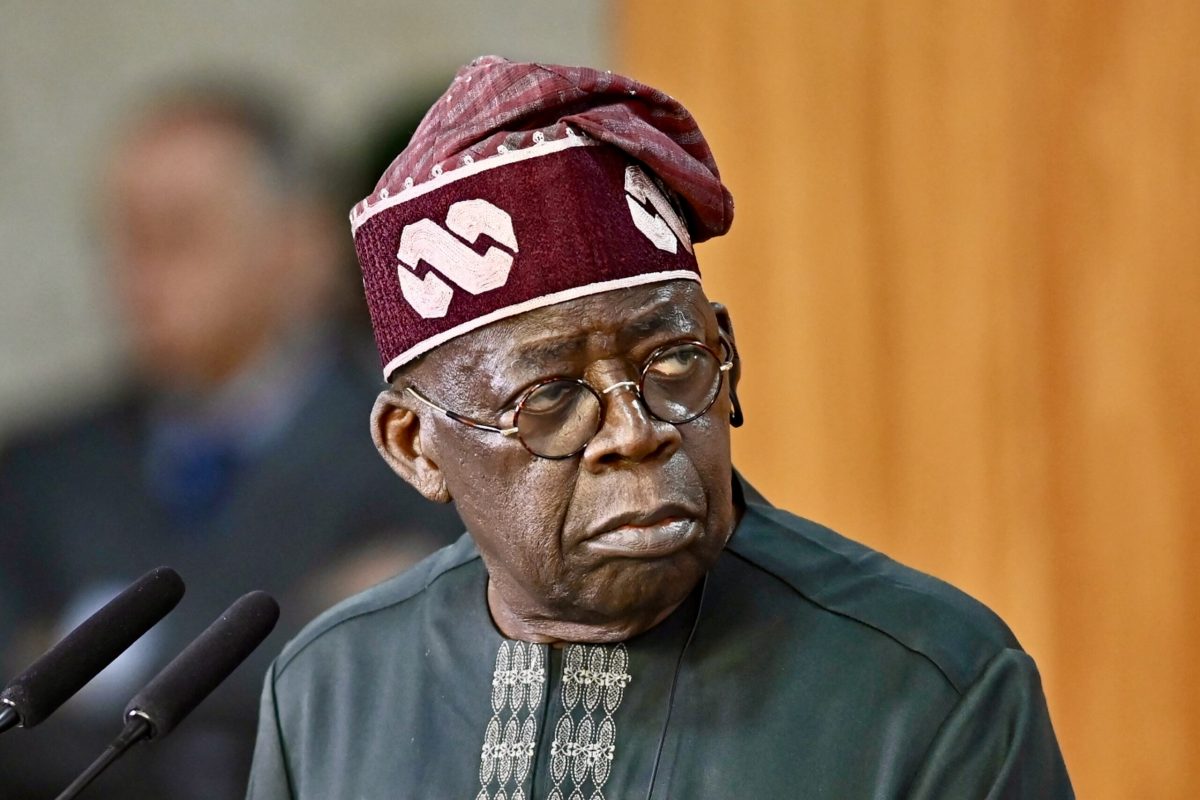
Explosive Senate debate sees approval of two Tinubu tax reform bills while spurning a VAT rise amid Nigeria’s economic storm.
Yesterday’s plenary session of the Nigerian Senate was nothing short of a political drama, as lawmakers cast a decisive verdict approving two of President Bola Tinubu’s quartet of tax reform bills while simultaneously rebuffing a bid to raise the Value-Added Tax (VAT) rate from 7.5 per cent to 10 per cent.
The session, which resumed after a brief postponement to iron out disputed clauses, culminated in a voice vote that saw overwhelming support for the Nigeria Revenue Service Establishment Bill and the Joint Revenue Board Establishment Bill.
Meanwhile, the proposal to hike VAT was summarily rejected amid mounting public disquiet over living costs, preserving the existing 7.5 per cent levy.
Key Provisions Approved
The first landmark legislation now on its way to presidential assent is the Nigeria Revenue Service (NRS) Establishment Bill, which dissolves the long-standing Federal Inland Revenue Service (FIRS) and replaces it with a revamped revenue body endowed with fresh powers to trace, freeze, and confiscate proceeds from tax fraud.
The Bill also provides for a board chaired by a non-executive chairman and headed operationally by an Executive Vice-Chairman, signalling a shift towards corporate-style governance.
Equally contentious was the Joint Revenue Board Establishment Bill, designed to harmonise tax administration across federal, state, and local tiers – a perennial challenge in Nigeria’s fiscal architecture.
Contentious Clauses and Their Removal
Earlier drafts of the NRS Bill included draconian penalties for disclosure of institutional information, with fines up to ₦5 million – a measure critics decried as autocratic and anti-whistleblower.
However, in a rare display of legislative caution, senators expunged this clause, branding it “self-serving” and “obnoxious” during clause-by-clause consideration by the Committee of the Whole.
Senate Leadership Speaks
Shortly after the voice vote, Senate President Godswill Akpabio hailed his colleagues for their cooperative spirit, asserting that the newly approved bills “will add immense value to governance and transform the way taxes are collected and distributed in Nigeria”.
Deputy Senate President Barau Jibrin echoed this sentiment, emphasising that initial rancour gave way to consensus once a special engagement committee consulted stakeholders – from religious bodies to the Nigerian Governors’ Forum.
A Day of High Drama
The legislative marathon commenced at noon and extended into the evening, with senators vowing to conclude work on the remaining two bills – the Nigeria Tax Administration Bill and the Nigeria Tax Bill – even if it meant sitting until 10 p.m..
Their determination underscored the gravity of the overhaul, which President Tinubu pitched in October 2024 as pivotal to shoring up Nigeria’s eroding revenue base.
Public Concern Triumphs Over Revenue Ambitions
The Senate’s decision to freeze the VAT at 7.5 per cent represents a rare victory for public sentiment over fiscal engineering. Critics of the proposed 10 per cent rate warned that any uptick in consumption tax would exacerbate inflationary pressures already battering households.
By siding with consumer interests, the Senate positioned itself as a bulwark against further cost-of-living shocks, but risked undercutting projected revenue targets outlined in the National Fiscal Framework.
Political Calculus and Electoral Underpinnings
Many analysts interpret the VAT rejection as political calculus ahead of the 2027 general elections, with senators eager to avoid alienating constituents enduring skyrocketing prices.
Such manoeuvring highlights the tension between short-term electoral expediency and the imperative for long-term fiscal sustainability in Nigeria’s precarious economy.
Economic Implications: Revenue Gap and Growth Prospects
While the NRS and Joint Revenue Board Bills promise improved tax collection and administrative efficiency, failure to raise VAT leaves a yawning revenue gap in the federal purse.
Economists warn that bridging this shortfall may necessitate alternative measures – including broadening the tax net and tackling evasion – lest fiscal deficits swell and derail growth projections.
What Lies Ahead
With two reform bills now en route for presidential signature, all eyes turn to this Thursday’s session, when the Senate will wrestle with the remaining measures.
Observers caution that further delays or last-minute revisions could imperil the entire package, undermining both investor confidence and the credibility of President Tinubu’s reform agenda.
The Senate’s passage of the Nigeria Revenue Service Establishment Bill and Joint Revenue Board Establishment Bill has elicited fervent reactions across Nigeria’s political, economic, and social spectrum. Business leaders warn of administrative bottlenecks despite nodding to potential efficiency gains.
Labour unions, notably the Trade Union Congress (TUC), have roundly rejected any incremental VAT increase, labelling it an assault on already squeezed workers.
Consumer groups forecast further inflationary pressures if taxes creep even marginally upwards.
Meanwhile, the Nigeria Governors’ Forum has officially backed the broader reform agenda, offering conditional support for harmonised revenue-sharing frameworks.
Regional flashpoints have emerged between the economically vibrant South and the structurally weaker North, where leaders fear skewed allocations under the Joint Revenue Board Bill.
Economists and multilateral institutions caution that maintaining VAT at 7.5 per cent leaves a substantial revenue gap that must be bridged through other, potentially unpopular, measures.
Stakeholder Reactions
Business Community’s Cautious Endorsement
Leaders of the Manufacturers Association of Nigeria (MAN) have expressed guarded approval of establishing the Nigeria Revenue Service, anticipating streamlined processes but warning of teething problems in implementation.
The Lagos Chamber of Commerce and Industry urged clear operational guidelines to prevent overlapping mandates between federal and state tax authorities.
International investors, according to a Bloomberg report, welcomed the potential for improved transparency but flagged concerns over the rejection of the VAT hike, which they believe was essential to shore up government coffers.
Labour Unions’ Uncompromising Stand
The Trade Union Congress (TUC) leadership has been unequivocal in its rejection of any VAT increase, arguing that Nigeria’s workers are already battling one of the highest real inflation rates globally.
Festus Osifo, TUC President, warned that a VAT rise would deepen poverty levels and spark industrial unrest.
Similarly, the Nigeria Labour Congress (NLC) undertook a survey revealing that over 70 per cent of respondents believe a VAT hike would exacerbate living costs and hunger.
Consumer and Civil Society Voices
Consumer rights organisations, such as the Consumer Advocacy Foundation of Nigeria, have decried the proposed VAT increase as regressive, underscoring its disproportionate impact on low-income households.
Civil society think-tanks also highlighted fears that, absent a VAT rise, the government might resort to indirect levies or increased user charges on essential services.
Governors’ Forum: Conditional Support
At its January meeting, the Nigeria Governors’ Forum (NGF) reiterated strong support for comprehensive tax reforms, including the harmonisation of federal, state, and local levies.
However, the NGF insisted on safeguards to protect sub-national revenue shares, particularly in states with narrower fiscal bases.
The Forum’s backing lends political heft to the Joint Revenue Board Bill but marks caveats that could shape final regulations.
Regional Ramifications
North–South Fiscal Faultlines
Northern governors and traditional leaders have voiced alarm at the Joint Revenue Board Bill’s formula, fearing a shift towards contributions-based distribution that favours wealthier southern states.
They argue that a continued 50 per cent equal allocation model must be preserved to safeguard the North’s developmental needs.
Southern counterparts, conversely, argue that performance-based sharing will incentivise tax compliance and economic activity across all regions.
Impact on State Budgets
States heavily dependent on federal allocations—especially those in the Niger Delta—warn that reduced oil revenues already strain budgets, making expanded own-source revenue vital.
The Joint Revenue Board’s success hinges on local capacity to broaden tax bases, a challenge in states with informal economies.
Detailed Economic Analysis
Revenue Gap and Fiscal Sustainability
Retaining VAT at 7.5 per cent leaves an estimated shortfall of ₦1.2 trillion against projections under a 10 per cent regime.
The IMF notes that Nigeria’s tax-to-GDP ratio must exceed 15 per cent to stabilize public finances; current reforms could raise this to 11 per cent if fully implemented.
Alternative Revenue Measures
Economists propose measures including digital taxation, environmental levies, and property taxes to compensate for the VAT gap.
The World Bank’s RESET and ARMOR facilities underscore the importance of non-oil revenue diversification, committing $2.25 billion to support these reforms.
Inflationary Dynamics
Surveys indicate Nigerians anticipate inflation peaking at 32 per cent this quarter; any tax hikes, even marginal, could fuel further price rises.
Central Bank data correlates previous VAT increases with a 2–3 per cent uptick in headline inflation.
Prospects for Growth
Despite short-term pain, the newly established Nigeria Revenue Service aims to reduce evasion, potentially boosting annual revenues by 10 per cent in the medium term.
Multilateral forecasts project GDP growth edging up to 3.6 per cent in 2025 if reforms are sustained.
The final act of this epic tax reform drama will centre on the Nigeria Tax Administration Bill and the Nigeria Tax Bill, scheduled for third reading imminently, with fierce lobbying by regional blocs and party stakeholders poised to shape their fate.
Deep fissures within the ruling APC, stoked by northern governors’ vehement opposition and PDP’s demand for broader consultation, risk derailing the remaining measures unless deft political manoeuvring prevails.
Legislative insiders warn that any attempt to force passage without genuine consensus could spark a constitutional impasse and fresh public protests.
To avert fiscal gridlock, experts urge phased implementation, enhanced stakeholder engagement, and complementary revenue-raising measures—ranging from digital levies to property taxes—to plug the looming ₦1.2 trillion VAT shortfall.
Political Fallout and Party Dynamics
APC Divisions and Northern Backlash
Despite President Tinubu’s reassurance that no region would be disadvantaged, northern governors under the Northern States Governors’ Forum openly directed their senators to reject clauses they judged inimical to the region’s fiscal interests.
This unprecedented revolt within the ruling APC underscores bitter north–south tensions over proposed VAT redistribution, echoing the deep historic divide chronicled by the Financial Times.
The Senate’s earlier expunging of draconian secrecy provisions from the Nigeria Revenue Service Bill did little to mollify critics, who warned that half-baked reforms threaten Nigeria’s fragile unity.
Opposition Parties Demand Broader Dialogue
The PDP, sensing a political opening, has called for the tax bills to be subjected to fresh stakeholder consultations rather than raw majority votes.
Its spokesperson argued that “arguments must be based on facts,” urging the National Assembly to pause and engage civil society, labour, and state authorities comprehensively.
Failure to heed this counsel could see the opposition mobilise mass protests under the banner of consumer rights and democratic accountability.
Legislative Prospects for Remaining Bills
Third Reading Countdown
Parliamentary records show the Nigeria Tax Administration Bill and the Nigeria Tax Bill advancing to third reading on Thursday, with an ad hoc committee’s report awaiting full plenary debate.
According to Taiwo Oyedele, special adviser on fiscal policy, senators will resume by noon and may sit until 10 p.m. to finalise the package.
Observers note that any last-minute amendments by the Committee of the Whole could substantially alter revenue-sharing formulas and enforcement powers.
Key Hurdles Ahead
The Tax Administration Bill’s provisions for expanded audit and compliance mechanisms have drawn fire from state governors fearful of federal overreach.
Concurrently, senators from oil-producing states are demanding retention of generous derivation entitlements, threatening to stall the bill unless their demands are accommodated.
Success hinges on striking a delicate balance: safeguarding sub-national revenue while forging a unified national framework.
Final Recommendations and Outlook
Phased Implementation and Transitional Safeguards
To mitigate social backlash, experts advocate a phased rollout of new administrative powers, coupled with transitional allowances for vulnerable households.
Introducing digital taxation on e-services and an environmental levy on polluting industries could help bridge the ₦1.2 trillion VAT gap without imposing blanket consumption taxes .
Enhanced Stakeholder Engagement
Institutionalising quarterly fiscal roundtables—bringing together federal, state, and local officials, alongside labour unions and business associations—would bolster transparency and pre-empt conflicts.
Civil society bodies like the Consumer Advocacy Foundation should be granted observer status in parliamentary finance committees to represent consumer interests.
Building Trust Through Data and Accountability
Mandating the Nigeria Revenue Service to publish monthly collection figures and deploy a public complaints portal would allay fears of arbitrary enforcement.
An independent Tax Appeal Tribunal, adequately funded and insulated from political influence, must be operationalised before further powers are transferred to the NRS.
A United Path Forward
Ultimately, Nigeria’s fiscal destiny rests on forging consensus across regional and partisan divides.
By delicately balancing revenue ambitions with social equity, and embedding robust checks and balances, the remaining two bills can emerge as a blueprint for a modern, inclusive tax regime—one fit for the complexities of the 21st-century Nigerian state.