By Editor
After years of delays and $1.5 billion in renovations, the Port Harcourt Refinery finally resumes production. With promises of cheaper fuel and reduced imports, will this revival transform Nigeria’s oil sector or repeat the failures of the past? Explore the implications for the economy, politics, and global energy markets in this in-depth analysis.
A Glimpse Into the Elusive Promise of Self-Sufficiency

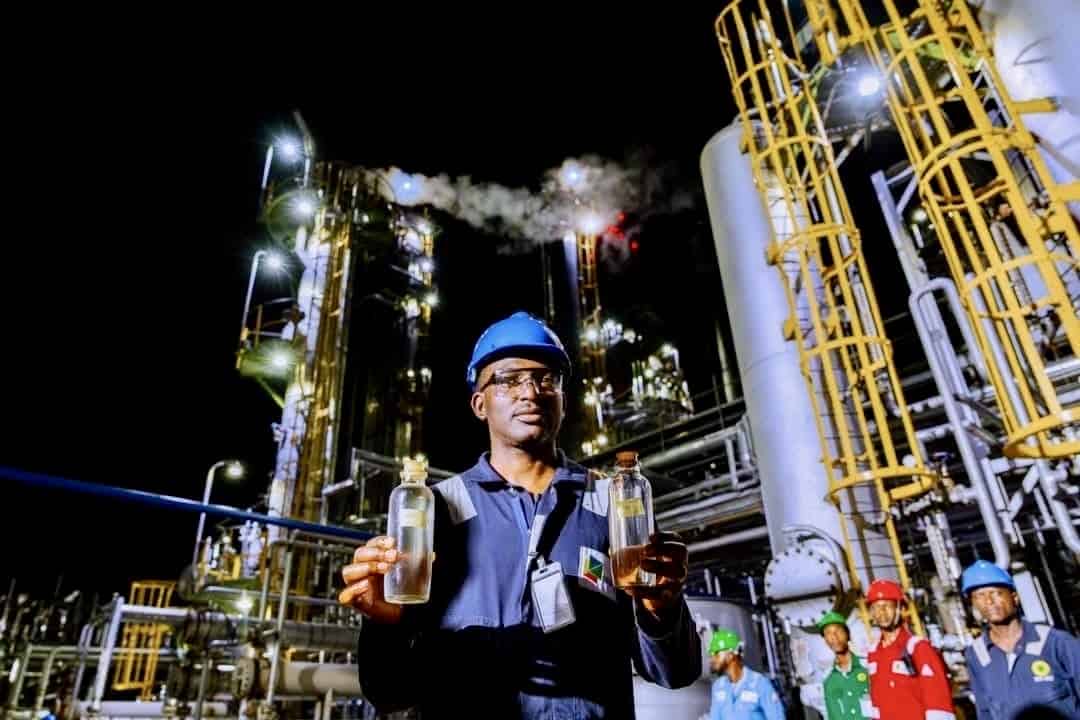
Pix 1: After years of delays and $1.5 billion in renovations, the Port Harcourt Refinery finally resumes production. November 26, 2024 Pix 2: After years of delays and $1.5 billion in renovations, the Port Harcourt Refinery finally resumes production. November 26, 2024. Pix 3: After years of delays and $1.5 billion in renovations, the Port Harcourt Refinery finally resumes production. November 26, 2024. 
Pix 4: After years of delays and $1.5 billion in renovations, the Port Harcourt Refinery finally resumes production. November 26, 2024.


The long and torturous journey to revive Nigeria’s Port Harcourt refinery has culminated in a historic moment—fuel production has finally commenced. For a nation beleaguered by decades of infrastructural decay and an unrelenting dependence on imported refined products, this development is laden with the weight of promise and skepticism. The Nigerian National Petroleum Company Limited (NNPC), through its spokesperson Olufemi Soneye, broke the news on Tuesday, confirming that truck loading of refined products has already begun. A simultaneous update on X (formerly Twitter) further amplified the announcement, setting the stage for what appears to be a much-awaited leap towards energy self-reliance.
The refinery, situated in the oil-rich Niger Delta, boasts an initial production capacity of 60,000 barrels per day. This output includes Premium Motor Spirit (PMS), diesel, and other refined products. It represents a critical step forward, especially as Nigerians have endured years of unfulfilled promises and policy inconsistencies. However, a closer examination of this development reveals deep-seated challenges and raises critical questions about the refinery’s ability to meet lofty expectations.
A Legacy of Failures and Broken Promises
Port Harcourt Refinery, one of three owned by the Federal Government and operated by NNPC, has seen better days. Commissioned in 1965, it once symbolised the nation’s ambition to dominate the oil and gas sector in Africa. Over the years, however, it fell into disrepair, becoming a glaring example of Nigeria’s inability to maintain its critical infrastructure. The refinery was rendered moribund for years, with successive governments pledging and failing to breathe life back into its operations.
In March 2021, the Buhari administration announced a $1.5 billion loan to finance the refinery’s renovation and modernisation. This massive injection of funds was met with cautious optimism, as many Nigerians questioned the wisdom of sinking such an amount into an aging facility. Skepticism grew when deadlines for completion were repeatedly missed. Between 2021 and 2024, no fewer than seven promised dates came and went, leaving Nigerians disillusioned. The repeated failures underscored a troubling pattern of overpromising and underdelivering that has plagued Nigeria’s public sector.
NNPC’s Defence: Navigating a Brownfield Project
In its most recent explanation for the delays, NNPC cited the inherent complexities of brownfield projects. According to Soneye, unforeseen risks emerged during the rehabilitation process, disrupting the commissioning timeline. While mechanical completion was reportedly achieved months ago, commissioning critical equipment and processing units proved arduous. Soneye argued that such challenges are typical of large-scale industrial renovations, but critics remain unconvinced, pointing to inadequate planning and inefficiency as underlying factors.
Brownfield projects indeed come with inherent risks, including the integration of new technologies into existing systems, safety hazards, and unexpected structural issues. However, the NNPC’s handling of these challenges raises questions about its project management capacity. Why were these risks not adequately anticipated during the planning phase? Could the delays and additional costs have been mitigated through better oversight and accountability?
A Long Road Ahead for Fuel Cost Reduction
The commencement of production at Port Harcourt refinery comes at a time of unprecedented economic hardship for Nigerians. Fuel prices have skyrocketed following the removal of subsidies earlier this year, leaving many households struggling to make ends meet. Expectations are high that domestic refining will lower the cost of fuel, as crude no longer needs to be shipped abroad for processing and then re-imported at exorbitant rates.
Yet, early indications suggest that the journey to affordable fuel remains fraught with obstacles. With an initial capacity of 60,000 barrels per day, the Port Harcourt refinery is far from meeting national demand. Nigeria consumes an estimated 1.52 million barrels of PMS daily, highlighting a glaring supply gap that will persist even with the combined output of the Port Harcourt and Dangote refineries.
Moreover, questions linger about the pricing of refined products. Will the NNPC and Federal Government adopt a transparent pricing framework that passes potential cost savings on to consumers? Or will entrenched inefficiencies and corruption dilute the anticipated benefits? History suggests that optimism should be tempered with caution.
A Symbolic Milestone or a Turning Point?
While the start of operations at Port Harcourt refinery is undoubtedly a milestone, it is far from the solution to Nigeria’s refining woes. Beyond production capacity, the broader operational environment, including distribution logistics, regulatory oversight, and market dynamics, will play critical roles in determining the refinery’s long-term impact.
Nigerians have grown weary of symbolic milestones that fail to translate into tangible improvements in their lives. The memories of unfulfilled promises tied to the refinery’s revival are still fresh. For this development to mark a genuine turning point, it must herald a shift towards efficiency, accountability, and a commitment to addressing the systemic challenges plaguing Nigeria’s oil and gas sector.
As the trucks begin to roll out of Port Harcourt refinery, transporting fuel to various parts of the country, the eyes of a skeptical populace remain firmly fixed on NNPC. Can the state-owned corporation deliver on its latest promise, or will this too dissolve into yet another chapter in Nigeria’s long history of dashed expectations?
Unpacking the Political and Economic Implications of Port Harcourt Refinery’s Revival
The commencement of production at the Port Harcourt refinery is not just a technical or economic milestone—it is deeply political, with far-reaching ramifications for Nigeria’s energy policy, governance, and macroeconomic stability. This development emerges amidst a backdrop of rising public discontent over the cost of living, the removal of fuel subsidies, and perceived governmental ineptitude in managing the nation’s vast oil resources. The Nigerian National Petroleum Company Limited (NNPC) and the Federal Government are now on trial in the court of public opinion, where the success or failure of this venture could shape their legacies.
A Fragile Economy Clings to an Oil Lifeline
Nigeria’s economy remains precariously dependent on crude oil, which accounts for a significant portion of government revenue and foreign exchange earnings. However, this dependence has become a double-edged sword. While the country benefits from high global oil prices, its lack of domestic refining capacity has subjected it to the volatile and costly dynamics of importing refined petroleum products. This has drained the treasury, inflated the national debt, and left millions vulnerable to external shocks.
The revival of the Port Harcourt refinery could serve as a partial remedy to this ailment, reducing Nigeria’s reliance on imports and alleviating pressure on the naira. Yet, questions remain about whether the refinery’s operations will be economically viable in the long run. The $1.5 billion loan secured for its rehabilitation adds to Nigeria’s already mounting debt profile, raising concerns about debt sustainability. For the refinery to justify this investment, it must operate at optimal capacity, adhere to international best practices, and generate consistent revenue streams—an expectation many observers view with skepticism, given NNPC’s history of inefficiencies.
A Question of Transparency and Governance
Transparency in the oil and gas sector has long been a sore point in Nigeria, with NNPC often at the centre of allegations ranging from mismanagement to outright corruption. The rehabilitation and subsequent operation of the Port Harcourt refinery present an opportunity for the company to rewrite its narrative. However, the opacity surrounding the project’s financing, execution, and operational plans continues to raise red flags.
For instance, despite the fanfare surrounding the refinery’s commissioning, key details remain shrouded in mystery. What agreements were struck with contractors and financiers? How does the NNPC plan to manage production costs, especially in light of global price fluctuations? And perhaps most importantly, will the savings from domestic refining be passed on to consumers, or will they be siphoned off by rent-seeking elites?
The refinery’s operations also intersect with broader governance challenges in Nigeria’s oil-rich Niger Delta. Decades of neglect and environmental degradation have fuelled militancy and unrest in the region, jeopardising oil production and refining activities. Without a concerted effort to engage local communities, address environmental concerns, and ensure that the benefits of the refinery are equitably distributed, this venture risks exacerbating existing tensions.
Fuel Subsidy Politics and Public Perception
The revival of the Port Harcourt refinery comes at a politically sensitive moment. Earlier this year, the Federal Government removed fuel subsidies, arguing that they were unsustainable and counterproductive. While the move was hailed by economic reformists, it sparked widespread outrage, as fuel prices tripled overnight, triggering inflation and compounding the hardships faced by ordinary Nigerians.
The NNPC and the government have framed the Port Harcourt refinery as a partial solution to these woes, promising that domestic refining will bring down fuel prices in the long term. However, this narrative faces a critical test in the months ahead. If the refinery’s operations fail to translate into tangible cost reductions for consumers, the government’s credibility will suffer another blow, further eroding public trust.
Moreover, the refinery’s initial capacity of 60,000 barrels per day falls woefully short of national demand, which exceeds 1.5 million barrels daily. This glaring mismatch means that Nigeria will continue to rely heavily on imports, at least in the short to medium term. The government’s claim that the refinery will ease the burden on Nigerians may thus prove premature, if not outright misleading.
The Geopolitical Dimension: Competing with Dangote Refinery
The Port Harcourt refinery’s commissioning also sets the stage for an intriguing geopolitical and economic dynamic within Nigeria’s oil and gas sector. Just two months earlier, the privately-owned Dangote Refinery began producing Premium Motor Spirit (PMS), marking a watershed moment in Nigeria’s refining history. With a staggering capacity of 650,000 barrels per day, the Dangote Refinery dwarfs the Port Harcourt facility, raising questions about the latter’s relevance and competitiveness.
NNPC’s decision to proceed with the Port Harcourt project despite Dangote’s dominance has sparked debate among industry watchers. Some argue that the two facilities can coexist, collectively reducing Nigeria’s reliance on imports. Others contend that the Port Harcourt refinery will struggle to compete, particularly if it fails to modernise its operations and adopt innovative practices. The potential for a public-private rivalry looms large, with both facilities vying for market share in an industry notorious for its opacity and inefficiency.
The Niger Delta Question
The Niger Delta region, home to the Port Harcourt refinery, is no stranger to controversy. For decades, its vast oil wealth has coexisted with abject poverty, environmental devastation, and socio-political unrest. While the revival of the refinery offers a glimmer of hope, it also brings renewed scrutiny to the government’s handling of Niger Delta affairs.
Local communities have long demanded a greater share of oil revenues, better infrastructure, and remediation for environmental damage caused by decades of oil exploration. The Port Harcourt refinery’s operations must navigate this complex terrain, balancing the demands of economic efficiency with the imperative of social justice. Failure to do so could reignite tensions, potentially disrupting refinery operations and undermining its economic viability.
Balancing Hope and Skepticism
The revival of the Port Harcourt refinery represents a delicate balancing act for Nigeria. On one hand, it offers a rare opportunity to reduce the country’s dependence on imported refined products, create jobs, and stimulate economic growth. On the other hand, it is mired in challenges that could derail its potential, from technical inefficiencies and governance lapses to socio-political tensions in the Niger Delta.
As the trucks begin to roll out, carrying the refinery’s first batches of fuel to the Nigerian market, the symbolism of this moment is undeniable. Yet, the path to energy self-reliance remains fraught with uncertainty. Nigerians are watching closely, hoping for a rare success story in a sector that has delivered more disappointments than triumphs.
Global Perspectives on Nigeria’s Refining Ambitions
The Port Harcourt refinery’s revival and the commencement of domestic fuel production represent a pivotal moment, not only for Nigeria but also within the broader framework of global energy dynamics. As the world undergoes a transformative energy transition, the implications of Nigeria’s refining ambitions extend far beyond its borders. From regional competition in Africa to the geopolitics of oil markets and the challenges of global decarbonisation, the refinery’s rebirth is inextricably linked to a rapidly evolving energy landscape.
Africa’s Refining Race: A New Era of Competition
Nigeria has long been Africa’s largest crude oil producer, yet its status as a net importer of refined products has undermined its regional clout. The Dangote Refinery’s entry into the market earlier this year shifted the paradigm, positioning Nigeria as a potential refining hub. With the Port Harcourt refinery now operational, Nigeria is doubling down on this ambition, seeking to reclaim a leadership role in Africa’s oil and gas sector.
However, Nigeria faces stiff competition from other African countries, including Angola, Algeria, and South Africa, all of which have been investing heavily in refining capacity. These nations aim to capture a share of the continent’s growing demand for refined petroleum products, which is driven by rapid urbanisation, industrialisation, and population growth. If Nigeria fails to optimise the operations of its refineries, it risks being outpaced by more efficient players, further entrenching its dependence on imports despite its significant oil reserves.
Geopolitics of Oil: Navigating a Shifting Landscape
The commissioning of the Port Harcourt refinery also has implications for Nigeria’s position in the global oil market. With international oil prices remaining volatile due to geopolitical tensions, production cuts by OPEC+, and the ongoing fallout from the Russian-Ukrainian conflict, oil-exporting nations like Nigeria are under pressure to maximise their value chains. By refining crude locally, Nigeria could capture additional revenue streams while insulating itself from some of the uncertainties of global markets.
Yet, this strategy comes with risks. Refining is a capital-intensive and highly competitive business. As the global market moves towards a post-oil economy, marked by declining demand for fossil fuels in developed countries, Nigeria must contend with the possibility of stranded assets. The question, therefore, is whether the Port Harcourt refinery can remain viable in an era where renewable energy and electric vehicles are rapidly gaining ground.
Moreover, the geopolitical alliances surrounding Nigeria’s oil sector add another layer of complexity. The $1.5 billion loan used to rehabilitate the refinery reportedly involved international financiers and contractors, raising questions about the geopolitical strings attached to the project. Is the refinery’s revival part of a larger geopolitical calculus by foreign powers seeking to deepen their influence in Nigeria? If so, how will this impact Nigeria’s sovereignty and energy security in the long term?
Energy Transition: Straddling Two Worlds
The world’s transition to cleaner energy sources presents a double-edged sword for Nigeria’s oil refining ambitions. On one hand, there is still significant demand for fossil fuels in emerging economies, where energy poverty and industrial growth are driving consumption. On the other hand, global climate commitments and technological advancements are accelerating the shift away from hydrocarbons, leaving oil-dependent economies vulnerable.
The Port Harcourt refinery’s operations must therefore navigate this delicate balance. While domestic refining reduces Nigeria’s environmental footprint by eliminating the carbon emissions associated with crude oil exports and refined product imports, it does not align with the global push for decarbonisation. Over time, the sustainability of the refinery—and Nigeria’s broader oil sector—may hinge on its ability to integrate renewable energy sources and adopt cleaner refining technologies.
The Role of Foreign Investment and Partnerships
Foreign investment has played a critical role in the rehabilitation of the Port Harcourt refinery, underscoring the importance of strategic partnerships in driving Nigeria’s refining ambitions. However, the terms of these partnerships remain opaque, fuelling speculation about whether Nigeria secured a fair deal.
The involvement of Italian firm Tecnimont in the refinery’s rehabilitation, for instance, highlights the reliance on foreign expertise in executing such complex projects. While this underscores the importance of international collaboration, it also raises concerns about the domestic capacity gap. How can Nigeria leverage these partnerships to build local expertise and reduce its dependence on foreign contractors in future projects?
Furthermore, foreign investment in Nigeria’s oil sector is often accompanied by demands for favourable fiscal policies, regulatory concessions, and profit-sharing agreements. These dynamics can create a conflict of interest between the need to attract foreign capital and the imperative to protect national interests. As the Port Harcourt refinery ramps up production, transparency and accountability will be crucial in ensuring that Nigerians—not foreign entities—reap the lion’s share of the benefits.
A Blueprint for Regional Integration?
The Port Harcourt refinery’s revival also has potential implications for regional integration in West Africa. By increasing its refining capacity, Nigeria could position itself as a supplier of refined products to neighbouring countries, many of which lack the infrastructure to process crude oil. This could strengthen Nigeria’s economic ties within the Economic Community of West African States (ECOWAS) and enhance its regional influence.
However, such ambitions are contingent on the refinery’s ability to produce at competitive prices and meet international quality standards. Nigeria’s notoriously weak infrastructure, including dilapidated roads and erratic power supply, poses a significant challenge to the efficient distribution of refined products. Without addressing these structural bottlenecks, the vision of Nigeria as a regional refining hub may remain a pipe dream.
Conclusion: A Cautious Optimism
The Port Harcourt refinery’s return to operation marks a significant milestone for Nigeria, offering a glimmer of hope in an otherwise bleak economic landscape. However, the journey ahead is fraught with challenges. From navigating global energy transitions and regional competition to addressing governance deficits and operational inefficiencies, the refinery’s success is far from guaranteed.
For Nigerians, the stakes are high. The promise of reduced fuel costs, job creation, and energy security remains tantalisingly within reach but hinges on the ability of policymakers, the NNPC, and other stakeholders to deliver on their commitments. In the end, the Port Harcourt refinery’s revival must serve as a catalyst for deeper reforms in Nigeria’s oil and gas sector—reforms that prioritise efficiency, transparency, and sustainability over short-term political gains.
As the first batches of refined fuel begin to trickle into the market, they carry with them the hopes of a nation yearning for a brighter, more self-reliant future. Whether those hopes will be fulfilled or dashed, however, remains a question only time can answer.