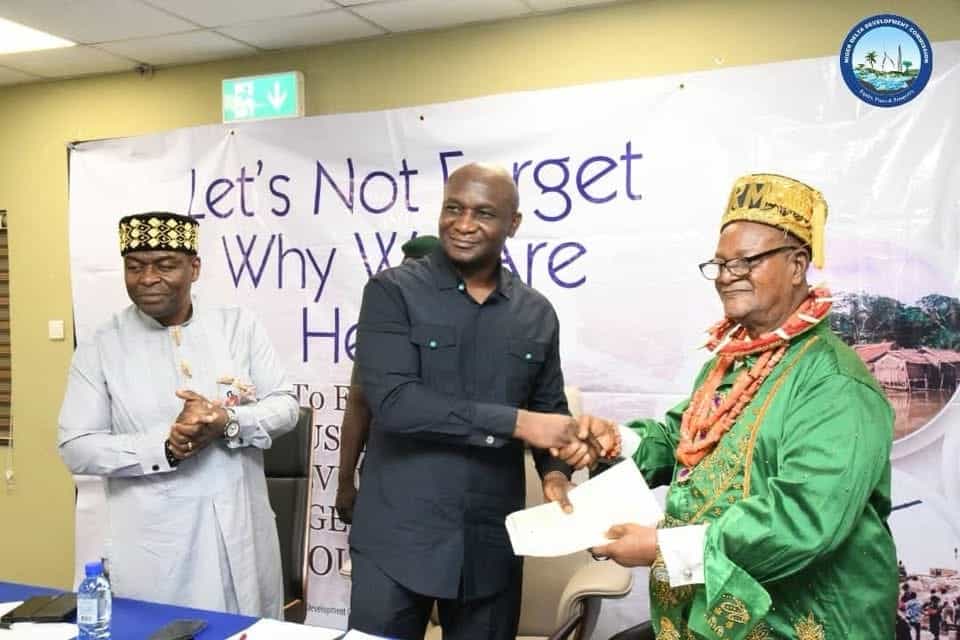
PORT HARCOURT, Rivers State — In a groundbreaking moment for community engagement in the Niger Delta, a delegation from the Ogbakor ethnic nationality in Ikwerre Local Government Area of Rivers State has, for the first time, paid a courtesy visit to the Niger Delta Development Commission (NDDC) headquarters in Port Harcourt. This historic visit, which has been long overdue, has amplified calls for the equitable treatment of the Ikwerre people—one of the communities that have often found themselves marginalised in the grand developmental agenda of the NDDC.

Led by Sir Barr. Godspower Onuekwa, a distinguished legal practitioner and vocal advocate for Ikwerre rights, the delegation did not mince words. Onuekwa, known for his fiery rhetoric and unyielding stance on community development, emphasised a critical point that resonates across the Niger Delta: the largest ethnic group in Rivers State is being sidelined in the distribution of development projects and economic opportunities by the very commission tasked with addressing the region’s historical neglect.
A Cry for Inclusion: Ikwerre’s Position in Rivers State Politics and Development
Onuekwa’s message was clear—Ikwerre youths and communities must no longer be treated as an afterthought. Despite their numerical strength and strategic importance in the socio-political landscape of Rivers State, the Ikwerre people have often been left out of the decision-making process that shapes their future. This marginalisation, according to Onuekwa, has stunted the growth of Ikwerre communities, leaving them grappling with underdevelopment, unemployment, and lack of access to basic social amenities.
“Enough is enough,” Onuekwa declared passionately. “We can no longer stand by and watch as others benefit from the resources and opportunities that rightfully belong to us. The NDDC must recognise the Ikwerre people as critical stakeholders in the development of the Niger Delta. Our youths must be engaged, our communities must be empowered, and our voices must be heard.”
A Blueprint for Development: The Ikwerre Community’s Demands
During the visit, Onuekwa presented a meticulously prepared document outlining the pressing needs of the Ikwerre community. While the specifics of the document have not been made public, sources within the delegation revealed that it includes demands for infrastructural development, educational scholarships, youth empowerment programmes, and increased representation of Ikwerre people in key decision-making positions within the NDDC.
This formal presentation is not merely a list of requests but a blueprint for the socio-economic transformation of the Ikwerre land. It underscores the community’s readiness to collaborate with the NDDC in implementing sustainable development projects that will uplift the lives of their people.
NDDC’s Response: Promises of Partnership and Grassroots Engagement
In response to the passionate appeal from the Ikwerre delegation, Dr. Samuel Ogbuku, the Managing Director/CEO of the NDDC, sought to reassure the community of the Commission’s commitment to inclusive development. Dr. Ogbuku, whose tenure has been marked by a renewed focus on transparency and community engagement, highlighted several initiatives designed to promote sustainable development across the Niger Delta.
Foremost among these initiatives is Project Hope, a flagship programme aimed at fostering youth engagement in various sectors, including entrepreneurship, vocational training, and leadership development. Dr. Ogbuku emphasised that the NDDC recognises the untapped potential of the region’s youth and is determined to create platforms that will enable them to contribute meaningfully to the socio-economic growth of their communities.
Another significant initiative discussed was the Niger Delta Chambers of Commerce, an ambitious project that seeks to integrate youths into the region’s commercial activities. By providing mentorship, access to capital, and networking opportunities, the NDDC hopes to nurture a new generation of business leaders who will drive economic growth in the Niger Delta.
Scholarships as a Catalyst for Change
Education, often hailed as the cornerstone of development, was also a key focus of Dr. Ogbuku’s response. He announced that the NDDC is set to roll out an extensive scholarship program aimed at supporting postgraduate education for Niger Delta youths. The programme will offer 200 scholarships for studies abroad and an additional 600 scholarships for local institutions, ensuring that no deserving student is left behind due to financial constraints.
“Our commitment to education is unwavering,” Dr. Ogbuku stated. “We believe that by investing in the education of our youths, we are investing in the future of the Niger Delta. These scholarships are not just financial aid; they are a testament to our belief in the transformative power of education.”
The Question of Trust: Can NDDC Deliver on Its Promises?
While the NDDC’s response has been met with cautious optimism, it has also raised a critical question: Can the Commission deliver on its promises? The history of the NDDC is marred by allegations of corruption, mismanagement, and political interference, which have often undermined its ability to execute developmental projects effectively.
For many in the Ikwerre community, words alone are not enough. They demand action—tangible, visible, and impactful action. The trust deficit between the NDDC and the communities it serves is a significant hurdle that must be overcome if the Commission is to achieve its developmental goals.
As the Ikwerre delegation left the NDDC headquarters, the mood was a mix of hope and skepticism. Hope that this historic engagement will mark the beginning of a new era of inclusion and development for the Ikwerre people, and skepticism rooted in the Commission’s track record of unfulfilled promises.
Will the NDDC rise to the occasion and deliver on its promises, or will this historic visit be remembered as yet another chapter in the long history of broken dreams in the Niger Delta? The coming months will be critical in determining the answer.
The Politics of Marginalisation—Ikwerre’s Struggle for Recognition in Rivers State
The visit of the Ogbakor Ikwerre delegation to the Niger Delta Development Commission (NDDC) has sparked a broader conversation about the systemic marginalisation of the Ikwerre ethnic nationality within Rivers State. Despite being the most populous ethnic group in the state and wielding significant political influence, the Ikwerre people have often been relegated to the sidelines in the developmental agenda of both state and federal institutions.
Historically, the Ikwerre have been a formidable force in the politics of Rivers State, producing influential figures who have shaped the region’s governance. Yet, this political prominence has not translated into proportional development for their communities. Instead, they have watched as other ethnic groups within the Niger Delta, often with lesser political clout, receive preferential treatment in the allocation of resources and developmental projects.
A History of Neglect: The Ikwerre Experience
To understand the depth of the Ikwerre’s grievances, one must examine the historical context of their relationship with the NDDC and other government agencies. Established in 2000, the NDDC was envisioned as a catalyst for the socio-economic transformation of the Niger Delta, a region long plagued by underdevelopment, environmental degradation, and political neglect. However, for the Ikwerre people, the reality has often fallen short of this vision.
Despite their proximity to Port Harcourt, the oil and gas hub of Nigeria, many Ikwerre communities remain trapped in a cycle of poverty and underdevelopment. Basic infrastructure such as roads, schools, and healthcare facilities are either non-existent or in a state of disrepair. Unemployment among Ikwerre youths is alarmingly high, leading to a sense of frustration and disillusionment with the government.
This sense of neglect is not limited to physical infrastructure but extends to human capital development. While other ethnic groups in the Niger Delta have benefitted from NDDC-sponsored scholarships and skills acquisition programmes, the Ikwerre have often been overlooked. This exclusion has perpetuated a cycle of poverty and limited opportunities for the younger generation.
A Power Play: The Politics Behind Resource Allocation
At the heart of the Ikwerre’s marginalisation lies a complex web of political manoeuvring and resource allocation. The NDDC, like many government agencies in Nigeria, operates within a highly politicised environment where access to resources is often determined by political connections and patronage rather than genuine need.
Observers have pointed out that the NDDC’s leadership, which rotates among the oil-producing states, has historically favoured certain ethnic groups over others. This favouritism is often influenced by the political affiliations of the Commission’s leadership and their desire to secure political loyalty from specific communities.
In this context, the Ikwerre’s marginalisation can be seen as a byproduct of the shifting political alliances and power dynamics within Rivers State and the broader Niger Delta region. While the Ikwerre have traditionally been aligned with the dominant political forces in the state, their relationship with the NDDC has been less favourable, leading to their exclusion from key developmental initiatives.
A Shift in Strategy: The Ogbakor Ikwerre’s Bold Move
The decision of the Ogbakor Ikwerre to engage directly with the NDDC represents a significant shift in strategy for the community. Rather than relying solely on political channels to advocate for their rights, the Ikwerre have chosen to take their case directly to the Commission. This move is indicative of a growing realisation within the community that political power alone is insufficient to secure their developmental needs.
By presenting a formal list of demands to the NDDC, the Ogbakor Ikwerre have signaled their readiness to engage in constructive dialogue and partnership with the Commission. This approach aligns with the broader trend of community-driven advocacy in the Niger Delta, where marginalised groups are increasingly asserting their rights and demanding accountability from government agencies.
NDDC’s Crossroads: A Test of Leadership and Commitment
For Dr. Samuel Ogbuku and the leadership of the NDDC, the engagement with the Ogbakor Ikwerre presents both an opportunity and a challenge. On one hand, it offers a chance to build a new relationship with a key stakeholder in Rivers State and demonstrate the Commission’s commitment to inclusive development. On the other hand, it raises the stakes for the NDDC, which must now prove that it can deliver on its promises and address the long-standing grievances of the Ikwerre community.
Dr. Ogbuku’s emphasis on grassroots partnerships and community engagement reflects a recognition of the need to rebuild trust between the NDDC and the communities it serves. However, translating these words into action will require a fundamental shift in the Commission’s operational approach. Transparency, accountability, and effective project execution must become the hallmarks of the NDDC’s operations if it is to regain the confidence of the Ikwerre and other marginalised communities.
The Risk of Political Backlash
While the engagement with the Ogbakor Ikwerre is a positive step, it also carries the risk of political backlash. The Niger Delta is a region where ethnic tensions and rivalries are deeply entrenched, and any perceived favouritism by the NDDC can quickly escalate into conflict. Other ethnic groups in Rivers State may view the Ikwerre’s engagement with the Commission as a threat to their own access to resources and opportunities, potentially leading to increased competition and tension.
To mitigate this risk, the NDDC must adopt a balanced and inclusive approach to development, ensuring that all communities in the Niger Delta feel that their needs are being addressed. This requires a delicate balancing act, as the Commission must navigate the complex political landscape of the region while remaining focused on its core mandate of promoting sustainable development.
The Ikwerre Youth: A Catalyst for Change
One of the most critical aspects of the Ogbakor Ikwerre’s engagement with the NDDC is the emphasis on youth empowerment. With a burgeoning population of young people, the Ikwerre community recognises that its future depends on the ability to harness the potential of its youth. The NDDC’s initiatives, such as Project Hope and the scholarship programmes, have the potential to be transformative if implemented effectively.
However, for these initiatives to succeed, they must be tailored to the specific needs and aspirations of Ikwerre youths. Vocational training, entrepreneurship support, and educational opportunities must be aligned with the realities of the local economy and the challenges faced by young people in the region. Moreover, the NDDC must ensure that these programmes are accessible to all youths, regardless of their political or social affiliations.
As the Ikwerre delegation continues to advocate for their community, the focus must remain on tangible outcomes that can improve the lives of their people. Will the NDDC rise to the challenge and deliver on its promises, or will this engagement be yet another chapter in the long history of unfulfilled dreams in the Niger Delta? The answer to this question will shape the future of the Ikwerre people and their place in the developmental landscape of Rivers State.
The Ikwerre Agenda and the Socio-Economic Future of the Niger Delta

The visit of the Ogbakor Ikwerre delegation to the Niger Delta Development Commission (NDDC) headquarters in Port Harcourt is more than just a symbolic gesture. It signals a strategic recalibration of the Ikwerre people’s long-term developmental agenda. This historic engagement, a first of its kind, opens a new chapter in the socio-economic and political evolution of Rivers State, with profound implications for the Niger Delta region at large.
The Ikwerre Demand for Equity: Breaking the Cycle of Systemic Exclusion
At the heart of the Ikwerre delegation’s demands is a call for equity—a plea to rectify decades of systemic exclusion. Despite the wealth generated from oil and gas activities in their territory, the Ikwerre people have historically been excluded from receiving a fair share of the resources and opportunities arising from these industries. The underrepresentation of the Ikwerre in critical decision-making processes within the NDDC has only compounded this exclusion.
Sir Barr. Godspower Onuekwa’s articulate presentation of the Ikwerre community’s demands underscores the urgent need for comprehensive intervention in critical sectors such as infrastructure, education, healthcare, and economic empowerment. The delegation’s submission of a formal list of needs is a clear message to the NDDC: “The time for passive promises has passed. The Ikwerre demand action.”
This demand is not rooted in a desire for preferential treatment but rather a quest for justice and fairness in resource allocation. The Ikwerre people, as custodians of vast oil reserves, believe they have a legitimate right to benefit from the wealth extracted from their ancestral lands. Their exclusion, they argue, is a glaring contradiction to the principles of equity and social justice that the NDDC was established to uphold.
NDDC’s Response: A Promise of Inclusion or Another Political Rhetoric?
Dr. Samuel Ogbuku’s response to the Ikwerre delegation was notably measured and conciliatory. His emphasis on grassroots partnerships and community-driven development reflects a shift in the NDDC’s approach to regional engagement. Dr. Ogbuku outlined several initiatives, including Project Hope and the Niger Delta Chambers of Commerce, aimed at fostering youth empowerment and economic diversification in the region.
However, critics are skeptical. The Niger Delta has witnessed countless government promises that have failed to materialise. The question on the minds of many Ikwerre youths and community leaders is: Will this engagement with the NDDC be any different?
Dr. Ogbuku’s announcement of 200 international scholarships and 600 regional scholarships is commendable, but it raises questions about the criteria for selection and the transparency of the process. Will these scholarships be accessible to deserving Ikwerre youths, or will they be distributed along political and ethnic lines, as has often been the case in the past? Transparency and accountability will be key determinants of the programme’s success and credibility.
Grassroots Partnerships: A Critical Pillar for Sustainable Development
The NDDC’s new focus on grassroots partnerships is a strategic move, acknowledging that sustainable development cannot be achieved through top-down interventions alone. By involving local communities in the planning and implementation of projects, the NDDC can ensure that development initiatives are tailored to the specific needs of the people.
However, this approach requires more than just rhetoric. The NDDC must institutionalise mechanisms for genuine community participation, ensuring that the voices of marginalised groups, such as the Ikwerre, are heard and considered in decision-making processes. This includes setting up community advisory councils, conducting needs assessments, and establishing feedback mechanisms to track the impact of developmental projects.
Economic Diversification: The Path to Self-Sufficiency
One of the critical issues raised by the Ikwerre delegation is the need for economic diversification in their communities. While oil and gas remain the dominant industries in the Niger Delta, over-reliance on these sectors has left the region vulnerable to economic shocks and environmental degradation. The NDDC’s focus on fostering youth involvement in commerce through initiatives like the Niger Delta Chambers of Commerce is a step in the right direction.
However, for economic diversification to be effective, it must go beyond rhetoric and pilot projects. The NDDC must invest in building the infrastructure necessary to support small and medium enterprises (SMEs) and create an enabling environment for entrepreneurship. This includes providing access to finance, training programmes, and market linkages for local businesses. By doing so, the NDDC can help the Ikwerre and other Niger Delta communities transition from dependency on oil revenues to a more sustainable and self-sufficient economic model.
Youth Empowerment: The Catalyst for Regional Transformation
The Ikwerre’s focus on youth empowerment is both strategic and necessary. With a median age of 18, Nigeria has one of the youngest populations in the world, and the Niger Delta is no exception. The region’s youth are its greatest asset, but they are also its most vulnerable demographic, plagued by high unemployment, lack of educational opportunities, and exposure to social vices.
The NDDC’s scholarship programmes, if implemented transparently and inclusively, have the potential to transform the lives of hundreds of young people. However, education alone is not enough. The NDDC must complement these efforts with vocational training, mentorship programmes, and job placement initiatives that equip youths with the skills and opportunities they need to thrive in a competitive economy.
Environmental Sustainability: A Key Component of Development
No discussion of development in the Niger Delta is complete without addressing the region’s environmental challenges. Decades of oil exploration and exploitation have left a devastating legacy of environmental degradation, affecting the livelihoods and health of local communities. For the Ikwerre, whose ancestral lands are among the most affected, environmental sustainability is a critical component of their developmental agenda.
The NDDC must prioritise environmental remediation and sustainable practices in its developmental projects. This includes collaborating with environmental experts, civil society organisations, and local communities to implement eco-friendly initiatives that restore degraded ecosystems and promote sustainable land use.
A New Dawn or Another Missed Opportunity?
As the Ikwerre people await the outcome of their engagement with the NDDC, the stakes could not be higher. The success or failure of this partnership will have far-reaching implications, not only for the Ikwerre but for the entire Niger Delta region. If the NDDC can deliver on its promises and address the grievances of the Ikwerre community, it could set a precedent for a new era of inclusive and sustainable development in the Niger Delta.
However, if this engagement follows the familiar pattern of broken promises and unfulfilled dreams, it will only deepen the sense of disillusionment and mistrust that has long characterised the relationship between the Niger Delta communities and government institutions.
The Ikwerre have made their demands clear. Now, it is up to the NDDC to rise to the occasion and prove that it is indeed committed to the principles of equity, justice, and sustainable development. The eyes of the Niger Delta are watching, and the verdict of history will be unforgiving.



