Nigeria’s latest ranking in the 2026 Global Terrorism Index should not be treated as a statistical embarrassment that can be waved away with familiar political language. It is a warning siren.
The country rose to fourth place globally, after recording 750 terrorism deaths in 2025, a 46.2 per cent year-on-year increase, with 171 incidents and 243 injuries.
The Institute for Economics & Peace also said Nigeria was the only country in the Sahel region to experience increases in both attacks and deaths. Just under 70 percent of all terrorism deaths worldwide were concentrated in five countries, including Nigeria.
That ranking matters because it captures more than battlefield violence. It reflects the cumulative breakdown of deterrence, intelligence, early warning, civilian protection and local governance.
In Nigeria’s case, the crisis is now more concentrated, more lethal and more adaptive. The GTI says attacks in Nigeria rose by 43 per cent from 120 in 2024 to 171 in 2025, while fatalities climbed to their highest level since 2020.
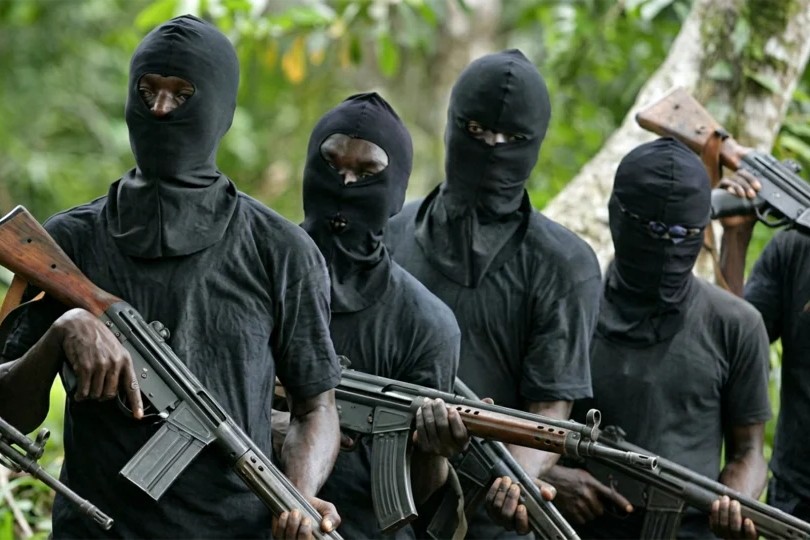
Boko Haram and ISWAP together accounted for 80 per cent of terrorism-related deaths in the country. Borno State absorbed 67 per cent of attacks and 72 per cent of deaths.
CLEEN Foundation is right to describe the finding as a grave national alarm. Its criticism is not merely rhetorical. The pattern in the GTI shows a terror economy that is becoming leaner, deadlier and more selective.
Civilian fatalities in Nigeria accounted for 67 per cent of terrorism deaths in 2025, while military personnel made up 19 per cent. That shift is crucial because it means extremists are not simply fighting security forces.
They are increasingly terrorising farming communities, traders, travellers, and displaced families. This behavior deepens fear, erodes public trust, and weakens state legitimacy.
The most troubling element is the strategic geography of the violence. Borno remains the epicentre, but the danger is spreading.
The GTI shows that attacks and deaths are no longer confined to one narrow theatre of war. Borno’s dominance in the data is significant. There is a rise in neighbouring zones. The report warns that Nigeria is the only Sahel country to worsen across both attacks and fatalities. This points to a threat that is migrating rather than receding.
That is how insurgencies survive pressure. They decentralize and shift routes. Insurgencies fracture into factions and exploit weak borders. They take advantage of thinly policed rural corridors.
The return of Boko Haram as Nigeria’s deadliest terror group is also a serious signal. The GTI says ISWAP reclaimed the position of the country’s deadliest group overall. Boko Haram, however, remained highly active. It was lethal with 43 attacks and 213 deaths in 2025.
The report links the violence to internal instability. There is an ongoing conflict between ISWAP and Boko Haram. Territorial disputes and economic conditions aid recruitment.
In plain terms, the militants are not only fighting the state. They are also feeding on their own competition, which often produces more spectacular attacks and higher civilian casualties.
This is where Nigeria’s response has looked increasingly outdated. A heavily military-driven strategy can suppress movement, seize terrain, and disrupt cells. However, such a strategy cannot by itself defeat an insurgency. The insurgency recruits through poverty, weak governance, local grievances, transnational supply lines, and ideological adaptation.
The GTI’s broader analysis highlights that sub-Saharan Africa has become the global epicentre of terrorism. The Sahel now accounts for more than half of all terrorism-related deaths worldwide. Nigeria’s problem therefore sits inside a regional security collapse, not outside it.
What advanced counterterrorism systems do differently is instructive. Britain’s CONTEST strategy is built around four linked pillars, namely Prevent, Pursue, Protect and Prepare.
The United States National Counterterrorism Center says it fuses foreign and domestic counterterrorism intelligence. It shares information across agencies. It drives whole-of-government action.
Spain’s CITCO, meanwhile, is built around an intelligence hub model that coordinates counter-terrorism and organised-crime responses.
These are not perfect systems. They show a common lesson. Winning against terror requires intelligence fusion, prevention, protection, disruption, and public confidence. It is not just about military pursuit.
Nigeria’s own policy language is not the main problem. The problem is execution. The gap between strategy and results suggests weak coordination, poor accountability and a failure to turn intelligence into prevention.
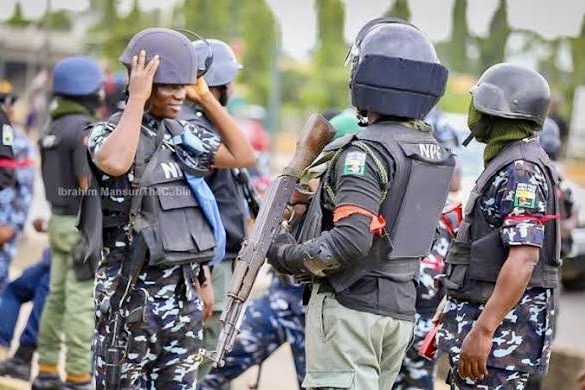
If the state had a genuinely integrated system, one would expect tighter border collaboration. There would be faster civilian alert channels and better inter-agency data sharing. Stronger tracking of extremist financing would be evident. Additionally, there would be more visible community protection in the most exposed local government areas.
Instead, the country keeps reporting the same patterns of attack, the same hotspots and the same lamentations after each mass killing.
The policy prescription is therefore clear. Nigeria must move from a war-only posture to a full-spectrum counterterrorism model. That means protecting civilians first, not last.
It means deepening community intelligence networks. It involves restoring trust with vulnerable populations. It requires tightening border cooperation with Niger, Chad, Cameroon and Benin. Additionally, it includes investing in deradicalisation, reintegration, and livelihood programmes that reduce the appeal of extremist recruitment.
It also means treating every civilian mass-casualty attack as proof that the country’s current security design is not yet meeting the scale of the threat.
CLEEN Foundation’s warning should now be read as a demand for action, not a routine civil society statement.
Nigeria is not just losing lives. It is losing ground in the contest for state authority. The federal government must close the gap between strategy and implementation. Until then, the country will keep appearing in global rankings for all the wrong reasons. Meanwhile, the insurgents keep adapting faster than the institutions meant to defeat them.
That is the real story behind the fourth-place ranking: not a single bad year, but a security architecture that is still failing to keep pace with the enemy it was built to destroy.
Follow us on our broadcast channels today!
- WhatsApp: https://whatsapp.com/channel/0029VawZ8TbDDmFT1a1Syg46
- Telegram: https://t.me/atlanticpostchannel
- Facebook: https://www.messenger.com/channel/atlanticpostng