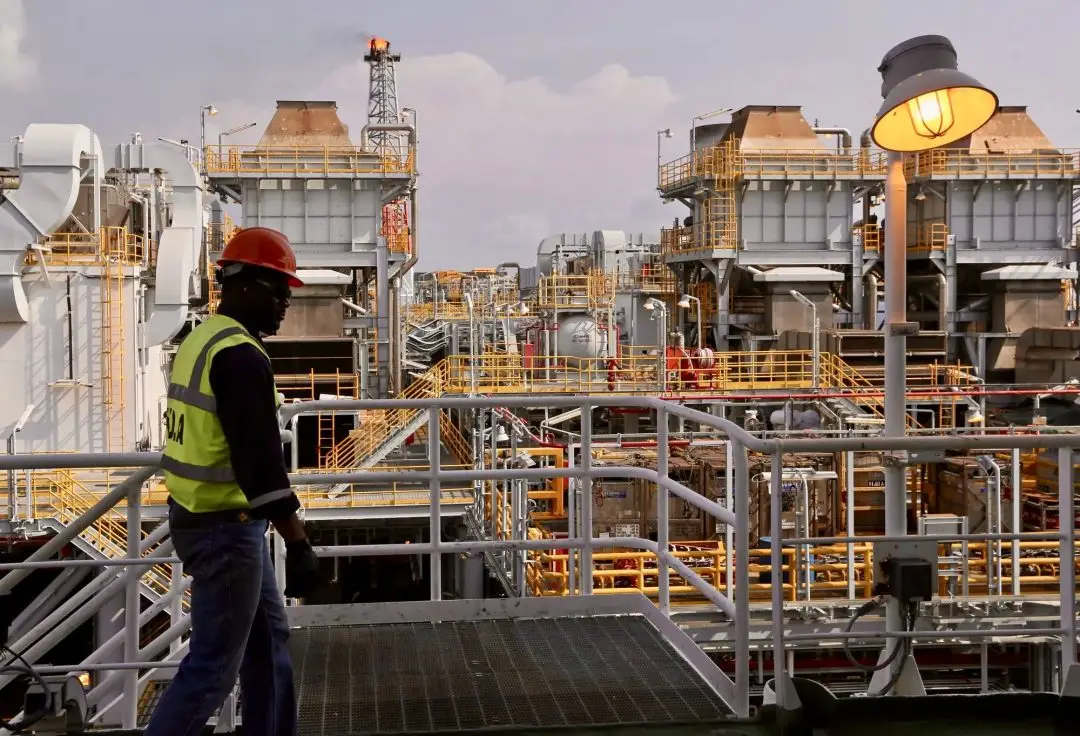
A comprehensive in-depth report on Nigeria’s volatile oil production landscape, detailing the surge to 1.8mbpd amid persistent leakages, ageing infrastructure, and regulatory challenges—unpacking the realities behind the headlines.
Production levels have drastically increased from 1.1 million barrels per day (bpd) to a whopping 1.8mbpd, causing a jolt to Nigeria’s unstable oil industry. Even though the Nigerian Upstream Petroleum Regulatory Commission (NUPRC) praises this as a major victory, there is a complicated network of long-standing inefficiencies, exorbitant production costs, and deteriorating infrastructure that threaten to sabotage sustainable growth.
A Promising Yet Precarious Upswing
Recent data from NUPRC indicates that Nigeria’s crude oil and condensate production is steadily climbing—a development that has been widely celebrated across the sector.
Indeed, from an underwhelming 1.1mbpd just a year ago, the nation now edges closer to the elusive threshold of 1.8mbpd. Operators are showing determination: the number of active oil rigs has swelled to 50, more than doubling the figure seen merely two years ago.
In places such as Otakikpo—a coastal swamp asset in Oil Mining Lease Eleven (OML 11) operated by Lekoil—the dramatic rise from 10,000 bpd to nearly 20,000 bpd symbolises an ambition to defy odds and revive an industry beleaguered by years of neglect.
Yet, as this headline-grabbing uptick is celebrated, industry veterans are quick to caution that the achievement is as much about plugging leakages as it is about genuinely ramping up production.
The analogy is stark: if one were to have a leaking roof that has flooded the house, the immediate priority would be to seal the leak before attempting any tidy-up.
Similarly, Nigeria’s upstream sector is crying out for a strategic overhaul of its antiquated systems and practices.
The Structural Malaise: Ageing Infrastructure and Escalating Costs
For decades, Nigeria’s oil industry has been haunted by a litany of structural challenges. Despite being Africa’s largest oil producer, the country’s potential has been curbed by chronic inefficiencies, rampant crude oil theft, underinvestment, corruption, and an infrastructure that is decades old.
The recent production surge, while promising, does little to mask the fact that Nigeria’s crude oil production costs average around $40 per barrel—a figure that stands in stark contrast to the government’s ambitious target of $10 per barrel.
As Chief Operating Officer of Lekoil Nigeria Limited, Sam Olotu, bluntly puts it,
“a single vessel costs $800,000 per month. That alone translates to about $2.40 per barrel—before factoring in salaries, diesel, well maintenance, and other operational costs. This isn’t civil service accounting; we are running a business.”
Such staggering costs are not only rendering Nigerian crude less competitive on the global stage but also undermining investor confidence in a sector already under the strain of incessant regulatory and logistical challenges.
Compounding these issues is Nigeria’s heavy reliance on outdated pipeline infrastructure. Iconic pipelines such as Forcados, the Trans-Niger, and Nembe Creek Trunk Line have been in operation for nearly 30 years, suffering from frequent breakdowns, vandalism, and theft.
These pipelines are the lifelines of Nigeria’s crude evacuation process, yet their deteriorating state forces many operators to resort to more expensive and less reliable alternatives like barges and tankers.
Regulatory Uncertainty and the Shift Towards Indigenous Operators
Over the past year, efforts to boost production have been bolstered by heightened security measures and a crackdown on oil theft spearheaded by the Nigerian National Petroleum Company Limited (NNPC Ltd) and other regulatory bodies.
However, these measures, though well-intentioned, have not been sufficient to overcome the labyrinthine regulatory environment that continues to stymie investor confidence.
In recent times, major international oil companies have been divesting from Nigeria, paving the way for indigenous companies to take centre stage.
While such divestments are lauded for creating local jobs and empowering Nigerian stakeholders, they also come with the daunting challenge of navigating a sector fraught with security concerns, infrastructural deficits, and persistent cost overruns.
Sam Olotu warns that while increased drilling and new rig installations have provided a temporary boost, sustaining this momentum and pushing production capacity beyond the 3mbpd threshold remains an elusive dream.
“Production has grown, but 1.8 million barrels per day is still insufficient,” he emphasises.
For a nation whose economic stability hinges on oil revenues, the inability to address fundamental structural challenges could prove catastrophic.
A Comparative Perspective: Global Competitiveness in a Shifting Energy Landscape
In stark contrast to Nigeria’s struggles, other oil-producing nations have managed to slash their production costs dramatically.
Libya, for instance, boasts production costs as low as $1 per barrel in certain fields, while Angola’s average hovers around $20 per barrel.
Even Brazil’s pre-salt fields have seen a significant reduction in breakeven costs—from $70 per barrel in 2014 to $35 in 2022—while Saudi Arabia continues to maintain production costs between $2 and $8 per barrel.
Such figures highlight the glaring disparity in cost management and efficiency between Nigeria and its global counterparts.
Respected energy expert Professor Wunmi Iledare has noted that the long-standing expectation of achieving a technical cost of $10 per barrel in Nigeria was, from the outset, unrealistic.
“What is easily observable is rising direct costs of operations, with inefficiency written all over them as Niger Delta fields mature and easy-to-produce reservoirs diminish,” Iledare observed.
The Price of Inaction: Oil Theft and Unaddressed Operational Hazards
No discussion on Nigeria’s oil production is complete without addressing the scourge of crude oil theft—a multi-billion-dollar drain on the nation’s economy. Despite recent initiatives awarding pipeline surveillance contracts to private firms, the problem remains endemic.
Industry insiders argue that tackling oil theft requires more than mere security measures; it calls for a comprehensive overhaul of regulatory practices, the deployment of modern pipeline monitoring technologies, and the assurance that host communities receive a fair share of oil revenues.
Without these structural reforms, any production gains achieved through increased drilling or new rig installations risk being offset by persistent leakages and theft.
This dual challenge of rising production and escalating losses presents a paradox: how can Nigeria sustain a production surge if the fundamental issues that have long plagued the industry remain unaddressed?
Financing, Local Investment, and the Road Ahead
Amid these challenges, there is a palpable shift in the financial dynamics of Nigeria’s oil sector. Traditionally, the industry has been heavily reliant on foreign capital, but recent trends indicate a growing reliance on local financing.
Lekoil Nigeria Limited’s recent approval on a N100 billion bond programme, supported by prominent financial institutions such as FBN Quest Merchant Bank and Iron Global Markets Limited, is emblematic of this trend.
Sam Olotu remarks, “No oil company, whether international or indigenous, funds its development with its cash.”
This pivot towards indigenous financing is intended to reduce dependence on international markets, yet it also underscores the limitations of Nigerian banks—which are often undercapitalised and reliant on offshore partnerships—to support large-scale oil and gas investments.
Energy sector leaders like Chief Executive Officer of Green Energy International Limited, Prof. Anthony Adegbulugbe, argue that Nigeria is squandering its potential by not addressing logistical constraints.
“Many fields with proven reserves remain underutilised due to evacuation issues. With relatively simple solutions such as re-entering existing wells and connecting them to efficient evacuation routes, we could increase output significantly,” he submits.
Political Will and Policy Reforms: A Critical Juncture
President Bola Tinubu’s administration has introduced several executive orders aimed at streamlining the ease of doing business in Nigeria’s oil sector.
These policy measures, coupled with efforts to curb crude oil theft, have resulted in a modest uptick in production figures.
However, the broader question looms large: have these regulatory reforms translated into long-term benefits for operators and investors?
According to industry experts, the answer remains uncertain. While the Petroleum Industry Act (PIA) has led to the establishment of new regulatory bodies—the Nigerian Upstream Petroleum Regulatory Commission (NUPRC) and the Nigerian Midstream Downstream Petroleum Regulatory Authority (NMDPRA)—these measures have also contributed to rising governance costs.
Professor Iledare contends that “the way to go is to implement the intent of the PIA and limit the unnecessary regulation for agency fees. Secondly, gold plating needs to be penalised. Finally, to the extent possible, NNPC Ltd needs to review its JV portfolio of assets and perhaps let indigenous companies buying divested IOC assets buy NNPC Ltd’s equity in those divested assets.”
The Geopolitical Context: External Pressures and Domestic Realities
Nigeria’s push to boost oil production comes at a time when the global energy landscape is undergoing a seismic shift.
Western nations are increasingly diverting investments from fossil fuels in favour of renewable energy sources. Even major players such as Shell and ExxonMobil are gradually diminishing their footprints in Nigeria.
Meanwhile, geopolitical developments—such as the controversial suggestion by former U.S. President Donald Trump to suspend the Foreign Corrupt Practices Act (FCPA) in a bid to attract more foreign investment—add further layers of complexity to an already precarious situation.
Yet, as Olotu makes clear, external policies alone cannot dictate Nigeria’s fortunes.
“We have been saying for years that Nigeria needs to grow its production. Our economy is struggling and oil is our primary revenue source. It is a no-brainer that we need to increase output,” he asserts, underscoring the critical need for internal reforms and a strategic overhaul of the nation’s oil production paradigm.
Conclusion: Between Hope and Despair
In the final analysis, Nigeria’s reported rise to 1.8mbpd is a double-edged sword. On one side, it signals a renewed commitment from operators, an infusion of local financing, and incremental policy reforms aimed at curbing inefficiencies and revitalising a stagnating industry.
On the other, it casts a harsh spotlight on the myriad challenges—ageing infrastructure, exorbitant production costs, regulatory labyrinths, and the persistent spectre of oil theft—that continue to undermine Nigeria’s ability to compete on a global stage.
For a nation whose economic lifeblood is inextricably linked to the fortunes of its oil industry, the stakes could not be higher.
The road to a sustainable, competitive future is fraught with obstacles that require not only immediate fixes but also a long-term strategic vision.
As Nigeria stands at this critical juncture, the choices made today will shape the country’s destiny for decades to come—a destiny that hinges on whether it can finally seal the leaks and build a resilient, modernised oil infrastructure.
This in-depth report aims to provide not only a detailed account of the recent production surge but also a critical analysis of the underlying issues that continue to challenge Nigeria’s oil sector. The message is clear: without decisive structural reforms, the promise of higher production may well remain an elusive mirage.