Nigeria faces a nationwide protest amid growing discontent over economic hardships and state repression. The Take-It-Back Movement aims to address these issues, while police preparations raise concerns about potential violence. This protest echoes past events and highlights citizens’ frustrations with democratic erosion, challenging the balance between civil liberties and state authority.
ABUJA, Nigeria – In a development that has rocked the nation, Nigeria braces for an unprecedented nationwide protest, as police forces scramble to secure strategic locations amid simmering discontent over worsening economic hardships, perceived clampdowns on civil liberties, and the escalating crisis in Rivers State.
As the clock ticks towards Monday’s planned demonstration by the Take-It-Back Movement and allied civil society groups, the nation finds itself at a critical juncture.
The events unfolding on the ground reveal not only the deep-seated frustration of Nigerians but also a worrying trend of increasing state repression—a narrative that demands both rigorous analysis and urgent attention.
A Nation on Alert: The Impending Protest
Late last night, high-ranking officers of the Nigeria Police Force (NPF) issued stern warnings to would-be demonstrators, cautioning them against staging what they described as an “ill-timed and mischievous” protest on Monday, 7 April 2025—a day earmarked for celebrating the National Police Day.
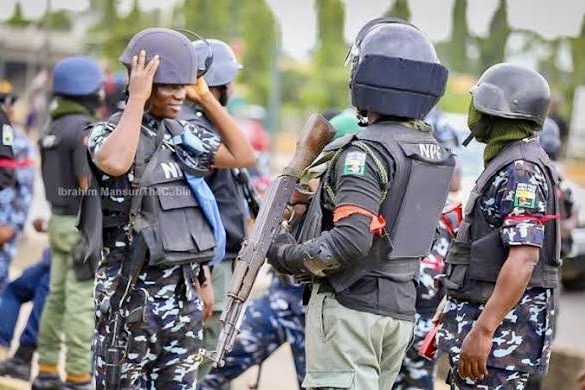
In a statement that resonated with both authority and apprehension, the police insisted that their personnel had been deployed across critical infrastructure, with particular emphasis on the Federal Capital Territory (FCT), Lagos, and several other key states.
The protest, as announced by the National Coordinator of the Take-It-Back Movement, Juwon Sanyaolu, is not merely a spontaneous outburst; it is a calculated expression of pent-up anger aimed at addressing what many perceive as a systematic erosion of democratic freedoms.
Sanyaolu made no bones about the protest’s underlying message, condemning the continued misuse of the Cybercrime Act, which he argues has been weaponised to stifle dissent.
“We are undeterred by police attempts to repress the protest,” he asserted during a recent interview, recalling the tragic memory of the #EndBadGovernance protests that occurred nine months ago.
He lamented the loss of lives and the arrest of minors—a dark chapter that, in his view, symbolises a blatant disregard for the democratic rights of citizens.
Echoes of the Past: The Legacy of #EndBadGovernance
The shadow of the #EndBadGovernance protests, held last August, looms large over the current mobilisation. Those protests, initially ignited by the soaring cost of living and a deep-seated dissatisfaction with governmental policies, culminated in episodes of severe state violence.
Critics have since decried the use of excessive force, highlighting how the state apparatus, rather than engaging in dialogue, opted for a heavy-handed approach that led to tragic consequences.
The memory of those protests now fuels a renewed wave of public discontent, as evidenced by the recent “30-day challenge” that saw Nigerians nationwide take to social media to air their grievances about the prevailing political and economic malaise.
This current protest, however, is set against a backdrop that is even more complex. The crisis in Rivers State, which has seen communities gripped by insecurity and lawlessness, has added a new dimension to the national dialogue on governance.
With calls for accountability growing louder, political analysts and reformist elements believe that the protest is poised to become a potent symbol of the struggle for genuine democratic reform.
Clash of Narratives: Protesters versus Police Command
The stark dichotomy between the protest organisers and the police command is both alarming and emblematic of a broader national crisis. On one hand, demonstrators, emboldened by past successes and the palpable frustration of the populace, are adamant in their resolve to stage a protest despite police warnings.
Adenola Michael, one of the key organisers in Abuja, emphasised that the protest is not an attack on the police as an institution, but rather a confrontation against a government that has, in his view, betrayed its constitutional promises.
“Nigeria is supposed to operate as a democracy even though most of the rulers are tyrants,” he stated, invoking the cherished ideals of free speech and assembly that have become increasingly rare in recent years.
Conversely, the police are portrayed as guardians of order—a role they are determined to fulfil, even as they face mounting criticism for what many view as an overzealous and heavy-handed response.
In separate interviews with national dailies such as The NATION, PUNCH, VANGUARD, and GUARDIAN, state police commands detailed their efforts to ensure that the protest did not degenerate into chaos.
This includes enhanced surveillance measures, the strategic placement of personnel around key landmarks, and the deployment of specialised units to guard against potential sabotage by criminal elements.
The NPF’s insistence on upholding law and order is punctuated by a robust narrative that frames the protest as a potential security risk—one that threatens to tarnish the reputation of a nation that is already grappling with international scrutiny.
Strategic Timing and Symbolic Confrontation
What adds another layer of complexity to this unfolding drama is the timing of the protest. Monday’s protest coincides with National Police Day—a day designated by the Federal Government to honour the resilience and dedication of the country’s law enforcement officers.
In a statement by the Force Public Relations Officer, Olumuyiwa Adejobi, the police questioned the rationale behind selecting such a significant date for a protest that, in their view, not only disrespects the nation’s security apparatus but also undermines the spirit of national unity.
Adejobi warned that the protest, if allowed to proceed unchecked, could potentially tarnish the image of the Nigeria Police Force on both a domestic and international stage.
The inherent irony of this timing cannot be overstated. As Nigeria grapples with a crisis of governance that has seen successive administrations accused of corruption, nepotism, and human rights abuses, the police’s current stance is being interpreted by some as a desperate attempt to maintain a semblance of order amid growing chaos.
The choice to protest on National Police Day is seen by many as a deliberate provocation—a strategic move designed to force a confrontation between the state and its citizens at a time when trust in public institutions is at an all-time low.
Escalation in Rivers State: A Microcosm of National Strife
While the protest is set to take place nationwide, one incident in Rivers State has already drawn widespread attention and ignited further debate. At Isaac Boro Park in Port Harcourt, demonstrators affiliated with the Take-It-Back Movement and other civil society organisations were met with a stark and unsettling response from the Rivers State Police Command.
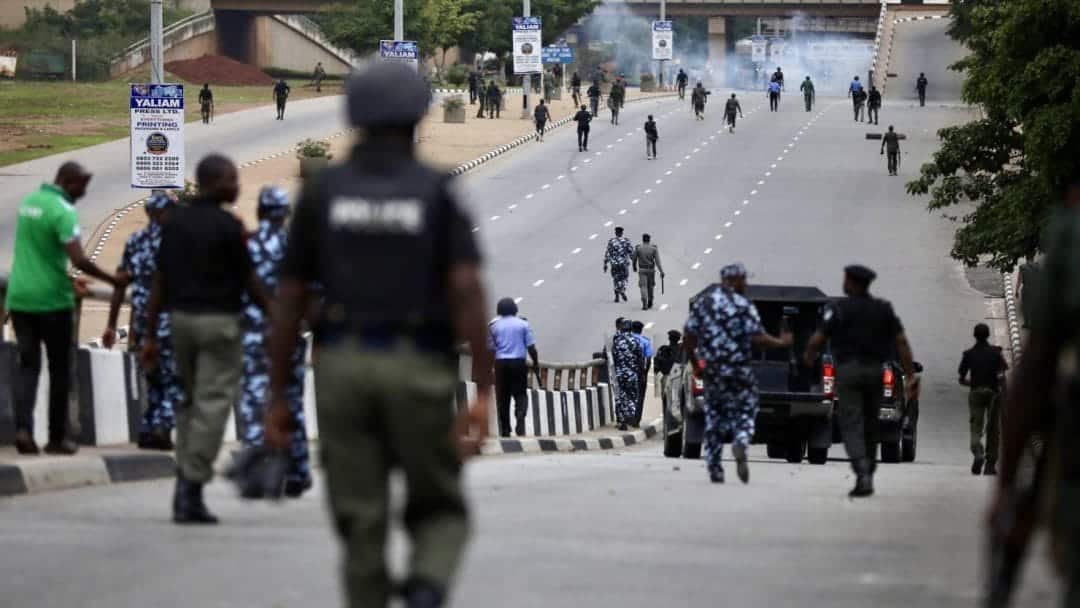
In an incident that has since taken on a symbolic resonance, officers deployed tear gas in an attempt to disperse the gathering. The confrontation quickly escalated when protesters, undeterred by the heavy-handed response, continued their march—only to be intercepted again near the CFC junction.
The ensuing clash, marked by the indiscriminate firing of tear gas canisters, saw demonstrators scatter in a desperate bid for safety.
This episode in Rivers State is a microcosm of the broader national crisis. It underscores the precarious balance between the right to peaceful assembly and the state’s mandate to maintain law and order—a balance that, in recent times, appears increasingly skewed towards repression.
Critics argue that the use of tear gas, while ostensibly a measure to prevent violence, serves as a stark reminder of the lengths to which the state will go to silence dissent.
Moreover, the incident has rekindled old wounds, with many recalling previous episodes of state violence that have left deep scars on communities across Nigeria.
The Wider Implications for Nigerian Democracy
The planned protest and its violent episodes are not isolated incidents; they form part of a broader narrative that speaks to the fragility of Nigerian democracy. Over the past few years, Nigerians have become increasingly disillusioned with a political system that some believe prioritises the interests of the elite over the welfare of ordinary citizens.
The protest, as framed by its organisers, is a direct response to this perceived injustice—a call for a return to the democratic principles enshrined in the Nigerian Constitution. Yet, it also raises probing questions about the role of the state in managing dissent.
Is the police response a necessary measure to uphold the law, or does it represent an overreach—a tactic designed to suppress legitimate calls for reform? The answer is far from straightforward.
On one side, the state’s argument is that the protest is being orchestrated by elements that are not genuinely interested in constructive dialogue, but rather in fomenting chaos for political gain.
This narrative is bolstered by claims that the protest organisers have failed to engage with established government channels, opting instead for a form of civic disobedience that threatens to destabilise an already volatile security environment.
On the other hand, critics contend that the heavy-handed police response is indicative of a broader pattern of repression—a pattern that has, over the years, eroded public trust in the state’s ability to act as a neutral arbiter in matters of civil unrest.
They point to the tragic aftermath of previous protests, where excessive force led to unnecessary loss of life and further alienated a populace that was already on edge.
In this view, the police are less a protector of public order and more an enforcer of an oppressive status quo—one that stifles dissent and marginalises voices calling for accountability.
The Role of Social Media and Public Sentiment
In an era where public opinion is increasingly shaped by digital platforms, social media has emerged as a potent force in the unfolding drama. In the weeks leading up to Monday’s protest, social media platforms have been awash with narratives that both galvanise support for the demonstrators and castigate the government’s heavy-handed response.
The “30-day challenge” initiated by Nigerians to air their grievances has evolved into a digital rallying cry, symbolising the collective frustration of a generation that feels betrayed by a political establishment that has repeatedly failed to deliver on its promises.
This digital mobilisation is not without its risks. The police have warned that the protest could be exploited by criminal elements seeking to capitalise on the ensuing chaos to launch opportunistic attacks on government installations and opposition leaders.
The spectre of violence looms large, and many analysts warn that the protest—if not managed properly—could spiral into a full-blown crisis. Yet, for the protest organisers, social media remains an indispensable tool—a means to bypass traditional gatekeepers and communicate directly with a populace that is increasingly sceptical of state-controlled media narratives.
A Crisis of Legitimacy: The State Versus the People
At the heart of the current unrest lies a profound crisis of legitimacy. The Nigerian government, under mounting pressure from both domestic and international quarters, is being forced to confront questions about its commitment to democratic ideals.
The protest, with its dual focus on economic hardship and civil liberties, is a potent reminder that the social contract between the state and its citizens is fraying.
For many Nigerians, the heavy-handed response by the police is emblematic of a government that is more interested in preserving its grip on power than in addressing the genuine concerns of its people.
In this light, the police’s staunch warnings and robust deployment of personnel can be seen as a symptom of a broader malaise—a deep-seated insecurity that stems from decades of political instability and institutional decay.
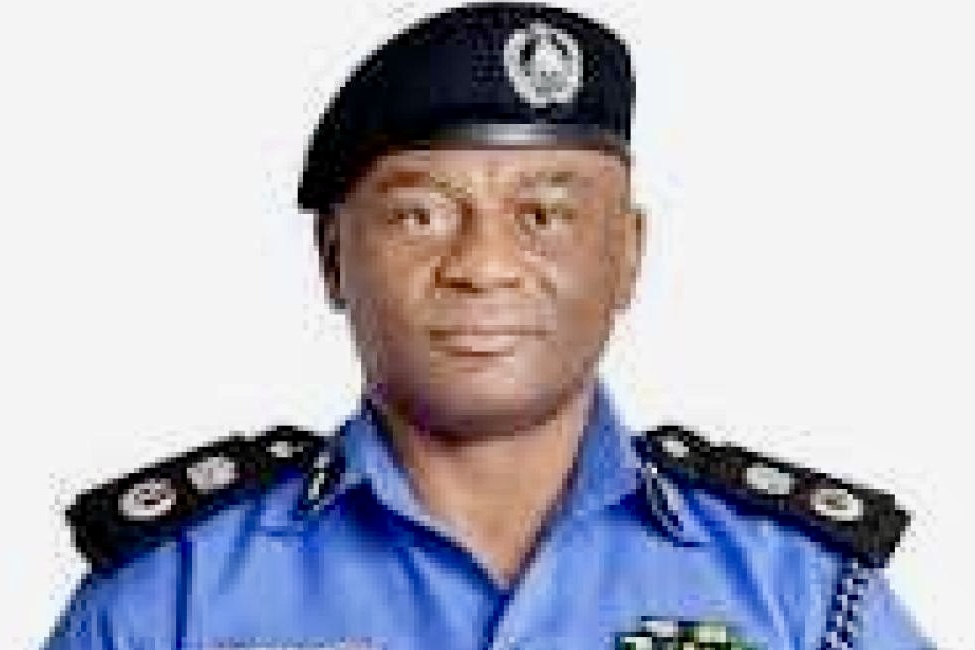
The assertion by Inspector-General of Police Kayode Egbetokun that demonstrators should “embrace dialogue and follow due process” rings hollow for a large segment of the population that has long felt that the avenues for peaceful redress are either blocked or ineffectual.
The protest, therefore, is not merely a challenge to the state’s monopoly on the legitimate use of force; it is a call for systemic change—a demand for a government that is truly responsive to the needs of its citizens.
The Global Perspective: How Nigeria’s Struggle Resonates Beyond Its Borders
Nigeria’s current predicament is not an isolated phenomenon. Across the globe, nations are grappling with similar tensions—a clash between entrenched state power and a burgeoning demand for democratic accountability.
The situation in Nigeria resonates with parallels drawn from other democracies where protests have become a catalyst for significant political change.
From the Arab Spring to recent demonstrations in Eastern Europe and Latin America, the Nigerian protest is part of a global pattern of civil disobedience aimed at challenging corrupt and unaccountable governments.
International observers have noted that the Nigerian government’s approach to managing dissent bears an uncanny resemblance to tactics employed in other authoritarian regimes, where protests are met with a combination of repression and propaganda.
This has led to growing concerns about Nigeria’s international reputation at a time when the country is seeking to assert itself as a leading power on the African continent.
The stark images of tear gas being fired on peaceful protesters, the clashing narratives between state authorities and civil society, and the palpable sense of urgency emanating from the streets—all serve as a potent reminder that the struggle for democracy in Nigeria is far from over.
Conclusion: A Nation Poised on the Edge
As Nigeria stands at the precipice of a potentially transformative moment, the events of the coming days will likely determine the trajectory of the nation’s democratic evolution.
The planned nationwide protest, with its dual imperatives of challenging economic injustice and demanding accountability for civil liberties abuses, encapsulates the deep divisions that have long festered within Nigerian society.
The police, for their part, remain resolute in their commitment to maintaining order—an objective that, in today’s fraught political climate, is increasingly viewed as antithetical to the rights and aspirations of the people.
The narrative unfolding in Nigeria is a powerful reminder that the struggle for democracy is an ongoing process—one that demands constant vigilance, unwavering courage, and a willingness to confront entrenched power structures.
As the protest unfolds and police forces engage with demonstrators on the ground, all eyes will be on Nigeria—a nation whose future hangs in the balance between the forces of repression and the enduring human desire for freedom and justice.
In these tumultuous times, the role of journalism is more critical than ever. At Atlantic Post, we remain committed to providing in-depth, critical, and independent reporting that not only informs but also empowers our readers.
As we witness history in the making, one can only hope that the voices of the many will triumph over the interests of the few, ushering in a new era of accountability, transparency, and genuine democratic reform in Nigeria.
The unfolding events serve as a clarion call for change—a call that, whether answered with dialogue or met with further repression, will undeniably shape the future of Nigerian society. As the nation braces for what may be a defining moment, the stakes could not be higher.
Will the authorities relent and engage in meaningful dialogue, or will the cycle of violence and repression persist, further alienating a populace that is desperate for a government that truly represents them?
Only time will tell, but one thing is clear: the struggle for justice in Nigeria is far from over, and its outcome will have profound implications not only for Nigeria but for the broader global discourse on democracy and human rights.
In the days to come, as news outlets across the country and beyond scrutinise every development, one must ask: Is this the dawn of a new era in Nigerian politics, or merely another chapter in a long history of state-sanctioned repression?
With the roar of dissent echoing across city streets and digital platforms alike, the nation watches, waits, and hopes for a future where the ideals of freedom and justice are not just aspirational slogans, but a lived reality for every Nigerian citizen.
Atlantic Post will continue to monitor the situation closely, bringing you comprehensive updates and analysis as events develop. Stay tuned for further reports on this pivotal moment in Nigeria’s democratic journey.
- Additional reports from Osaigbovo Okungbowa, Kalada Jumbo, Suleiman Adamu and Peter Jene