By Editor
Introduction: An Oil Monopoly in the Making?
In a dramatic escalation within Nigeria’s oil sector, three of the country’s largest oil marketers—AYM Shafa Limited, A. A. Rano Limited, and Matrix Petroleum Services Limited—have taken legal action against Dangote Petroleum Refinery and Petrochemicals, challenging what they describe as an imminent monopolistic takeover of the oil market. The battle centres around a counter-affidavit submitted to the Federal High Court in Abuja, as the marketers rally to prevent what they argue would be catastrophic monopolisation.

At the heart of this high-stakes legal clash is a provocative question: should one corporation, Dangote Refinery, hold the reins of Nigeria’s oil supply? While Dangote’s side argues this would streamline the market, the marketers insist it would devastate both competition and energy security. As Nigeria grapples with a precarious economic landscape, the question of monopoly versus competition in the oil sector has implications for millions of Nigerians and the nation’s economic stability.
The Counter-Affidavit: Marketers’ Plea Against Monopoly
In a joint counter affidavit marked as FHC/ABJ/CS/1324/2024, dated November 5, 2024, the three marketers vehemently opposed Dangote Refinery’s push for exclusive control over petroleum supply. The affidavit frames the marketers’ concerns that this monopoly will lead to an unhealthy concentration of power, capable of manipulating prices to the detriment of Nigerian consumers.
The marketers’ counter-argument centres around the practicalities of Nigeria’s daily fuel consumption needs, which, they assert, cannot be reliably fulfilled by Dangote Refinery alone. Their affidavit insists that Nigeria’s oil sector requires diversity in supply chains, particularly through the continued importation of petroleum products. According to their argument, granting Dangote monopoly control would be a “recipe for disaster,” stifling competition and leaving the market vulnerable to supply shortages or price manipulations.
Dangote’s Original Suit: A Challenge to Import Licensing
In Dangote’s initial suit, dated September 6, 2024, the refinery sought a court ruling to halt import licenses for petroleum products, challenging the actions of the Nigeria Midstream and Downstream Petroleum Regulatory Authority (NMDPRA) and Nigeria National Petroleum Corporation Limited (NNPC Ltd). Dangote contends that the NMDPRA’s decision to issue licenses for imports infringes upon the statutory intent of the Petroleum Industry Act (PIA), specifically Sections 317(8) and (9), which limit import licenses to situations of national supply shortages.
Dangote’s suit further criticises the NMDPRA’s alleged failure to prioritise and support local refineries. From their perspective, the regulatory authority’s actions favour external imports over domestic production, undercutting Dangote Refinery’s efforts to meet Nigeria’s demand. By controlling the majority of the country’s petroleum supply, Dangote argues, Nigeria would be able to end its long-standing reliance on foreign imports, stabilise local pricing, and exert greater control over energy security.
Marketers’ Rebuttal: Emphasis on Supply Adequacy and Consumer Protection
In response, the marketers argue that Dangote’s refinery alone lacks the capacity to satisfy Nigeria’s vast petroleum demands. Without sufficient domestic production, the marketers contend that the importation of fuel is not only necessary but critical to ensuring steady supply and market balance. They point to the absence of concrete data in Dangote’s claim regarding its refining output and capability.
The marketers’ counter-affidavit highlights the legal grounds for their import licenses, which they claim were validly issued by the NMDPRA in line with Section 317(9) of the PIA. They argue that NMDPRA’s role includes enabling multiple players to sustain the country’s energy security and prevent reliance on any single supplier. According to their interpretation, this provision underscores the need for a competitive market landscape that encourages price efficiency and diversity in petroleum sources.
From their viewpoint, Dangote’s monopoly bid would eliminate competition and result in a dramatic escalation in petrol prices, burdening consumers who are already grappling with inflation and a weakened economy. Allowing Dangote sole control, they assert, would lead to unchecked pricing power that would devastate ordinary Nigerians and further strain an already fragile economy.
Economic Implications of a Dangote Monopoly
A potential monopoly in Nigeria’s petroleum market, controlled by Dangote, has alarmed economists and consumer advocates who warn that such a shift could have dire ramifications. The marketers’ argument touches on these concerns, pointing out that unchecked power in Dangote’s hands could lead to monopolistic price-setting and potentially exploitative practices. In a monopoly, Dangote would hold the power to determine fuel prices across the nation, free from competitive constraints.
They argue that in the event of a refinery breakdown, the country would face severe fuel shortages and likely resort to emergency imports at a premium, inflating costs for consumers. With Dangote as the sole producer and distributor, Nigeria’s energy security would be at significant risk, as any disruption to Dangote’s supply chain would have nationwide impacts.
Moreover, the marketers stress that monopolisation would create barriers to market entry, deterring investment from other domestic and international stakeholders. The lack of competition could discourage technological innovation and operational efficiency, leading to a stagnant market reliant on a single player’s interests rather than national growth objectives.
Consumer Impact: Rising Prices and the Cost of Monopoly
The oil marketers’ legal case sheds light on a potential consequence that could directly affect Nigeria’s consumers: increased petrol prices. They argue that Dangote’s exclusive control over the market would eliminate competitive pricing, ultimately leading to higher costs at the pump. With no competitors, Dangote could unilaterally set prices to maximise profits, exacerbating an already intense economic strain on Nigerian households.
For consumers, who are already dealing with the high cost of living, an increase in petrol prices would have a ripple effect across other essential goods and services, intensifying inflation. Transportation costs, for instance, would likely rise, affecting everything from food prices to public transit fares, thereby placing further strain on average Nigerians.
The Marketers’ Dire Warning: Recipe for Energy Insecurity and Economic Chaos
Perhaps the most alarming claim in the marketers’ counter-affidavit is their prediction that a Dangote monopoly could lead to an unprecedented energy crisis in Nigeria. They outline a scenario where Nigeria’s energy security is left to the whims of a single entity, creating a fragile supply chain prone to disruptions. If Dangote’s refinery encounters operational issues, the nation could face a crisis of epic proportions, as there would be no alternative supply to fall back on.
In a nation with limited fuel reserves, the absence of import options could lead to immediate shortages and widespread panic. For a country already grappling with energy challenges, such as inconsistent electricity supply, reliance on a single source of fuel poses a serious threat. This warning echoes concerns from economic analysts who argue that a diversified import system is necessary to ensure stability and mitigate risks associated with unforeseen disruptions in production.
Legal Foundation: Marketers Cite Petroleum Industry Act and Consumer Protection
The legal backbone of the marketers’ argument lies in multiple statutory provisions designed to prevent monopolistic practices and protect consumers. They cite the Petroleum Industry Act, the Federal Competition and Consumer Protection Act, and other relevant legislation as mandates that support their right to participate in the petroleum import market.
These laws are not merely technicalities; they embody the Nigerian government’s intention to foster a competitive, consumer-friendly petroleum sector. According to the marketers, monopolising the oil market contravenes these laws and would strip Nigerian consumers of the protection they are entitled to under the law. They argue that Dangote’s demand for exclusive control conflicts with the spirit of the PIA, which aims to create a diversified, resilient energy market.
Dangote’s Export Strategy: Local Market Concerns Versus Global Aspirations
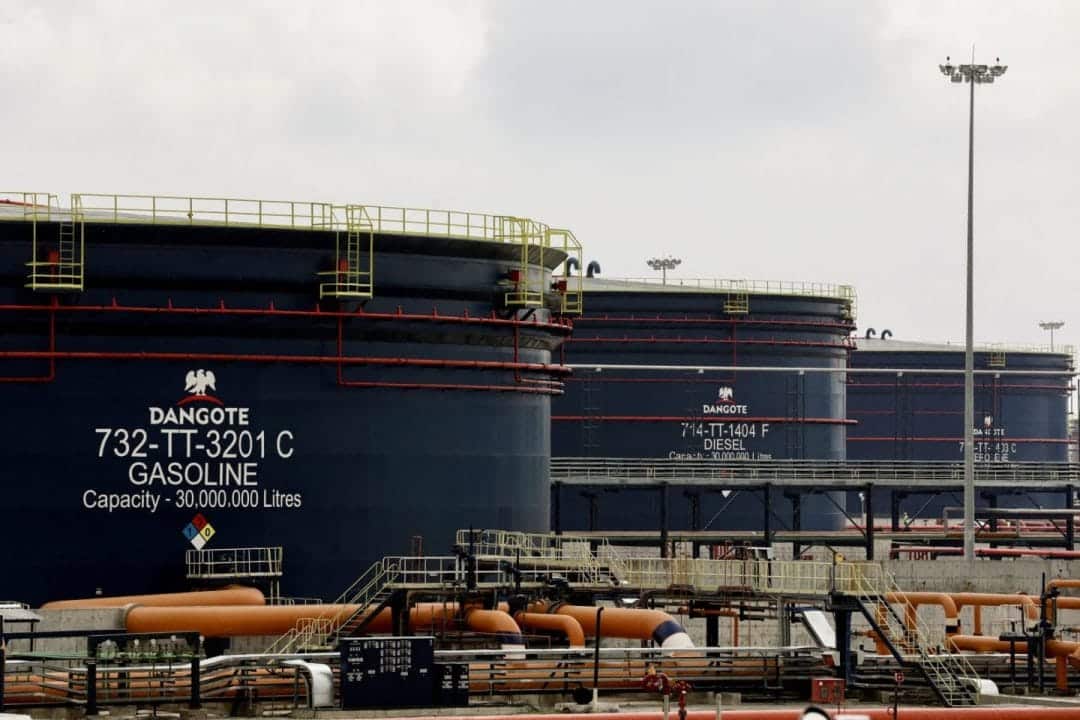
A crucial dimension of the current conflict lies in Dangote Refinery’s potential export strategy. Designed as Africa’s largest single-train refinery, Dangote Refinery has the capability to refine up to 650,000 barrels per day, a scale that not only meets domestic demands but also positions it as a major exporter of refined petroleum products across Africa and potentially other global markets. This ambition to dominate both local and international markets fuels the marketers’ concerns, as they argue that Dangote’s export priorities could leave Nigeria vulnerable to supply disruptions and price inflation.
The marketers assert that, by focusing on exports, Dangote could deprioritise domestic needs, particularly during periods of high demand or operational disruptions. They contend that a monopoly allows Dangote the liberty to allocate resources as it sees fit, even at the expense of Nigerian consumers. If Dangote’s priority shifts towards lucrative export markets, Nigerians may face scarcity and inflated prices—a prospect that could strain households, businesses, and the overall economy.
On the other hand, Dangote’s representatives argue that the refinery’s export capabilities would enhance Nigeria’s geopolitical influence in the energy sector, reduce reliance on imports, and potentially bring in substantial foreign exchange. According to Dangote’s vision, becoming a net exporter would boost Nigeria’s economy, potentially offsetting trade deficits and fortifying the nation’s position within the African Continental Free Trade Area (AfCFTA). Yet the marketers remain skeptical, viewing these claims as a potential diversion from the adverse impacts that a monopoly could impose on the local market.
Economic Ramifications of Centralised Petroleum Supply
The centralisation of Nigeria’s petroleum supply under Dangote has sparked considerable debate among economists and industry analysts. The marketers’ counter-affidavit stresses that monopolising the supply chain threatens Nigeria’s economic resilience. According to their argument, diversity in the petroleum supply chain is critical to prevent systemic vulnerabilities, especially in a nation where fuel availability directly affects the cost of goods, transportation, and overall living standards.
A monopoly could also discourage foreign and local investment in Nigeria’s downstream oil sector, as potential investors may see the market as dominated by a single player, with little room for competitive entry. The marketers warn that this environment could create a cycle of dependency, where Nigeria is left reliant on a single supplier and subject to potentially volatile price fluctuations. Such a dependency, they argue, would reduce the government’s ability to regulate prices effectively, thereby limiting its power to shield citizens from economic shocks.
Additionally, some analysts suggest that monopolising the market could lead to a lack of innovation and stagnation in infrastructure development within the sector. With limited competition, there is less incentive for Dangote to invest in refining efficiencies or to adopt new technologies. The result could be a slower-paced evolution in Nigeria’s oil infrastructure, leaving the nation ill-prepared to handle future energy demands or adapt to shifts in the global energy landscape.
Impacts on NNPC Ltd: A Question of National Interests
The marketers’ battle against Dangote Refinery has placed NNPC Ltd, Nigeria’s national oil corporation, in a difficult position. As a state-owned entity, NNPC Ltd has historically played a dominant role in the oil industry, from extraction to refining and distribution. Yet, with Dangote’s rise, the NNPC now faces competition on an unprecedented scale within its own territory.
Currently, NNPC Ltd holds stakes in Dangote Refinery, viewing the relationship as a strategic alignment meant to bolster national energy security. However, the marketers argue that NNPC Ltd’s endorsement of Dangote’s monopoly push goes against its responsibility to foster a competitive and consumer-friendly oil market. They claim that NNPC Ltd’s alignment with Dangote undermines the core purpose of a national oil company—to prioritise national interests over corporate gain.
The marketers suggest that NNPC Ltd’s stakes in Dangote could blur the lines between national and corporate interests, creating conflicts of interest that might compromise regulatory enforcement. For instance, if NNPC Ltd benefits financially from Dangote’s monopoly, it may be incentivised to limit competitive imports, regardless of the negative effects on consumer prices or supply stability. This blurring of roles raises concerns over NNPC’s commitment to transparent and consumer-centric practices in the downstream sector, leading some to call for more rigorous oversight of NNPC Ltd’s dealings with Dangote Refinery.
Legal and Regulatory Frameworks: Are They Enough to Prevent a Monopoly?
The marketers’ legal challenge brings attention to the adequacy of Nigeria’s regulatory frameworks in handling monopolistic behavior. Nigeria’s petroleum sector is primarily governed by the Petroleum Industry Act (PIA), which aims to foster a competitive environment. However, with Dangote’s refinery holding such a vast market share, the marketers argue that existing regulations may fall short in preventing monopolistic dominance.
The marketers call upon the Federal Competition and Consumer Protection Act (FCCPA), highlighting its role in preventing monopolistic practices and protecting consumer interests. They argue that the FCCPA mandates Nigeria’s regulatory bodies to prioritise consumer protection over the interests of any single corporation, regardless of its scale or strategic alignment with national goals. By invoking this law, the marketers emphasise the need for a market environment where multiple players can coexist, ensuring that consumer rights and economic stability are upheld.
However, regulatory experts argue that the PIA and FCCPA provide only limited protections, given the political and economic influence wielded by Dangote Refinery. They contend that Dangote’s significant market power could undermine regulatory efforts, particularly if political entities benefit from its monopolistic hold. Without more robust antitrust enforcement, they argue, Dangote’s monopoly could become entrenched, with little recourse for competitors or consumers.
In response, the marketers have urged the Nigerian judiciary to reinforce the statutory intent of these laws, ensuring that they apply equally to all players, regardless of their financial or political clout. For the marketers, this case represents a litmus test for the strength of Nigeria’s regulatory frameworks and the judiciary’s ability to uphold competitive practices in a rapidly consolidating market.
International Trade and Geopolitical Consequences
The repercussions of a Dangote monopoly extend beyond Nigeria’s borders. As Africa’s largest oil-producing nation, Nigeria’s policies and market structure significantly influence the West African and sub-Saharan oil economies. The marketers’ lawsuit underscores that a monopoly could shift regional trade dynamics, concentrating market power within a single entity and potentially setting the tone for monopolistic practices across the continent.
If Dangote gains dominance, Nigeria could become a critical supplier within Africa’s energy markets, with far-reaching implications for regional trade. For African nations reliant on Nigerian petroleum, a Dangote monopoly may limit their bargaining power and expose them to potential price volatility. Moreover, this concentration could give Dangote strategic leverage in negotiations within the African Continental Free Trade Agreement (AfCFTA), where oil supply security is a key concern for many member states.
International analysts have also voiced concerns that a Dangote monopoly could influence Nigeria’s stance in global energy discussions, particularly with Western nations and emerging economies seeking stable oil supplies. With Dangote potentially controlling both domestic and export markets, Nigeria’s energy policy could become inseparable from Dangote’s corporate strategies, limiting the government’s capacity to engage in trade discussions that do not align with Dangote’s interests.
For Nigeria’s foreign policy, this concentration of power could bring both benefits and challenges. On one hand, Dangote’s scale could enhance Nigeria’s influence within OPEC and in global energy circles. However, the marketers argue that such influence would come at the cost of national interests, with Dangote’s monopoly pushing Nigeria into a precarious position where the interests of a single corporation could dictate foreign policy agendas.
Public Reaction and Government Stance
The public response to this ongoing legal battle has been mixed. Some Nigerians express support for Dangote Refinery, viewing it as a symbol of local innovation and pride. Proponents argue that a locally owned monopoly would be preferable to dependence on foreign oil imports, especially given Nigeria’s decades-long struggle with fuel shortages. They see Dangote’s refinery as a step towards economic independence and national pride, with the potential to stabilise prices in the long term.
Conversely, a significant portion of the public sides with the marketers, fearing that monopolisation would lead to exploitation. Nigeria’s fuel market is notoriously volatile, with price hikes sparking protests and public backlash in the past. Many fear that without competition, Dangote could hold undue influence over pricing, triggering economic hardship for the average Nigerian. For them, the marketers’ stance resonates with concerns over transparency, fairness, and consumer welfare.
Amid these public debates, the Nigerian government has largely remained silent, refraining from openly taking sides. Analysts speculate that the government’s silence may reflect internal divisions, as various factions within the administration weigh the potential economic benefits of Dangote’s monopoly against the public’s fear of price inflation and market control. This case has also reignited discussions on Nigeria’s energy policy, with calls for the government to prioritise national interests over corporate consolidation.
Conclusion: The Fight for Nigeria’s Oil Future
As the court case progresses, Nigeria stands at a crossroads in determining the future of its oil sector. For Dangote, monopolising the oil market represents an opportunity to reshape the nation’s energy landscape, potentially stabilising prices and enhancing Nigeria’s geopolitical standing. For the marketers, however, this potential monopoly is a threat to competitive pricing, market stability, and consumer protection.
This legal battle could set a powerful precedent in Nigerian law, determining whether the nation’s energy market will allow for competitive practices or consolidate under one dominant player. The stakes are high, not only for Nigeria’s economy but for millions of Nigerians whose livelihoods depend on access to affordable petroleum. With Dangote’s ambition clashing against the marketers’ plea for a diverse market, the outcome of this legal dispute will likely reshape Nigeria’s oil sector for decades to come.