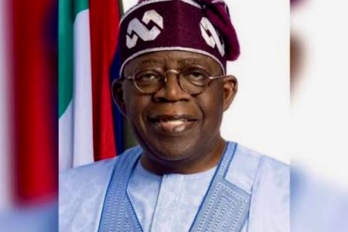
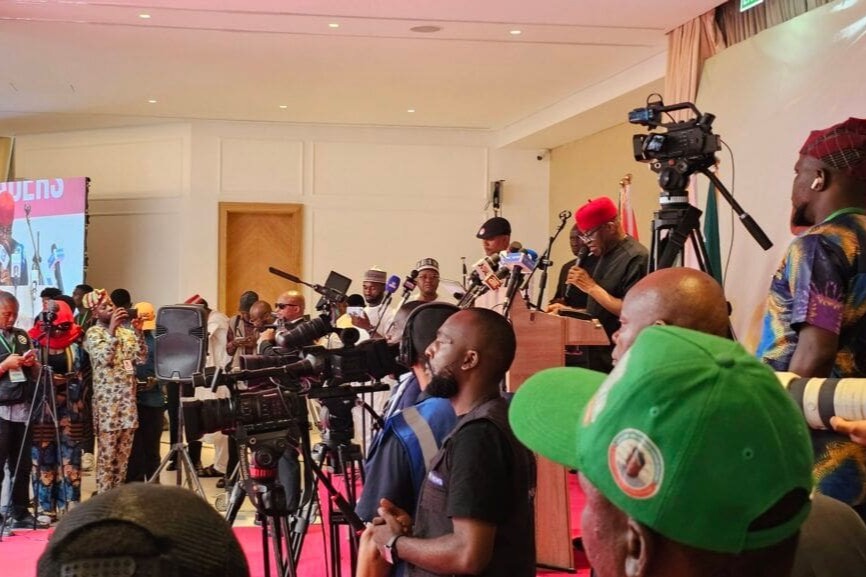
On Tuesday, Nigeria’s domestic intelligence service pushed a rare and politically combustible prosecution into open court. They arraigned a former Attorney General of the Federation and Minister of Justice, Abubakar Malami, alongside his son, Abdulaziz. The allegations blend national security and elite accountability. They also raise the perennial question. Do Nigeria’s terrorism laws apply to the powerful with the same force? Do they apply to the powerless with equal strength?
The Department of State Services (DSS) is prosecuting through counsel Callistus Eze. They told the Federal High Court in Abuja about the defendants’ charges. The defendants faced a five count charge dated 2 February and filed on 3 February. Both men pleaded not guilty.
The trial judge, Justice Joyce Abdulmalik, ordered the defence to file a formal bail application. She declined the oral request from defence counsel Shuiabu Arua, SAN. Proceedings were adjourned to 20 February 2026 for trial to commence. The defendants are to be remanded in DSS custody pending the bail hearing.
That is the procedural headline. The deeper story is the allegation at the centre of count one. It also concerns the signal the state appears eager to send about how it interprets the Terrorism Act. This is in a post-insurgency Nigeria where prosecutions are rising. However, trust in institutions remains fragile.
What the DSS Is Alleging, Count by Count
According to the charge as reported, the prosecution splits the case into two distinct tracks.
First, Malami faces charges of “knowingly abetting terrorism financing.” He allegedly did this while serving as Attorney General. He is accused of refusing to prosecute suspected terrorism financiers. Their case files were brought to his office in November 2022. The charge is anchored on the Terrorism (Prevention and Prohibition) Act, 2022, specifically the provision cited by the prosecution as Section 26(2).
Second, Malami and his son are jointly charged in counts two to five. They are accused of conduct described as preparatory to terrorism. They are also charged with unlawful possession of firearms and ammunition. The prosecution alleges that in December 2025, at their residence in Gesse Phase II, Birnin Kebbi LGA, the defendants were found with a Sturm Magnum firearm without a licence. Additionally, they had 16 live rounds and 27 expended rounds of Redstar cartridges. These were also said to be held without lawful authority. These charges refer to Section 29 of the Terrorism Act. They also mention the Firearms Act, particularly Sections 3 and 8(1), as cited in court reports. Any punishment is connected to Section 27(1).
In plain terms, the state is presenting a two pronged case. One part alleges an abuse of high office in a terror financing context. The other part alleges physical possession of a weapon and ammunition. The state frames this not merely as a firearms offence. It is seen as behaviour preparatory to terrorism.
That framing matters.
Why Count One Is a Legal and Political Thunderclap
Nigeria has seen terrorism related prosecutions increase, and security agencies have regularly arraigned suspects, financiers, and facilitators. The unusual aspect is the claim that an Attorney General’s alleged failure or refusal to prosecute can be considered as “abetting terrorism financing”.
The Attorney General is constitutionally and statutorily powerful, but prosecutorial discretion is not a blank cheque. It comes with duties, internal processes, evidentiary thresholds, and accountability mechanisms. The DSS is turning an alleged non-prosecution decision into a terrorism-linked offence. They are effectively asking the court to treat prosecutorial inaction as criminal assistance. They want this done within the strict architecture of a law designed to punish those who fund or enable violence.
If the court ultimately accepts the prosecution’s theory, it sets a precedent. This precedent could reshape how future Attorneys General assess politically sensitive files. It especially affects those involving terror financing lists, sanctions-linked intelligence, and inter-agency referrals.
If the court rejects it, the DSS risks appearing to have stretched a national security statute beyond its intended boundary. The case could harden public suspicion. People might think that counter terrorism tools are being repurposed for elite score settling.
Either way, the judiciary becomes the arena where Nigeria tests the edges of its most consequential security legislation.
The Firearms Counts, and the State’s Choice to Add a Terrorism Lens
The firearms allegations, as reported, could have been prosecuted primarily under firearms legislation. Yet the DSS and the Federal Government have paired the alleged weapon possession with the Terrorism Act’s language around preparatory conduct.
This prosecutorial choice suggests a strategic objective. Under terrorism statutes, bail becomes more difficult. Detention arguments become more persuasive. The narrative shifts from ordinary criminality to an existential threat. For the state, it is a way to anchor remand, justify custody choices, and elevate the matter beyond the usual patterns of unlawful possession cases.
For the defence, it creates a clear counter strategy. Separate the firearms allegations from any terrorism intent. Contest the chain of custody and licensing facts. Argue that the terrorism overlay is speculative. This holds unless the prosecution proves a credible nexus between the alleged items and a planned terrorist act.
That contest will likely define the early months of this trial.
Background That Shadows the Dock, Malami’s Tenure and the Controversy File
Malami served as Attorney General and Minister of Justice from 2015 to 2023. During this time, he dealt with high profile corruption disputes. He also handled politically sensitive prosecutions and cross border recoveries.
Public controversy during and after his tenure has frequently centred on recovered assets and high stakes legal decisions. For years, media and civil society have scrutinized the handling of repatriated funds. They have also debated the propriety of certain legal fee arrangements connected to recovered loot. Those issues are different from the current allegations. However, they provide the context in which many Nigerians will interpret this case.
More directly relevant is the recent record of Malami’s public denials of terrorism financing related claims. In December 2025, multiple reports quoted statements from his camp. They described the terrorism financing allegations as baseless and politically motivated. They also insisted he had not been accused, investigated, or charged by relevant agencies. The DSS arraignment now places that dispute into a formal courtroom setting. Assertions must translate into admissible evidence. They must be presented as sworn affidavits and tested testimony.
The defence will likely lean on that earlier posture. The prosecution will likely argue the opposite, that petitions, intelligence, and investigative outcomes have matured into charges.
Voices Around the Case, What Experts Are Likely to Argue
While formal reactions from major institutions may evolve over the coming days, the likely fault lines are already visible.
Senior criminal practitioners will focus on procedure. Bail requirements and detention conditions need careful consideration. Prosecutors must justify continued DSS custody, as terrorism charges often intensify judicial caution.
Civil society and rights advocates will emphasise due process. They will ask whether the defendants’ access to counsel was full. They will inquire if medical claims cited in court will be supported on record. They will also question whether the state is using pre trial detention as punishment.
National security hawks will argue that terrorism financing and facilitation are too consequential for sentimentality. They will insist that Nigeria must demonstrate that elite status does not confer immunity.
A careful newsroom must hold all three lines in view, without merging allegation into fact.
The Wider Security Moment, Why This Case Lands Now
Nigeria’s counter terrorism posture has been under renewed pressure.
Security agencies are pursuing more prosecutions. Recent reporting has highlighted the scale of terrorism-related detentions. The government is making an effort to accelerate trials. At the same time, Nigeria remains awash with illicit weapons. Research and regional enforcement reports have repeatedly warned that porous borders and trafficking routes feed insurgency, banditry, and communal violence.
International context also matters. During US President Donald Trump’s second term, which began on 20 January 2025, Washington’s public rhetoric about religious killings in Nigeria has sharpened. The insecurity in the region has also been a focus. Additionally, international counter-terrorism cooperation has remained a sensitive topic. Any domestic case involving “terrorism financing” therefore carries reputational weight, and the state may see value in signalling seriousness, both to Nigerians and to external partners.
But signalling is not proof. The state must prove each element.
What to Watch Between Now and 20 February
Three developments will shape how this story matures.
The formal bail motion. The defence has been ordered to file and serve a written application. Its content will matter, health claims, flight risk arguments, and assurances about appearing for trial. Disclosure and evidentiary clarity.
The prosecution will need to show what “refused to prosecute” means in operational terms. Was there a written directive, a recorded decision, or a file trail showing intent.
Malami, Son Docked for Terrorism Financing, Firearms Charges
This is the sort of case that can be tried in court or tried in headlines. The judiciary will likely insist on the former. The parties’ public statements, if any, will be watched for attempts to influence perception.
Right of Reply and the Discipline of Language
At this stage, Malami and his son have pleaded not guilty. The charges remain allegations until tested. A responsible investigative posture involves interrogating the law. It requires examining the incentives of institutions, and tracking the evidence trail. The goal is not to convict in advance.
Atlantic Post will continue to seek comment from the defendants’ legal team, the DSS, and the Federal Ministry of Justice. The publication will update readers as filings and rulings enter the public record.
Follow us on our broadcast channels today!
- WhatsApp: https://whatsapp.com/channel/0029VawZ8TbDDmFT1a1Syg46
- Telegram: https://t.me/atlanticpostchannel
- Facebook: https://www.messenger.com/channel/atlanticpostng