By Taiwo Adebowale
ABUJA, Nigeria — In a fiery legal clash with potentially far-reaching consequences for Nigeria’s energy sector, three major oil marketers—AYM Shafa Limited, A.A. Rano Limited, and Matrix Petroleum Services Limited—have filed counterclaims against Dangote Petroleum Refinery and Petrochemicals’ attempt to prevent them from importing petroleum products into Nigeria. This unfolding case, filed at the Federal High Court in Abuja, raises pivotal questions about market monopolies, the nation’s economic stability, and the role of regulatory authorities like the Nigeria Midstream and Downstream Petroleum Regulatory Authority (NMDPRA) in safeguarding Nigeria’s energy future.

The case highlights a standoff with implications for competitive pricing, energy security, and the country’s oil-dependent economy. While Dangote’s ambitious 650,000-barrel-per-day refinery promises to transform Nigeria’s oil sector, marketers argue that granting it monopolistic control over petroleum supplies would lead to price hikes, economic volatility, and a heightened risk of energy crises.
Background: The Rise of Dangote Refinery and Its Dominance Bid
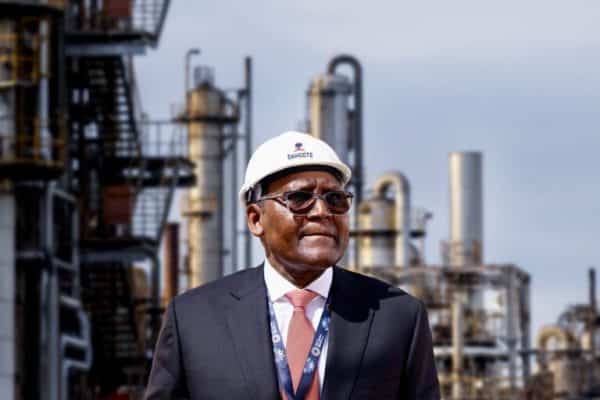
The Dangote Refinery, which began operations in early 2024, is not just Nigeria’s largest oil refinery; it is the biggest single-train refinery in Africa and one of the largest globally, capable of processing 650,000 barrels per day. The refinery, strategically positioned to meet Nigeria’s massive fuel demands, has commenced the production of key fuels, including diesel, aviation fuel, and LPG, with plans to eventually ramp up to full production capacity. Given Nigeria’s long-standing issues with fuel imports and price volatility, the Dangote Refinery’s potential to become a self-sustaining energy behemoth has been widely celebrated by both investors and government officials.
However, concerns have emerged regarding the monopoly this refinery could wield if it gains exclusive control over petroleum product distribution in Nigeria. Dangote’s lawsuit against NMDPRA and several oil marketers seeks to prevent any issuance of import licenses unless there is a product shortfall. The refinery asserts that licensing additional importers contravenes the Petroleum Industry Act (PIA), which mandates regulatory support for local refineries.
Oil Marketers’ Argument: Monopoly as a Threat to Energy Security
The counter-affidavit filed by AYM Shafa, A.A. Rano, and Matrix Petroleum represents a staunch pushback against Dangote’s monopoly bid, citing severe risks if their imports are barred. They contend that relying solely on Dangote for fuel would concentrate too much power within a single entity, posing a risk to the economy and threatening Nigeria’s energy security. This legal manoeuvre underscores fears that the absence of competition would drive up prices and stifle market dynamism, leaving consumers vulnerable to fluctuating costs without viable alternatives.
“The plan to monopolise the oil sector is a recipe for disaster in Nigeria’s already fragile economic landscape,” the marketers argued in their court filing. They assert that granting Dangote Refinery exclusive control over the petroleum supply chain would make it the de facto gatekeeper of Nigeria’s energy sector—a scenario that has proven costly in other resource-dependent countries.
The oil marketers further argued that they meet the necessary legal requirements to receive import licenses and that their activities do not hinder Dangote’s refinery operations. “The licenses issued to us by NMDPRA are compliant with the PIA and the Federal Competition and Consumer Protection Act, 2018, ensuring a balance between local production and necessary imports,” they maintained, implying that regulatory bodies must allow a range of market players to keep prices stable and prevent monopolistic practices.
Dangote’s Defence: Ensuring National Energy Independence and Compliance with PIA
Dangote Refinery, however, insists that its monopoly ambitions are rooted in national interest. Its defence centres on reducing Nigeria’s dependency on fuel imports and building a self-sufficient oil sector, goals closely aligned with the PIA’s objectives. By curtailing import licenses, Dangote argues, NMDPRA would be fulfilling its mandate to encourage local refining capacity over costly imports that have historically drained Nigeria’s foreign reserves.
The refinery’s counsel emphasised that “the NMDPRA’s decision to grant import licenses runs counter to Sections 317(8) and (9) of the PIA,” which requires support for local refineries. With a sprawling production complex and billions of dollars invested in infrastructure, Dangote Refinery contends that it deserves government support to achieve its production goals and to provide Nigeria with a steady supply of affordable petroleum products.
According to Dangote’s court filings, the monopoly would not lead to excessive control over prices but would instead stabilise them by ensuring Nigeria is no longer at the mercy of volatile global oil prices and foreign supply chains. The refinery also assured that it would meet the domestic demand, averting any need for imports.
Public Reaction: Fears of Price Hikes and Economic Hardship
The public, however, remains skeptical about Dangote’s promises. Many Nigerians have voiced concerns that allowing Dangote to dominate the market could lead to unchecked price hikes, particularly given the recent history of fuel shortages and inflation. “If Dangote controls everything, what’s to stop prices from skyrocketing?” asked a Lagos-based economist. “Monopolies rarely act in the consumer’s interest, and in a sector as sensitive as petroleum, the stakes are incredibly high.”
A recent survey conducted by a local news outlet found that nearly 70% of respondents feared that the cost of fuel would increase if the Dangote Refinery were granted exclusive rights to petroleum distribution in Nigeria. These fears are not without precedent; countries that have handed energy sector monopolies to a single firm often experience price surges and supply issues.
Energy Crisis Concerns: The Dangers of Putting All “Energy Eggs” in One Basket
One of the most compelling arguments raised by the oil marketers is the risk of an energy crisis if the Dangote Refinery faces an unexpected shutdown. With Dangote’s exports accounting for approximately 75% of the refinery’s current production capacity, any major operational issue could severely disrupt Nigeria’s petroleum supply, potentially plunging the country into a nationwide fuel shortage.
The marketers emphasised the precariousness of a single-point supply system, stating that “if Dangote experiences a breakdown or disruption, Nigeria could face an immediate and severe fuel crisis due to the lack of alternative suppliers.” They argue that in the absence of adequate reserves and alternative supply channels, a monopoly would leave Nigeria vulnerable to sudden shocks in the supply chain—a risk that could have disastrous economic and social consequences.
The Bloomberg Report: Dangote’s Major Exports and Its Local Supply Limits
A recent report by Bloomberg highlights another dimension of the issue. According to the data, only 25% of Dangote’s refinery output is dedicated to Nigeria’s local market, with the majority of its products being exported to international clients such as Vitol Group, Trafigura Group, and BP Plc. These foreign firms reportedly account for the bulk of Dangote’s exports, reflecting the refinery’s emphasis on high-value foreign markets rather than domestic supply.
This revelation raises questions about Dangote’s ability—and commitment—to meet Nigeria’s fuel needs. While the refinery has ramped up production to around 420,000 barrels per day, critics argue that this output level is insufficient to satisfy Nigeria’s daily demand for refined products, especially if other import channels are restricted. The marketers’ legal team argued that “amidst the glaring absence of credible proof that the plaintiff refines and supplies adequate petroleum products for Nigerians’ daily use, monopolising the sector is a recipe for disaster.”
Economic Implications: A Monopoly’s Toll on Nigeria’s Fragile Economy
If Dangote gains a monopoly, the economic repercussions could be severe. The marketers warned that blocking imports would push up fuel prices, exacerbating Nigeria’s inflation crisis. With the cost of living already high, a surge in fuel prices would likely intensify economic hardships for millions of Nigerians, leading to a ripple effect across various sectors of the economy. Additionally, the threat of job losses in the oil importation sector could increase unemployment levels, further destabilising the economy.
The Way Forward: Should Nigeria Foster Competition or Grant Dangote a Monopoly?
As the court prepares to review the case on January 20, 2025, Nigeria stands at a crossroads. On one side lies the promise of a locally sourced, self-sufficient energy supply led by Dangote Refinery, potentially freeing Nigeria from the burdens of oil imports. On the other, a cautionary tale about the perils of monopoly, a weakened regulatory framework, and the destabilising impact of price hikes on an already beleaguered populace.
Conclusion: Nigeria’s Oil Future in the Balance
In this unfolding legal battle, the fate of Nigeria’s oil market hangs in the balance. Whether the court sides with Dangote’s monopoly ambitions or upholds the rights of other importers will set a powerful precedent for the country’s approach to energy security, competition, and economic stability. For now, all eyes are on the court, as it determines whether Nigeria will move toward a monopolised oil sector or embrace a competitive landscape that allows market forces to shape the future of petroleum pricing and availability.
As January 20 approaches, Nigerians are left wondering if they are witnessing the rise of a new energy monopoly—and what that might mean for their wallets, their livelihoods, and the stability of their nation’s economy.