Discover our in-depth investigative report on the Lagos Assembly leadership crisis where the Akande-led panel forced Meranda out and reinstated Obasa. Explore the high-stakes political manoeuvring, party interventions and the future of Lagos politics.
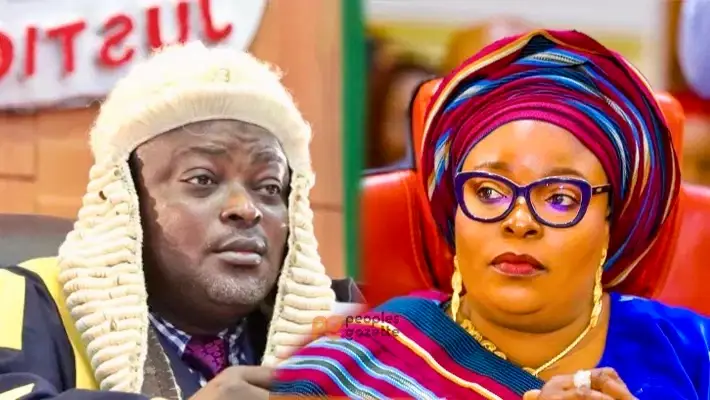
IKEJA, Lagos State — In an extraordinary turn of events that has sent shockwaves through Lagos politics, the 49-day tenure of Mojisola Meranda as Speaker of the Lagos State House of Assembly has come to an abrupt end.
In a dramatic reversal of fortunes, the assembly re-elected Mudashiru Obasa as Speaker in a decision that, while aimed at restoring order, has raised critical questions about the inner workings of party politics and the erosion of democratic autonomy in our legislative processes.
A Crisis of Leadership and Democratic Principles
The political debacle, which commenced when over 30 lawmakers ousted Obasa on 13 January 2025 while he was abroad, exposed the fragility of leadership structures in one of Nigeria’s most influential legislative bodies.
Obasa’s removal, executed in his absence, and the subsequent ascension of his deputy, Mojisola Meranda, set off a chain reaction of dissent and division within the assembly.
Meranda’s brief but contentious 49-day leadership was marked by mounting tensions, internal power struggles and an escalating crisis of confidence among party members and the public alike.
The crisis escalated to a boiling point, forcing intervention from a high-powered mediation panel. This panel, helmed by former governors Chief Bisi Akande of Osun State and Chief Olusegun Osoba of Ogun State, was drafted by President Bola Tinubu himself to mediate a solution to the legislative impasse.
Their involvement underscores the critical interplay between party directives and the independence of democratic institutions—a dynamic that has, time and again, characterised Nigeria’s political landscape.
The Intervention of Political Heavyweights
In a move reminiscent of high-stakes political theatre, the Akande-led panel intervened with an agenda to quell internal strife and restore stability.
Senior members of the All Progressives Congress (APC) had long been aware that the disarray in the House of Assembly risked not only paralyzing legislative processes but also undermining the credibility of the party.
With the mediators arriving on the scene, the focus swiftly shifted from personal ambitions to the broader imperative of party unity and the safeguarding of democratic values.
It was at a crucial meeting held outside the assembly chamber—with the presence of state party chairman Cornelius Ojelabi and the state Attorney General, Lawal Pedro (SAN)—that a consensus began to emerge.
Meranda, who had assumed the mantle of leadership in turbulent circumstances, delivered a poignant resignation speech. In her address, she emphasised that her decision was not an act of capitulation, but rather a bold sacrifice in the interest of preserving the sanctity of the legislative process.
“I have made a personal sacrifice towards resolving the leadership crisis rocking this House,” she stated, underscoring the painful toll that such internal conflicts can exact on public service.
The Return of Obasa: A Tactical Reinstatement
Following Meranda’s resignation, the assembly witnessed a significant reshuffle of its principal officers. The Deputy Speaker, Mojeed Fatai, and the Chief Whip, Okanlawon Sani, also tendered their resignations in a clear signal of a collective desire to end the ongoing discord.
In the ensuing plenary session, Mudashiru Obasa, who had earlier taken legal recourse to challenge his removal, was re-instated as Speaker.
In a fresh oath-taking ceremony, Obasa pledged his renewed commitment to the people of Lagos, vowing that the assembly would continue its work in drafting laws that propel the state towards progress and stability.
Obasa’s return, however, is far from a tidy resolution. His re-election is shadowed by an unresolved legal suit challenging the constitutionality of the assembly’s actions during his absence.
The suit, filed before Justice Yetunde Pinheiro of the Lagos State High Court, remains pending and has yet to be formally withdrawn.
According to his counsel, Chief Afolabi Fashanu (SAN), Obasa’s decision on whether to withdraw the suit is still under careful deliberation—a move that could have significant implications for the perceived legitimacy of the current leadership.
Behind Closed Doors: The Power of Party Directives
The unfolding drama within the Lagos State House of Assembly is not merely a tale of personal rivalry but a vivid illustration of how party structures can exert overwhelming influence over democratic institutions.
The APC’s internal hierarchy, represented by figures such as Cornelius Ojelabi and the governance advisory council (GAC) members, played a decisive role in orchestrating the sequence of events.
In interviews, GAC members like Chief Muraina Taiwo hinted at further manoeuvring, suggesting that there might be a future in which both Obasa and Meranda are replaced by a fresh candidate from Lagos West—the largest senatorial zone in the state.
Such revelations have sparked a wave of criticism among political observers, who argue that the supremacy of party decisions over legislative autonomy raises fundamental questions about the true state of democracy in Nigeria.
As one top source within the APC remarked, the internal conflict resolution mechanism has been “well-tested and trusted,” yet it remains deeply entwined with political expediency rather than the impartial administration of justice and governance.
The Emotional Toll and the Call for National Reforms
Amid the political wrangling, the human element of this crisis has not been lost on those within the assembly. Lawmakers offered tearful commendations for Meranda, lauding her willingness to sacrifice personal ambition for the sake of party unity.
Lawmaker Temitope Adewale reflected on the crisis as a moment of reckoning, saying, “The entire chamber is in tears. You have restored the spirit of friendship, comradeship, and loyalty to this House.”
Similarly, the emotional outpouring from colleagues such as Tobun Abiodun and Desmond Elliot highlights the deep-seated desire among Lagos legislators to move beyond personal grievances and work towards a more harmonious future.
However, beneath the veneer of reconciliation lies a more critical issue: the tendency of political elites to prioritise party interests over the democratic rights of individual lawmakers and, by extension, the electorate.
This episode is not an isolated incident; it is emblematic of a recurring pattern in Nigerian politics where powerful figures and entrenched party structures manipulate internal conflicts to consolidate control.
The implications of such actions are profound, casting long shadows over the integrity of our legislative institutions and, ultimately, the democratic process itself.
A House at a Crossroads
As the dust begins to settle, Lagosians are left to ponder what the reinstatement of Obasa truly signifies for the future of their governance.
Will the House of Assembly emerge from this crisis as a rejuvenated body capable of independent legislative action, or will it continue to be a stage for high-stakes political bargaining where the dictates of party leaders override the principles of democracy?
Obasa’s pledge to represent and protect the interests of Lagos residents is laudable, yet it must contend with the spectre of further political interference.
The unresolved legal suit, the lingering possibility of enforced resignations and the opaque workings of party negotiations all suggest that the road to genuine reform is still fraught with challenges.
The current state of affairs invites a broader reflection on the nature of political power in Lagos and, by extension, in Nigeria.
While the interventions of seasoned politicians like Chief Bisi Akande and Chief Olusegun Osoba have temporarily restored order, they also reveal a system where external arbiters are required to enforce decisions that ideally should be determined internally through transparent and democratic processes.
Such reliance on heavyweight interventions underscores the pressing need for systemic reforms that can guarantee a more balanced and equitable distribution of power within our legislative institutions.
Looking Ahead: A Cautious Optimism Amid Uncertainty
In the immediate aftermath of the crisis, there is a palpable sense of cautious optimism. Lawmakers, party leaders and political commentators alike are hopeful that this turbulent episode may serve as a catalyst for much-needed introspection and reform.
The APC’s public statements emphasising peace, unity and the supremacy of the party suggest an intention to restore a semblance of normalcy. Yet, the underlying tensions and unresolved legal challenges indicate that the issues plaguing the Lagos State House of Assembly are far from resolved.
For the people of Lagos, the hope is that this moment of crisis will ultimately lead to a more accountable and transparent legislative process—one that genuinely reflects the aspirations of its citizens rather than the interests of a select few.
As Lagosians watch with bated breath, the coming days will be crucial in determining whether this episode of political manoeuvring will pave the way for substantive reforms or merely mark another chapter in the ongoing saga of partisan politicking.
In conclusion, the dramatic reinstatement of Mudashiru Obasa as Speaker, following the Akande-led intervention, encapsulates the paradox of Lagos politics: a constant interplay between democratic ideals and the overpowering influence of party directives.
While Meranda’s sacrificial resignation may have restored a temporary sense of order, it also serves as a stark reminder of the fragility of democratic institutions in the face of relentless political ambition.
As Lagosians demand accountability and transparency, the onus is now on Obasa and his colleagues to chart a course that not only reconciles internal differences but also upholds the lofty principles of democracy for which Nigeria stands.
- Additional reports by Osaigbovo Okungbowa, Peter Jene and Omonigho Macaulay