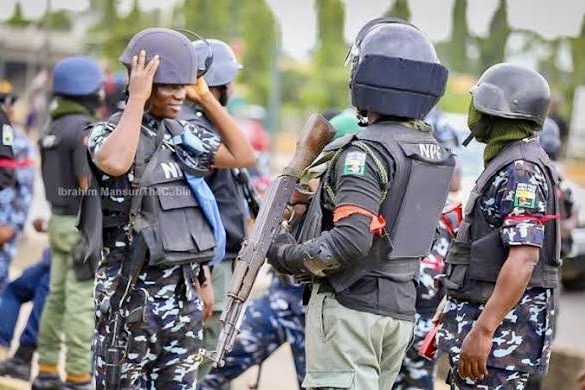
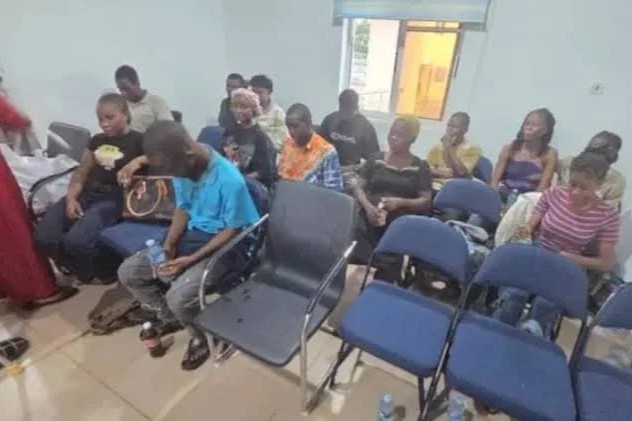
The deadly raid on Oro-Ago in Ifelodun Local Government Area has pushed Kwara State’s security crisis into an even more politically charged phase.
Local reports say suspected terrorists stormed the community on Wednesday evening, firing sporadically, attempting to force their way towards a police station, and leaving residents in panic as the violence spread through houses and streets.
Accounts from the scene differ on the full casualty figure, but they agree on the essentials: the attack was brazen, the community was overwhelmed, and the town’s local security chief, identified by residents as the Olu-Òde, was shot while trying to defend the area.
What makes the assault especially alarming is its location. Oro-Ago is the hometown of Kwara Deputy Governor Kayode Alabi. This fact turns what might otherwise have been read as another rural security incident into a direct indictment of the state’s protection architecture.
In the aftermath, residents described a community under siege. They said they had been left to fend for themselves. Gunmen moved with ease through the area.
One local source told reporters the attackers appeared determined to seize control of the police station. This underscores how bold and organised the raid appears to have been.
The Oro-Ago attack cannot be viewed in isolation. Earlier in the week, ECWA said armed bandits attacked a church service at Oke Oro Local Church Council in the same Oro Ago district, abducting eight worshippers and injuring several others.
The church warned security agencies to be more proactive rather than merely reacting after the damage had been done. Its statement is a stark reflection of the mood now taking hold across Kwara South.
That warning sits alongside a much wider pattern of violence across Kwara’s frontier communities.
Reuters reported in February that gunmen killed at least 170 people in Woro, in what a local lawmaker described as the deadliest assault of the year, while the Associated Press reported just days ago that an explosion in the state killed at least one person and injured others, again fuelling fears that armed groups are pushing deeper into the region.
Villagers fled into surrounding bushland after the Woro massacre. Security forces were mobilised. AP quoted a village head saying, “This is another trauma again because people are afraid.”
These incidents suggest a widening security corridor. This corridor now stretches from isolated settlements. It reaches places previously thought less exposed.
The significance is not only the number of attacks, but the speed with which communities are being emptied out.
AP reported that people feared they would leave Woro again after the blast. In Oro-Ago, local reports say neighbouring communities have also begun to empty. Families flee in anticipation of further raids. That is the language of displacement, not merely insecurity.
There is also a glaring political question at the heart of the crisis. Armed men reportedly moved from house to house. They attempted to overwhelm a police station in a community that is home to the state’s deputy governor. If this can happen, what confidence should ordinary residents in less prominent villages have in the state’s protective umbrella?
Residents are now openly asking that question. They have reportedly appealed for soldiers. They want stronger deployments and immediate intervention. Fear spreads across Ifelodun and adjoining local government areas.
As of the latest reports, Kwara State authorities had yet to issue a formal public response to the Oro-Ago raid.
The bigger problem is that Kwara’s insecurity now shows signs of becoming self-reinforcing. Each successful attack deepens distrust in the state’s ability to protect rural populations. Each delayed response encourages more flight. Each abandoned village becomes a softer target for the next assault.
That cycle is already visible in the reports from Oro-Ago. Communities said to include Ahun, Oke-Oyan, Ago-Olomo, Ajegunle, Omugo, and Oke-Daba are now deserted. Residents wait for a level of security that has not yet materialised.
The state government and security agencies must respond with urgency. Otherwise, the Oro-Ago attack may be seen as more than an isolated raid. It might signal that armed groups believe they can operate with impunity in Kwara South.
Residents already deal with repeated fear. This would amount to a devastating verdict on governance. It would also reflect poorly on intelligence and frontline security deployment.
Follow us on our broadcast channels today!
- WhatsApp: https://whatsapp.com/channel/0029VawZ8TbDDmFT1a1Syg46
- Telegram: https://t.me/atlanticpostchannel
- Facebook: https://www.messenger.com/channel/atlanticpostng