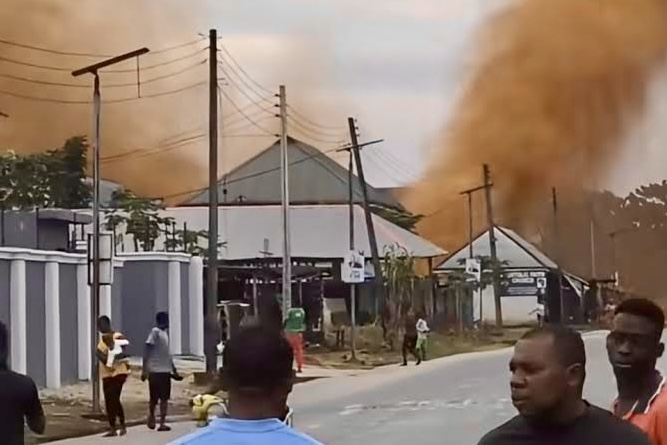
Terrorists stormed a wedding in Kahir village, Kagarko LGA, late on Sunday, firing into the hall, looting nearby shops and deepening fears that Southern Kaduna remains exposed to repeated mass attacks.
Horror In Kagarko As Wedding Celebration Is Turned Into A Killing Field
The night in Kahir village should have been filled with music, laughter, and family gatherings. Instead, it ended as a grim reminder of the collapse of rural security in parts of northern Nigeria.
Reports from Punch, The Guardian and other outlets said at least 13 people were killed and several others abducted after suspected bandits stormed the wedding venue late on Sunday, March 29, 2026, at about 11:47 p.m.
Residents said the attackers arrived in large numbers, armed with sophisticated weapons, and opened fire indiscriminately on guests inside the hall.
One witness, Shehu Bala, said the gunmen “came in large numbers and started shooting sporadically,” adding that people ran in different directions as bullets tore through the venue.
Several injured victims went quickly to Kagarko General Hospital. Those in more critical condition needed advanced treatment in Kaduna.
The attack did not end at the wedding hall. Local reports said the assailants raided nearby shops. They carted away food items, provisions, and medical supplies. This occurred before they escaped after nearly an hour of terror.
Police and community sources said the exact number of abducted people was still being verified. However, early reports clearly showed that the community had been overwhelmed and left on its own.
That detail matters. In a region where villages increasingly live under the shadow of banditry, villages face danger. Gunmen can operate for close to an hour. There is no immediate reported resistance. This situation is as damning as the casualty count itself.
Reuters reported in February that communities in Kaduna and other northern states had been forced into fragile local deals with armed groups. This occurred because many residents had lost faith in the government’s ability to protect them.
One analyst told Reuters: “People seem to have lost faith in the government’s ability to protect them. They are making deals with bandits instead.”
The Full List Of Victims Circulated By Residents
The names below are the full lists circulated in the report provided to Atlantic Post. The killed list contains 12 named victims and one unidentified person. The abducted list contains 27 named victims and one unidentified person.
Killed
Douglas John
Ado Yakubu
Maikano Aribi
John Dan Asabe
Williams Luka
Bako Danjuma
Joseph Yakubu
Victor Peter
Peter Williams
Dogara Markus
Francis Amadu
Zephaniah Alhaji
One unidentified victim
Injured
Micah Tanko
Fidelis Awuh
Samson Alhaji
Habila Bulus
Colonius Dauda
Lina Samaila
Bello Alkali
Felix Erick
Francis Tanko
Doctor Solomon
Abducted
Tanko Makeri
Jummai Victor
Tanko Madaki
Beauty Marshal
Mariya Dominic
Awede Tanko
Patience Bitrus
Thadious Augustine
Salome Danladi
Ephraim Monday
Kande Monday
Lucky Monday
Lidiya Benjamin
Gambo Benjamin
Najirgi Yakubu
Danladi Kagarko
Daniel Shehu
Talatu Ibrahim
Dauda Markus
Peace Waziri
Tanko Waziri
Promise Waziri
Asami Dauda
Awuh Adams
Bulus Sunday
Chibi Emmanuel
Peace Luka
One unidentified victim
Why This Attack Feels Bigger Than One Night Of Bloodshed
This massacre is not occurring in a vacuum. The latest attack occurs amid a broader security breakdown in Kaduna State and across the North West. In these areas, terrorist groups have raided villages and kidnapped for ransom. They have also struck soft civilian targets.
Reuters reported that officials and communities in Kaduna, Sokoto and Zamfara have been attempting local security arrangements. This is because conventional protection has often come too late. Sometimes, it has not come at all.
The pattern in Kaduna is especially troubling. The Guardian reported that the Kahir attack left several victims injured. Some of them were moved from Kagarko General Hospital to Kaduna for further treatment. A police source confirmed the incident. They said security agencies were still working to determine the exact number of abducted persons.
The paper also reported that the deputy governor, Dr Hadiza Sabuwa Balarabe, visited the injured in hospital. This visit underscored the political weight of yet another preventable disaster.
The same report added that at least 14 people abducted in Janjala three weeks earlier were still in captivity. This situation serves as a reminder that this is a rolling crisis. It is not an isolated flare-up.
Communities mourn one attack. Then another attack happens within weeks. This sends a brutal message to residents: the gunmen still set the pace.
What makes the wedding massacre particularly chilling is its symbolism. Weddings are communal, public and usually protected by the shared assumption that civilians and celebrants are not the enemy.
By targeting a family gathering, the gunmen have sent a message. No gathering is too sacred. No village is too remote. No celebration is too private to escape their reach. That is how fear spreads faster than any official reassurance.
For now, the key questions remain unanswered. Who exactly carried out the raid. Where were the abducted victims taken. How many are still missing. Why do communities remain exposed. This happens in a locality repeatedly hit by violent attacks. It occurs at the very moments when they should feel safest.
The police have promised a fuller report after preliminary investigations, but in Southern Kaduna, people have heard versions of that promise before.
Follow us on our broadcast channels today!
- WhatsApp: https://whatsapp.com/channel/0029VawZ8TbDDmFT1a1Syg46
- Telegram: https://t.me/atlanticpostchannel
- Facebook: https://www.messenger.com/channel/atlanticpostng