Discover the high-stakes debate surrounding INEC’s radical reforms, from phasing out PVCs to introducing diaspora voting. Will these proposals revolutionise Nigeria’s democracy or deepen its electoral woes? Uncover the truth behind the headlines.
INEC’s Radical Electoral Reforms: A Game-Changer or Another Empty Promise?
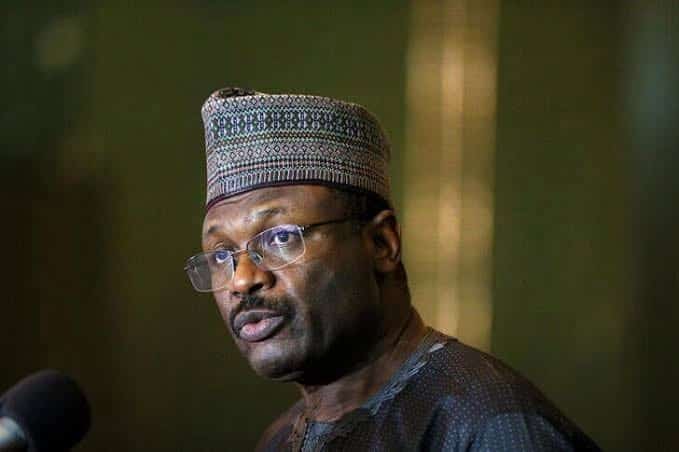
In a nation grappling with persistent electoral irregularities, the Independent National Electoral Commission (INEC) has proposed sweeping reforms that could fundamentally reshape Nigeria’s democratic process. Unveiled by the INEC Chairman, Professor Mahmood Yakubu, during a high-stakes meeting with Resident Electoral Commissioners in Abuja, these reforms have ignited a fiery debate about their potential to salvage Nigeria’s tarnished electoral system or become another empty promise.
Among the headline-grabbing proposals is the phasing out of Permanent Voter Cards (PVCs), the introduction of diaspora voting, and the establishment of an electoral offences tribunal. While these suggestions aim to modernise and streamline the electoral process, they have also drawn significant skepticism and questions about their feasibility and sincerity.
Phasing Out PVCs: A Cost-Saving Innovation or a Recipe for Chaos?
INEC’s plan to replace PVCs with computer-generated slips or downloadable voter credentials has been pitched as a revolutionary cost-saving measure. Professor Yakubu argued that this shift, combined with the Bimodal Voter Accreditation System (BVAS), would eliminate the logistical nightmares and voter disenfranchisement associated with PVC distribution.
“Those who already have PVCs can still use them to vote, but going forward, computer-generated slips issued to the voter or even downloaded from the commission’s website will suffice for voter accreditation,” Yakubu explained.
The proposal, while commendable on paper, has sparked fierce criticism. Critics argue that Nigeria’s fragile digital infrastructure, marked by frequent internet outages and limited access in rural areas, could exacerbate voter exclusion rather than alleviate it. Moreover, the spectre of cyber-attacks and digital manipulation looms large, raising concerns about the security and integrity of such a system.
Would this “modernisation’s ” truly be a step forward, or does it risk plunging Nigeria into greater electoral uncertainty? With allegations of election rigging and vote-buying still rampant, the mere digitalisation of voter accreditation may do little to address the deeply entrenched culture of electoral malpractice.
Diaspora Voting: An Inclusive Step or a Pandora’s Box?
The introduction of diaspora voting marks another bold stroke in INEC’s proposed reforms. For decades, millions of Nigerians living abroad have been excluded from participating in elections, a glaring omission in a country that prides itself on its diaspora’s contributions to national development.
“Early and diaspora voting will accommodate citizens unable to vote at their registered polling units, including INEC staff, security personnel, and Nigerians living abroad,” Yakubu announced.
While this proposal has been lauded as a step towards inclusivity, the logistical and legal challenges it presents are staggering. How will INEC ensure the credibility of votes cast thousands of miles away? What mechanisms will be put in place to prevent the hijacking of the process by political actors with deep pockets and malicious intent? And most critically, will the National Assembly—dominated by partisan interests—endorse this ambitious plan?
Unbundling INEC: A Genuine Reform or Dilution of Responsibility?
Perhaps the most contentious aspect of the reforms is the proposed unbundling of INEC’s responsibilities. The commission has called for the establishment of an electoral offences tribunal and a separate agency to handle political party registration and regulation. The rationale, according to Yakubu, is to allow INEC to focus solely on its core mandate of conducting elections.
However, detractors argue that this move could diffuse accountability and create additional bureaucratic hurdles. The establishment of an electoral offences tribunal, while necessary to address the impunity with which electoral crimes are committed, raises questions about its independence and effectiveness. Will it be another toothless tiger, or will it have the teeth to prosecute high-profile offenders and deter future violations?
Legal Clarity on Result Transmission: A Lingering Controversy
INEC’s push for legal clarity on the manual versus electronic transmission of results is a direct response to the controversies that marred the 2023 general elections. The introduction of BVAS and the INEC Result Viewing Portal (IReV) was meant to enhance transparency, but their implementation was riddled with inconsistencies and allegations of manipulation.
“The commission believes that with the introduction of BVAS, there is an imperative need for legal clarity in result management,” Yakubu stated.
This call for clarity is long overdue, but it also underscores the commission’s failure to enforce existing electoral laws effectively. The Nigerian public’s trust in INEC’s commitment to transparency has been severely eroded, and mere legislative amendments will not suffice to restore it. What is needed is a robust enforcement mechanism that ensures every vote counts and every result reflects the will of the people.
A 524-Page Blueprint: Visionary or Overwhelming?
INEC’s 524-page review report on the 2023 general elections, containing 142 recommendations, has been described as a comprehensive roadmap for reform. Of these, 86 require administrative action by INEC, 48 depend on collaboration with stakeholders, and eight necessitate legislative amendments. The sheer volume of these recommendations raises questions about their prioritisation and implementation.
Yakubu’s insistence that Resident Electoral Commissioners engage deeply with the report is a step in the right direction. However, without a clear timeline and measurable outcomes, this ambitious blueprint risks being buried under the weight of its complexity.
The Road Ahead: Reform or Rhetoric?
As INEC prepares to present its proposals to the Senate and House of Representatives, the Nigerian public watches with a mix of hope and skepticism. Will these reforms mark a turning point in Nigeria’s electoral history, or will they join the long list of unfulfilled promises? The stakes could not be higher, and the coming months will test the commission’s resolve to walk the talk.

INEC’s Reforms in Historical Context: A System Long in Crisis
To truly grasp the magnitude of INEC’s proposed reforms, it is essential to understand the historical backdrop of Nigeria’s electoral challenges. Since the nation’s transition to democratic rule in 1999, elections have often been marred by allegations of fraud, violence, and systemic inefficiencies. From the infamous ballot box snatching of the early 2000s to the more sophisticated manipulation of results through digital platforms in recent years, the story of Nigeria’s elections has been one of innovation in malpractice rather than progress in integrity.
The 2023 general elections, which served as a litmus test for INEC’s much-touted technological advancements such as BVAS and IReV, exposed the deep-rooted flaws in the system. Allegations of vote suppression, late arrival of materials, and the controversial manual transmission of results despite promises of electronic transparency dominated the headlines. These failures have severely eroded public trust in the commission, making the current push for reforms not just necessary but existential for INEC’s credibility.
However, this is not the first time INEC has promised transformative change. Past reform initiatives, such as the introduction of the card reader in 2015, initially raised hopes but were later undermined by poor implementation and political interference. The skepticism greeting the current proposals, therefore, is not without merit. Nigerians have heard this tune before, and many are wary of dancing to it again without seeing concrete action.
Diaspora Voting: International Comparisons and Local Realities
INEC’s plan to introduce diaspora voting has drawn comparisons to electoral practices in advanced democracies. Countries like Ghana and Kenya have successfully allowed their citizens abroad to participate in elections, leveraging digital platforms and strict verification processes to ensure credibility. For Nigeria, however, the road to diaspora voting is fraught with unique challenges that could derail its implementation.
One critical issue is the lack of a comprehensive database of Nigerians living abroad. The National Identity Management Commission (NIMC) has struggled to integrate the diaspora into its identity framework, leaving significant gaps that could be exploited for electoral fraud. Moreover, the logistical challenges of setting up voting centres in foreign countries or developing a secure online voting platform are daunting in a nation still grappling with basic electoral logistics at home.
Another concern is the potential for political elites to manipulate diaspora voting to their advantage. With Nigeria’s diaspora community often concentrated in countries with strong ethnic and regional affiliations, there is a risk that the process could deepen existing divisions rather than foster inclusivity. Without a robust legal and technological framework, diaspora voting could become yet another avenue for electoral malpractice.
Unbundling INEC: A Cure for Impunity?
The proposal to establish an electoral offences tribunal and a separate agency for political party regulation is perhaps the most consequential reform in INEC’s arsenal. For years, the lack of accountability for electoral crimes has emboldened political actors to flout the rules with impunity. From vote-buying to outright violence, the perpetrators of these crimes have often walked free, perpetuating a culture of lawlessness.
An electoral offences tribunal, if truly independent and empowered, could change this narrative. By swiftly prosecuting offenders and imposing severe penalties, the tribunal could serve as a deterrent to future violations. However, the history of Nigeria’s judicial system offers little optimism. Corruption, political interference, and a chronic backlog of cases have undermined the effectiveness of similar institutions in the past. The success of this tribunal will depend not just on its legal mandate but also on the political will to shield it from external pressures.
Similarly, the creation of a separate agency for political party regulation could streamline INEC’s operations and allow it to focus on election management. Yet, this unbundling must be done with caution. The new agency must be insulated from the partisan interests that have often compromised INEC’s neutrality. Otherwise, it risks becoming another tool in the arsenal of Nigeria’s political elite.
BVAS and the PVC Debate: A Technological Revolution or a Red Herring?
The debate over BVAS and the proposed phasing out of PVCs underscores the central dilemma of INEC’s reforms: can technology solve what is fundamentally a human problem? BVAS has been hailed as a game-changer, capable of eliminating multiple voting and ensuring accurate accreditation. However, its deployment in the 2023 elections revealed significant vulnerabilities, from technical glitches to deliberate sabotage.
The plan to replace PVCs with computer-generated slips or downloadable credentials is similarly fraught with complications. While it promises to reduce costs and curb voter card-buying schemes, it also opens the door to new forms of digital manipulation. In a country where cybersecurity is still in its infancy, the risks of hacking, phishing, and data breaches cannot be ignored.
Moreover, the success of such a system hinges on the reliability of Nigeria’s digital infrastructure. With many rural areas still lacking basic internet access, how will INEC ensure that every eligible voter can obtain and use these digital credentials? Without clear answers to these questions, the proposal risks becoming another well-intentioned but poorly executed initiative.
The Politics of Reform: Who Stands to Gain or Lose?
Behind the technical details of INEC’s proposals lies a web of political calculations that could determine their fate. Electoral reforms in Nigeria have always been a battleground for competing interests, with each stakeholder seeking to tilt the scales in their favour. The current proposals are no exception.
For the ruling party, which has often been accused of benefiting from electoral malpractices, these reforms could be seen as a double-edged sword. While they offer an opportunity to enhance credibility and legitimacy, they also threaten to dismantle the very system that has kept them in power. Opposition parties, on the other hand, have welcomed the reforms but remain skeptical about their implementation, fearing that they could be weaponised against them.
The role of the National Assembly is also crucial. With its members deeply entrenched in the partisan dynamics of Nigerian politics, securing legislative approval for reforms like diaspora voting and the unbundling of INEC will be an uphill battle. Will the lawmakers prioritise national interest over personal and party gains? Or will they, as history suggests, stall the process to preserve the status quo?
International Stakeholders: Watching Closely
Nigeria’s electoral reforms are not just a domestic issue; they hold significant implications for the country’s international standing. As Africa’s largest democracy, Nigeria’s elections are closely watched by global stakeholders, from the African Union to Western democracies. The failures of the 2023 elections drew widespread condemnation, tarnishing Nigeria’s image and undermining its leadership role in the region.
The proposed reforms offer a chance to redeem this image, but only if they are implemented transparently and effectively. International partners have a role to play, particularly in providing technical and financial support for initiatives like diaspora voting and cybersecurity enhancements. However, this support must be conditional on measurable progress, lest it become another avenue for waste and corruption.
A Historical Context of Nigeria’s Electoral Challenges
To fully grasp the potential impact of INEC’s proposed reforms, it is imperative to examine the historical trajectory of electoral malpractices in Nigeria. The country’s electoral history is littered with controversies, ranging from ballot box snatching and voter intimidation to outright falsification of results. These systemic flaws have not only undermined democracy but also eroded public trust in governance.
Since the return to civilian rule in 1999, successive elections have been marred by allegations of rigging and violence. The 2007 general elections, widely regarded as one of Nigeria’s most flawed, exposed the glaring inadequacies in the electoral process. Subsequent polls, including those in 2011, 2015, and 2019, showed marginal improvements but fell short of the ideals of free, fair, and credible elections.
Against this backdrop, INEC’s new reform agenda must confront decades of entrenched practices that have turned elections into a high-stakes, winner-takes-all contest. Will these new measures finally address these enduring issues, or are they mere cosmetic changes to a fundamentally broken system?
International Perspectives on INEC’s Reform Agenda
The international community has long been a keen observer of Nigeria’s electoral process, given the country’s strategic importance in Africa. Observers from the European Union, African Union, and Commonwealth have repeatedly highlighted deficiencies in the system and recommended reforms.
The introduction of BVAS and IReV during the 2023 elections initially drew praise for their potential to enhance transparency. However, the chaotic implementation of these technologies led to widespread criticism and allegations of manipulation.
INEC’s latest proposals, particularly the introduction of diaspora voting, align with global best practices. Countries like Ghana, South Africa, and Kenya have successfully implemented mechanisms for citizens abroad to participate in elections. However, the glaring difference lies in the robustness of their electoral systems and the absence of the pervasive political interference that plagues Nigeria.
For INEC to gain international credibility, it must not only implement these reforms but also ensure their seamless execution. This requires a level of political will and institutional independence that has been conspicuously absent in the past.
The Political Calculations: Who Stands to Gain or Lose?
Any reform in Nigeria’s electoral process inevitably triggers a flurry of political manoeuvring. The proposed changes, particularly the unbundling of INEC and the shift from PVCs to digital voter slips, have significant implications for the power dynamics within the political class.
For the ruling All Progressives Congress (APC), which has been accused of leveraging incumbency advantages in past elections, these reforms could either consolidate their dominance or disrupt their grip on power. The opposition Peoples Democratic Party (PDP) and other smaller parties, on the other hand, may see these changes as an opportunity to level the playing field.
Diaspora voting, in particular, has become a contentious issue. While proponents argue that it would amplify the voices of millions of Nigerians who contribute significantly to the economy, critics claim it could become a tool for political manipulation. The outcome largely depends on the legislative approval process, where partisan interests often overshadow national priorities.
Civil Society and Public Opinion: The Deciding Factor?
Civil society organizations and advocacy groups have historically played a pivotal role in pushing for electoral reforms in Nigeria. Groups like the Transition Monitoring Group (TMG) and the Centre for Democracy and Development (CDD) have been vocal in demanding accountability from INEC and the political class.
Public opinion, as captured through town hall meetings and social media discussions, reflects a deep-seated frustration with the status quo. Nigerians are demanding tangible actions, not just lofty promises. The pressure from these groups could serve as a critical counterweight to the entrenched interests that often derail reform efforts.
A Make-or-Break Moment for Nigerian Democracy
INEC’s reform agenda represents a critical juncture for Nigeria. The success or failure of these proposals will not only shape the country’s electoral landscape but also determine its democratic trajectory. As the commission navigates the treacherous waters of political resistance and public skepticism, one question looms large: Will this be the dawn of a new era or the perpetuation of a vicious cycle?