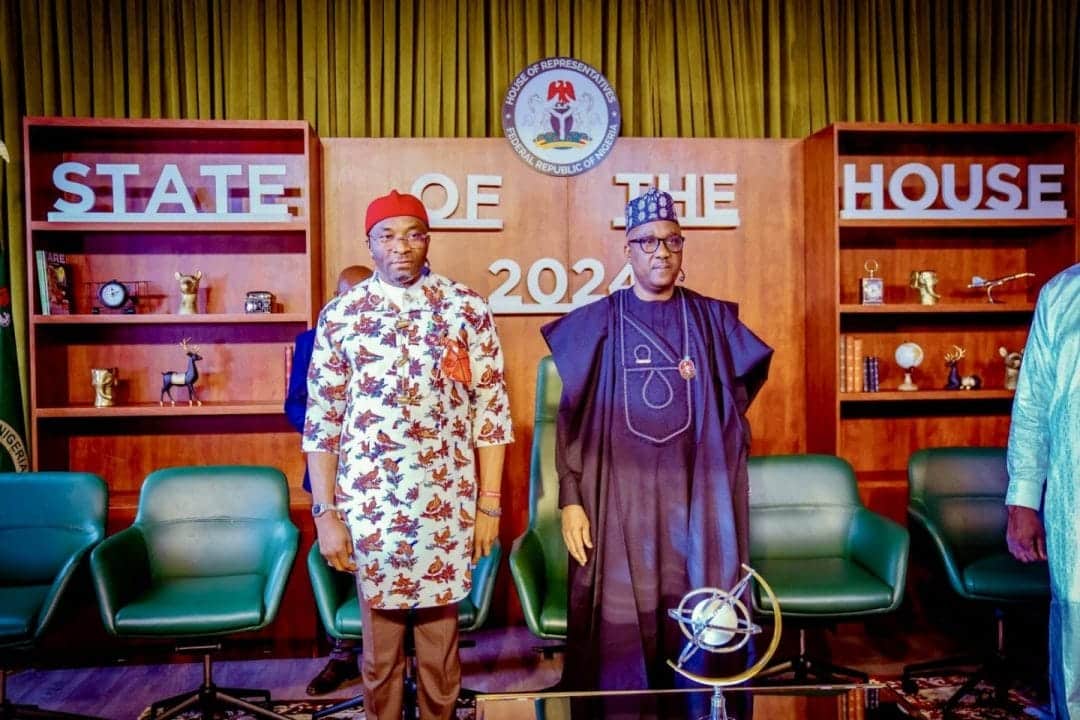
Nigerian Speaker Abbas Tajudeen launches historic live citizens’ engagement, promising transparency and accountability. Can this bold initiative redefine democracy?
ABUJA, Nigeria — In an unprecedented move towards transparency and public engagement, the Speaker of Nigeria’s House of Representatives, Rt. Hon. Abbas Tajudeen, alongside his Deputy, Rt. Hon. Benjamin Okezie Kalu, and other House leaders, hosted a live citizens’ engagement broadcast on national television. This two-hour event, aired on NTA and Channels TV, marked a significant milestone in the 10th Assembly’s commitment to fostering direct communication between the legislature and the Nigerian populace.

The initiative underscores the 10th House’s dedication to not only represent the people but also to actively involve them in legislative processes. Speaker Abbas emphasised that such engagements are pivotal in strengthening representative democracy, stating, “We have resolved to ‘speak with the people’ and not just ‘speak for the people.’” This approach aims to provide genuine platforms for citizens to voice their opinions on governance and legislative matters.
The event was a convergence of diverse societal segments, including media representatives from the Nigeria Union of Journalists (NUJ), the Nigerian Guild of Editors (NGE), and the Guild of Corporate Online Publishers (GOCOP). Public relations professionals under the Nigerian Institute of Public Relations (NIPR), civil society groups like the Nigerian Youth Parliament and the Albino Foundation, and traditional leaders were also in attendance. Notably, three former presiding officers of the House—ex-Speakers Rt. Hon. Patricia Etteh and Rt. Hon. Yakubu Dogara, along with ex-Deputy Speaker Rt. Hon. Babangida Nguroje—graced the occasion, reflecting a blend of past and present legislative leadership.
Throughout the session, Speaker Abbas and his colleagues addressed numerous questions from citizens present in the hall, demonstrating a willingness to be held accountable and to listen to public concerns. This interactive format is a testament to the House’s pledge to maintain an open dialogue with Nigerians, ensuring that legislative actions align with the people’s needs and aspirations.
The Speaker assured attendees and viewers that such engagements would become a regular feature in the 10th House’s agenda. He reiterated the House’s promise to engage in biannual dialogues with the youth, reinforcing the commitment to keep citizens at the forefront of legislative priorities. This initiative aligns with the ‘OPEN NASS’ project embraced by the 10th Assembly, which aims to enhance transparency and inclusivity in the legislative process.
In his closing remarks, Speaker Abbas expressed gratitude to the House leadership team, including his deputy, Rt. Hon. Benjamin Okezie Kalu; House Majority Leader, Hon. (Prof.) Julius Ihonvbere; Chief Whip, Hon. Usman Bello Kumo; Deputy Leader, Hon. Abdullahi Ibrahim Halims; Deputy Whip, Hon. Adewunmi Onanuga; Minority Leader, Hon. Kingsley Chinda; Minority Whip, Hon. Ali Isa; Deputy Minority Leader, Hon. Aliyu Sani Madaki; and Deputy Minority Whip, Hon. George Ozodinobi, for their unwavering support. He also acknowledged the solidarity of the other 350 House members, emphasising a collective resolve to advance Nigeria’s progress.
As the nation approaches the new year, Speaker Abbas extended his best wishes to all Nigerians, particularly conveying advance Christmas greetings to Christian citizens. He concluded with a patriotic invocation: “God bless the Federal Republic of Nigeria!”
This landmark event signifies a transformative approach in Nigeria’s legislative engagement, setting a precedent for future interactions between lawmakers and the citizens they represent. By institutionalising such dialogues, the 10th House of Representatives is poised to enhance democratic governance through increased transparency, accountability, and public participation.
The live broadcast of the citizens’ engagement session not only provided a platform for immediate interaction but also allowed millions of Nigerians to witness their representatives in action, thereby demystifying legislative proceedings and fostering a sense of inclusion. This initiative is expected to bridge the gap between the electorate and the elected, ensuring that the voices of ordinary Nigerians resonate within the halls of power.
In the broader context of Nigeria’s democratic evolution, such initiatives reflect a growing recognition of the importance of citizen participation in governance. By committing to regular engagements, the 10th House of Representatives is setting a benchmark for legislative bodies across Africa, highlighting the role of transparency and accountability in building public trust and enhancing democratic legitimacy.
As the 10th Assembly continues its tenure, the institutionalisation of these engagements will be crucial in assessing the effectiveness of this approach. The success of such initiatives will depend on the consistency of these interactions, the responsiveness of the legislature to citizens’ concerns, and the tangible outcomes that result from this dialogue.
In conclusion, the inaugural live citizens’ engagement hosted by Speaker Abbas Tajudeen and the House leadership marks a significant stride towards participatory governance in Nigeria. By opening channels of direct communication with the populace, the 10th House of Representatives is not only fulfilling its representative mandate but also empowering Nigerians to play an active role in shaping the legislative agenda. This development heralds a new era of inclusivity and responsiveness in Nigeria’s democratic journey.
As the nation anticipates the continuation of such engagements, it is imperative for citizens to seize these opportunities to voice their concerns, contribute to policy discussions, and hold their representatives accountable. The success of this initiative hinges on active participation from all stakeholders, fostering a collaborative effort towards national development.
The 10th House’s commitment to “speak with the people” signifies a paradigm shift in legislative governance, one that prioritises dialogue, inclusivity, and shared responsibility. This approach not only strengthens the democratic fabric of the nation but also ensures that the legislative process remains attuned to the aspirations and needs of the Nigerian people.
In embracing this progressive path, the House of Representatives is setting a commendable example for other arms of government, reinforcing the principle that governance is a collective endeavour that thrives on transparency, accountability, and active citizen engagement.
As Nigeria stands on the cusp of a new year, the promise of continued citizens’ engagements offers a beacon of hope for a more inclusive and responsive governance framework. It is a call to action for all Nigerians to engage constructively, contribute meaningfully, and collaborate in the ongoing journey towards a more prosperous and democratic nation.
Delving into the Implications and Challenges of the 10th House’s Citizens’ Engagement Initiative
The Nigerian 10th House of Representatives’ live citizens’ engagement event, led by Speaker Abbas Tajudeen, has sparked both commendation and debate across the nation. While the initiative marks a significant step towards greater transparency and accountability, it also raises critical questions about its long-term effectiveness, potential challenges, and the broader implications for Nigeria’s democratic landscape.

A Paradigm Shift in Legislative Engagement
The move to institutionalise live citizens’ engagement events signals a departure from the traditionally opaque and distant operations of the legislature. For decades, Nigerians have grappled with a legislative system perceived as detached from the realities of the citizenry. The advent of this initiative could redefine the relationship between lawmakers and the people they serve.
Speaker Abbas’s assertion that the House aims to “speak with the people” rather than merely “speak for the people” reflects a conscious effort to bridge the gap. This approach is particularly significant in a country where the trust deficit between the government and its citizens has been a persistent issue. By adopting a participatory model, the 10th House acknowledges that true representation requires ongoing dialogue and collaboration with the electorate.
The Promise of an Inclusive Legislative Process
The event’s inclusivity, as demonstrated by the diverse range of attendees, underscores its potential to democratise the legislative process. The presence of civil society organisations, media bodies, traditional rulers, and underrepresented groups like the Albino Foundation highlights a commitment to amplifying marginalised voices. This inclusivity, if sustained, could lead to more equitable policy outcomes that reflect the aspirations of all Nigerians.
Moreover, the involvement of youth-focused organisations, such as the Nigerian Youth Parliament, is particularly noteworthy. With Nigeria’s youth demographic forming a significant portion of the population, engaging this group is critical for fostering a sense of ownership and participation in the nation’s governance.
Skepticism and the Need for Tangible Outcomes
Despite the optimistic rhetoric surrounding the initiative, skepticism remains. Critics argue that such engagements, while laudable, could devolve into mere public relations exercises if not accompanied by tangible outcomes. Nigerians have witnessed numerous government initiatives that began with fanfare but ultimately failed to deliver substantive change.
For the live citizens’ engagement initiative to be impactful, it must translate citizens’ inputs into actionable legislative measures. The House must demonstrate a clear mechanism for incorporating feedback from these sessions into its lawmaking, representation, and oversight functions. Without this, the initiative risks being dismissed as a performative gesture rather than a genuine effort to enhance governance.
Institutionalising Accountability in the Legislature
One of the most significant challenges facing the 10th House is institutionalising the principles of accountability and transparency. While the inaugural live engagement event sets a positive precedent, its success depends on consistent implementation and the establishment of robust accountability frameworks.
The commitment to biannual youth dialogues and regular live engagements is a step in the right direction. However, the House must go further by ensuring that these sessions are not only regular but also structured to produce measurable outcomes. Transparency in reporting the outcomes of these engagements and the subsequent actions taken by the House will be crucial in building public trust.
Navigating the Political Terrain
The political implications of this initiative cannot be ignored. In a polarised political environment, the live citizens’ engagement events could become arenas for partisan contestation. Ensuring that these sessions remain focused on governance and citizen representation, rather than devolving into political theatrics, will be a delicate balancing act for Speaker Abbas and his team.
Moreover, the involvement of former presiding officers, such as Rt. Hon. Patricia Etteh and Rt. Hon. Yakubu Dogara, adds a layer of political complexity. While their presence lends credibility and historical perspective to the initiative, it also raises questions about the potential influence of political alliances and rivalries on the process.
The Role of Media and Civil Society
The engagement of media organisations and civil society groups is a critical factor in the initiative’s success. Bodies such as the Nigeria Union of Journalists (NUJ), the Nigerian Guild of Editors (NGE), and the Guild of Corporate Online Publishers (GOCOP) play a vital role in shaping public perception and holding the legislature accountable.
For these stakeholders, the live citizens’ engagement events provide an opportunity to advocate for greater transparency and inclusivity in governance. Their active participation in these sessions can help ensure that the voices of ordinary Nigerians are amplified and that the legislature remains responsive to the needs of the people.
Challenges Ahead
While the inaugural event was widely praised, the road ahead is fraught with challenges. Institutional resistance, logistical constraints, and the risk of public disillusionment are just a few of the hurdles the 10th House must navigate. Additionally, sustaining momentum and public interest in these engagements will require continuous innovation and responsiveness from the House leadership.
Another potential challenge lies in managing the expectations of citizens. As the House opens itself up to greater scrutiny, it must be prepared to address the criticisms and demands that will inevitably arise. Balancing these expectations with the practical constraints of legislative governance will require astute leadership and strategic planning.
A Test for Nigeria’s Democracy
The live citizens’ engagement initiative represents a bold experiment in participatory democracy. For Speaker Abbas and the 10th House, it is both an opportunity and a challenge—a chance to redefine legislative governance and a test of their commitment to transparency and accountability.
As the initiative unfolds, its success will depend on the House’s ability to translate citizen participation into meaningful legislative action. By doing so, the 10th House could set a new standard for governance in Nigeria, paving the way for a more inclusive, transparent, and accountable democratic system. However, failure to deliver on its promises could erode public trust and reinforce the cynicism that has long plagued Nigeria’s political landscape.
In the final analysis, the live citizens’ engagement initiative is a litmus test for Nigeria’s democratic evolution. It holds the potential to bring the government closer to the people, but its true impact will only be determined by the actions that follow. The spotlight is now on the 10th House to demonstrate that it is not only willing to listen but also prepared to act decisively in the interest of the Nigerian people.
The Road Ahead and the Legacy of the 10th House of Representatives
As the Nigerian 10th House of Representatives embarks on a mission to institutionalise live citizens’ engagement, the initiative stands poised to leave a lasting legacy. However, the sustainability and impact of this bold experiment will largely depend on its execution, public reception, and the ability to integrate feedback into actionable legislative reforms.

Former House Speaker Yakubu Dogara (L) and House Speaker Abbas Tajudeen exchange pleasantries after a live citizens’ engagement broadcast on national television. December 21, 2024. Former House Speaker Patricia Etteh (L) and House Speaker Abbas Tajudeen exchange pleasantries after a live citizens’ engagement broadcast on national television. December 21, 2024.


The Unfinished Business of Representation
The live engagement event has laid a foundation for a more participatory form of democracy, but the question remains: how will the House address the myriad concerns raised by citizens? During the event, questions ranged from pressing economic challenges to demands for improved infrastructure, education reforms, and security measures. These are not new issues, but the platform has elevated them to a level of prominence that demands immediate attention.
The 10th House must leverage its legislative powers to address these concerns effectively. This requires not only crafting laws that reflect the will of the people but also exercising oversight to ensure the executive branch implements these policies faithfully. Speaker Abbas’s declaration that citizens remain the focus of the 10th House will be tested by the House’s ability to deliver tangible results.
A Model for Africa?
Nigeria’s democratic experiment has often been scrutinised by the international community, serving as both a cautionary tale and a beacon of hope. The live citizens’ engagement initiative could set a precedent for other African nations grappling with similar challenges of governance and representation.
However, for this model to gain traction beyond Nigeria’s borders, it must prove its efficacy at home. The success of the initiative could redefine legislative engagement across the continent, showcasing Nigeria as a leader in innovative governance practices. Conversely, failure could reinforce negative stereotypes about the inefficacy of African political institutions.
Speaker Abbas: Architect of a New Legislative Era?
Speaker Abbas Tajudeen’s leadership is central to the success of this initiative. His tenure as Speaker of the 10th House will likely be defined by his ability to sustain and expand this citizens’ engagement framework. While his rhetoric has been widely praised, the onus is now on him to ensure that the initiative transcends political symbolism.
The inclusion of former presiding officers, such as Patricia Etteh and Yakubu Dogara, lends a sense of continuity and institutional memory to the effort. However, it also places additional pressure on Abbas to meet the high expectations set by these seasoned politicians. His handling of this delicate balance will shape his legacy and, by extension, the legacy of the 10th House.
The Role of Public Trust
Ultimately, the success of the live citizens’ engagement initiative hinges on public trust. Nigerians have long been skeptical of their political leaders, viewing government initiatives with a mix of hope and suspicion. To build and sustain trust, the 10th House must demonstrate that these engagements are not mere performative acts but genuine efforts to involve citizens in governance.
Transparency will be key. The House must provide regular updates on the progress made in addressing the issues raised during these sessions. More importantly, it must be willing to admit failures and take corrective action when necessary. Only through such honesty and accountability can the House hope to rebuild the trust of the Nigerian people.
A Vision for the Future
As 2025 approaches, the live citizens’ engagement initiative offers a glimmer of hope for a nation often weighed down by cynicism and despair. It represents a chance to chart a new course for Nigeria’s democracy—one that is more inclusive, responsive, and accountable.
For Speaker Abbas and his colleagues, the stakes could not be higher. The eyes of the nation are upon them, and their actions in the coming months will determine whether this initiative becomes a transformative force or yet another missed opportunity in Nigeria’s democratic journey.
Additional report: Osaigbovo Okungbowa, Atlantic Post Senior Political Correspondent.