State governors in Nigeria are opposing the federal government’s plan for direct local government funding following a Supreme Court ruling. Concerns focus on maintaining state control and addressing existing debts. As discussions with President Tinubu unfold, the conflict poses significant implications for federalism and local governance in Nigeria’s evolving political landscape.
State Governors Clash with Federal Mandate: Tinubu Under Pressure Over Direct LG Payments
ABUJA, Nigeria — In a dramatic twist in Nigeria’s political saga, state governors have mounted an unprecedented challenge against the federal government’s plan to disburse local government (LG) funds directly—bypassing state control—following the landmark Supreme Court ruling on LG autonomy.
This controversy, fuelled by allegations of multi-billion dollar debts and political overreach, now threatens to upend the delicate balance of power between Nigeria’s federal, state, and local tiers of governance.
A Landmark Judgement and Its Tumultuous Aftermath
On 11 July 2024, Nigeria’s Supreme Court delivered a historic ruling that fundamentally reshaped the fiscal landscape of local government administration.
The judgement declared that federal allocations must be paid directly into the accounts of Nigeria’s 774 local government areas, a move designed to ensure that funds reach democratically elected officials without undue state interference.
Proponents hailed the ruling as a triumph for decentralisation and grassroots development, while opponents warned it could exacerbate longstanding financial mismanagement and debt crises at the local level.
Yet, almost nine months after this monumental verdict, state governors remain resolute in their efforts to delay or even derail the implementation of this directive.
Their primary contention centres on the planned mechanism: funds are to be channelled through the Central Bank of Nigeria (CBN), a process they argue effectively maintains federal oversight and control over LG finances.
Critics of this approach claim that such a system not only dilutes local autonomy but also leaves the councils vulnerable to potential mismanagement of their own resources.
The Governors’ Objections: Debt and Loss of Control
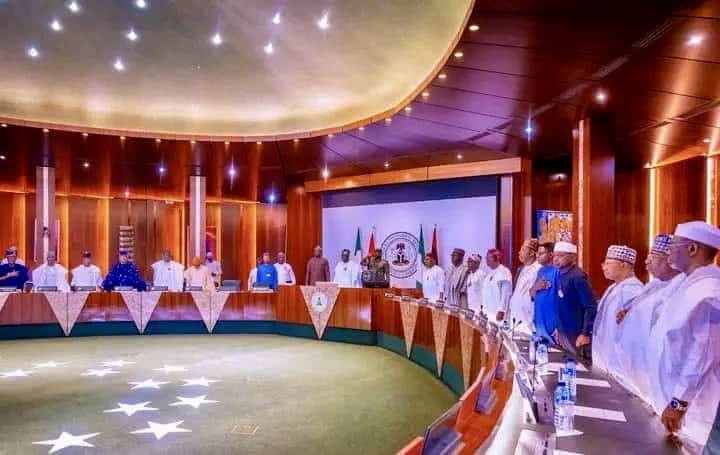
At the heart of the governors’ opposition is a potent mix of fiscal caution and political self-interest. During a high-profile meeting with President Bola Tinubu at the State House in Abuja—held under the auspices of an Iftar dinner—the governors raised serious concerns about the proposed payment route.
They contended that depositing LG funds into CBN accounts would mean that any money sent for local government use would still be subject to federal control, effectively undermining the autonomy the Supreme Court ruling sought to secure.
One insider revealed,:
“They argued that if the funds are routed through the CBN, it would still require approval from the Accountant-General. In essence, the Federal Government would retain de facto control over the local government finances.”
This sentiment was echoed by several state executives, who suggested that a more acceptable alternative would be to have these funds disbursed directly into commercial bank accounts, thereby cutting out the intermediary role of the apex bank.
A further complication is the issue of outstanding debts. Some governors have cited the multi-billion dollar liabilities allegedly incurred by local councils as a rationale for blocking the direct payment system.
They fear that if these debts are not fully addressed, the influx of federal funds could be diverted to settling arrears—potentially leaving local governments even more financially crippled.
This argument has resonated with a faction of state leaders who see the proposed system as a potential conduit for further fiscal mismanagement.
Tinubu’s Iftar Encounter: A Political Chess Match
The meeting with President Tinubu, which took place at the State House in Abuja, has now become a focal point in this unfolding political drama.
Insiders report that the governors used the occasion not only to air their grievances but also to press for a renegotiation of the terms surrounding LG fund disbursement.
According to an anonymous source:
“The governors met with the President for an extended period. They were clearly jostling for a solution that would preserve state influence over local finances.”
Such high-stakes discussions have now set the stage for a political showdown, with the President caught in the crossfire between federal imperatives and state-level resistance.
President Tinubu, known for his pragmatic approach to governance and grassroots development, has attempted to walk a tightrope. In a public address on New Year’s Day 2025, he emphasised that his administration was not at odds with state governors over LG autonomy.
“We are not in a battle with the states,” he declared. “Local governments are crucial to grassroots development, and I call on all state executives to work collaboratively in driving development for Nigeria.”
Despite these assurances, the deep-seated mistrust between the federal government and state leaders continues to simmer, threatening to derail the implementation of the Supreme Court’s directive.
The Broader Implications for Grassroots Development
The stakes in this dispute are exceptionally high. Proponents of direct LG payments argue that financial autonomy at the local level is vital for responsive governance, improved service delivery, and enhanced accountability.
Direct disbursement would empower local governments to address pressing community needs—from healthcare and education to sanitation and infrastructural development—without bureaucratic delays and the risk of funds being siphoned off by intermediary state agencies.
However, critics warn that the abrupt implementation of such a radical shift could have unintended consequences.
They point to potential scenarios where LG funds might be misdirected to settle debts or become entangled in protracted legal battles, ultimately undermining the very purpose of decentralisation.
The controversy is further compounded by reports that some local government employees and stakeholders have not been adequately briefed on the new processes, with calls for clearer guidelines from both the CBN and the Federal Government.
Indeed, industry insiders and observers have stressed the need for a comprehensive stakeholder engagement process to ensure that all parties understand their roles and responsibilities.
The Association of Local Governments of Nigeria (ALGON) and the National Union of Local Government Employees (NULGE) have both voiced concerns over the lack of transparent communication regarding the opening of LG accounts at the CBN.
Without detailed procedural guidelines and a clear roadmap for implementation, there is a significant risk that the transition could be marred by confusion and mismanagement.
The Call for Stakeholder Consultation and Transparency
As tensions continue to mount, voices from within the LG sector are calling for an inclusive dialogue involving all stakeholders—state governors, local government officials, federal authorities, and even independent experts.
ALGON’s Secretary-General, Mohammed Abubakar, has been particularly vocal about the need for a coordinated approach.
“What is needed now is a stakeholder meeting where all components—state governors, LG chairmen, and financial experts—can sit together and hash out a clear, transparent plan for direct payment,” he asserted.
Abubakar warned that without such collaboration, the implementation could be “haphazard”, potentially leading to further mismanagement of local government funds.
“If the funds are diverted under the guise of settling debts, local governments may end up worse off. We must ensure that every naira is accounted for and that the autonomy granted by the Supreme Court is not eroded by bureaucratic red tape,” he added.
Political Ramifications and the Future of Federalism in Nigeria
This dispute over LG fund disbursement is not merely a technical financial issue—it is emblematic of the broader struggles within Nigeria’s federal system.
For decades, the power dynamics between the federal, state, and local levels have been fraught with tension.
State governors have traditionally wielded significant influence over LG finances, a practice that many argue has stifled local innovation and accountability.
The Supreme Court’s decision was intended to break this cycle, promoting a more equitable distribution of power and resources.
Yet, the vigorous opposition from state governors highlights the challenges inherent in reforming entrenched systems.
As state leaders cling to their perceived prerogatives, the federal government is forced to navigate a labyrinth of political, financial, and legal obstacles.
President Tinubu’s administration now faces a critical test: whether it can reconcile these divergent interests and chart a course that honours the Supreme Court’s ruling while addressing the legitimate concerns of state governors.
Failure to do so could not only derail LG autonomy but also undermine public confidence in Nigeria’s governance structures.
Navigating a Path Forward
Experts suggest that the key to resolving this impasse lies in building a bridge between the competing interests. Enhanced transparency, clear procedural guidelines, and robust stakeholder engagement are all essential components of a viable solution.
The Federal Government and the CBN must urgently clarify the implementation framework, detailing the roles of commercial versus central bank accounts, the audit requirements, and the timelines for disbursement.
Moreover, there is an urgent need for a broader national dialogue on LG autonomy.
This should include consultations with local government representatives, civil society organisations, and financial experts who can provide insights into best practices for managing local funds.
Such consultations would not only help to allay fears about potential mismanagement but also foster a sense of collective ownership over the reform process.
Conclusion: A Tipping Point for Nigerian Federalism
The current standoff over direct LG payments is more than a bureaucratic tussle—it is a defining moment in Nigeria’s journey towards true decentralisation and grassroots empowerment.
As state governors press their case against what they perceive as federal overreach, the outcome of this debate will have profound implications for the country’s future.
If President Tinubu’s administration can successfully navigate this crisis by balancing the imperatives of fiscal autonomy with the practical realities of state-level concerns, Nigeria may finally be able to realise the full potential of its constitutional promise.
On the other hand, if the discord persists, the very foundations of local government autonomy—and by extension, effective grassroots development—could be jeopardised.
For now, all eyes remain on Abuja, where political manoeuvrings and high-stakes negotiations continue behind closed doors.
The coming weeks will be critical in determining whether Nigeria’s federal system can adapt to the evolving demands of democratic governance, or if the spectre of centralised control will once again reassert itself over the nation’s local governments.
As the drama unfolds, one thing is clear: the battle for local government autonomy is far from over, and its resolution will shape the future of Nigeria’s democracy for years to come.
- Additional reports from Atlantic Post Senior Correspondents Osaigbovo Okungbowa and Peter Jene