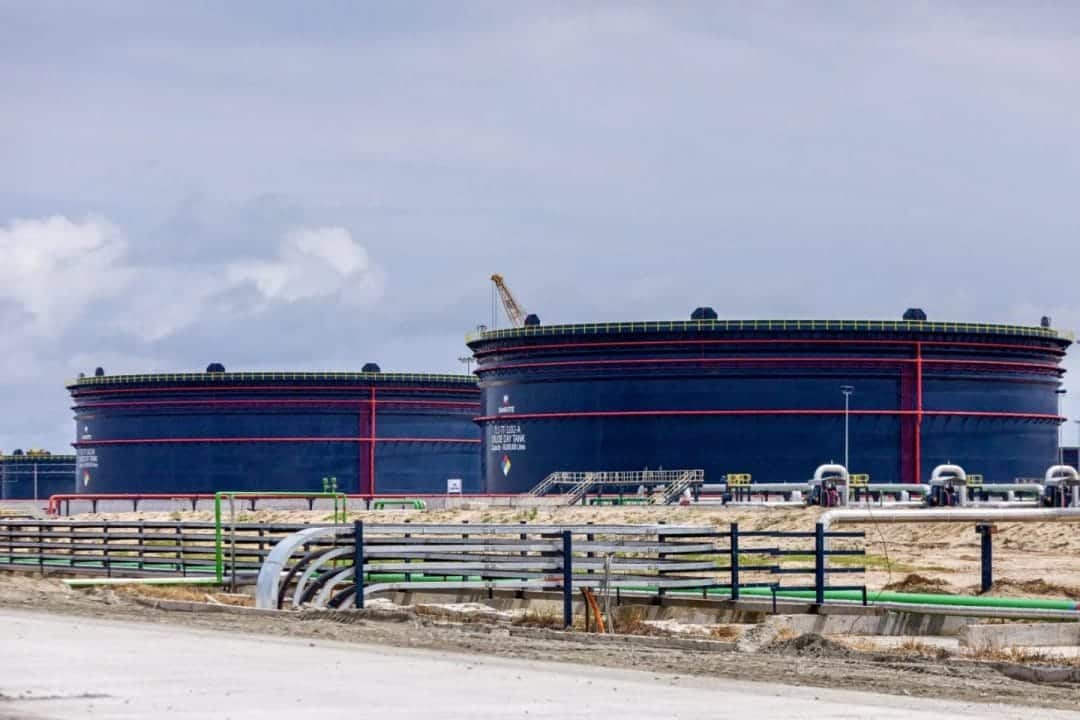
NNPCL slashes petrol price to ₦899, matching Dangote Refinery. A bold move in Nigeria’s energy sector with major economic and global implications.
NNPCL’s Move in a Deregulated Market: The Beginning of a New Era?
In a dramatic turn of events, the Nigerian National Petroleum Company Limited (NNPCL) has slashed its ex-depot price of Premium Motor Spirit (PMS), popularly known as petrol, from a staggering ₦1,020 to ₦899 per litre. This landmark decision, confirmed by the Petroleum Products Retail Outlets Owners Association of Nigeria (PETROAN), signals a seismic shift in the dynamics of Nigeria’s downstream petroleum sector.
The move comes mere days after the Dangote Refinery, Africa’s largest privately-owned oil refining facility, announced its own price reduction of PMS to ₦899 per litre. The synchronicity of these announcements has sparked intense speculation, with analysts and industry stakeholders questioning whether this marks the beginning of a competitive price war that could redefine Nigeria’s energy market.
In a statement released on Saturday, PETROAN’s National Public Relations Officer, Dr. Joseph Obele, highlighted the competitive pressures stemming from the deregulation of the downstream sector as the primary catalyst for NNPCL’s decision. The statement noted that while marketers purchasing PMS from depots in Warri, Oghara, Port Harcourt, and Calabar will still pay ₦970 per litre, the reduction to ₦899 per litre for other regions underscores a deliberate strategy to retain market relevance in the face of rising private-sector competition.
A Strategic Response to Deregulation
The deregulation of Nigeria’s downstream petroleum sector has long been a contentious issue, with proponents arguing it would foster competition, drive efficiency, and ultimately benefit consumers. Critics, however, have warned of potential price volatility and the erosion of government oversight. NNPCL’s latest decision reflects an adaptation to the new realities of deregulation, which have forced even the state-owned oil giant to operate in a more competitive landscape.
By matching Dangote Refinery’s pricing, NNPCL is sending a clear message: the days of monopolistic pricing and lack of competition are over. However, the implications of this decision extend far beyond immediate consumer relief. The move represents a profound shift in the balance of power within Nigeria’s petroleum sector, as the dominance of state-owned entities is increasingly challenged by private players with superior operational efficiencies and market-driven strategies.
The Ripple Effects of Competitive Pricing
NNPCL’s price adjustment has set the stage for a potential price war among oil marketers, a development that could profoundly impact Nigeria’s economy and energy sector. For consumers, the immediate benefit is clear: lower petrol prices could alleviate the financial strain of transportation and logistics, particularly as the country grapples with high inflation and dwindling purchasing power.
However, the long-term ramifications are more complex. Industry observers warn that a sustained price war could erode profit margins for smaller players, potentially driving them out of the market and leading to a consolidation of power among a few dominant firms. This, in turn, could undermine the very competition that deregulation was intended to foster.
Moreover, the regional pricing disparities highlighted in PETROAN’s statement raise questions about the equitable distribution of benefits from price reductions. Marketers in regions such as Warri and Port Harcourt will still pay ₦970 per litre, a significant premium compared to the ₦899 per litre price point in other areas. This disparity could exacerbate existing regional inequalities and fuel resentment among consumers and stakeholders in the affected regions.
A Catalyst for Broader Reforms?
NNPCL’s decision may also serve as a catalyst for broader reforms within Nigeria’s energy sector. The company’s willingness to adjust its pricing in response to market dynamics underscores the potential for deregulation to drive efficiency and innovation. However, it also highlights the need for robust regulatory frameworks to ensure fair competition and prevent market abuses.
The announcement has reignited calls for greater transparency and accountability in the operations of both NNPCL and private-sector players. Critics argue that without stringent oversight, the benefits of deregulation may be short-lived, as market forces alone are insufficient to address systemic issues such as supply chain inefficiencies and infrastructure deficits.
The Consumer Perspective
For the average Nigerian, the reduction in petrol prices offers a glimmer of hope amid widespread economic challenges. The timing of the announcement, coming just weeks before the holiday season, is particularly significant, as it promises to ease transportation costs during a period of heightened travel and spending.
However, consumers are also acutely aware of the volatility that has historically characterised Nigeria’s petroleum market. Past price reductions have often been followed by abrupt increases, eroding public trust in both government and corporate entities. As such, NNPCL’s latest move will be closely scrutinised, with many questioning whether it represents a genuine commitment to consumer welfare or a calculated effort to regain lost market share.
NNPCL’s decision to slash PMS prices to ₦899 per litre marks a watershed moment in Nigeria’s energy landscape. While the move offers immediate relief to consumers and underscores the competitive impact of deregulation, it also raises critical questions about the future of the country’s petroleum sector.
As the implications of this decision continue to unfold, one thing is clear: Nigeria’s downstream sector is entering a new era, where competition, innovation, and consumer expectations will play a more central role than ever before. The coming weeks and months will reveal whether NNPCL and other stakeholders are prepared to navigate these uncharted waters.
Economic and Political Ramifications of NNPCL’s Price Reduction
The Nigerian National Petroleum Company Limited’s (NNPCL) decision to reduce the ex-depot price of Premium Motor Spirit (PMS) from ₦1,020 to ₦899 per litre represents more than just a tactical response to competition from private entities such as Dangote Refinery. It is a strategic manoeuvre with profound economic and political implications, raising questions about the viability of Nigeria’s deregulated oil market and its broader economic policies.
Economic Impacts: A Double-Edged Sword
From an economic perspective, the price cut is a welcome development for consumers and businesses alike. For many Nigerians, who have borne the brunt of rising fuel prices since the removal of fuel subsidies in May 2023, this reduction offers temporary relief. Cheaper fuel means lower transportation costs, which could translate to reduced prices for goods and services, particularly in urban areas where commuting and logistics are cost-intensive.
However, the sustainability of this pricing strategy is debatable. Industry experts caution that NNPCL’s decision to lower prices might strain its revenue streams, especially as global oil prices remain volatile. Unlike private refineries such as Dangote, which operate with a profit-driven model, NNPCL is burdened by decades of inefficiency, corruption, and mismanagement.
The company’s recent financial struggles are well-documented. Despite its transition from a state-run entity to a limited liability company, NNPCL has struggled to shed its legacy of inefficiency. Critics argue that the price reduction could exacerbate these challenges, particularly if the company is unable to achieve cost-efficiency in its operations.
Additionally, the regional disparities in pricing—where marketers in Warri, Port Harcourt, and other southern depots are charged ₦970 per litre compared to ₦899 in other regions—highlight lingering inefficiencies in Nigeria’s supply chain infrastructure. These disparities could undermine the broader economic benefits of the price reduction, as consumers in these regions may not experience the same level of relief.
The Politics of Competitive Pricing
The timing of NNPCL’s price adjustment is politically significant. Coming on the heels of Dangote Refinery’s announcement of a similar price reduction, NNPCL’s move appears to be a calculated effort to reassert its dominance in Nigeria’s downstream sector. However, the implications extend beyond market competition.
For the administration of President Bola Ahmed Tinubu, which has faced significant public backlash over its economic policies, including the removal of fuel subsidies, NNPCL’s price reduction offers a rare opportunity to regain public goodwill. By aligning with consumer interests, the government can present this decision as a validation of its commitment to market-driven reforms.
However, this narrative is unlikely to resonate with all Nigerians. Critics have already begun questioning the motives behind the price cut, with some alleging that it is a politically expedient move designed to deflect attention from the administration’s broader failings. The timing of the announcement, during the festive season, adds fuel to these suspicions, as it suggests a deliberate attempt to placate a restive populace during a period of heightened economic activity.
A Test of Deregulation’s Promise
NNPCL’s price reduction also serves as a litmus test for the effectiveness of deregulation in Nigeria’s downstream petroleum sector. Proponents of deregulation have long argued that market competition would drive down prices and improve service delivery. While the recent price cuts by both NNPCL and Dangote Refinery lend credence to this argument, the long-term sustainability of these reductions remains uncertain.
For deregulation to deliver on its promise, industry stakeholders must address several underlying challenges. These include infrastructure deficits, regulatory inefficiencies, and the dominance of a few key players in the market. The latter is particularly concerning, as the emergence of a duopoly—dominated by NNPCL and Dangote Refinery—could stifle competition and undermine the benefits of deregulation.
Moreover, the absence of a robust regulatory framework to oversee pricing and ensure fair competition raises the risk of market abuses. Without adequate oversight, the price reductions announced by NNPCL and Dangote Refinery could merely be temporary measures, masking deeper structural issues within the sector.
Implications for Small and Medium Marketers
The competitive pricing strategies adopted by NNPCL and Dangote Refinery are likely to have ripple effects across the downstream value chain. For small and medium-sized marketers, who lack the financial and operational capacities of these industry giants, the price war could pose existential challenges.
Already operating on thin margins, many smaller players may find it difficult to match the prices set by NNPCL and Dangote Refinery. This could lead to a wave of consolidations and market exits, further reducing competition in the sector. While this would benefit larger players in the short term, it could undermine the broader objectives of deregulation by creating an oligopolistic market structure.
Consumer Expectations and Public Trust
For consumers, the price reduction is a bittersweet development. While it offers immediate financial relief, it also raises questions about the sustainability and transparency of pricing in Nigeria’s petroleum market. Nigerians have grown accustomed to abrupt and often unexplained changes in fuel prices, eroding trust in both government and corporate actors.
NNPCL’s decision will undoubtedly be scrutinised for its long-term implications. Will the price cut lead to a sustained reduction in petrol prices, or is it merely a short-term measure aimed at countering competition? More importantly, will the benefits of deregulation trickle down to consumers, or will they be offset by new challenges, such as supply chain inefficiencies and regional pricing disparities?
NNPCL’s decision to reduce its ex-depot price of PMS to ₦899 per litre represents a pivotal moment in Nigeria’s energy landscape. While the move offers immediate benefits to consumers and underscores the competitive impact of deregulation, it also raises critical questions about the future of the country’s petroleum sector.
As stakeholders grapple with the economic and political ramifications of this decision, one thing is clear: the success of deregulation will ultimately depend on the ability of industry players and regulators to address the structural challenges that have long plagued Nigeria’s energy sector.

Geopolitical and Global Implications of Nigeria’s Downstream Revolution
NNPCL’s price reduction to ₦899 per litre signals a transformative period for Nigeria’s downstream petroleum sector, but its ripple effects extend far beyond domestic borders. As Africa’s largest oil producer, Nigeria’s policies and market dynamics carry significant weight in the global energy landscape. The implications of this move stretch into regional geopolitics, international trade, and the country’s position as a critical player in Africa’s quest for energy independence.
Regional Geopolitical Dynamics
The price cut by NNPCL is poised to reshape regional energy markets. Neighbouring countries, many of which depend heavily on imported refined products from Nigeria, will likely experience shifts in their pricing structures. For decades, Nigeria has been a primary supplier of petroleum products across West Africa, but frequent shortages and high costs have driven these nations to diversify their supply chains.
NNPCL’s new pricing strategy could restore Nigeria’s dominance in the regional market, especially if the company can maintain a steady supply of affordable products. However, this dominance comes with challenges. Competing oil-exporting nations such as Angola and Ghana may view Nigeria’s pricing as an undercutting strategy, potentially sparking tensions in the subregion.
Moreover, the interplay between NNPCL and Dangote Refinery—two behemoths with overlapping interests—could complicate regional trade dynamics. If the two entities prioritise domestic consumption at the expense of exports, smaller West African nations could face supply constraints, further destabilising an already volatile market.
Global Trade and Nigeria’s Refining Ambitions
Nigeria’s ambition to become a net exporter of refined petroleum products hinges on the success of its deregulated market. With a refining capacity of 650,000 barrels per day, the Dangote Refinery is a key player in this vision. However, NNPCL’s pricing strategy raises questions about the competitiveness of Nigerian exports on the global stage.
International buyers, particularly in Europe and Asia, are likely to scrutinise Nigeria’s pricing mechanisms. While competitive pricing could enhance Nigeria’s appeal as a source of refined products, concerns about regulatory oversight and market stability may deter long-term commitments.
Additionally, the price reduction may reignite debates about Nigeria’s compliance with global environmental standards. As major economies shift toward cleaner energy sources, the competitiveness of Nigeria’s petroleum products will depend on their adherence to stringent environmental regulations. Failure to meet these standards could limit the country’s access to lucrative markets, undermining its export ambitions.
The Energy Transition and Nigeria’s Role
The global push for renewable energy presents another layer of complexity. As countries worldwide accelerate their transition to cleaner energy sources, the long-term demand for petroleum products is expected to decline. For Nigeria, this transition poses both challenges and opportunities.
On one hand, the country’s reliance on oil revenues makes it vulnerable to global shifts in energy consumption. On the other hand, Nigeria’s vast natural gas reserves and emerging renewable energy initiatives position it as a potential leader in Africa’s energy transition. The success of this transition will depend on the country’s ability to leverage its oil and gas resources to fund investments in renewable energy and infrastructure.
NNPCL’s recent pricing strategy could play a pivotal role in this transition. By optimising its revenue streams and fostering competition, the company can generate the funds needed to invest in cleaner energy solutions. However, achieving this goal will require a clear and consistent policy framework, free from the inefficiencies and corruption that have long plagued Nigeria’s energy sector.
Consumer-Centric Reforms: A Path Forward
Ultimately, the success of NNPCL’s pricing strategy will depend on its impact on consumers. Nigerians have long endured the consequences of a dysfunctional petroleum sector, from chronic fuel shortages to exorbitant prices. The recent price reduction offers a glimmer of hope, but it is not a panacea.
For the reforms to succeed, NNPCL and other stakeholders must prioritise transparency, efficiency, and accountability. This includes addressing regional pricing disparities, ensuring a steady supply of products, and fostering an environment where competition can thrive.
Furthermore, the government must play a proactive role in safeguarding consumer interests. This includes strengthening regulatory oversight, addressing infrastructure deficits, and promoting alternative energy solutions. By doing so, Nigeria can create a petroleum sector that not only meets the needs of its citizens but also positions the country as a global leader in energy innovation.
NNPCL’s decision to slash its ex-depot price to ₦899 per litre is a watershed moment in Nigeria’s downstream petroleum sector. While it offers immediate relief to consumers and underscores the competitive impact of deregulation, it also raises critical questions about the sector’s long-term sustainability and global competitiveness.
As Nigeria navigates the complexities of a deregulated market, the stakes are high. Success will require a delicate balance between domestic priorities and international ambitions, underpinned by a commitment to transparency, efficiency, and innovation. The world is watching, and Nigeria has an opportunity to redefine its role in the global energy landscape.
Additional reports: Peter Jene and Taiwo Adebowale, Atlantic Post Senior National Affairs and Business Correspondents, respectively.