
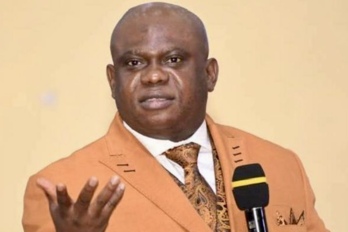
A flurry of social media posts by Femi Fani-Kayode has reopened a bruising chapter in Abuja politics. He says the former Federal Capital Territory minister set out with multiple intentions. These included not only closing down AIT but also seizing its land and demolishing buildings. Most shockingly, he intended to burn the place down.
The claims track back to a note shared by Jackson Ude. They have been amplified across platforms. Fresh questions are asked about power, media freedom, and the use of state instruments.
What FFK Has Said And Why It Matters
Femi Fani-Kayode posted a long social media statement. He says he read Jackson Ude’s account with interest. He confirmed its broad outline.
He alleges that while minister, the man now known as Nasir El Rufai moved to wrest control of land on which AIT was built. He executed demolitions in breach of court orders. When restrained, he devised a plan to burn the complex. The cause was later blamed on an electrical fault.
Those are grave accusations. If true, they describe an attempt to silence a broadcaster. These actions also risked lives and the rule of law.
FFK goes further. He names a clutch of former aides to President Olusegun Obasanjo who, he says, thwarted the alleged arson plot.
He also frames the episode as part of a pattern. He contrasts what he describes as Obasanjo’s tolerant public engagement with critics. These are set against El Rufai’s purportedly draconian instincts.
Whether readers accept FFK’s political framing or not, the allegations demand verification. They allege criminality by a former public officer. They also speak to institutional checks and balances.
The Record: Demolitions, Court Cases and Past Disputes
The dispute between AIT’s owners and the Federal Capital Territory administration is not new. In April 2019, officials demolished structures within the DAAR Communications compound on grounds of alleged illegal encroachment.
The FCT authorities said the action was to open access for neighbouring property owners and to enforce planning rules. AIT and its proprietors argued the demolitions were politically motivated.
The episode revived memories of earlier fights over land allocation and ministerial conduct while El Rufai occupied the FCT portfolio.
There is also case law. In 2013 an Abuja court freed Nasir El-Rufai in a land grab prosecution, clearing him of criminal charges. That ruling is part of a patchwork of legal and administrative events that make the factual trail complex.
Any attempt to assess FFK’s new allegations must start by mapping those earlier actions. The court record and the administrative instructions led to demolitions.
Corroboration, Motive and the Limits of Memory
FFK’s piece is a mixture of first person recall, named recollections and corroboration from a contemporaneous media note.
Jackson Ude’s original thread and the Pointblank summary are serving as the proximate sources that triggered FFK’s confirmation. But memory fades, motives colour recall and partisan actors have incentives to shape narratives.
For a journalist the task is precise. We must separate what is recorded and verifiable from what is reported as recollection or inference.
FFK’s allegation that the alleged plot to burn AIT was leaked to Obasanjo insiders and stopped is specific. It names individuals who, if willing, can be asked to confirm their intervention.
The presence of named witnesses is useful but it is not proof on its own. A careful investigation requires documentary traces. It also needs contemporaneous communications, internal FCDA orders, and accounts of those who supervised demolition operations at that time.
The New Chemical Weapons Claim And Why It Sharpens the Stakes
More recent statements made by Nasir El-Rufai have sharpened this row. He made these statements in an interview with Charles Aniagolu on Arise TV. He said he had evidence that the NSA had imported dangerous chemicals and suggested suspicious activity.
Femi Fani-Kayode has publicly warned that such pronouncements are reckless. He has even floated the possibility that El-Rufai or his associates might be behind an illicit importation intended for a false flag attack.
Those are explosive and potentially destabilising claims which must be met with urgent, methodical scrutiny by security agencies.
What To Investigate Next
• Obtain court records and FCDA operational orders. Review these documents to understand the actions that led to the 2019 demolitions. Investigate any earlier enforcement actions as well.
• Interview Jackson Ude and request any documents or contemporaneous notes he used to make his original post.
• Seek statements from the named Obasanjo insiders and from officials who served in the FCT at the time. Corroboration matters.
• Ask the relevant security agencies to confirm or deny the existence of any evidence about chemical imports mentioned by Nasir El-Rufai. Inquire whether any investigation is currently under way.
Conclusion. What began as a social media thread has the makings of a major investigative story. The stakes are public trust, media freedom and the integrity of state power.
Allegations of demolition, land seizure and arson are not mere political rhetoric. They are matters that, if true, point to serious abuse. If false, they are a dangerous form of defamation that warps public debate.
The duty of the press, and of any impartial investigator, is to move patiently from claim to evidence. They must name sources and weigh motives. Their goal is to produce a record the public can trust.
Follow us on our broadcast channels today!
- WhatsApp: https://whatsapp.com/channel/0029VawZ8TbDDmFT1a1Syg46
- Telegram: https://t.me/atlanticpostchannel
- Facebook: https://www.messenger.com/channel/atlanticpostng


Join the debate; let's know your opinion.