
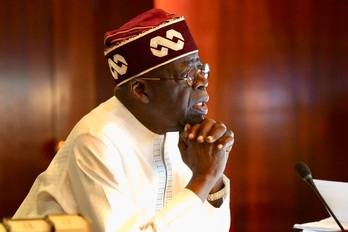
President Bola Tinubu has dispatched a high-level delegation to London. The aim is to press for the transfer of former Deputy Senate President Ike Ekweremadu. The goal is for him to serve the rest of his UK sentence in Nigeria.
The move has reopened raw questions about the rule of law. It has also raised questions about diplomatic reciprocity and political timing. South-East leaders are split between cautious welcome and outright suspicion.
The legal facts are straightforward and grave. In May 2023, a UK court convicted Ekweremadu under the Modern Slavery Act. He was involved in a scheme to bring a young man to Britain. The purpose was to provide a kidney for the senator’s daughter.
Ekweremadu was sentenced to nine years and eight months. His wife, Beatrice, received four years and six months and was released and returned to Nigeria earlier in 2025.
The Federal Government decided to try a formal transfer under an existing but dormant bilateral mechanism. This decision has altered the political arithmetic.
Nigeria and the United Kingdom signed a compulsory prisoner transfer agreement in January 2014. The agreement is intended to allow nationals convicted in the other country to serve sentences at home.
The accord was supported by promises of UK investment in Nigerian custodial infrastructure. This included a 112-bed wing at Kirikiri, reportedly funded at about £700,000.
Despite that infrastructure pledge no transfers were implemented for years and the scheme has effectively lain fallow until now.
Tinubu’s delegation was led by the Minister of Foreign Affairs and the Attorney General. Reports say the Nigerian team met officials of the UK Ministry of Justice. They then visited the Nigerian High Commission in London. The purpose of these visits was to discuss modalities for Ekweremadu’s repatriation.
A formal request for transfer under the prisoner exchange framework has been submitted and discussions are ongoing.
The diplomatic move coincides with renewed bilateral talks between Nigeria and the UK under the 2025 Migration, Justice and Home Affairs Dialogue. These talks have specifically mentioned the need to operationalise the transfer agreement. They also clarify transfer procedures and detention conditions.
At first sight the repatriation effort reads as a compassionate, corrective step. A citizen convicted overseas can sometimes be better rehabilitated closer to family and in familiar surroundings.
The prisoner transfer treaty itself anticipates exactly that objective. It sets out arrangements for transfer and adaptation of sentences. It also retains certain jurisdictional safeguards. Politics are unavoidable during an election cycle. Judicial independence and institutional memory are often fragile in the country.
Voices From The South-East
Reaction in the South-East has been deeply divided and politically charged. Chilos Godsent of the Igbo National Council questioned the timing and motive.
He warned against political manipulation disguised as compassion. He accused the Buhari administration of negligence. They neglected to protect Ekweremadu during his UK legal ordeal.
Godsent asked bluntly whether the senator would be brought back to be freed, retried, or to continue serving his term. Such scepticism is not merely rhetorical. It reflects long standing mistrust of state institutions and fears that criminal justice can be repurposed as political theatre.
Others took a more accommodating view. Ohanaeze Ndigbo’s deputy president general, Mazi Okechukwu Isiguzoro, publicly applauded the government for attempting repatriation. He framed the move as an act of rehabilitation. This act should transcend party politics.
Local party actors in Abia state argued that successive administrations differ in posture. Still, they do not necessarily differ in legality. They stated that the current government is entitled to pursue lawful diplomatic remedies.
These voices are united in one sentiment. If transfer happens, it must be transparent, legal and not as a reward for influence.
Political Risk And The Rule Of Law
There are at least three distinct legal and political risks. The Federal Government must manage these risks. This management is necessary if it expects this gambit to be seen as principled rather than partisan.
First, jurisdictional and sentencing rules. The 2014 agreement allows transfers but retains certain jurisdictional safeguards. The transferring state can keep some jurisdiction or rights of review. The receiving state will normally enforce the sentence according to its own laws. It will adapt measures where necessary.
Any perception that the sentence will be commuted, suspended, or selectively enforced to create a political spectacle will provoke legal backlash. It will also provoke diplomatic backlash and cause domestic outrage.
Second, prison conditions and human rights scrutiny. The UK pressed for upgraded facilities before transfers could be contemplated. The construction of the UK-funded wing at Kirikiri was intended to meet United Nations standards. Yet Nigeria’s correctional system remains under severe strain.
Official figures show custodial centres have a designed capacity of roughly 64,000 to 65,000. However, they house well over 75,000 inmates in recent counts. A very large proportion are awaiting trial.
Chronic overcrowding, periodic jailbreaks and resource shortfalls are widely documented. Any transfer that places a transferred prisoner into worse conditions will draw legal challenge. This applies to conditions that are inferior to those in which he was convicted.
Third, optics and timing. This is not a legal nicety. Nigeria is in the early run up to the 2027 general election campaign season.
Several commentators in the South-East have explicitly linked the timing of the repatriation bid to political calculations. These include the mobilisation of influential Ibo figures. Whether fair or not those suspicions can become self-fulfilling if the process lacks openness.
For this reason, the government needs to publish clear timelines. They must outline the legal basis for any adaptation of sentence. Additionally, a roadmap for rehabilitation should be provided to avoid the narrative of selective favour.
The Broader Institutional Question
Ekweremadu’s case also reopens a national debate about why a treaty signed in 2014 never delivered transfers. Successive administrations pledged reform but follow through was lacking.
Critics highlight bureaucratic inertia. They note weak interagency coordination between the Ministry of Foreign Affairs, the Ministry of Justice, and the Nigerian Correctional Service. Additionally, there is a perennial shortage of funds and credible custodial infrastructure.
The Nigerian Correctional Service Act 2019 rebranded and reformed the service but implementation has been uneven. If the Tinubu administration intends to operationalise the agreement it must do so as a matter of durable policy rather than episodic politics.
What Success Looks Like
A credible repatriation that withstands scrutiny would show at least four elements.
First, a transparent legal application under the 2014 treaty with public disclosure of conditions and timetable.
Second, independent verification that the receiving facility meets agreed standards and that the prisoner’s human rights will not be compromised.
Third, judicial safeguards so that transfer does not amount to retrial or political persecution.
Fourth, clear rehabilitation and reintegration plans are needed. These plans should show the state is prepared to take responsibility for the social consequences of repatriation.
If the government can deliver all four, the initiative could mark a rare example of constructive diplomacy. It could also demonstrate prison reform and victim-centred policy working in concert.
Conclusions
The Ekweremadu affair sits at the intersection of diplomacy, criminal justice and politics. For many in the South-East there is a fine line between compassion and political expediency.
For Abuja, there is an opportunity to show its ability to translate treaties into practice. It can show that criminal justice can be executed without turning public policy into patronage.
The test will be whether the process is governed by law and transparency or by backroom deals and opaque commutations.
If Tinubu’s government truly wishes to heal divisions, it must restore public confidence. The government must place the law before the optics and implement institutional reforms before the headlines. Anything less will not silence suspicion.
Additional reporting by Peter Jene, Senior National Affairs Correspondent.
Follow us on our broadcast channels today!
- WhatsApp: https://whatsapp.com/channel/0029VawZ8TbDDmFT1a1Syg46
- Telegram: https://t.me/atlanticpostchannel
- Facebook: https://www.messenger.com/channel/atlanticpostng



Join the debate; let's know your opinion.