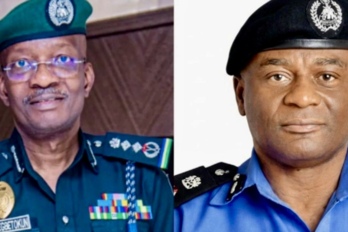
The Department of State Services (DSS) has taken the unusual step of publicly disowning and listing 115 former personnel. The agency says this purge is part of internal reforms. These reforms aim to restore discipline and integrity.
The decision was announced by the Service and then reported in national outlets. It has prompted a mixture of approval for a long-overdue clean-up. There is also alarm among security professionals. They warn that publishing the identities of former intelligence staff risks serious counter-espionage consequences.
This investigation unpacks the known facts, the institutional causes, the legal and operational risks, and the broader political context.
What happened: the facts, as reported
On 4–5 November 2025 the DSS published a notice stating that 115 personnel had been dismissed. This was part of ongoing internal reforms. The notice warned the public not to engage with them as operatives of the Service. The Service also uploaded the list to its media page.
Newsrooms reported that the dismissals spanned 2024 and 2025. The reasons included offences said to undermine the integrity of the Service. These included fraudulent practices, acts of indiscipline, certificate forgeries, and, in some cases, the leaking of official information.
The move followed other public warnings issued in recent weeks. In mid-October two former personnel were named in press reports as Barry Donald and Victor Onyedikachi Godwin. They were arrested for allegedly impersonating DSS operatives. The impersonation was to defraud members of the public.
The Service had earlier put out disclaimers about those two individuals. Reports say the arrests were among the immediate prompts for the larger public list.
The DSS has framed the exercise as a disciplinary action. It is also an administrative action. This follows internal investigations and due process for affected staff.
Former and serving security officials quoted in national newspapers describe the current Director-General, Adeola Oluwatosin Ajayi, as determined to cleanse the Service of “bad eggs.” He aims to restore standards. Insiders call it a period when some offences were overlooked or only lightly sanctioned. Mr Ajayi, who was appointed in August 2024, has been publicly credited with driving internal reform.
Why the DSS says it acted
According to reporting from staff sources, the offences that triggered dismissal are contested but fall into several categories:
1. Discipline and repeat misconduct. Some officers had existing disciplinary files that were not fully resolved under the prior administration. They repeated offenses, which led to dismissal under the new leadership.
2. Fraud and impersonation. A small but dangerous subset is accused of pretending to be DSS operatives after dismissal. They do this to swindle the public. This behaviour compelled the Service to warn citizens. The arrest of the two men named above illustrates that risk.
3. Document and credential fraud. Numerous dismissed personnel have been reportedly recruited or retained using forged or dubious educational and identification documents. These include mosque or short-course certificates passed off as degrees, foreign short-term study certificates, and falsified birth records. Such falsification, if true, directly undermines the trust and vetting at the heart of intelligence work.
The DSS has presented the purge in two ways. It is shown as both accountability and protection of the Service’s integrity. This internal house-cleaning appears to answer public complaints about fake operatives and internal corruption. The Service’s own notice and multiple national outlets report the action as an administrative reform.
The deeper institutional context
Intelligence organisations are paradoxical institutions. Their effectiveness depends on secrecy, discretion and tight vetting. At the same time, they must be accountable. They must also be free from corruption that can weaponise the Service against citizens and the state.
Nigeria’s domestic parlance for the DSS — the country’s premier domestic intelligence agency — reflects that tension. Over the past decade Nigerian security services have faced allegations ranging from political interference to human rights abuses and corruption.
Reforms, reshuffles and changes at director-general level are not unusual in this environment. The appointment of Mr Ajayi in August 2024 followed the replacement of his predecessor and arrived amid wider institutional scrutiny.
Insiders say some of the malpractices now punished were allowed to fester. This occurred when managers prioritised short-term loyalty over stringent vetting. They also focused on operational expediency.
The present leadership has signalled a change in that approach. Whether the new signal will yield durable cultural reform in a large, secretive organisation is an open question. The manner and tempo of the dismissals suggest a leadership keen to be seen as decisive.
The controversy: publication of names and pictures
The most controversial element of the DSS action is public disclosure. Several outlets reported that the Service published the names of dismissed personnel. In some accounts, they also published images and dismissal dates.
The decision to make identities public has been defended inside the Service. The Service claims it is a protective measure to prevent impostors from defrauding citizens. But senior security experts have warned that it may contravene counter-espionage precautions. It could endanger former operatives who once conducted covert work.
Kabir Adamu, a security consultant quoted in national newspapers, warned that revealing identities exposes former officers. They risk recruitment and revenge. Hostile states and non-state actors may target them.
He argued that the Service’s counter-espionage remit should counsel greater caution. Naming operators, even if they are retired or dismissed, can provide hostile intelligence services with usable leads.
The concern is not hypothetical; intelligence agencies internationally counsel restraint in publishing or transferring lists that reveal identities.
International jurisprudence and practice repeatedly demonstrates the danger of exposing intelligence identities. This is observed from the United States to Europe.
The mosaic effect is well known to counterintelligence practitioners. Independently harmless details are combined to identify or compromise an individual. Public disclosure risks playing into that dynamic.
Counter-arguments and the public interest case
Those who defend the publication stress the immediate public protection imperative. In a market where fraudsters donned uniforms, they weaponised public trust. An unequivocal public notice can prevent crime. It can also shield citizens.
The DSS has stressed that some dismissed personnel were reported to be impersonating operatives. The publication was meant to stop further victimisation.
In the short term, that argument carries weight. Warnings about impostors can save people money. They can also protect witnesses and sources from being misled.
There is also an accountability argument. Maintaining the Service’s credibility in the eyes of the public sometimes requires transparent and visible actions. This is especially important where prior inaction created public resentment.
In a polity where public confidence in security institutions is fragile, visible reform can be politically and institutionally valuable. The question then becomes one of calibration: how to reconcile public protection, accountability and counterintelligence best practice.
The operational and legal risks
Security professionals and legal experts should note several overlapping risks:
1. Physical security threats — Former covert or clandestine officers might have been involved in arrests, surveillance and operations that left them exposed to retaliatory violence. Publishing their photos and names may revive those threats.
2. Recruitment by foreign services and non-state actors — disgruntled but skilled ex-operatives are precisely the sort of human assets hostile intelligence services seek to recruit. Public identity disclosure can accelerate that process by making outreach easier.
3. Loss of future employability and stigma — expert comment in the press notes the social and economic consequences for dismissed staff. Once named and publicly disowned, many will find it near impossible to secure legitimate employment, raising the risk of them turning to criminal networks.
4. Legal exposure for the Service — if publication occurs without adequate due process or is perceived to be punitive rather than administrative, legal challenges on procedural fairness grounds can follow. The Service says disciplinary processes preceded dismissals; whether that will satisfy courts or public scrutiny is another matter.
These risks do not negate the need for reform, but they require mitigation. International best practice suggests tailored, risk-sensitive communications that protect citizens while avoiding unnecessary exposure of sensitive individuals.
Comparative perspective: how other services handle purges
Intelligence agencies globally face similar conundrums. In democracies with robust oversight, the trend has been towards internal accountability mechanisms. There is also parliamentary scrutiny. Redaction is used where identity disclosure is necessary for public protection.
Mass publication of identities is rare and usually confined to very narrow circumstances where imminent public harm is established.
The United States, for example, has laws and procedures for specific reasons. Revealing identities can constitute a national security threat. In extreme cases, it can be a criminal offence.
UK, US and European practices emphasise protecting covert identities while pursuing accountability through oversight bodies and courts.
Nigeria’s DSS is not unique in confronting these choices. What matters is that policy decisions are transparent about legal safeguards. They should detail vetting and the criteria used to decide when names are published. That proportionality is central to maintaining both security and public trust.
What should the DSS and government do next?
A conservative, security-first set of recommendations that also respects the public’s right to protection would include:
1. Clarify the legal basis and due process for each dismissal, and make summary findings public without publishing operationally sensitive personal data where avoidable. This preserves accountability while limiting counterintelligence exposure.
2. Offer post-dismissal protections and reintegration options where wrongdoing is non-violent so that dismissed personnel are not driven into criminal or foreign service recruitment trajectories.
3. Develop a calibrated public-safety communication protocol that restricts publication of identities to cases where imminent public harm is demonstrable and unavoidable, with redacted dossiers used for oversight bodies.
4. Strengthen vetting and recruitment standards so that the problem of forged credentials is addressed at source. Improved background checks, cross-agency verification and digital record checks can reduce future risk.
Conclusion — reform with caution
The DSS purge of 115 personnel is a signal moment. It highlights genuine problems of indiscipline. Fraud is also a concern. There is a need for renewed standards inside an agency on which democratic Nigeria depends for domestic security.
The public protection justification for action is understandable; public officials owe citizens plain answers when operatives misuse authority. The method involves public naming and the use of images. It crosses into an area where counterintelligence doctrine counsels restraint.
Publication without adequate safeguards risks trading short-term spectacle for long-term vulnerability.
For now, the responsibility lies with the DSS and government. They must show that this was not merely a performative purge. It needs to be a durable reset.
That will need clear evidence of rigorous due process. There needs to be a plan to protect those legitimately at risk. A communications strategy must balance the public’s right to know with the state’s obligation. This obligation is to protect those who once served and whose exposure now exposes the rest of us.
Follow us on our broadcast channels today!
- WhatsApp: https://whatsapp.com/channel/0029VawZ8TbDDmFT1a1Syg46
- Telegram: https://t.me/atlanticpostchannel
- Facebook: https://www.messenger.com/channel/atlanticpostng