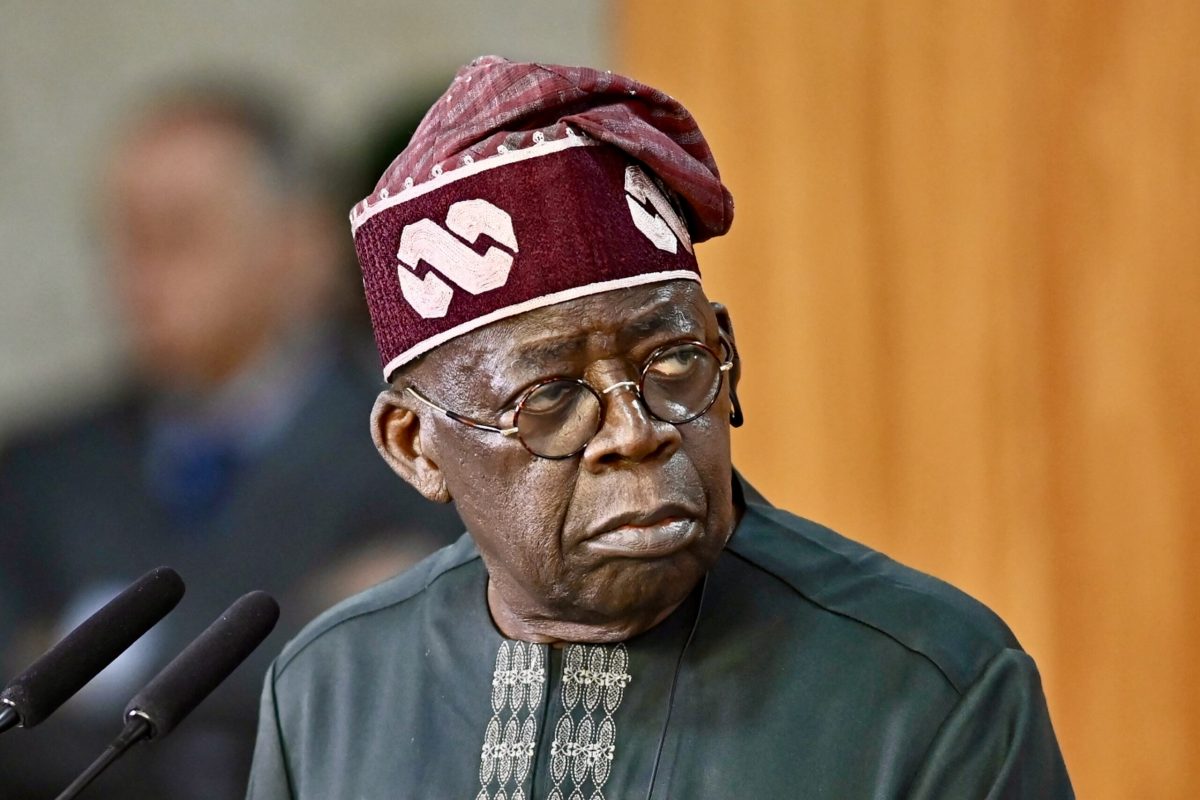
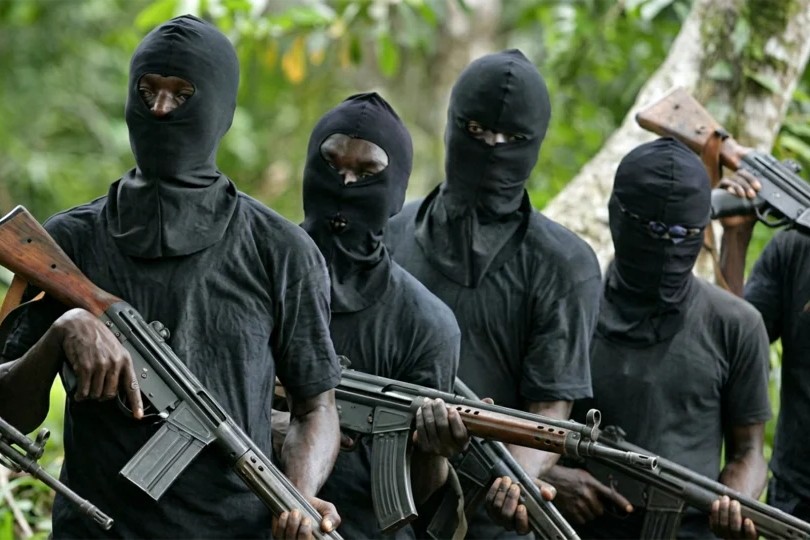
In a sensational turn during the resumed terrorism trial of Indigenous People of Biafra (IPOB) leader Nnamdi Kanu, Justice James Omotoso of the Federal High Court in Abuja on Thursday admitted into evidence a controversial Department of State Services (DSS) report alleging Kanu’s direct role in inciting the killing of security personnel and widespread destruction during the #EndSARS protests.
The admission of this report has escalated tensions between prosecution and defence, raised serious questions over evidentiary standards, and resurrected broader debates about political dissent, separatist agitation, and accountability in Nigeria.
Background: From #EndSARS Uprising to Allegations of Hijack
What began in October 2020 as a largely peaceful, youth-led outcry against police brutality—demanding an end to the notorious Special Anti‑Robbery Squad (SARS)—quickly morphed into nationwide unrest.
Amnesty International documented at least 56 protest-related fatalities, including 12 people shot at the Lekki Tollgate alone, though official figures remained much lower.
While initial police admission cited 22 officers killed and 205 police formations damaged, the DSS report now claims a staggering 186 police officers, 37 military personnel, and 10 DSS operatives lost their lives, alongside the destruction of 164 police stations and nine Independent National Electoral Commission (INEC) offices across 17 states.
This dramatic inflation of figures underpins the prosecution’s narrative of “hijacked protests” orchestrated by shadowy subversives.
Nnamdi Kanu: Separatist Leader or Scapegoat?
Born in September 1967 in Isiama Afara, Anambra State, Nnamdi Kanu emerged as IPOB leader in 2012, championing the revival of Biafra—a vision that precipitated the 1967–1970 civil war, claiming over one million lives.
After his 2015 arrest on treason charges and subsequent 2017 bail escape, Kanu’s exile saw him helm Radio Biafra broadcasts inciting secessionist fervour.
IPOB was proscribed as a terrorist organisation in September 2017, yet despite heavy-handed security responses, Kanu continued to command a substantial online following.
With his re-arrest in Kenya in 2021 and rendition to Nigeria, Kanu’s courtroom appearances have repeatedly become flashpoints for national debate on civil liberties and national unity.
Anatomy of the DSS Report: Methodology and Credibility Under Fire
Tendered by Chief Adegboyega Awomolo (SAN) through a masked operative, “Mr EEE,” the DSS exhibit encompasses a damage assessment dossier, death certificates, photographic evidence, and a certificate of compliance.
But cross‑examination by Dr Onyechi Ikpeazu (SAN) has laid bare key flaws: an absence of the witness’s signature, undated photographs, missing personal details of the deceased, and no explicit linkage between IPOB membership and specific acts of violence.
Even the purportedly “voluminous” document lacks a single caption identifying IPOB or Kanu as the proximate cause of any death—undermining the prosecution’s assertion of a direct causal chain.
Legal Implications: Evidentiary Thresholds and “Hijack” Narrative
By admitting the report, Justice Omotoso has signalled a judicial willingness to consider intelligence-derived evidence—often opaque and contested—in terrorism trials.
The defence’s reserved arguments on admissibility will centre on establishing that hearsay, chain-of-custody gaps, and ambiguities render the report unreliable.
If Kanu’s team succeeds in discrediting the DSS dossier, it could not only derail the current “terrorism” framing but also cast doubt on the use of national security agencies’ unverified data in politically charged prosecutions.
Statistical Discrepancies: Inflated Figures or Under‑reported Reality?
Independent assessments of #EndSARS violence diverge sharply from the DSS’s toll. Amnesty’s 56 fatalities and the IGP’s 22 slain officers figure pale when contrasted with the 233 total security deaths claimed by the DSS.
Similarly, other credible reports estimate fewer than 50 police facilities razed nationwide, versus the DSS’s 164.
Analysts suggest that such inflation serves a dual purpose: legitimising draconian security measures and discrediting popular protest by painting all dissenters as “terrorists”—a dangerous conflation that risks criminalising legitimate civic unrest.
Historical Context: Civil War Echoes and Contemporary Secessionist Agitation
IPOB’s insistence on Biafran independence evokes the tragic 1967–1970 civil war, during which the Eastern Region seceded as the Republic of Biafra, leading to widespread starvation and an estimated 1–3 million deaths.
Kanu’s rhetoric and the government’s heavy-handed response both hark back to this painful chapter—suggesting that Nigeria’s failure to address ethnic grievances and economic marginalisation continues to fuel separatist sentiments.
The DSS report’s attempt to link #EndSARS, a pan‑Nigerian movement, to Eastern separatism underscores official anxiety over unified national dissent.
Political Stakes: Governance, Human Rights, and International Scrutiny
The admission of the DSS report comes amid mounting international concern over human rights in Nigeria. Global media outlets—The New York Times, The Washington Post, Reuters—are closely monitoring Kanu’s trial and the broader crackdown on dissent.
For President Bola Tinubu’s administration, balancing investor-friendly security assurances with respect for civil liberties is critical.
A conviction rooted in shaky evidence could tarnish Nigeria’s global standing and embolden critics who accuse the government of weaponising counter‑terrorism laws against political opponents.
Conclusion: A Trial of Evidence or of Political Will?
As proceedings resume, the central question is not merely whether Nnamdi Kanu will be convicted of incitement and terrorism, but whether Nigeria’s courts will demand rigorous proof before curtailing fundamental freedoms.
The DSS report, though dramatic in its numbers, may prove a double‑edged sword: while bolstering the prosecution’s narrative of a “hijacked” #EndSARS, its flaws expose the perils of relying on uncorroborated intelligence dossiers to secure convictions.
When the court reconvenes on 18 July for submissions on the no‑case application, all eyes will be on Justice Omotoso to uphold evidentiary integrity—or risk setting a precedent that conflates legitimate protest with treasonous conspiracy.