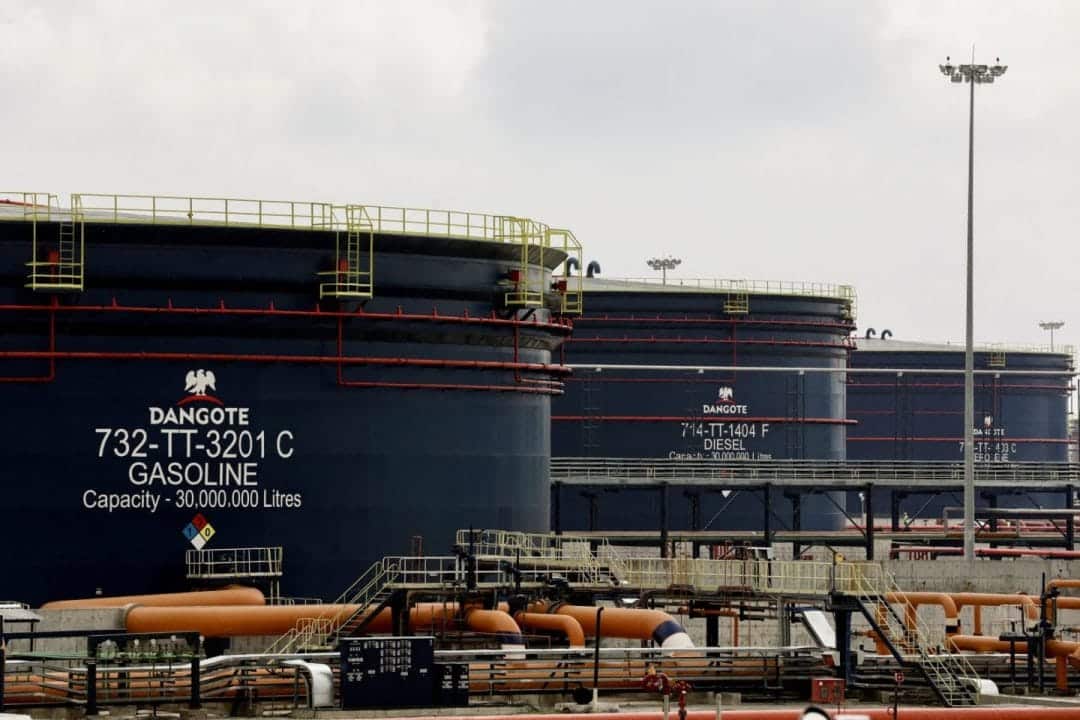
Dangote Petroleum Refinery has reduced the ex-depot price of petrol from N950 to N890 per litre, effective February 1, 2025. This move aims to mitigate inflation, lower living costs, and stimulate Nigeria’s economy amid declining global crude prices. It supports President Tinubu’s economic recovery plan, boosting consumer confidence and competition in the energy sector.
BREAKING: Dangote Refinery Slashes Ex-Depot Price of PMS to N890 – A Game-Changer for Nigeria’s Energy Market
LAGOS, Nigeria — In a bold move that is already sending shockwaves across Nigeria’s energy sector, Dangote Petroleum Refinery has officially reduced the ex-depot (gantry) price of Premium Motor Spirit (PMS), commonly known as petrol, from N950 to N890 per litre.
Effective from Saturday, 1st February 2025, this price adjustment is a strategic response to a significant downturn in international crude oil prices and a broader positive outlook in the global energy and gas markets.
In this report, we examine the details behind the announcement, analyze the potential economic ripple effects, and assess the strategic implications for Nigeria’s market and government policy.
A Strategic Shift in Nigeria’s Fuel Pricing
On Saturday, Dangote Petroleum Refinery released an official statement emphasising its unwavering commitment to transparency and fairness. The announcement comes on the heels of a prior decision on 19th January, when the refinery implemented a modest price increase amid rising crude oil prices.
However, with recent global market trends now indicating a reversal, the refinery has recalibrated its pricing structure to benefit the Nigerian consumer and stimulate the national economy.
According to the statement, the reduction from N950 to N890 is not only a reflection of the current favourable market conditions but is also designed to lower the cost of petrol nationwide. By doing so, Dangote Petroleum Refinery anticipates that the decrease in fuel prices will drive down the cost of goods and services, ultimately reducing the overall cost of living for Nigerians.
Furthermore, the move is intended to contribute to the wider economic recovery plan led by President Bola Ahmed Tinubu, whose administration is dedicated to making Nigeria self-sufficient in refined petroleum products and positioning the country as a leading oil export hub.
Global Energy Market Dynamics: The Catalyst Behind the Reduction

Falling Crude Oil Prices
At the heart of this strategic adjustment lies the recent decline in international crude oil prices. Global benchmarks such as Brent crude have been trading at significantly lower levels compared to the highs experienced in early January.
The reduction in oil prices has provided a window of opportunity for refiners to adjust their pricing models and pass the benefits directly to the consumer. This is especially critical in a country like Nigeria, where the cost of fuel has long been a determinant of the overall economic activity and consumer spending patterns.
Market analysts have noted that the current environment, characterised by a positive outlook in both the global energy and gas markets, underpins the refinery’s decision. With crude oil prices trending downward, refiners are better positioned to reduce their margins without compromising profitability, all while easing inflationary pressures in the downstream sector.
Historical Context: Price Volatility in Nigeria
It is noteworthy that Nigeria’s downstream sector has been highly sensitive to fluctuations in global oil markets. Over the past year, fluctuations in international crude prices have directly influenced the ex-depot pricing decisions of major players, including both state-owned entities and private refiners.
In January, a modest increase was implemented in response to rising prices; however, the tide has now turned. This latest reduction is emblematic of the dynamic interplay between global market conditions and local pricing strategies, highlighting the importance of agile management in a volatile market environment.
Economic Ripple Effects: How Lower Fuel Prices Could Transform Nigeria
Reducing the Cost of Living
One of the most immediate benefits of the price cut is the potential reduction in the cost of living across Nigeria. Fuel costs are intricately linked with the price of transportation, logistics, and ultimately, the cost of goods and services. When the ex-depot price of petrol decreases, oil marketers are expected to pass on these savings to consumers at the pump.
This could translate into lower transportation expenses, which would have a cascading effect on the pricing of essential commodities such as food, medicine, and manufactured goods. For a country grappling with inflationary pressures, this is a welcome development that could help stabilise consumer prices.
Stimulating Economic Activity
Lower fuel prices have a multiplier effect on the economy. With reduced transportation costs, businesses can lower their operational expenses, thereby boosting profitability and increasing disposable income for households. This, in turn, can spur greater consumer spending, which is a critical driver of economic growth.
Analysts expect that a sustained reduction in petrol prices will lead to increased economic activity across various sectors, from agriculture to manufacturing, ultimately contributing to a more robust economic recovery.
Furthermore, reduced fuel prices can serve as an impetus for small and medium-sized enterprises (SMEs) to expand their operations, as lower operating costs improve their competitiveness. The potential for increased job creation and business expansion underscores the broader economic benefits of this strategic pricing move.
Impact on Inflation
Inflation has been a persistent challenge in Nigeria, where rising fuel prices have historically contributed to higher costs of living. By lowering the ex-depot price of petrol, Dangote Petroleum Refinery is effectively taking a step to mitigate inflationary pressures.
While the price cut may represent only a fraction of the overall fuel price, its impact on the transport and logistics sectors could lead to a significant reduction in inflation over time.
Economic commentators have stressed that even a marginal decrease in fuel costs can help ease the burden on Nigerian households, which have been disproportionately affected by recent inflation spikes.
Enhancing Consumer Confidence
In addition to the tangible economic benefits, the price reduction could have a positive psychological impact on Nigerian consumers. Fuel prices are a highly visible indicator of economic well-being, and any downward movement is likely to boost consumer confidence.
As motorists notice lower prices at the pump, it can create a perception of economic relief and stability, thereby reinforcing the narrative that government-led reforms under President Tinubu are beginning to bear fruit.
Strategic Implications for Nigeria’s Energy Sector
Aligning with President Tinubu’s Economic Recovery Plan
The price cut by Dangote Petroleum Refinery is closely aligned with the broader economic recovery agenda spearheaded by President Bola Ahmed Tinubu.
The Tinubu administration has been actively working toward reducing Nigeria’s dependency on imported refined products by fostering a more self-sufficient domestic refining sector.
By adjusting its pricing in accordance with global market trends, the refinery is not only responding to market forces but also supporting the government’s strategic goal of achieving energy independence.
The administration’s vision is to position Nigeria as a leading oil export hub while simultaneously ensuring that domestic consumers benefit from more affordable fuel prices.
In this context, the collective effort by refiners, marketers, and government agencies to maintain competitive pricing is viewed as a cornerstone of the overall economic reform program.
Encouraging Market Competition
The call for oil marketers to collaborate and ensure that the benefits of the reduced price are passed on to consumers highlights a broader strategy to foster competition within the industry.
In recent years, Nigeria’s downstream sector has been characterised by a mix of state-owned and private entities, each operating under different pricing regimes. By setting a benchmark price reduction, Dangote Petroleum Refinery is essentially challenging competitors to reassess their pricing strategies.
This competitive dynamic can lead to further price adjustments and may eventually force laggards to follow suit, thereby benefiting the end consumer.
However, while competition is largely viewed as a positive force, there are concerns that an overly aggressive price war could potentially erode profit margins and lead to compromises in product quality.
Industry experts have cautioned that a balance must be struck between competitive pricing and maintaining high-quality fuel standards—a challenge that will require close regulatory oversight.
Positioning Nigeria as a Global Oil Export Hub
Beyond the immediate domestic benefits, the price reduction is part of a broader strategy to enhance Nigeria’s standing in the global oil market. By achieving self-sufficiency in refined petroleum products, Nigeria can reduce its reliance on imports and better control its supply chain.
This strategic positioning is critical as global demand for oil products continues to evolve amid shifts toward sustainable energy sources. The ability to produce competitively priced fuel domestically could also open new avenues for export, thereby boosting Nigeria’s foreign exchange reserves and contributing to a more balanced trade account.
Industry Reactions and Stakeholder Perspectives
Voices from the Downstream Sector
The reaction from industry stakeholders has been overwhelmingly positive. Many market analysts see the price reduction as a timely intervention that could stabilise an industry long plagued by volatility.
The announcement has already generated buzz across major news outlets, with leading financial analysts and energy experts weighing in on the implications.
For instance, business correspondents at reputable outlets have noted that the move is “a strategic reset” designed to align domestic pricing with international market conditions while also serving as a catalyst for broader economic reforms.
According to one senior energy analyst, “When global crude prices decline, it is both prudent and necessary for refineries to adjust their prices. This not only stabilises the domestic market but also provides a critical boost to the overall economy.”
Consumer and Motorist Reactions
On the ground, motorists and everyday consumers are likely to feel the immediate benefits of the reduction. Anecdotal reports from various filling stations suggest that consumers are already noticing a slight easing in the burden of fuel expenses.
In a country where fuel prices have a direct impact on transportation and the cost of everyday goods, even a N60 reduction per litre can result in substantial savings over time. This has the potential to improve disposable income and, by extension, consumer spending—a crucial driver of economic growth.
While some independent marketers have expressed cautious optimism, there remains a need for consistent enforcement of the new pricing directive. It is essential that the reduced cost at the ex-depot level is faithfully passed on to retail consumers to ensure that the full benefits of the move are realised.
Any deviation or hoarding of fuel supplies could undermine the intended impact of the price cut, leaving consumers in the lurch.
Regulatory Oversight and the Role of Government
Regulatory bodies will play a crucial role in monitoring the implementation of the price reduction. The Nigerian Midstream and Downstream Petroleum Regulatory Authority (NMDPRA) is expected to step in and ensure that oil marketers adhere to the new pricing structure.
This oversight is necessary to prevent any form of profiteering or price distortion that could arise from market imbalances.
Moreover, the government’s commitment to the economic recovery plan hinges on the ability of these regulatory agencies to enforce fair pricing and safeguard consumer interests.
Potential Challenges and Future Outlook
Sustainability of Lower Prices
One of the key questions that remains is whether the current price reduction can be sustained over the long term. Global oil prices are notoriously volatile, and any future increases in crude prices could force a reversal of the current trend.
Additionally, the competitive dynamics within Nigeria’s downstream sector mean that while some players might lower their prices, others may choose to maintain higher margins.
The challenge for policymakers will be to create an environment where competitive pricing does not come at the expense of product quality or financial sustainability for the refiners.
Impact on Refinery Profit Margins
Another critical issue is the impact of the price reduction on the profitability of refiners. While the move is expected to generate broad-based economic benefits, it could also squeeze the profit margins of companies operating in an already challenging market.
The balancing act between offering competitive prices and maintaining a healthy bottom line will require refiners to innovate and optimise their operational efficiencies.
This may include investing in new technologies, reducing operational costs, and exploring alternative revenue streams to offset any potential losses.
Broader Economic and Political Implications
The price reduction is being touted as a key component of President Tinubu’s broader economic recovery strategy. However, it also comes at a time when Nigeria is grappling with multiple economic challenges, including inflation, currency devaluation, and rising unemployment.
Some critics argue that while lowering fuel prices is a welcome move, it represents only one piece of a much larger puzzle. For the reforms to be truly transformative, they must be accompanied by other structural adjustments—such as improving infrastructure, enhancing governance, and diversifying the economy away from an over-reliance on oil revenues.
Moreover, the political ramifications of such economic measures cannot be overlooked. Fuel prices are a highly sensitive issue in Nigeria, and any perception that benefits are not being equitably distributed could lead to public discontent.
As such, the success of the current price reduction will depend not only on its economic merits but also on the government’s ability to communicate and implement the broader recovery plan in a manner that reassures the populace.
The Road Ahead: Strategic Recommendations
Given the current market conditions and the broader economic context, several strategic recommendations can be made:
Enhanced Monitoring and Enforcement: Regulatory bodies must ensure that the ex-depot price reduction is fully reflected at the retail level. Strict monitoring is essential to prevent any diversion or hoarding of fuel that could negate the benefits of the reduction.
Investment in Operational Efficiency: Refiners should leverage this period of favorable market conditions to invest in technologies and processes that enhance operational efficiency. Such investments could help sustain lower prices without compromising financial viability.
Diversification of the Energy Sector: The government and industry players should work collaboratively to diversify Nigeria’s energy mix. This includes exploring alternative sources of energy and reducing the economy’s over-dependence on oil, which would help insulate it from future global price shocks.
Public Communication Strategy: Clear and transparent communication from both government and industry stakeholders is vital to maintain consumer confidence. Public education campaigns can help ensure that Nigerians understand the benefits of the reforms and how they contribute to long-term economic stability.
Long-Term Policy Consistency: For the current price reductions to have a lasting impact, policymakers must commit to a consistent and coherent long-term strategy. This involves aligning fiscal, monetary, and regulatory policies in a manner that supports sustainable economic growth while protecting consumer interests.
Conclusion: A Pivotal Moment for Nigeria’s Economy
The decision by Dangote Petroleum Refinery to cut the ex-depot price of PMS from N950 to N890 marks a significant moment in Nigeria’s energy market. It is a strategic response to favourable global market conditions, reflecting both the agility of industry players and the broader economic reform agenda championed by President Bola Ahmed Tinubu.
With the potential to lower the cost of living, stimulate economic activity, and enhance consumer confidence, this price reduction could serve as a catalyst for broader economic recovery.
However, as with any major economic intervention, the path forward is fraught with challenges. The sustainability of lower prices, the impact on refinery profit margins, and the need for consistent regulatory oversight will all be critical factors in determining whether this move will deliver lasting benefits for Nigeria’s economy.
In the coming months, the success of this initiative will depend on how effectively the reduced ex-depot price is transmitted to consumers and how well industry stakeholders adapt to the new competitive landscape.
With the government’s strong commitment to a recovery plan that seeks to position Nigeria as a self-sufficient, globally competitive oil exporter, the current developments signal a hopeful beginning—but only time will tell if this bold move can truly transform the nation’s energy and economic future.
As Nigeria continues to navigate a complex web of global market dynamics and domestic challenges, the actions taken by key players such as Dangote Petroleum Refinery will be closely scrutinised by both policymakers and consumers alike.
For now, the reduction to N890 per litre stands as a beacon of potential relief in an otherwise volatile market, promising to deliver a positive ripple effect that extends well beyond the fuel pumps and into the very fabric of Nigeria’s economy.
With consumers, businesses, and government agencies all watching keenly, this development may well prove to be a turning point in Nigeria’s quest for economic stability and growth. It is a vivid illustration of how global market trends, when met with decisive domestic action, can produce transformative outcomes.
As this story unfolds, stakeholders across the board will be keenly interested in ensuring that the benefits of lower fuel prices are not merely transient but instead lay the foundation for a more resilient and prosperous economic future.
This report is based on official statements from Dangote Petroleum Refinery and corroborated by multiple industry sources. Further updates will be provided as more data becomes available and the long-term impacts of the price reduction are assessed.