Nigerian Army Council promotes 108 officers to Major-General and Brigadier-General ranks. Explore the implications of this strategic move in addressing Nigeria’s security challenges.
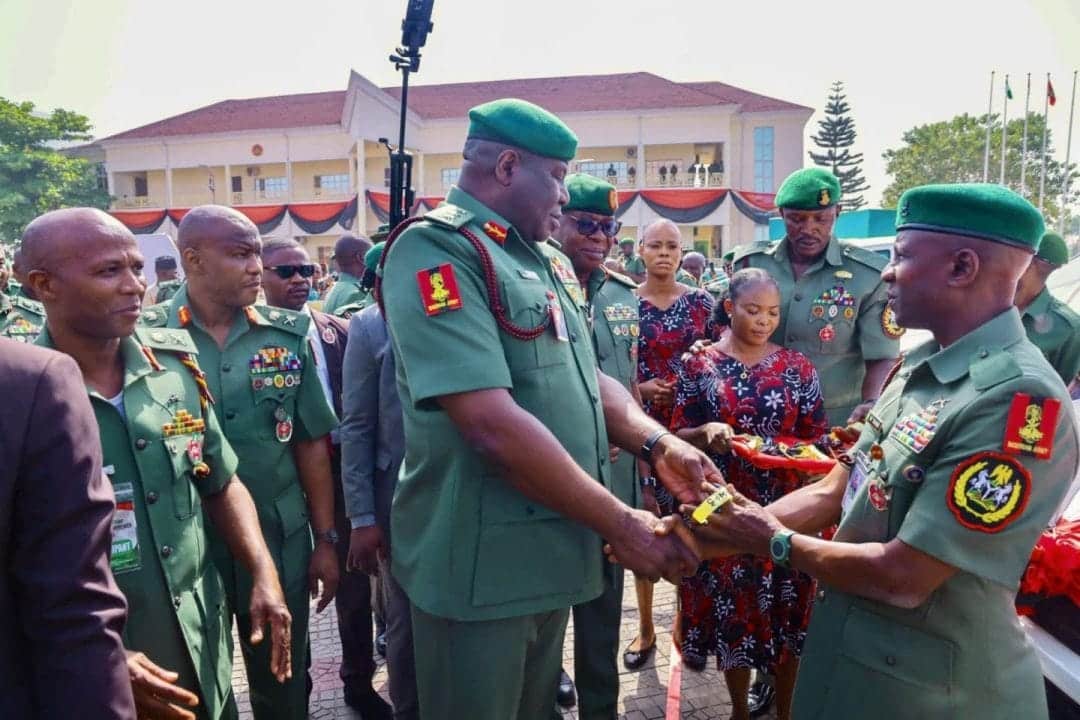
ABUJA, Nigeria — In a groundbreaking development that reverberates across Nigeria’s military landscape, the Nigerian Army Council has approved the promotion of 108 senior officers to the ranks of Major-General and Brigadier-General. This significant announcement, made public through a statement by the Director of Army Public Relations, Maj-Gen. Onyema Nwachukwu, underscores a strategic shift aimed at reinforcing the command structure and tackling the myriad security challenges confronting the nation.

A Resounding Milestone in Military Leadership
The promotion list, which includes 35 Brigadier-Generals elevated to Major-General and 73 Colonels promoted to Brigadier-General, epitomises the Army’s commitment to bolstering its leadership cadre. Among the newly promoted Major-Generals are officers who hold pivotal command and staff positions, signalling a deliberate effort to fortify operational efficiency.
Notable promotions to the Major-General rank include:
- Brig-Gen. Ibikunle Ajose: Acting General Officer Commanding 8 Division and Commander, Sector 2, North West Operation Fasan Yamma.
- Brig-Gen. U.G. Ogeleka: Commander, Nigerian Army Space Command.
- Brig-Gen. B.P. Koughna: Deputy Chief of Military Affairs, Army Headquarters, Department of Civil-Military Affairs.
- Brig-Gen. I. Otu: Nigerian Army Heritage and Future Centre.
- Brig-Gen. A.O. Adegbite: Headquarters, Nigerian Army Corps of Supply and Transport.
- Brig-Gen. S.A. Jimoh: Deputy Director, Tender Board, Department of Procurement.
Promotions to the Brigadier-General rank include:
- Col. S.M. Iliya: Commander, 43 Engineers Brigade.
- Col. O. Igwe: Commander, 78 Supply and Transport.
- Col. N.S. Onuchukwu: Chief Medical Director, 44 Nigerian Army Reference Hospital.
These promotions reflect a meticulous selection process that recognises strategic thinkers, operational tacticians, and exemplary leaders within the Nigerian Army.
Strategic Implications for National Security
The elevation of these officers comes at a time when Nigeria faces multifaceted security challenges, ranging from insurgency in the Northeast to banditry in the Northwest, secessionist agitations in the Southeast, and oil theft in the Niger Delta. The timing of this promotion underscores an urgency to recalibrate military strategies and leadership to address these threats effectively.
Enhanced Command Capabilities
The new cadre of Major-Generals and Brigadier-Generals brings a wealth of experience and fresh perspectives to the table. Their roles will be critical in shaping and executing strategies to counter terrorism, insurgency, and other security threats. For instance, Brig-Gen. Ajose’s expertise in the volatile Northwest region positions him as a key figure in stabilising the area through Operation Fasan Yamma.
Specialised Units and Innovation
The inclusion of officers like Brig-Gen. Ogeleka, who leads the Nigerian Army Space Command, highlights a forward-thinking approach to integrating technology in military operations. This move aligns with global best practices, where advanced surveillance and satellite technologies play pivotal roles in modern warfare.
Civil-Military Relations: A Renewed Focus
The promotions also signal a renewed focus on civil-military relations, as exemplified by Brig-Gen. Koughna’s role in the Department of Civil-Military Affairs. Strengthening these relations is crucial for fostering trust between the military and the civilian populace, particularly in conflict-prone areas.
Addressing Internal and External Criticism
Critics have often accused the Nigerian Army of being reactive rather than proactive in its operations. The promotions offer an opportunity to shift this narrative by empowering a new generation of leaders committed to innovative and strategic approaches.
Leadership Accountability: The Chief of Army Staff’s Charge
In his address to the newly promoted officers, the Chief of Army Staff, Lt-Gen. Olufemi Oluyede, emphasised the importance of accountability and innovation. He reminded the officers of their oath to defend the nation and urged them to develop solutions tailored to Nigeria’s unique security landscape.
“Your elevation is not just a reward but a call to higher responsibility,” Oluyede stated. “Lead by example, inspire your troops, and justify the trust reposed in you.”
Critical Analysis: Navigating Institutional Challenges
While the promotions are a welcome development, they also bring to the fore pressing questions about the Nigerian Army’s institutional framework.
Meritocracy vs. Patronage
The process of selecting officers for promotion has historically been mired in allegations of favouritism and regional bias. To what extent this round of promotions adheres to meritocratic principles remains a topic of debate.
Operational Readiness
Promotions alone cannot address systemic issues such as inadequate funding, outdated equipment, and low troop morale. Without addressing these challenges, the effectiveness of the newly promoted officers may be undermined.
Transparency and Public Perception
The Army’s image has been tainted by incidents of human rights abuses and lack of transparency. Promoting officers with a track record of integrity and professionalism is essential for rebuilding public trust.
The Way Forward: Recommendations for Sustainable Impact
For the promotions to translate into tangible improvements in security and military efficiency, the following steps are imperative:
- Enhanced Training: Continuous professional development programs should be instituted to equip officers with the skills needed for modern warfare.
- Resource Allocation: Adequate funding and resources must be allocated to support the operations led by these senior officers.
- Accountability Mechanisms: Transparent performance metrics should be established to evaluate the effectiveness of the promoted officers.
- Civil Engagement: Strengthening partnerships with civilian stakeholders will ensure a more holistic approach to security.
A Defining Moment for Nigeria’s Military
The promotion of 108 senior officers marks a pivotal moment in the Nigerian Army’s quest to enhance its leadership and operational capabilities. While the move has been lauded as a step in the right direction, its success will ultimately depend on the ability of the newly promoted officers to deliver measurable results in addressing Nigeria’s complex security challenges.
As the nation watches closely, the onus is on these officers to rise to the occasion and redefine the standards of military leadership in Nigeria. Their performance will not only shape the future of the Nigerian Army but also influence the broader narrative of national security and stability.
Additional report: Suleiman Adamu, Atlantic Post National Security/Defence Correspondent