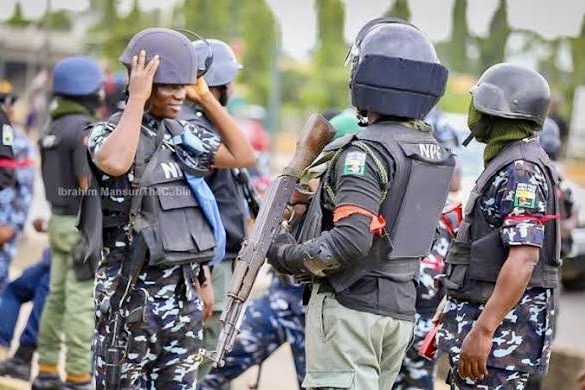
MAIDUGURI, Nigeria — In the early hours of Monday a suspected Boko Haram force probed the fringes of Maiduguri attempting to overrun an outpost at Ajilari before troops and allied security actors forced a withdrawal.
The assault jolted residents from sleep. It revived grim questions about the resilience of urban defences around the city. This city has borne the brunt of the insurgency for more than a decade.
What happened
Around 0100 local time assailants in armed groups infiltrated the Ajilari area on the metropolitan outskirts of Maiduguri and engaged a military position. Residents reported sustained gunfire and explosions that sent families onto the streets.
Video footage obtained by reporters captured frightened residents appealing for prayers as soldiers moved to confront the attackers.
Security sources described the incident as part of a string of “probing attacks.” These attacks were designed to test the perimeter defenses of Maiduguri. They aimed to identify weak points near strategic sites, including the Maiduguri International Airport and several military formations.
Local law enforcement units acted quickly. Military units also mobilised swiftly. They had support from Civilian Joint Task Force elements and other local security actors.
Confirmation and immediate response
As of filing, state police spokesmen and local security officials had confirmed the event. They said combined security operatives repelled the attackers after a brief but intense exchange.
Authorities reported that troops and police moved rapidly to the scene. The engagement forced the assailants to retreat into bushy terrain outside the city. Precise casualty figures for either side remained unclear at the time of reporting.
Residents who recorded events on mobile phones praised the army for their quick response. They were heard cheering soldiers as they deployed.
Others described a community tense with fear. They expressed alarm at the repetition of midnight strikes. These strikes have become a pattern in recent weeks.
Pattern analysis Intelligence and motive
Security analysts describe the Ajilari incursion as tactical probing rather than a full scale attempt to seize the city. Probing attacks are a recognised Islamist insurgent tactic. They expose gaps in surveillance and allow fighters to confiscate weapons or loot supplies while testing response times.
Days earlier, a military strategist issued a warning. Indicators suggested militants had been bolstering capacity after seizing arms and ammunition in recent clashes. There was a concern that Maiduguri could be targeted. The warning was publicised on March 10 and appears prescient in light of Monday’s events.
Northeast security experts point to several drivers for the renewed aggression. Splinter factions have conserved momentum by mounting frequent raids on outposts and supply lines.
Recent operations away from urban centres have been successful. These gains have allowed some cells to rearm and retry tactics. These tactics once brought them close to Maiduguri’s gates. Without sustained intelligence pressure and civilian cooperation, these surges can quickly escalate.
The human toll and civilian impact
Beyond immediate physical danger the raids terrorise communities. Video testimony from residents showed families fleeing homes and pleading for government protection. Night time shocks compound trauma in a region with deep displacement and loss.
Humanitarians warn that repeated incursions drive further displacement. They hamper relief operations. These actions deepen distrust between civilians and authorities when protection gaps persist.
How prepared are the defences
Official statements over recent years stress that Maiduguri remains strongly defended by the army and allied formations. Yet the geography of the city with sprawling outskirts and key infrastructure close to peripheral communities creates multiple pressure points.
Defensive doctrine requires layered surveillance and rapid reaction forces. The Ajilari episode shows that those layers held on Monday. It also illustrates how slender the margin can be between a contained skirmish and a more damaging penetration.
What must change Strategic recommendations
Harden the outer ring. Increase permanent checkpoints. Fortify vulnerable outposts. Improve night vision surveillance and rapid reaction patrols around Ajilari Pompomari and similar vectors.
Surge intelligence Improve human intelligence by expanding community liaison teams and incentivising credible tip lines with secure reporting channels.
Airborne integration tasks involve assigning air assets to maintain persistent overwatch. This occurs during suspected windows of insurgent activity. They also integrate real-time surveillance with ground quick reaction forces.
Ammunition and logistics are crucial. Make sure forward outposts have enough ammunition and medical supplies. This prevents tactical collapses after surprise attacks.
Civilian protection and communication. Prioritise clear and timely public communication to reduce panic. This limits the space insurgents exploit for propaganda when civilians are left in uncertainty.
Political and operational risk
Every raid that reaches the urban periphery risks a sharper national reaction. Hardening defences must not come at the cost of heavy handed measures that alienate communities.
The governance imperative is to combine kinetic response with visible civil protections. This approach ensures that residents see the state as both a shield and a partner in intelligence gathering.
Failure to do so hands insurgent groups a propaganda advantage and potential recruitment wins.
What we still do not know
Authorities had not released comprehensive casualty figures at the time of filing. Investigations were ongoing into the exact size and composition of the attacking force.
It is also unclear whether Monday’s attack was coordinated with other simultaneous operations elsewhere in Borno State or beyond.
Journalists will continue to monitor official briefings and corroborate eyewitness accounts.
Verdict
Monday’s midnight strike on the outskirts of Maiduguri was neither a decisive victory for the insurgents nor a trivial skirmish. It was a warning.
It tells us that militant groups retain the capacity to exploit seams in perimeter security. The fight for stability in the northeast remains unfinished.
The response on the ground was quick and effective. The strategic imperative is to translate tactical success into durable security. This must be done for the people who live under the nightly shadow of these raids.
Follow us on our broadcast channels today!
- WhatsApp: https://whatsapp.com/channel/0029VawZ8TbDDmFT1a1Syg46
- Telegram: https://t.me/atlanticpostchannel
- Facebook: https://www.messenger.com/channel/atlanticpostng