The Ibadan Declaration summit, held on 25 April 2026 in Oyo State, saw over a dozen opposition parties unite against the ruling APC. Leaders from the PDP, ADC, Labour Party, NNPP, Accord, NDC and smaller parties gathered in Ibadan, vowing to field a common presidential candidate and to resist any drift toward one-party rule.
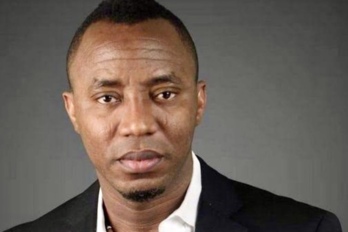
In contrast, Omoyele Sowore – the former AAC presidential candidate – publicly disavowed the summit as a “recycling” of failed politicians. In a social media post, Sowore wrote:
“I declined the Ibadan ‘Opposition Summit’. Nigerians deserve a genuine alternative, not recycled failure.”.
He argued that the summit’s leading figures are largely the same elites who have presided over years of corruption and decay, saying,
“the same men (and a few women) who held Nigeria to ransom for years…presiding over stagnation, corruption, and systemic decay, can [not] suddenly reinvent themselves as champions of progress”.
Sowore’s stance – that the country needs a complete break from past politics – highlights growing frustration among activists who want a fresh, people-driven movement.

Highlights of the Ibadan Summit: Attendees included representatives of at least ten opposition parties – notably the PDP (under Kabiru Turaki’s faction), ADC (led by ex-Senate President David Mark), LP (with 2023 candidate Peter Obi), NNPP (Rabiu Kwankwaso’s party), Accord, NDC and others.
Also present were veteran politicians like former VP Atiku Abubakar, ex-governors Peter Obi, Rauf Aregbesola, Rotimi Amaechi, Rabiu Kwankwaso, David Mark and others.
Governor Seyi Makinde of Oyo State hosted the summit and delivered keynote remarks warning that democracy cannot survive without strong opposition.
In the “Ibadan Declaration” communiqué, the parties pledged unity for 2027: they will “work towards fielding one presidential candidate for the 2027 elections” agreed by all participant parties.
They accused President Tinubu’s APC of manoeuvring to impose one-party rule, and vowed to fight back through a unified ticket.
Other resolutions included: demanding the resignation of INEC Chairman Joash Amupitan over alleged bias, extending the party-primary deadline to July 2026, amending the Electoral Act 2026 to protect multiparty democracy, and securing the release of detained opposition figures.
The summit’s broad, multi-point agenda reflected deep anxiety about Nigeria’s democratic future – even as observers noted that the participants were largely drawn from Nigeria’s older political class (governors, ex-ministers and party leaders from recent decades).
- Parties & Leaders: The communiqué listed parties from mainstream to fringe – PDP, ADC, LP, NNPP, PRP, NDC, APP, Accord, APM, AA, DLA, YP, ADP, ZLP. Notable dignitaries included former VP Atiku Abubakar, ex-governors Peter Obi (Anambra), Rabiu Kwankwaso (Kano), Rauf Aregbesola (Osun), Rotimi Amaechi (Rivers), Aminu Tambuwal (Sokoto), Liyel Imoke (Cross River), and senate veteran David Mark.
- Unity Pledge: The parties “shall field one Presidential Candidate for the 2027 elections, which shall be agreed and supported by all participating opposition parties”. This candidate will carry the banner of “rescuing the nation and her long-suffering masses”.
- Democracy Warning: The communiqué accused the APC of undermining democracy, insisting “Nigeria is under the stranglehold of an oppressive and anti-democratic APC” and vowing resistance to any slide into one-party rule. Governor Makinde echoed this concern, declaring that “democracy without opposition is not democracy; it is a slow drift toward a one-party state”.
- Electoral Reforms: Leaders called for urgent changes to election laws. They urged the National Assembly to remove problematic clauses from the 2026 Electoral Act and pressed INEC to extend its primaries deadline to the end of July 2026. They also demanded INEC replace its chairman, calling his retention “vexatious and capable of triggering a widespread crisis”.
- Political Prisoners: The communique condemned arrests of opposition figures, demanding the release of politicians held on “bailable offences,” arguing such detentions threaten free political activity.
Despite this show of solidarity, the summit drew immediate criticism from ruling-party circles. APC National Secretary Ajibola Basiru mockingly shared an image of Atiku Abubakar dozing during the meeting, deriding the gathering as a “ruse” lacking official party backing.
Basiru insisted that unless parties’ national executives sanction such meetings, “it is simply a gathering of individuals.”
He argued the opposition’s claims of unity actually demonstrated its inability to compete separately: “the political space remains open, but they lack the strength to compete individually”.
Governor Makinde’s earlier warning about possible unrest (“Operation Wetie”) also drew rebukes from the APC, which accused him of incitement and vowed the 2027 polls would be “hitch-free and credible” despite dissent.

For Omoyele Sowore, the summit epitomised the very problem he has campaigned against. The Sahara Reporters publisher and two-time AAC presidential hopeful flatly boycotted the Ibadan meeting, denouncing it on social media. He declared that Nigerians “deserve a genuine alternative, not recycled failure”.
In his post he emphasised: “There is no need to pretend that the same men (and a few women) who held Nigeria to ransom for years… can suddenly reinvent themselves as champions of progress… Not all Nigerians are suffering from amnesia.”.
Sowore portrayed the summit as a political charade: “our revolutionary party, the African Action Congress (AAC), will not be part of any charade designed to recycle failed political actors under the guise of ‘opposition’,” he wrote.
Instead, he insists, his movement will continue to build what he calls a “formidable, people-driven alternative” rooted in integrity and accountability.
He vowed to mobilise ordinary citizens “behind a credible vision that rejects the decadence and deception represented by both the APC and their opportunistic counterparts in ADC, PDP, Labour Party and elsewhere”, arguing that Nigeria needs “a complete break from the past” rather than a reshuffling of the same “broken pieces”.
Sowore’s critique strikes at the heart of a dilemma for Nigeria’s opposition. Many voters, especially younger Nigerians, share his frustration with entrenched politicians and crave new leadership; but others argue that without coordination, opposition parties stand little chance of defeating the APC in 2027.
As Amnesty International’s 2023 election report noted, electoral success often requires coalitions in Nigeria’s fractured party system.
Sowore’s stance – refusing any alliance that simply repackages old figures – highlights a split: mainstream leaders are seeking unity, while grassroots activists demand a fresh political break.
How influential Sowore’s message will be remains to be seen. For now, he commands attention from civil society and youthful sections of the electorate who echo his call for real change.
At the Ibadan summit itself, veteran opposition figures like Atiku Abubakar struck a conciliatory tone, writing that “the time has come to forge a united opposition” bound by purpose to defend democracy. Sowore’s rebuttal underscores that any such unity will need to answer deep popular scepticism.
As Nigeria heads toward the 2027 elections, the debate sparked by the Ibadan summit and Sowore’s response is likely to continue. Will opposition parties find a balance between pragmatic alliances and renewal? Or will voices like Sowore’s reshape the conversation around a cleaner, citizen-driven agenda?
Analysts will be watching closely as Nigerians weigh the merits of “recycled” coalitions against the promise of a genuinely new path.
Follow us on our broadcast channels today!
- WhatsApp: https://whatsapp.com/channel/0029VawZ8TbDDmFT1a1Syg46
- Telegram: https://t.me/atlanticpostchannel
- Facebook: https://www.messenger.com/channel/atlanticpostng