By Editor
Dangote’s Bold Declaration Shakes Nigeria’s Energy Landscape
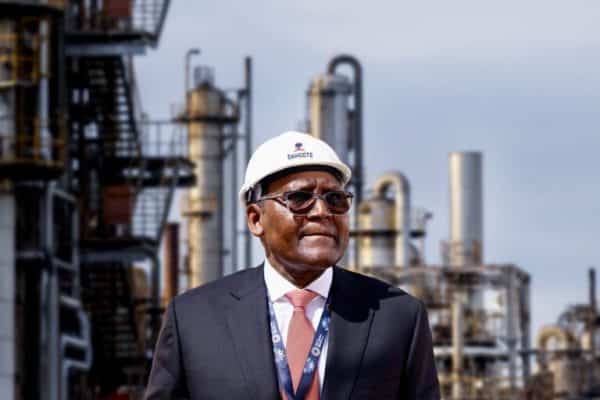
Aliko Dangote, President of the Dangote Group, has sparked a fierce debate by calling for Nigeria to cease its controversial crude-for-loan deals. In a direct critique of the country’s energy strategy, Dangote challenged the government to halt the mortgaging of its crude oil reserves to foreign lenders, calling for a more sustainable approach to managing the nation’s energy resources. His remarks, made during a summit organised by the Crude Oil Refinery Owners Association of Nigeria in Lagos, have set off a firestorm of discussion among stakeholders in the country’s oil sector.

This critical report will dissect Dangote’s statement, scrutinise Nigeria’s current crude-for-loan arrangements, and analyse the broader implications of this strategy for the country’s economy, energy security, and long-term growth prospects. Is Nigeria indeed selling off its future for short-term financial relief, as Dangote suggests? And what role will the Dangote Refinery play in reshaping the nation’s energy policy?
Crude-for-Loan Deals: Mortgaging Nigeria’s Future?
At the heart of Dangote’s criticism is Nigeria’s ongoing practice of pledging large quantities of crude oil to secure foreign loans. According to a recent report, the Nigerian National Petroleum Company Limited (NNPC) has pledged 272,500 barrels per day of crude oil in a series of crude-for-loan deals amounting to $8.86 billion. This arrangement means that approximately 8.17 million barrels of crude oil are committed to servicing these loans every month, significantly reducing the country’s ability to use its oil for domestic development or future investments.
Dangote’s warning was clear and direct: “We will need to stop mortgaging crude. It is unfortunate that while countries like Norway are putting oil proceeds into a future fund through their national wealth funds, in Africa, we are spending oil proceeds from the future today.” This statement resonates with a profound sense of urgency, suggesting that Nigeria’s current strategy could be jeopardising its long-term economic health in exchange for short-term fiscal fixes.
But what are the consequences of this approach? Is Nigeria truly “spending oil proceeds from the future,” as Dangote claims? To fully understand the gravity of the situation, we must first unpack the details of the country’s crude-for-loan deals and their impact on both the economy and the energy sector.
The NNPC’s Crude-for-Loan Strategy: A Necessary Evil or a Dangerous Gamble?
The Nigerian government, through the NNPC, has relied heavily on crude-for-loan deals as a means to secure foreign exchange and fund critical infrastructure projects. With oil prices remaining volatile and external debts mounting, this strategy has provided the country with much-needed liquidity in a challenging economic environment.
However, the cost of these deals has been high. By pledging significant volumes of crude oil, Nigeria has effectively tied up its most valuable natural resource, leaving little room for flexibility in the event of a market downturn or a domestic crisis. Furthermore, this approach undermines the country’s ability to capitalize on rising oil prices or use its oil for domestic refining purposes.
Critics of the strategy, including Dangote, argue that the crude-for-loan arrangement is unsustainable and detrimental to Nigeria’s long-term growth. They point to countries like Norway, which have established sovereign wealth funds to manage their oil revenues and ensure future generations benefit from their natural resources. By contrast, Nigeria appears to be using its oil wealth to service debts and meet immediate fiscal needs, rather than investing in its future.
This critique is not new. For years, experts have warned that Nigeria’s over-reliance on crude oil exports, combined with its failure to develop a robust refining sector, leaves the country vulnerable to external shocks and price fluctuations. But with Dangote’s refinery now operational, could this be the turning point Nigeria needs?
Dangote Refinery: A Game-Changer for Nigeria’s Energy Sector?
The completion of the Dangote Refinery, a massive 650,000 barrels-per-day facility in Lagos, represents a monumental shift in Nigeria’s energy landscape. As one of the largest refineries in the world, it has the potential to transform Nigeria from an importer of petroleum products to a net exporter, reducing the country’s dependence on foreign refineries and boosting its domestic refining capacity.
At the summit, Dangote emphasised the importance of prioritising domestic crude supply, stating that Nigeria must “prioritise the implementation of the domestic crude supply obligation” and “expand crude production capacity to support demand from the refinery.” This is a crucial point: for the refinery to operate at full capacity, Nigeria must ensure that it has a reliable and consistent supply of crude oil. But with so much of the country’s crude tied up in loan agreements, is this feasible?
Dangote’s warning about the dangers of mortgaging crude takes on added significance in this context. If Nigeria continues to pledge its oil to foreign creditors, it may struggle to supply the Dangote Refinery and other domestic refineries with the crude they need. This could undermine the very purpose of building these refineries in the first place: to reduce the country’s reliance on imported petroleum products and create a more self-sufficient energy sector.
Incentives for Refiners: Dangote’s Call for Government Support
One of the most surprising revelations during Dangote’s speech was his assertion that the Dangote Refinery was built without any government incentives. “We built the Dangote refinery without a single incentive from the government,” he stated. This is an extraordinary claim, particularly given the scale and cost of the project.
However, Dangote also made it clear that if Nigeria is to become a refining hub for the region, investors will need to be incentivised. “To achieve the vision of turning Nigeria into a refining hub for the region, investors need to be incentivised,” he said. This raises important questions about the role of government in supporting the development of the energy sector. Should the government provide tax breaks, subsidies, or other incentives to encourage investment in refining capacity? And if so, how can these incentives be structured to avoid the kind of corruption and mismanagement that has plagued other sectors of the economy?
Dangote’s call for incentives is particularly timely given the challenges facing the global refining industry. As environmental standards tighten in Europe and other parts of the world, many refineries are being shut down or converted to produce lower-emission products. This presents both an opportunity and a challenge for Nigeria. On the one hand, the country could capitalize on the growing demand for refined products in Africa by expanding its refining capacity. On the other hand, it must ensure that its refineries are able to meet increasingly stringent environmental standards if they are to remain competitive in the global market.
Jet Fuel Exclusivity: Dangote Refinery’s Strategic Role in Aviation
In a significant development, the Federal Government of Nigeria has designated the Dangote Refinery as the exclusive supplier of Jet A1 fuel for the country’s airline operators. This move, announced by Minister of Aviation Festus Keyamo during an interview with Channels TV, is seen as a strategic decision aimed at stabilising the domestic aviation industry.
“The airline operators just met recently. With my blessing, it’s a decision from the airline operators in Nigeria that they should only buy from Dangote refinery Jet A1,” Keyamo stated. He further explained that the arrangement would allow airline operators to purchase jet fuel in naira, rather than being exposed to the volatility of international oil prices and the fluctuations of the US dollar.
This decision represents a major win for the Dangote Refinery and underscores its growing importance in Nigeria’s energy landscape. By securing a guaranteed market for its jet fuel, the refinery is well-positioned to become a key player in the aviation sector, helping to lower operational costs for airlines and improving the overall efficiency of the industry.
However, the exclusivity of this arrangement has raised concerns among some stakeholders. Critics argue that the government’s decision to grant Dangote a monopoly on jet fuel supply could stifle competition and create an unhealthy dependency on a single supplier. Furthermore, there are questions about whether the refinery has the capacity to meet the demands of the entire aviation industry, particularly as Nigeria’s air travel market continues to grow.
The Broader Implications: Nigeria’s Energy Future at a Crossroads
Dangote’s remarks, combined with the government’s decision to designate his refinery as the sole supplier of jet fuel, highlight the central role that the Dangote Refinery is expected to play in Nigeria’s energy future. But the country’s energy policy remains at a crossroads. On the one hand, the completion of the refinery represents a major step forward in reducing Nigeria’s dependence on imported petroleum products and boosting its refining capacity. On the other hand, the ongoing crude-for-loan deals threaten to undermine these gains by tying up the very resources that the country needs to fuel its domestic refineries.
As Dangote pointed out, countries like Norway have taken a more sustainable approach to managing their oil wealth, investing in national wealth funds that provide for future generations. In contrast, Nigeria appears to be mortgaging its future for short-term gains. The question now is whether the government will heed Dangote’s warning and reconsider its crude-for-loan strategy, or whether it will continue down the same path, risking the long-term health of the economy in exchange for immediate fiscal relief.
In conclusion, Dangote’s fiery call to end crude-for-loan deals and his bold vision for the future of Nigeria’s energy sector have set the stage for a critical debate. The Dangote Refinery has the potential to transform the country’s energy landscape, but only if the government takes steps to ensure that its oil resources are used wisely. As Nigeria grapples with these challenges, one thing is clear: the decisions made today will shape the country’s energy future for decades to come.
With reporting from Taiwo Adebowale, Atlantic Post Senior Business Correspondent