By Editor
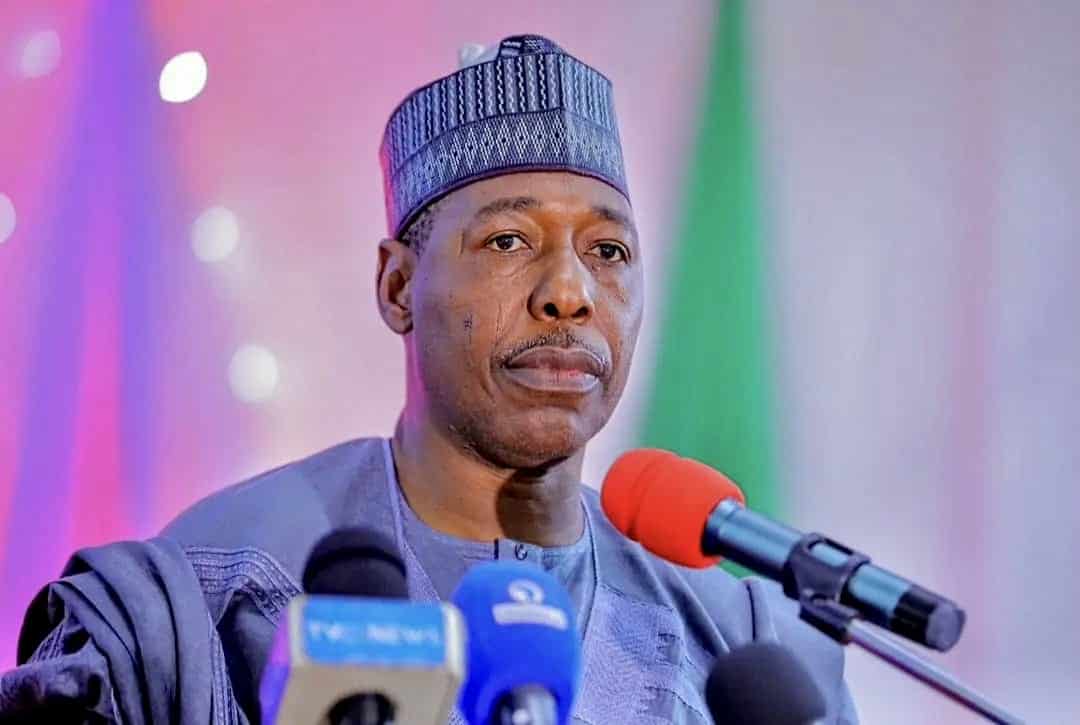
Governor Babagana Zulum delivers a stark warning about President Tinubu’s controversial tax reform bills, predicting catastrophic consequences for Northern Nigeria and beyond. With fears of fiscal collapse, salary crises, and regional unrest, the nation stands at a crossroads. Can Tinubu navigate the political firestorm and save Nigeria from economic chaos?
Zulum’s Stinging Critique of Nigeria’s Tax Reform Bills: A Political Time Bomb Waiting to Explode?
The Brewing Storm in the North
In a dramatic and impassioned warning, Borno State Governor Babagana Zulum has rung the alarm bells over the proposed tax reform bills currently making their way through Nigeria’s legislative corridors. With a deep sense of urgency, Zulum took to the airwaves in an interview with BBC Hausa to decry what he described as a hasty and ill-conceived legislative process, one that poses an existential threat to the fragile economies of Northern Nigeria and beyond.
“This is not just a matter of taxes; it’s a matter of survival for the North,” Zulum declared, his voice laden with both frustration and forewarning. Comparing the rapid progression of the tax reform bills to the protracted 20-year journey of the Petroleum Industry Bill (PIB), Zulum questioned the inexplicable haste with which these reforms are being pushed. “Why the rush? The Petroleum Industry Bill took almost 20 years before it was finally passed. But this tax reform bill is being transmitted and receiving legislative attention within a week,” he lamented, hinting at what many in political circles suspect—a deliberate attempt to ram the reforms through without adequate scrutiny.
Zulum’s analogy to the PIB is not without significance. The PIB, despite its delays, represented a landmark achievement in Nigeria’s energy sector, crafted with painstaking negotiations across geopolitical zones and economic stakeholders. In stark contrast, the current tax reform bills, which seek to overhaul Nigeria’s fiscal framework, are being fast-tracked through the National Assembly with a speed that has raised eyebrows and stirred suspicion of political machinations.
The North’s Economic Backbone Under Siege
For Zulum, the implications of these tax reforms extend beyond mere fiscal policy. He paints a grim picture of a North that could be economically incapacitated should the bills be enacted in their current form. “These bills are structured to disadvantage certain regions of the country,” Zulum warned, pointing to what he perceives as a deliberate attempt to marginalise the North—a region already grappling with entrenched poverty, insecurity, and developmental deficits.
In a sweeping indictment, Zulum did not limit his concerns to the North alone. He called attention to the potential fallout in other regions, naming the South East and specific South Western states like Oyo, Osun, Ekiti, and Ondo as collateral damage in what he sees as a misguided legislative endeavour. The governor’s rhetoric underscores a fundamental flaw in the tax reform bills: a lack of regional sensitivity and equity.
But why is the North, in particular, at risk? The region, often characterised by its reliance on federal allocations, lacks the industrial base and tax revenue streams that more economically diverse regions like Lagos and Rivers enjoy. If the proposed tax regime shifts the burden disproportionately onto states with weaker economies, the North could find itself unable to meet basic financial obligations, including the payment of civil servants’ salaries—a point Zulum emphasised with stark clarity.
“If these bills pass, we won’t even be able to pay salaries. And if we do, it won’t be sustainable the following year,” he cautioned, painting a dire scenario of financial insolvency and social unrest. The message is clear: these reforms, if enacted without significant amendments, could plunge Northern states into a fiscal crisis, crippling their ability to execute developmental projects and maintain basic governance functions.
The Shadow of Political Manipulation
Beyond the economic implications, Zulum’s critique veers into the political, raising questions about the motives behind the tax reform push and the influence of unseen hands within President Bola Ahmed Tinubu’s administration. In a striking allegation, Zulum suggested that certain individuals within the president’s inner circle might be misleading him into believing that the North is unsupportive of his government.
“This is not opposition. Based on our understanding, this bill will destroy the North entirely. We call on President Tinubu to review this decision,” Zulum implored, emphasising that the North’s objections are rooted in genuine economic concerns rather than political antagonism.
The governor’s appeal carries significant weight, given the North’s pivotal role in delivering Tinubu’s electoral victory. “He secured 60% of his votes from the North,” Zulum reminded, subtly underscoring the political debt owed to the region. The subtext of his message is unmistakable: neglecting the North’s interests could have far-reaching consequences for the president’s political capital and legacy.
A House Divided: Regional Resistance Mounts
Zulum’s warnings are not falling on deaf ears. His assertion that “even Lagos State is against it” signals a broader coalition of opposition that cuts across geopolitical lines. The proposed tax reforms, initially framed as a panacea for Nigeria’s fiscal challenges, are increasingly being seen as a divisive policy that threatens to exacerbate regional inequalities and undermine national unity.
The Senate’s decision to pass the bills for a second reading and refer them to the Committee on Finance for further deliberation has done little to assuage fears. With a mandate to report back within six weeks, the committee’s task is daunting: to navigate a minefield of competing regional interests and craft a tax policy that balances the federal government’s revenue needs with the economic realities of its constituent states.
As the legislative process unfolds, the stakes could not be higher. For Zulum and the North, the battle over the tax reform bills is not just a policy debate—it is a fight for economic survival and regional equity in a federation that has long struggled with balancing its diverse interests.
A Tipping Point for Nigeria’s Fiscal Future?
Governor Babagana Zulum’s forceful critique of the tax reform bills has set the stage for a high-stakes political showdown that could shape Nigeria’s fiscal landscape for years to come. As the nation watches, the question looms large: will the government heed the warnings and chart a more inclusive path, or will it press ahead with reforms that risk leaving the North—and other vulnerable regions—behind?
The coming weeks will reveal whether Nigeria’s leaders have the political will and foresight to avert a fiscal crisis that many, like Zulum, believe is both imminent and avoidable. The North is watching. The nation is waiting.
Unmasking the Regional Fault Lines in Nigeria’s Tax Reform Debate
As the dust begins to settle on Governor Babagana Zulum’s explosive remarks, the implications of Nigeria’s proposed tax reform bills are becoming ever more apparent. What initially appeared to be a technical adjustment to the country’s fiscal framework has now morphed into a full-blown political crisis, exposing deep-seated regional fault lines and reigniting the long-standing debate over fiscal federalism and resource control in Nigeria.
At the heart of the controversy lies a fundamental question: Who truly benefits from Nigeria’s tax reform agenda, and at whose expense? For many in the North, the answer is as clear as it is unsettling—the proposed reforms threaten to entrench economic disparities and reinforce a system that leaves their region perpetually disadvantaged.
A Historical Context of Economic Marginalisation
The concerns voiced by Zulum are not new. Northern Nigeria has long been caught in the throes of economic marginalisation, a consequence of both historical neglect and structural imbalances in the country’s federal system. While the region boasts significant human and natural resources, including vast agricultural potential, its economic fortunes have remained disproportionately tied to federal allocations, derived primarily from oil revenues in the Niger Delta.
Decades of insecurity, poor infrastructure, and limited industrialisation have compounded the North’s economic woes, leaving it heavily reliant on government intervention and public sector employment. In this context, the proposed tax reforms—which aim to centralize tax administration, increase revenue generation, and reduce dependence on oil revenues—are perceived as a direct threat to the region’s economic lifeline.
Zulum’s warning that Northern states may struggle to pay salaries if the reforms are enacted is a stark reflection of this reality. With limited internally generated revenue (IGR) and a weak tax base, many Northern states simply cannot afford to lose their share of federal allocations without facing severe financial distress.
This structural vulnerability is exacerbated by the fact that much of the North’s economic activity takes place in the informal sector, which is notoriously difficult to tax. The proposed reforms, which emphasise formal tax administration and compliance, risk further marginalising the informal economy, pushing millions into deeper poverty and unemployment.
The Political Economy of Taxation
Beyond the economic arguments, the tax reform bills also raise critical questions about the political economy of taxation in Nigeria. Who controls the power to tax, and how are the revenues distributed? These are not just technical issues; they are deeply political, touching on the very foundations of Nigeria’s federal structure.
The Nigeria Revenue Service Establishment Bill, one of the four tax reform bills under consideration, seeks to replace the Federal Inland Revenue Service (FIRS) with a new centralised tax authority. While proponents argue that this will enhance efficiency and reduce tax evasion, critics see it as a power grab by the federal government, one that undermines the fiscal autonomy of states and concentrates too much power in Abuja.
For a region like the North, which has historically advocated for greater fiscal decentralisation and resource control, the centralisation of tax authority is a red flag. It threatens to strip states of their ability to manage their own revenues and prioritise their own developmental needs, effectively relegating them to the status of administrative appendages of the federal government.
Zulum’s assertion that the tax reforms are designed to disadvantage certain regions underscores this fear. The North, he argues, is being asked to bear the brunt of a fiscal policy that was crafted without adequate consultation or consideration of regional differences. In this sense, the tax reform debate is not just about economics; it is about power, representation, and the ongoing struggle for equitable governance in Nigeria’s multi-ethnic federation.
The Spectre of National Disunity
The potential for the tax reform bills to exacerbate regional tensions and undermine national unity cannot be overstated. Nigeria is a country that has long grappled with issues of ethnic and regional inequality, and any policy perceived as favouring one region over another is bound to spark controversy and resentment.
Zulum’s warning that the tax reforms could drag the North backward is a call to action, not just for the region’s political leaders, but for all Nigerians who believe in the principles of fairness and equity. His appeal to President Bola Ahmed Tinubu to reconsider the reforms is a reminder of the delicate balance that must be maintained in a country as diverse and complex as Nigeria.
But the stakes are not limited to the North. Zulum’s mention of opposition from South Eastern and South Western states highlights the broader coalition of resistance forming against the reforms. States like Oyo, Osun, Ekiti, and Ondo, which also face economic challenges and rely on federal allocations, have joined the chorus of dissent, signalling a growing consensus that the reforms, in their current form, are untenable.
This emerging coalition of Northern and Southern states presents a significant challenge to the Tinubu administration. It suggests that the opposition to the tax reforms is not merely a regional issue, but a national one, with the potential to disrupt the legislative process and force a re-evaluation of the government’s fiscal strategy.
The Role of the National Assembly
As the tax reform bills move through the National Assembly, all eyes are on the lawmakers who hold the power to shape the future of Nigeria’s fiscal landscape. The Senate’s decision to refer the bills to the Committee on Finance for further deliberation is a critical juncture, offering a glimmer of hope that the concerns raised by Zulum and others will be addressed.
However, the legislative process is fraught with uncertainty. Will the committee take the time to engage in meaningful consultations with stakeholders from all regions, or will it succumb to political pressure to pass the reforms quickly? Will lawmakers prioritise the interests of their constituents, or will they align with the federal government’s push for increased revenue generation?
These questions loom large as the six-week deadline for the committee’s report approaches. The outcome of this process will not only determine the fate of the tax reform bills but also set a precedent for how Nigeria navigates the complex interplay of regional interests and national policy in the years to come.
A Looming Crisis of Confidence
At its core, the debate over Nigeria’s tax reform bills is a reflection of a deeper crisis of confidence in the country’s governance structures. For many Nigerians, particularly those in marginalised regions, the federal government’s ability to act in the best interests of all citizens, rather than a select few, is increasingly being called into question.
Zulum’s comments about the influence of unnamed individuals within the Tinubu administration speak to this broader issue of trust and accountability. Who are these individuals, and what are their motivations? Are they acting in the best interests of the nation, or are they pursuing narrow, self-serving agendas?
These are questions that demand answers, not just for the sake of transparency, but for the sake of Nigeria’s democratic integrity. The Tinubu administration, having secured a significant portion of its electoral mandate from the North, cannot afford to ignore the voices of dissent rising from the region. To do so would be to risk alienating a key political constituency and undermining the very foundations of its legitimacy.
The Battle for Nigeria’s Fiscal Soul
As Nigeria stands at the crossroads of fiscal reform and regional equity, the stakes could not be higher. The tax reform bills, far from being a mere legislative exercise, have become a battleground for the soul of the nation—a test of whether Nigeria can chart a path toward inclusive governance and shared prosperity, or whether it will succumb to the forces of division and inequality.
Governor Babagana Zulum’s warnings have set the stage for a critical debate, one that will shape the future of Nigeria’s economy and its federation. As the nation watches and waits, the question remains: Will Nigeria’s leaders rise to the occasion, or will they falter in the face of one of the most significant challenges of the Tinubu era?
The Consequences of Tax Reform: Navigating Nigeria’s Looming Fiscal and Political Storm
The tax reform bills currently navigating their way through Nigeria’s National Assembly are more than just policy proposals—they represent a potential watershed moment for the country’s economic and political future. As Borno State Governor Babagana Zulum has fervently warned, the reforms could cripple Northern Nigeria’s economy, exacerbate existing inequalities, and ignite a wave of socio-political unrest that may destabilise the fragile balance of power across the nation.
While proponents of the reforms argue that they are necessary to modernise Nigeria’s tax system, reduce the country’s dependence on oil revenues, and boost government revenues, the potential fallout of these changes cannot be overlooked. If the tax reform bills are passed in their current form, they are likely to trigger a cascade of consequences that could affect everything from economic growth and public sector stability to national unity and political trust.
Economic Consequences: A Path to Stagnation or Transformation?
One of the most immediate concerns raised by Governor Zulum is the potential for the tax reforms to plunge Northern states into an economic quagmire. With limited industrial activity, a predominantly informal economy, and low internally generated revenue (IGR), many states in the North are heavily reliant on federal allocations to fund critical services, including education, healthcare, and infrastructure development.
If the proposed reforms result in reduced federal allocations or increased pressure on states to generate their own revenue, the North could face severe fiscal challenges. Governor Zulum’s dire warning that Northern states might struggle to pay salaries underscores the precarious financial position many of these states find themselves in. A failure to meet salary obligations could lead to widespread unrest among public sector workers, further destabilising the region.
Moreover, the ripple effects of reduced government spending could stifle economic growth, leading to higher unemployment rates and exacerbating poverty levels in a region already grappling with insecurity and underdevelopment. The agriculture sector, which remains a cornerstone of the Northern economy, could also suffer if state governments are forced to cut subsidies and support programs due to budget constraints.
Southern Discontent: A Brewing Economic Rebellion?
While much of the focus has been on the North, it is crucial to recognise that opposition to the tax reform bills is not confined to a single region. States in the South West, such as Oyo, Osun, Ekiti, and Ondo, have also expressed concerns about the potential impact of the reforms on their economies. Despite being relatively more industrialised than the North, these states face their own fiscal challenges, particularly in the wake of the COVID-19 pandemic and ongoing economic uncertainties.
For these states, the centralisation of tax administration under the proposed Nigeria Revenue Service Establishment Bill represents a significant threat to their fiscal autonomy. By consolidating tax collection and administration at the federal level, the reforms could reduce the ability of state governments to generate and manage their own revenue, limiting their capacity to fund local development projects and respond to the needs of their citizens.
The growing coalition of Northern and Southern states opposing the reforms raises the spectre of a broader economic rebellion against the federal government’s fiscal policies. If this opposition gains momentum, it could lead to increased tensions between Abuja and state governments, potentially triggering a constitutional crisis over the distribution of fiscal powers in Nigeria’s federal system.
Political Fallout: A Crisis of Legitimacy for Tinubu’s Administration
President Bola Ahmed Tinubu, who secured a significant portion of his electoral mandate from the North, now finds himself in a precarious political position. The backlash against the tax reform bills, particularly from key Northern leaders like Governor Zulum, threatens to erode his support base and undermine his legitimacy as a leader who promised to prioritise national unity and equitable development.
Zulum’s assertion that unnamed individuals are influencing Tinubu into believing that the North does not support his administration is a troubling indication of the political undercurrents at play. If these perceptions persist, they could fuel a narrative of betrayal and alienation among Northern voters, weakening Tinubu’s ability to govern effectively and implement his broader policy agenda.
Moreover, the political fallout from the tax reform debate could extend beyond the North. If Southern states continue to align themselves with Northern opposition, Tinubu may face a nationwide crisis of confidence in his administration. This could embolden opposition parties and civil society groups to intensify their criticism of the government, potentially leading to mass protests and calls for a review of the reforms.
The National Assembly’s Role: Gatekeepers or Rubber Stamps?
As the tax reform bills move through the legislative process, the National Assembly holds the key to determining their fate. The Senate’s decision to refer the bills to the Committee on Finance for further deliberation provides an opportunity for lawmakers to engage in meaningful dialogue with stakeholders and address the concerns raised by Zulum and other regional leaders.
However, the question remains: Will the National Assembly rise to the occasion and act as a check on executive power, or will it succumb to political pressure to expedite the passage of the reforms? The answer to this question will have far-reaching implications for Nigeria’s democratic institutions and the balance of power between the executive and legislative branches of government.
If the National Assembly fails to adequately address the concerns of dissenting states, it risks alienating a significant portion of the electorate and undermining public trust in the legislative process. On the other hand, a thorough and inclusive review of the reforms could help build consensus and pave the way for a more equitable and sustainable fiscal framework.
A Test of Nigeria’s Federalism
At its core, the debate over Nigeria’s tax reform bills is a test of the country’s federalism and its ability to navigate the complex interplay of regional interests and national policy. The outcome of this debate will not only shape the future of Nigeria’s tax system but also set a precedent for how the country addresses issues of resource allocation, fiscal autonomy, and regional equity.
For Governor Zulum and other regional leaders, the stakes could not be higher. Their opposition to the reforms is not just about protecting their states’ economic interests; it is about asserting their right to participate in the governance of the country and ensuring that the voices of marginalised regions are heard and respected.
Conclusion: A Nation at a Crossroads
As Nigeria stands on the brink of a potentially transformative fiscal reform, the nation finds itself at a crossroads. The decisions made in the coming weeks will determine whether the country moves toward greater fiscal transparency, efficiency, and sustainability, or whether it plunges deeper into economic inequality, political instability, and regional discontent.
Governor Babagana Zulum’s passionate plea for a reconsideration of the tax reform bills has sparked a national conversation about the future of Nigeria’s economy and its federal system. The Tinubu administration, the National Assembly, and all stakeholders must now grapple with the complex realities of governance in a diverse and divided nation.
The road ahead is fraught with challenges, but it is also an opportunity for Nigeria to chart a new course—one that prioritises inclusivity, equity, and the collective well-being of all its citizens. Whether Nigeria seizes this opportunity or allows it to slip away will depend on the actions of its leaders and the resilience of its democratic institutions.
The question remains: Will Nigeria rise to the challenge, or will it falter under the weight of its own divisions?
Additional report by Taiwo Adebowale, Atlantic Post Senior Business Correspondent