
Official tallies say Nigeria hosts millions of internally displaced people. The reality on the ground is deeper and more bitter. This investigation reveals several issues. Methodological blind spots, insecurity, and climate shocks are part of these problems. Political incentives also contribute to hiding large numbers of displaced Nigerians from the very systems meant to help them.
The consequence is a chronic mismatch between need and response, and policies that paper over human suffering.
Key findings
1. Official counts understate scale by hundreds of thousands. It could be by millions. This is because many displaced people move into informal urban settlements and host communities. These are not captured by camp-based surveys.
2. Repeated flooding in 2024 and 2025 has caused waves of secondary displacement. Conflict-driven displacements across multiple regions have also contributed. Standard rounds of enumeration miss these waves.
3. Insecurity limits access for enumerators so whole localities remain invisible to national and international monitoring exercises.
4. Political and administrative incentives can depress official tallies. They delay recognition of new displacement. As a result, budgets shrink and urgent relief slows down.
5. Practical fixes exist. These require sustained funding, better methodology, and political will. We need to count people where they live, not where authorities prefer to see them.
The numbers and the apparent contradiction
International monitoring bodies estimated that Nigeria had roughly 3.4 million people internally displaced by the end of 2024. At the same time, subnational tracking by IOM and partners identifies concentrated populations in northeast, north-central, and north-west states. These populations number in the low millions. There is large month-to-month variation.
Those two truths sit uneasily together. There are millions of displaced people. Yet, local figures routinely shift. They are incomplete and leave whole groups uncounted or misclassified.
Part of the answer is simple. Global and national datasets use different methods, different time windows and different operational definitions. Another part is more troubling. Large numbers of displaced people never enter formal camps.
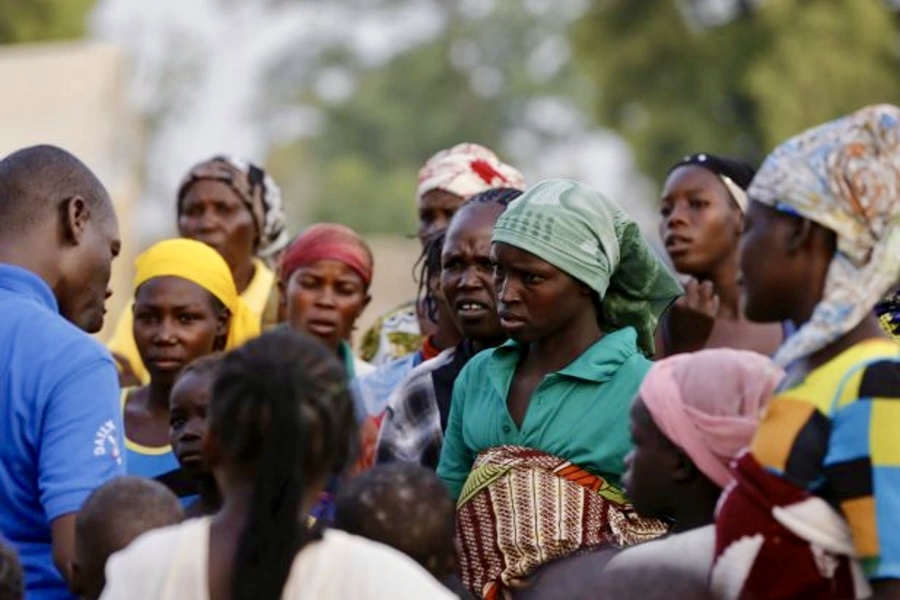
They seek shelter with relatives. They may sleep in rented rooms, on the floors of mosques and churches, in markets, or in rapidly forming slums on the periphery of cities. These arrangements are less visible, harder to enumerate and easier for authorities to ignore.
Why standard counting misses people
1. Camp bias
Counting exercises that prioritise camps and planned sites systematically omit urban and host community displacement. In Nigeria many newly displaced households deliberately avoid camps because of stigma, fear or the harsh conditions inside. Enumerations that focus on camps therefore give a partial view.
2. Secondary and invisible movement
After an initial flight people often move again. A family that escaped a village may spend weeks in a neighbouring town then move further to a city. If counting rounds are spaced months apart those chained moves slip through the gaps. IOM mobility tracking rounds repeatedly document such mobility.
3 Insecurity and access denial
Where conflict or banditry persists enumerators cannot safely visit communities. Local informants may hide displacement for fear of reprisals. This is not conjecture. Displacement tracking reports repeatedly note inaccessible areas and rely on proxies or satellite imagery instead of door-to-door surveys. The resulting estimates are cautious but incomplete.
4. Natural disasters outpacing surveys
Floods and dam failures in 2024 and 2025 produced sudden, large displacements. Rapid onset events outpace the slower cadence of many monitoring systems. People displaced by floods are often treated as short term. They are not always added to IDP registries unless displacement becomes protracted. That undercounts climate driven displacement.
5. Administrative and political distortion
Local governments sometimes delay recognising displacement. They fear economic disruption and reputational harm. They may also aim to control resource flows. Where recognition is delayed, the counting machinery does not activate and needs remain undocumented. Humanitarian organisations have documented instances where state actions effectively narrowed the operational definition of who is an IDP.
Case studies from three regions
Benue State. Violence, concealment and a crisis that grew in the dark
Amnesty International and on-the-ground reports chronicled waves of attacks in Benue where communities fled to host towns and informal sites. Local authorities struggled to keep pace with arrivals and in some instances the official counts lagged months behind reality.
Survivors described overcrowded shelters, a lack of health services and families sleeping in market stalls. The effect was that urgent needs were not matched by funding.
North-East. Flood then displacement then return then displacement again
The northeast has endured an overlapping crisis of insurgency and climate shocks. Large floods in late 2024 and unpredictable dam bursts displaced tens of thousands. Riverside communities attempted to return. They were pushed out again by renewed insecurity.
These repeated cycles create difficulties in classifying people. It is challenging to determine if they are newly displaced or protracted. These cycles also produce gaps in the official flow of data.
Urban Lagos and Abuja peripheries. Invisible IDPs inside cities
Working papers and urban studies demonstrate a trend. Many displaced people purposefully move to cities. In these cities, anonymity shields them from recruitment, attack, or forced returns.
In cities displaced people often join informal labour markets. They do not want to be labelled. As a result they are missed by national IDP registries that emphasise rural return and camp-based assistance.
The human cost of being invisible
When a household is uncounted, it loses access to food distributions and health outreach. It also loses access to cash assistance and the legal recognition that underpins durable solutions. An unregistered displaced child may not get vaccination. An unrecognised mother may go without maternal care.
Lives are not just statistical errors. They are failures of systems designed to protect the most vulnerable. That is the moral and operational urgency of a better count.
Methods Why this investigation relies on mixed sources
This report draws on public monitoring datasets from international organisations. It includes round reports from the Displacement Tracking Matrix and human rights field reports. Additionally, it references peer-reviewed working papers on urban displacement. The report also incorporates contemporaneous news reporting of climate events.
Where direct interviews were unavailable we used published first person accounts from humanitarian assessments and local reporting. IOM DTM rounds, IDMC country analysis and UN operational plans were cross checked for consistency.
The contradictions between global and local datasets are not errors to be dismissed. They are signals of deeper methodological and political problems.
The methodological reforms that would close the gap
Counting people on the move is hard but not impossible. Pragmatic reforms fall into three groups.
1. Shift from camp centric to people centric enumeration
Enumerators must be trained and funded to map host communities and urban informal sites as rigorously as camps. Door to door is ideal but resource intensive. Sampling and network respondent methods can be scaled up so that displaced people living outside camps are included.
Successful pilot studies in other contexts show that hybrid enumeration strategies raise capture rates markedly.
2. Real time mobility tracking and data fusion
Combining satellite imagery, mobile phone mobility data, and rapid key informant surveys can produce faster, more inclusive estimates. IOM’s mobility tracking rounds already move in this direction but need more investment and legal frameworks that protect data privacy.
Faster detection matters because when displacement is first missed it is often never properly registered.
3. Protection for enumerators and community data collectors
In areas where insecurity prevents external teams from entering, local enumerators from the affected communities should be trained. They should also be equipped to collect safe and ethical data.
Supporting community led monitoring keeps the count honest and reduces the incentive to hide displacement. International partners must budget for remote support and rapid cash mobilisation to ensure local teams can operate.
Meta description (≤156 chars)
A deep investigation into why official IDP counts in Nigeria miss millions. Data flaws, floods, insecurity and political incentives that hide need.
Political barriers and workable governance fixes
Counting better is not only technical. It is political.
1. Transparency incentives Governments must be encouraged to view accurate counts as the path to resources not as a reputational threat. Donors and multilateral partners should tie assistance to verified need. They must ensure that governments are not penalised for simply reporting bad news.
2. Decentralised registration with central aggregation Local authorities and community organisations can register displaced persons. They feed anonymised data into a central platform. That preserves local sensitivity while delivering national visibility.
3. Legal safeguards Ensure that registration does not expose displaced people to eviction, forced recruitment or discrimination. Legal safeguards will encourage registration and reduce the number of invisible households.
Funding and operational realities
Global and national humanitarian budgets are under pressure. Donor fatigue and competing crises mean that even well documented needs may be underfunded.
This makes the stakes of accurate counting higher. If large invisible populations remain off the ledger they will not attract attention and funding. The solution is twofold.
First, donors must fund flexible crisis windows that respond to rapid displacement. Second, humanitarian actors must streamline low cost rapid enumeration techniques that prove their value quickly.
Evidence from pilot projects shows that modest investments in improved counting can unlock larger assistance flows.
Recommendations for immediate action
1. Rapid hybrid enumeration pilot in three states — select one state in the northeast. Then, choose one in the north-central belt. Finally, pick one urban periphery. Use a combination of local enumerators, remote sensing and mobile surveys. Document cost per household and time to completion.
2. National IDP data platform — build an aggregated, anonymised platform. It should accept verified local inputs and protect privacy. This will enable national planning.
3. Emergency funding trigger — Donors and the federal budget should create an automatic response envelope. It will release funds when rapid assessments exceed predefined thresholds. This mechanism prevents delays that make the crisis invisible.
4. Community enumerator corps — fund and train local data collectors in insecure regions and provide remote validation support. This reduces security risks and improves coverage.
5. Public transparency and audits — publish anonymised disaggregated counts at LGA level. Then, subject them to third party audit. This reduces political distortion. Transparency builds trust and unlocks more support.
What better counting would change
Accurate enumeration does more than improve statistics. It reorients policy. Health outreach can be targeted to communities that actually exist. Cash programmes can reach the newly displaced rather than the already visible.
Education planning can account for displaced children who now attend informal schools. And crucially, it brings hidden people into the social contract that makes long term recovery possible.
Accurate counts also mean evidence to pressure for durable solutions including land rights, housing and livelihoods support.
Limits of this investigation and a call for verification
This report synthesises public monitoring rounds, human rights reporting, academic working papers and contemporaneous news reporting. It does not present new door-to-door survey data gathered by the author.
Where direct, fresh interviews were not possible this piece refers to published first person accounts and agency testimony.
The gaps and contradictions between sources are themselves meaningful. They point to the places new investment in data collection will matter most.
Readers interested in the raw datasets should consult IOM DTM and IDMC country analyses for the underlying rounds and caveats.
Final word
Counting displaced people is an ethical task. It demands that governments, donors and humanitarian agencies accept the political discomfort of bad news.
For the displaced, a number is not an abstraction. It is the difference between a ration and nothing. It is the difference between a clinic and a closed door. It is the difference between a child vaccinated or left at risk.
Nigeria can fix this. It needs technical reforms, funding and the political courage to count people where they actually live. The future of millions depends on it.
Sign up for Atlantic Post
Follow us on our broadcast channels today!
- WhatsApp: https://whatsapp.com/channel/0029VawZ8TbDDmFT1a1Syg46
- Telegram: https://t.me/atlanticpostchannel
- Facebook: https://www.messenger.com/channel/atlanticpostng


Join the debate; let's know your opinion.