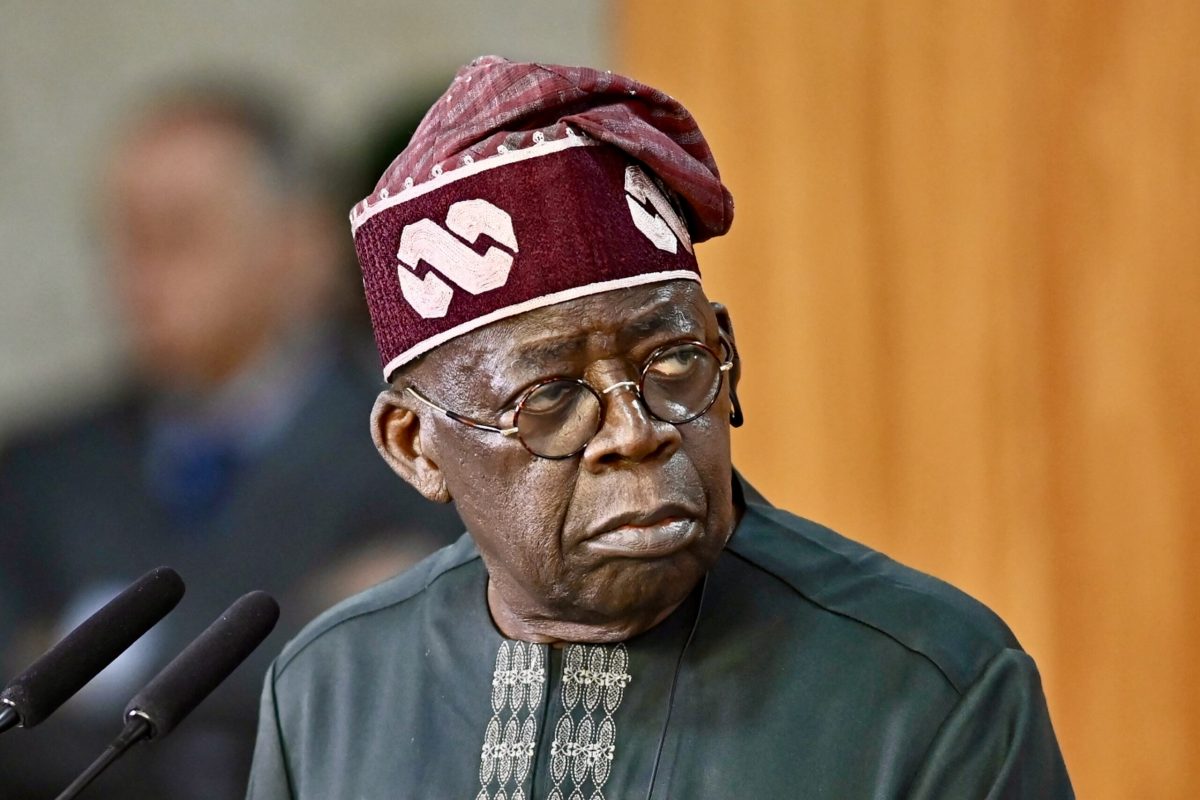
In a high-stakes address at the 150th National Economic Council (NEC) meeting on 31 July 2025, President Bola Ahmed Tinubu implored state governors to channel scarce resources towards rural electrification, poverty eradication and agricultural mechanisation.
Yet, with Nigeria’s economic recovery sputtering at sub-4% growth and poverty levels ballooning, critics argue the Renewed Hope Ward Development Programme (RHWDP) risks becoming yet another paper tiger.
As the president transfers the Surveyor-General’s office to the presidency and green-lights mega-highway projects, governors face the unenviable task of delivering tangible results where past initiatives have failed.
Nigeria’s poverty crisis remains acute: 38.9% of the population – roughly 87 million people – live below the national poverty line in 2023, making it the second-largest poor population globally after India.
Since 2018, over 45 million Nigerians have slipped into poverty, pushing the headcount ratio near 47% in 2024 according to World Bank projections.
Despite bold rhetoric, Tinubu’s exhortation lacks new funding. Governors contend they must stretch dwindling Internally Generated Revenues and federal allocations already strained by subsidy removals and devaluation impacts.
Even as the economy ekes out modest gains, with IMF projecting 3.4% GDP growth in 2025 and Q4 2024 registering a 3.84% uptick – the fastest in three years – these figures fall catastrophically short of the 15% annual growth needed for a $1 trillion economy by 2030.
With headline inflation persistently high at 22.22% in June 2025, food inflation nearing 22% and average consumer prices up 1.68% month-on-month, households bear the brunt of policy volatility.
Without stabilising prices, rural investments risk being swallowed by rising living costs.
At the heart of Tinubu’s pitch is the RHWDP, targeting direct interventions in Nigeria’s 8,809 wards and calling for at least ₦1 billion per ward.
Yet, similar bottom-up schemes under Obasanjo, Jonathan and Buhari have collapsed amid corruption, poor local governance and overlapping jurisdictions.
The proposed National Steering Committee, comprised of unelected appointees, raises further questions about accountability and the sidelining of elected officials.
Dr. Amina Mohammed, former UN Deputy Secretary-General, warns: “Top-heavy committees often replicate the very bottlenecks they aim to dismantle” .
Rural electrification, a perennial albatross, remains dismal. While national access stands at 59.5%, rural coverage languishes at just 24.6% according to World Bank and NBS data.
The president’s call to boost funding comes amid a $200 million deal with WeLight to install mini-grids for 1.5–2 million rural dwellers, yet that falls far short of the estimated 60 million unelectrified citizens.
Powering villages demands hundreds of millions in additional private and public investment — a heavy lift in an era of fiscal deficits north of ₦13 trillion and debt servicing consuming 45% of revenue.
Agricultural mechanisation, touted as the panacea for food security, is equally underwhelming.
Nigeria’s mechanisation rate hovers at a paltry 0.27 horsepower per hectare — a fraction of FAO’s 1.5 hp/ha recommendation, and dwarfed by India’s 2.6 hp/ha and China’s 4.1 hp/ha.
With only 7,000–12,000 tractors nationwide for over 87 million hectares of arable land, smallholders rely on hoes and cutlasses, capping yields and perpetuating import dependence.
The president’s renewal of mechanisation grants must clear land fragmentation, logistical and maintenance bottlenecks that have crippled past programmes.
Tinubu’s directive to transfer the Surveyor-General’s office to the presidency and fast-track Super Highways — notably Lagos-Calabar and Sokoto-Badagry — underscores a preference for showcase infrastructure over grassroots essentials.
Yet, Nigeria has endured $5 billion in flood losses in 2025 alone, with the Mokwa flood claiming over 500 lives and submerging 4,000 homes.
Strengthening SEMAs and releasing emergency funds is welcome, but preventive measures and community-based flood forecasting remain underfunded.
With electoral pressures mounting ahead of 2027 and governors wary of over-promising, Tinubu’s rural gambit teeters between transformative vision and political theatre.
As NEC embarks on another committee, grassroots Nigerians await the day when words convert into wells of electricity, mechanised farms and resilient communities.
Until then, the RHWDP risks joining the graveyard of abandoned Nigerian development schemes — a cautionary tale for leaders who promise the moon yet deliver mirages.