President Tinubu’s Pledge to Complete Eastern Rail Line and Develop Anambra Basin Sparks Mixed Reactions
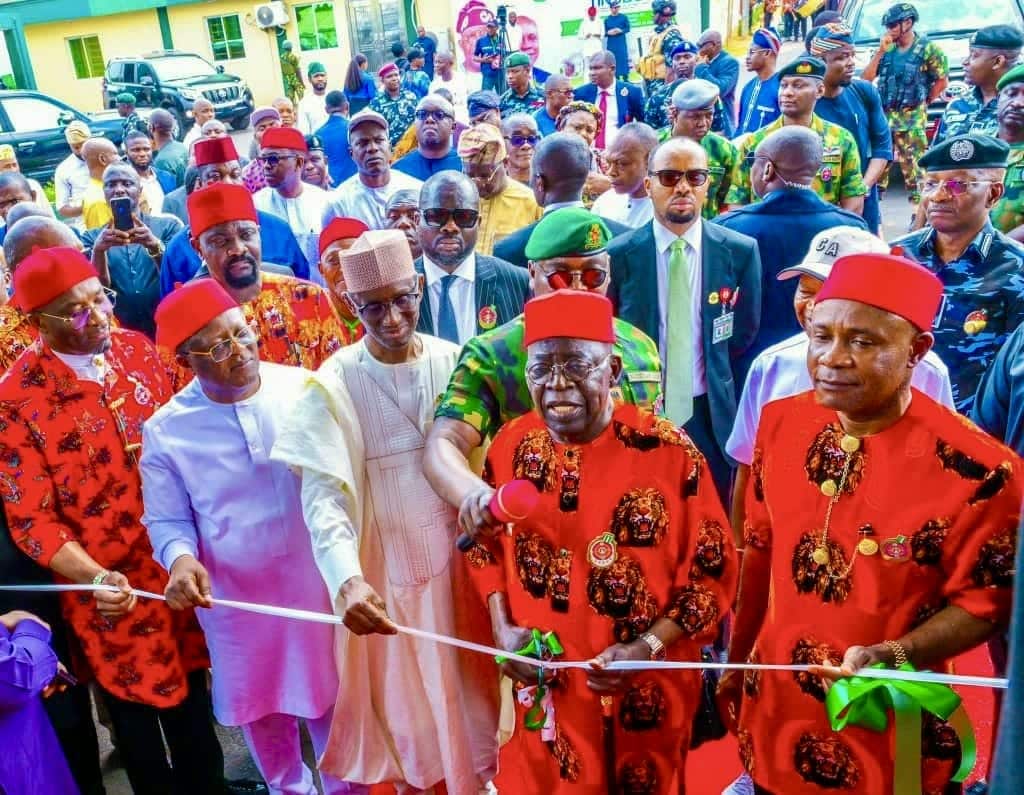
In a bold and highly publicised visit to Enugu State, President Bola Ahmed Tinubu reaffirmed his administration’s commitment to addressing critical infrastructure and energy challenges in Nigeria’s South East region.
Speaking to an audience of South East leaders, governors, traditional rulers, and industry stakeholders, President Tinubu pledged the completion of the Eastern Rail Line connecting Port Harcourt to Maiduguri.
Additionally, he vowed to support the development of the Anambra Basin, which is believed to hold significant oil and gas reserves.
This announcement comes at a time when the nation grapples with a myriad of economic challenges, including skyrocketing fuel prices, surging inflation, and a security crisis threatening the country’s unity.
While the President’s promises were met with cautious optimism, they have also sparked debates about the feasibility, sincerity, and broader implications of these commitments.
The Eastern Rail Line: An Unfinished Journey
The Eastern Rail Line has been a subject of controversy and unfulfilled promises for decades. Stretching from Port Harcourt to Maiduguri, the rail link holds immense potential to transform the economic landscape of the South East and North East regions.
Yet, successive administrations have failed to deliver on its completion. President Tinubu’s assurance of continuity, especially following the completion of the Port Harcourt to Aba section, has reignited hope among stakeholders.
During the interactive session, former Minister of Power, Professor Chinedu Nebo, emphasised the rail line’s importance as a catalyst for economic growth, particularly in boosting non-oil exports.
“This project is not just about connectivity; it is about opening up economic opportunities for millions,” Nebo stated, urging the President to prioritise the project.
However, critics question whether the Tinubu administration has the political will and financial resources to see the project through. With Nigeria’s external debt burden swelling and infrastructure funding often marred by corruption and inefficiencies, skepticism abounds.
Anambra Basin: Nigeria’s Untapped Energy Treasure
The Anambra Basin, with its estimated reserves of one billion barrels of oil and 30 billion cubic feet of gas, has long been touted as a potential game-changer for Nigeria’s energy sector. President Tinubu’s pledge to develop this resource was welcomed by stakeholders like Chris Ugoh, who highlighted its potential to support power generation and industrial growth.
“This is not just about energy; it is about the future of industrialisation and job creation in the South East,” Ugoh remarked.
Yet, the exploitation of the Anambra Basin raises critical environmental and social concerns. Communities in the Niger Delta, which have borne the brunt of decades of oil exploration, have repeatedly warned against replicating the region’s mistakes. Environmental degradation, poor community engagement, and resource mismanagement are cautionary tales that many fear could play out in the South East if proper safeguards are not implemented.
Security Concerns Dominate Discussions
Beyond infrastructure and energy, security remained a focal point of the President’s visit. Onyemauche Nnamani, the South East representative on the Police Service Commission, called for modern security strategies in the region, advocating for the adoption of surveillance technology over traditional checkpoint methods.
“Checkpoints are not only inefficient but also expose our security personnel to unnecessary risks,” Nnamani argued, urging the federal government to prioritise innovation.
President Tinubu’s response struck a conciliatory tone, acknowledging the need for a holistic approach to security. Yet, his administration’s track record on security has been far from stellar, with the military and police struggling to contain the activities of non-state actors across the country. Whether the proposed measures will translate into tangible improvements remains to be seen.
The South East Development Commission: A Federalist Approach?
Governor Peter Mbah of Enugu State commended President Tinubu for establishing the South East Development Commission and signing the Electricity Act (Amendment) Bill. These initiatives, according to Mbah, signal a commitment to true federalism and decentralisation.
He outlined ambitious plans to grow Enugu’s economy from $4.4 billion to $30 billion within four years, attributing the state’s progress to federal reforms that have freed up resources for development.
However, critics argue that the establishment of such commissions often serves as a political appeasement tool rather than a genuine driver of development. The effectiveness of the South East Development Commission will depend on its governance structure, funding, and alignment with regional priorities.
A Legacy in the Making or Political Rhetoric?
President Tinubu’s remarks were laced with optimism, projecting himself as a unifying leader committed to Nigeria’s development, irrespective of political or regional divides.
He praised Governor Mbah, a member of the opposition PDP, for his visionary leadership and emphasised the need for collaboration across party lines.
Yet, many view these statements with a healthy dose of skepticism. “This is classic political theatre,” one analyst remarked. “The promises are grand, but the execution is where this administration will be judged.”
Beyond Promises: An In-Depth Analysis of Structural and Policy Challenges

President Bola Tinubu’s recent declarations regarding the Eastern Rail line and the Anambra Basin are undoubtedly ambitious, but they bring to the forefront deep-seated structural and policy concerns that have historically impeded such projects.
While the President’s commitment signals a progressive tone, achieving these goals requires surmounting entrenched challenges, ranging from bureaucratic inefficiency to political interference.
This section delves into the systemic issues that could hinder these initiatives and evaluates the feasibility of the promises made during the President’s visit to Enugu State.
The Eastern Rail Line: A Legacy of Delays and Unrealised Dreams
The Eastern Rail line, connecting Port Harcourt to Maiduguri, has remained a poignant symbol of Nigeria’s infrastructural failures. Despite being heralded as a key driver for economic integration across the southern and northern regions, the project has been mired in delays, funding shortfalls, and shifting political priorities.
President Tinubu’s assurance that the rail line will be completed is not the first of its kind. Successive administrations have made similar commitments, yet tangible progress has been minimal.
The Port Harcourt-to-Aba section, recently completed, stands as a rare exception, but it also underscores the fragmented and piecemeal approach that has characterised rail infrastructure development in Nigeria.
Experts argue that the project’s completion hinges on three critical factors:
- Funding and Partnerships: The Nigerian Railway Corporation (NRC) estimates that completing the rail line will require over $12 billion in investments. While public-private partnerships (PPPs) have been touted as a solution, questions linger about the willingness of international investors to commit to a project fraught with risks, including insecurity and fluctuating policy frameworks.
- Insecurity in the Southeast and Northeast: The Eastern Rail line traverses regions plagued by unrest, including activities of non-state actors in the Southeast and insurgency in the Northeast. These security challenges not only escalate costs but also deter potential contractors and investors.
- Policy Consistency: The lack of continuity in government policies has often derailed long-term projects like the Eastern Rail line. Without a robust legislative framework to guarantee the project’s sustainability, there is a risk that the rail line could remain a political promise rather than a reality.
The Anambra Basin: A Potential Energy Goldmine or Another Unrealised Vision?
With an estimated 1 billion barrels of oil and 30 billion cubic feet of gas, the Anambra Basin holds immense potential to bolster Nigeria’s energy sector. However, its development faces significant hurdles, including environmental concerns, inadequate infrastructure, and competing interests between federal and state governments.
The President’s pledge to support the basin’s development is timely, given Nigeria’s ongoing energy transition. Gas is increasingly viewed as a critical bridge fuel, capable of reducing the country’s reliance on petrol while supporting industrialisation. Yet, turning this potential into actual gains requires addressing several systemic challenges:
- Environmental and Social Impact Assessments (ESIAs): Developing the basin demands thorough ESIAs to mitigate the environmental and social risks associated with oil and gas exploration. Communities in the Niger Delta provide a cautionary tale of what can happen when these assessments are overlooked.
- Revenue Allocation and Transparency: The question of who benefits from the basin’s resources remains contentious. Local communities in Anambra, Enugu, and neighbouring states have already begun to voice concerns about marginalisation in revenue sharing. Without a transparent and equitable framework, the Anambra Basin could become another flashpoint for resource-based conflicts.
- Infrastructure Gaps: Unlike established oil and gas fields in the Niger Delta, the Anambra Basin lacks the necessary infrastructure for production, processing, and transportation. Developing these facilities will require significant capital investment, which may not be forthcoming in a volatile global energy market.
Security and Federalism: A Double-Edged Sword
President Tinubu’s acknowledgment of the South East’s unique security challenges highlights the broader question of federalism in Nigeria. Onyemauche Nnamani’s call for modern security strategies, including the deployment of surveillance technologies, reflects growing dissatisfaction with the federal government’s approach to policing.
The President’s praise for Enugu State’s Command-and-Control Center and CCTV-equipped patrol vehicles underscores a shift towards localised security solutions. However, this raises critical questions:
- Funding and Replication: Can other Southeast states afford similar investments without federal support? If not, will the federal government provide the necessary resources, or will these initiatives remain isolated success stories?
- Devolution of Policing Powers: The reliance on state-driven security solutions has reignited calls for state police. While the President’s rhetoric suggests an openness to collaboration, there is little evidence of concrete steps towards devolving policing powers to states.
A Legacy of Federal-State Collaboration or Continued Friction?
Governor Peter Mbah’s commendation of President Tinubu as a “true federalist” is both a compliment and a challenge. While the establishment of the South East Development Commission and liberalisation of the electricity sector are laudable, they represent the beginning, not the culmination, of a federalist agenda.
Governor Mbah’s ambitious goal to grow Enugu’s economy from $4.4 billion to $30 billion within four years exemplifies the type of visionary leadership needed to complement federal initiatives.
However, achieving this vision requires a harmonious relationship between federal and state governments, free from the partisan bickering that often undermines such collaborations.
Southeast Marginalisation: Fact or Fiction?
Despite the President’s overtures to the Southeast, perceptions of marginalisation persist. Critics point to the uneven distribution of federal projects and the underrepresentation of Southeasterners in key federal appointments as evidence that the region remains politically sidelined.
The interactive session in Enugu provided an opportunity to address these grievances, but whether the President’s reassurances will translate into action remains to be seen. For many in the Southeast, actions—not words—will determine whether President Tinubu’s administration represents a departure from the status quo.
Conclusion: A Road Paved with Good Intentions
As the Tinubu administration charts its course, the promises made in Enugu serve as a litmus test for its commitment to inclusive development. Completing the Eastern Rail line and developing the Anambra Basin are not just infrastructural goals; they are emblematic of a broader struggle to redefine Nigeria’s socio-economic landscape. However, the path to achieving these goals is fraught with challenges that require more than rhetoric.
Implications for Nigeria’s Political Economy and National Cohesion
President Bola Tinubu’s commitments in Enugu signal a potential shift in Nigeria’s political and economic trajectory. However, the success or failure of these initiatives will have profound implications for the country’s unity and future development.
Let us explore how the Eastern Rail line, the Anambra Basin development, and the administration’s federalist rhetoric could reshape Nigeria’s political economy, addressing longstanding grievances while sparking new debates about equity, efficiency, and governance.
Economic Revival or Regional Disparities?
The Eastern Rail line and the Anambra Basin projects are positioned as transformative for Nigeria’s economy. Their completion could stimulate intra-regional trade, enhance connectivity, and bolster energy production, potentially reducing the country’s reliance on crude oil exports.
However, the uneven allocation of infrastructure projects across regions has long fuelled perceptions of inequality.
- Boosting Investor Confidence: If successfully implemented, these projects could attract foreign and local investors, particularly in the transport and energy sectors. However, sustaining investor interest will require addressing systemic corruption, ensuring transparency, and mitigating security risks.
- Balancing Regional Development: The Southeast has often felt neglected in federal development projects. Ensuring the equitable distribution of benefits from these initiatives will be key to fostering national cohesion.
Federalism Reimagined: A Catalyst for National Unity?
President Tinubu’s federalist overtures present an opportunity to recalibrate Nigeria’s governance structure. Empowering states like Enugu to spearhead their development initiatives could inspire other regions to adopt similar strategies.
However, this approach raises critical questions about resource allocation and the balance of power between federal and state governments.
- Decentralised Governance: The success of state-driven projects in the Southeast could set a precedent for other regions, potentially reducing dependency on the federal government. However, this shift requires legal and constitutional reforms to provide states with greater autonomy.
- Addressing Grievances: Critics argue that federalism has often been selectively applied, benefiting some regions while sidelining others. Ensuring a consistent and inclusive approach to governance will be crucial to overcoming these grievances.
National Cohesion: Bridging the Divide
The interactive session in Enugu highlighted the deep-seated mistrust between the Southeast and the federal government. While President Tinubu’s visit was a step in the right direction, bridging this divide requires sustained engagement and concrete actions.
- Building Trust: The administration must go beyond promises, demonstrating its commitment through tangible projects that benefit the Southeast.
- Inclusive Governance: Appointing Southeasterners to key federal positions could help dispel perceptions of marginalisation, fostering a sense of belonging and unity.
The Verdict: Tinubu’s Defining Moment
President Tinubu’s promises in Enugu could become a cornerstone of his administration’s legacy—or a haunting reminder of unfulfilled potential. The stakes are high, not just for the Southeast but for the entire nation.
Successfully executing these projects could redefine Nigeria’s socio-economic landscape, proving that inclusive development is possible. Conversely, failure would reinforce cynicism, deepening divisions and eroding national cohesion.
As Nigeria stands at this crossroads, one thing is clear: the journey ahead will require bold decisions, unwavering commitment, and a willingness to confront the systemic challenges that have long plagued the nation. President Tinubu’s administration has set the stage—only time will tell if it can deliver.
Additional report: Osaigbovo Okungbowa, Atlantic Post Senior Political Correspondent.