
Amnesty International says police brutality and torture remain entrenched in Nigeria despite years of reform promises. A fresh police shooting case, unanswered questions over the 2020 Lekki Toll Gate killings and another anniversary crackdown raise a harder question: who is being held accountable?
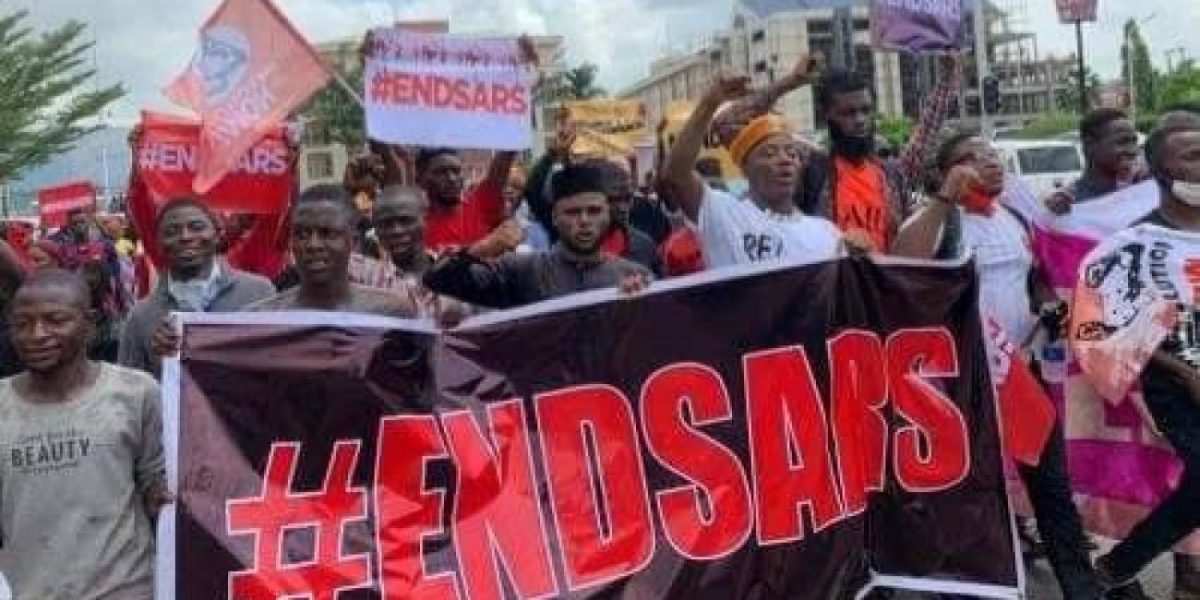
Nigeria’s unresolved #EndSARS crisis returned to the streets on Tuesday, 20 October 2026, when police fired tear gas to disperse activists and other Nigerians gathered at Lagos’s Lekki Toll Gate to commemorate the sixth anniversary of the protests against police brutality.
The confrontation revived a painful question. Six years after the demonstrations forced the government to promise sweeping police reforms, why do allegations of unlawful killings, torture and excessive force continue to surface?
Amnesty International says the central problem is not a shortage of official promises but a failure to ensure that officers who violate citizens’ rights face meaningful consequences.
In a statement marking the anniversary, the human rights organisation cited recent alleged killings, recalled cases of torture and extortion, and renewed its demand for credible investigations into abuses committed by the police and military.
The organisation said victims seeking justice frequently encounter official inaction, allowing abusive practices to persist despite the disbandment of the notorious Special Anti-Robbery Squad (SARS) in October 2020.
“This lack of accountability breeds and perpetuates impunity, creating an environment where Nigerian police believe they have carte blanche to carry out atrocities,” Amnesty International said.
The latest allegations put the credibility of Nigeria’s police reform programme under renewed scrutiny. They also expose the difference between announcing disciplinary measures and demonstrating that unlawful conduct is investigated, prosecuted and prevented from recurring.
Two Recent Cases Put Police Accountability Under the Spotlight
One of the latest cases identified by Amnesty International concerns Anthony Enruchi Obodo, a 22-year-old University of Port Harcourt graduate.
According to Amnesty, Obodo was shot dead by police officers on 27 August 2026. The organisation said he was driving when officers pursued him and shot him, allegedly leaving him by the roadside in a pool of blood.
The allegation raises questions that require public answers. What prompted the pursuit? Where did the shooting occur? Which officers were involved? Was the incident reported, and has an independent investigation established the circumstances of his death?
Atlantic Post could not independently corroborate the details of Obodo’s case through a second publicly accessible source during the preparation of this report. The account is therefore presented as Amnesty International’s allegation, not as an independently established finding.
The questions remain important because a police shooting should trigger a verifiable process: preservation of physical and digital evidence, identification of witnesses, a medical or post-mortem examination where appropriate, and an investigation independent enough to examine officers’ conduct without protecting those involved.
A second case has a more extensive public record.
On 26 April 2026, 28-year-old Mene Ogidi was fatally shot by a police officer in Effurun, Delta State, after being restrained during a police operation.
The Nigeria Police Force subsequently acknowledged that the team leader, Assistant Superintendent of Police Nuhu Usman, discharged his firearm in violation of police regulations, resulting in Ogidi’s death.
Police accounts said officers had responded to information that Ogidi had been apprehended while attempting to send a parcel containing a Beretta pistol and four rounds of ammunition. The presence of a suspected weapon may explain why officers intervened, but it does not remove the obligation to comply with the law when taking a suspect into custody.
Amnesty said Ogidi was restrained on the ground before being shot twice at close range.
The distinction matters. Arresting a suspect, investigating an alleged offence and protecting the public are legitimate policing functions. Using lethal force against someone who has been restrained raises a different question: why was shooting necessary at that moment?
Following the incident, the police announced disciplinary proceedings against officers connected to the shooting. The Force Disciplinary Committee found that Usman had violated operational rules, and the Police Service Commission subsequently ratified the dismissal of Usman and four other officers.
The case file was reported to have been forwarded to the Office of the Attorney-General of the Federation for prosecution.
That response represents a concrete disciplinary step, but it does not by itself establish that criminal accountability has been completed. At the time of writing, Atlantic Post could not establish from the public records located for this report whether a criminal trial had concluded.
The public deserves to know whether charges have been filed, whether the accused officers have appeared in court and what the courts ultimately determine.
Without that information, a dismissal announcement cannot answer the central question of criminal responsibility.
A Pattern Extending Beyond SARS
Amnesty International’s latest statement recalls a series of cases that have troubled Nigeria’s policing system since the 2020 protests.
On Christmas Day 2022, Bolanle Raheem, a pregnant lawyer, was shot dead by a police officer at a checkpoint beneath the Ajah Underbridge in Lagos State.
The case produced an important exception to the perception that officers can escape punishment. In October 2023, a Lagos State High Court convicted the officer, Drambi Vandi, of murder and sentenced him to death.
That conviction demonstrates that criminal prosecution of a police officer is possible. It does not, on its own, establish that the wider system consistently investigates and prosecutes comparable cases.
In April 2023, Onyeka Ibe, a businessman in Delta State, was shot dead in an incident linked to an alleged N100 bribe demand at a police checkpoint. The officer involved, Inspector Ubi Ebri, was dismissed and remanded following a murder charge.
Amnesty has also highlighted the reported torture of 17-year-old student Abdullahi Abba Tukur in Yola, Adamawa State, in August 2023 over an allegation that he stole a smartphone.
Another case involved Kabiru Ibrahim, who allegedly died after severe beatings and torture by police officers following an accusation that he stole sachets of noodles in Bauchi State.
Amnesty also cited Ahmed Ibrahim, a 20-year-old businessman allegedly killed by a policeman in the Zamare area of Yauri Local Government Area, Kebbi State, after he refused to pay a bribe.
These cases differ in their circumstances and in the stages their investigations or court proceedings may have reached. They should not be treated as though every allegation has been judicially proven.
Their significance lies in the recurring questions they raise about the use of force, treatment of suspects, alleged extortion and the availability of effective remedies for victims.
When these allegations recur across different states, the issue extends beyond individual officers. It raises questions about supervision, operational culture, reporting procedures and whether the threat of meaningful punishment is strong enough to deter misconduct.
Lekki Toll Gate: Six Years Without a Settled Public Reckoning
The #EndSARS movement was driven by longstanding complaints of unlawful arrests, extortion, torture and extrajudicial killings, particularly those associated with SARS.
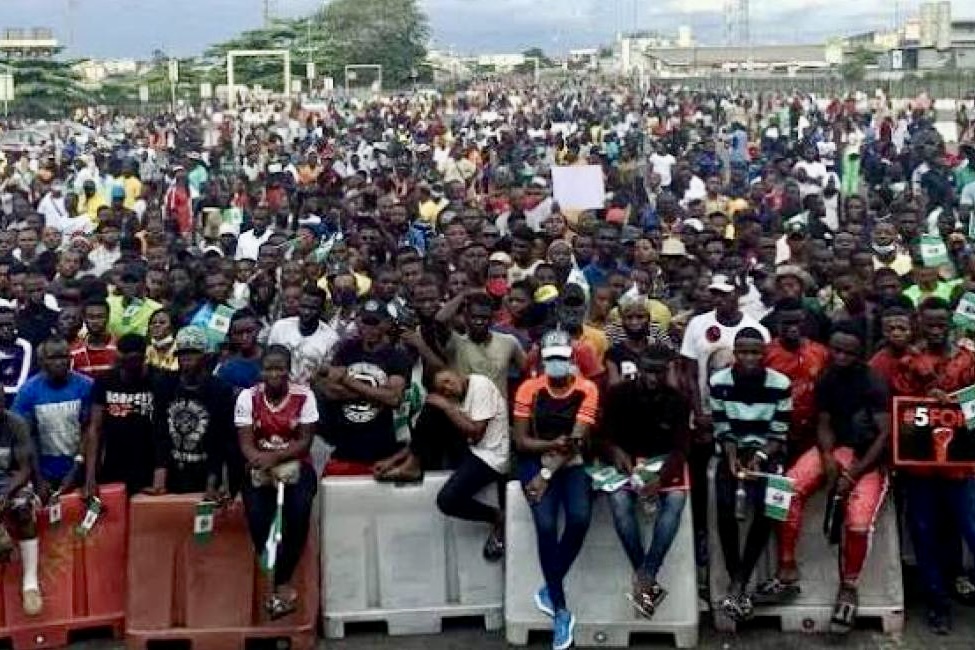
The protests began spreading across Nigeria in October 2020. On 20 October, the Lekki Toll Gate in Lagos became the focal point of a deadly confrontation between protesters and security personnel.
Amnesty International’s investigation, published the following day, reported that at least 12 people were killed at Lekki and Alausa in Lagos. It said its findings drew on eyewitness accounts, video footage and hospital reports.
The organisation said soldiers arrived at the Lekki protest ground at about 6.45 pm and opened fire without warning. At Alausa, it reported that soldiers and police officers attacked protesters at approximately 8 pm, killing at least two people and critically injuring another.
At the time, Osai Ojigho, then Amnesty International Nigeria’s country director, said: “Soldiers clearly had one intention – to kill without consequences.”
Amnesty also reported that CCTV cameras at the toll gate had been removed and electricity disconnected shortly before the shootings. It alleged that some of those killed or injured were taken away by military personnel.
The organisation estimated that at least 56 people had died nationwide during the protests, with about 38 killed on 20 October alone.
The Lagos State Judicial Panel of Inquiry subsequently found that protesters were shot, injured and killed at the toll gate. Its findings and casualty assessments became the subject of a fierce dispute after the Lagos State Government rejected key parts of the panel’s conclusions in its November 2021 White Paper.
The controversy over casualty figures does not erase the need to establish individual responsibility. Nor should disagreements over the number of people killed substitute for credible investigations into the use of lethal force, the treatment of the injured and the actions of those who issued or carried out orders.
The essential questions remain: who authorised the deployment, what rules governed the use of force, what evidence was preserved and what criminal proceedings followed?
Amnesty renewed its call for investigations into the killings of protesters by the military and police. The continued demand for accountability demonstrates how the absence of a broadly accepted and transparent reckoning can prolong public distrust long after the immediate violence has ended.
Reform Promises Have Not Ended the Dispute
The Federal Government responded to the 2020 protests by disbanding SARS and promising wider reforms.
The government also supported the establishment of state-level judicial panels to investigate alleged police abuses and recommend compensation and other remedies for victims. Some victims received compensation, and officers were recommended for disciplinary action or prosecution.
The Nigeria Police Act 2020 established a legal framework that expressly recognises accountability, transparency and the protection of human rights as principles of policing.
In April 2026, the Ministry of Police Affairs announced the formal handover of updated Nigeria Police Regulations intended to strengthen accountability, professional standards, discipline and oversight. The Federal Government has also initiated a process to review the legal framework for policing through a proposed National Policing Bill.
These measures matter. They show that reform has not disappeared from the official agenda.
The unresolved question is whether the legal frameworks, regulations and administrative announcements produce demonstrable changes in daily encounters between police officers and citizens.
An announcement that an officer has been dismissed is not equivalent to a public criminal trial. A judicial panel recommendation is not the same as a completed prosecution. An award of compensation does not amount to effective redress if the victim never receives payment.
The Rule of Law and Accountability Advocacy Centre (RULAAC), in a separate statement published on the sixth anniversary, argued that implementation of judicial-panel recommendations remained fragmented and inadequate, particularly in criminal accountability, institutional reform and comprehensive remedies for victims.
“Redeployment is not accountability, and changing the name of a police unit is not institutional reform,” the organisation maintained.
RULAAC also cited the case of a woman identified as Ngozichukwu, who it said had obtained a judgment against the police but had not received the compensation awarded to her. It called for compliance with the court’s orders.
The organisation separately highlighted the death of Japheth Njoku, who reportedly died in police custody at the Tiger Base detention facility in Imo State in May 2025. According to RULAAC, a coroner’s inquest recommended prosecution of two officers over alleged extortion and corruption and compensation for Njoku’s family.
Those allegations and recommendations require the responsible authorities to publish the actions taken in response. They also reinforce the need for a system in which a victim or family does not have to sustain a public campaign indefinitely to obtain compliance with a court judgment or official finding.
The Accountability Gap Is Also a Public Safety Problem
Police brutality is often discussed as a human rights issue separate from national security. In practice, the two are closely linked.
A police force that cannot persuade citizens that complaints will be investigated fairly risks weakening the cooperation required to prevent and solve crimes.
Witnesses may hesitate to report offences. Victims may avoid police stations. Residents may interpret checkpoints and searches as opportunities for harassment rather than legitimate security operations.
That erosion of trust has practical consequences in a country confronting serious security challenges, including kidnapping, armed robbery and violent crime.
Professional policing requires officers to have the authority, training, equipment and support needed to protect the public. It also requires clear limits on their powers, independent scrutiny of serious incidents and consequences for unlawful conduct.
Poor working conditions and inadequate police welfare can warrant serious attention, but they cannot justify torture, extortion or unlawful killing. The responsibility to respect citizens’ rights remains part of the job.
The same principle applies to protests. Public authorities may have legitimate responsibilities to manage public safety, traffic and the risk of violence. Any restrictions on peaceful assembly and any use of force must still be lawful, necessary and proportionate.
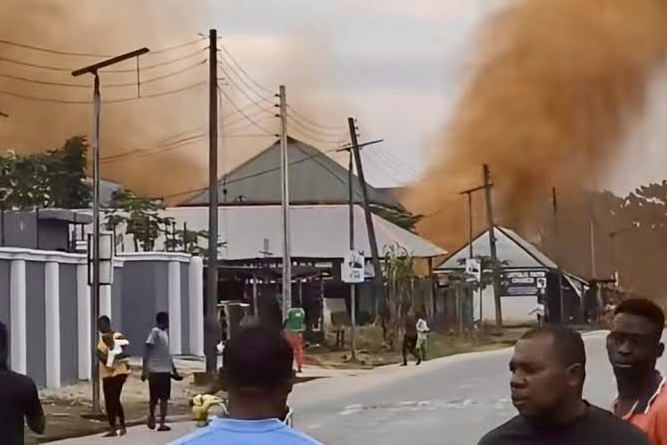
The reported use of tear gas at the Lekki Toll Gate on the sixth anniversary therefore deserves a clear public explanation. The available report of the incident does not, by itself, establish the full circumstances or prove whether every police action was unlawful. It does make transparency important, particularly at a site where the use of force remains a source of deep public concern.
What Nigerians Should Be Able to Measure
Six years after #EndSARS, the test of reform should no longer be the number of announcements or the titles given to new units.
Nigerians need verifiable answers about how many complaints of unlawful killing, torture and extortion are received, how many are independently investigated and how many result in disciplinary action, criminal charges and final court judgments.
Authorities should publish the status of outstanding judicial-panel recommendations, the compensation awarded and paid, and the prosecution of officers identified in credible investigations. They should also disclose whether officers implicated in serious abuses were removed from frontline duties, retrained or redeployed, and under what safeguards.
For every fatal police shooting, the public should be able to establish which agency is investigating, whether forensic evidence has been preserved, whether relatives have been informed and whether a case has reached the courts.
Those disclosures would help distinguish genuine enforcement from announcements made during moments of public outrage.
They would also make it possible to assess the effectiveness of the updated Police Regulations and other reform measures introduced since 2020.
The sixth anniversary has placed two images side by side: the memory of Nigerians demanding protection from police brutality, and the sight of police tear gas being used to disperse a gathering at the same landmark.
Neither image, by itself, settles every question about Nigeria’s police reform programme. Together with the latest allegations of unlawful killings and torture, however, they underline why public trust cannot be restored through promises alone.
Amnesty International’s charge is stark: the alleged pattern of abuse will persist while accountability remains weak. The government and police authorities now face a practical test of that claim.
Can they show, case by case, that serious allegations are investigated independently, that officers responsible are prosecuted where evidence warrants it, that victims receive effective remedies and that abuses are prevented from recurring?
Until the authorities provide verifiable answers, the central demand of #EndSARS will remain unfinished: a police force that protects Nigerians without placing itself above the law.
Join the debate; let’s know your opinion.