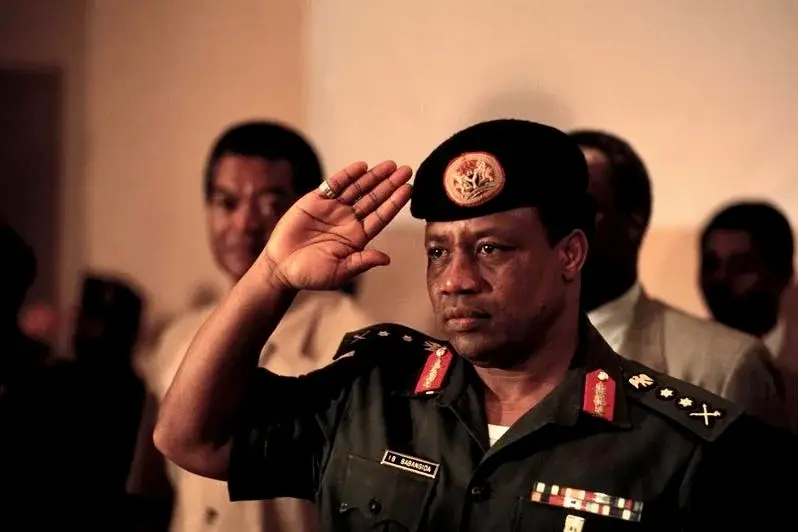
The human rights community in Nigeria is demanding the prosecution of former military ruler General Ibrahim Babangida for annulling the June 12, 1993 presidential election. The Committee for the Defence of Human Rights calls this action a coup against democracy. Babangida’s admission of wrongdoing raises questions about Nigeria’s ongoing quest for justice and accountability.
LAGOS, Nigeria — In a dramatic resurgence of historical accountability, Nigeria’s political landscape is once again abuzz with the human rights community’s call for the prosecution of former military ruler General Ibrahim Badamasi Babangida.
The Committee for the Defence of Human Rights (CDHR) has made an emphatic appeal for President Bola Tinubu to hold Babangida accountable for what they describe as a “coup d’état against democracy”—the annulment of the June 12, 1993 presidential election.
This pivotal moment in Nigeria’s modern history, widely celebrated as the freest and most credible election, saw the historic victory of business magnate Moshood Kashimawo Olawale (MKO) Abiola, only for it to be cruelly subverted.
Babangida’s recent public admission of his role in the annulment has rekindled long-standing debates about Nigeria’s democratic deficit. In his newly launched memoir, A Journey in Service, Babangida confessed that the annulment was not an act borne solely of political strategy, but a decision that plunged the nation into decades of political instability, civil unrest, and economic hardship.
The CDHR’s president, Debo Adeniran, condemned this confession as an attempt to “hoodwink” the Nigerian public into believing that the ill-fated decision was made in good faith.
The annulment of the June 12 election has long been cited as one of Nigeria’s gravest democratic injustices. With over 14 million eligible voters disenfranchised, the abrupt cancellation of what was widely considered a clear victory for Abiola ignited nationwide protests and set the stage for years of military rule.
Critics argue that Babangida’s decision not only undermined the nascent democratic process but also paved the way for the repressive regimes that followed—most notably that of General Sani Abacha. The repercussions of this decision continue to haunt the nation, as evidenced by the renewed demands for accountability.
Political analysts note that Babangida’s confession represents a critical juncture. His acknowledgment that Abiola had indeed won the election—and that his administration’s actions amounted to a coup against the democratic will of the people—brings to the forefront a painful yet necessary reckoning with Nigeria’s past.
As Nigeria continues to struggle with the vestiges of military rule, the demand for legal redress is seen by many as a step towards healing and national reconciliation.
However, the road to prosecution is fraught with complexities. Babangida’s legacy is a contentious one; while many denounce his role in subverting the democratic mandate, others point to his contributions in liberalising the economy and paving the way for Nigeria’s subsequent transition to civilian rule.
Yet, for the vast majority who suffered under the weight of his decisions, these economic reforms hardly justify the human and political cost of annulling a democratic election.
The CDHR has called on President Tinubu to take swift action. Adeniran’s statement is unequivocal: “We call on President Tinubu to prosecute General Babangida for crimes against humanity and for orchestrating a coup d’état that subverted the democratic will of Nigerians.”
The group further demands that reparations be made to the Abiola family and that all privileges accorded to those who benefited from the annulment be revoked.
Such measures, they argue, would serve not only as a symbolic gesture of justice but also as a tangible step towards erasing the culture of impunity that has long plagued Nigerian politics.
Critics, however, caution against a simplistic reckoning with the past. They argue that while Babangida’s actions were indeed a dark chapter in Nigeria’s democratic journey, the political and military landscape of the time was extraordinarily complex.
Internal factionalism, external pressures, and the precarious nature of Nigeria’s transition to civilian rule all contributed to decisions that, though condemnable today, were influenced by a myriad of factors.
Nonetheless, the call for accountability is resonating across the nation, amplified by the continuous struggle for a more transparent and just governance system.
As debates intensify within the corridors of power and in the public square, one thing remains clear: the wounds inflicted by the June 12 annulment have yet to fully heal.
For many Nigerians, justice for that lost democratic mandate is not merely a political demand—it is a moral imperative that speaks to the very soul of the nation.
Whether or not the legal machinery will ultimately hold Babangida accountable remains uncertain, but the call for justice is an enduring reminder that democracy in Nigeria is still a work in progress.
In a nation still grappling with the legacies of its past, the renewed pursuit of accountability serves as a beacon of hope. It is a clarion call for leaders and citizens alike to confront history honestly and to forge a future built on transparency, justice, and true democratic values.