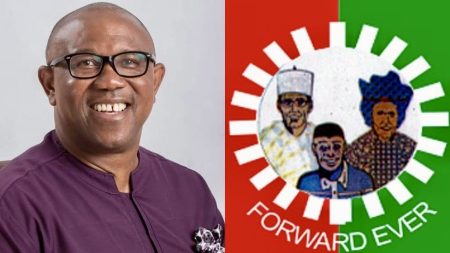
Peter Obi’s emphatic declaration that he will contest the 2027 presidential election on the Labour Party (LP) platform has sent shockwaves through Nigeria’s political landscape.
In a viral video circulating on social media this weekend, the former Anambra State governor dispelled rumours of a party switch, insisting: “I will still continue to run in the Labour Party. I’m a member of the Labour Party”.
This pronouncement not only reaffirms Obi’s commitment to his grassroots “Obidient” base but also reignites debate over the health of Nigeria’s party system.
Obi’s critique of the ruling establishment was nothing short of incendiary. He squarely blamed the federal government for orchestrating crises within both the LP and the People’s Democratic Party (PDP), asserting that such divisions are “deliberate problems caused by the system”.
Drawing on historical precedent, Obi recounted his intervention during the late President Umaru Musa Yar’Adua’s tenure, when he appealed directly to Yar’Adua, who then summoned INEC Chairman Maurice Iwu to quell a party dispute.
“We were forced to fix it,” Obi recalled, underscoring his long-standing frustration with state interference in party affairs.
This accusation raises critical questions: if the government can so brazenly manipulate the internal dynamics of ostensibly independent parties, what hope is there for genuine opposition?
Obi insists that a robust multi-party democracy is essential: “You can’t have a system working without a strong opposition.” His pledge to “clean up” the political system suggests a platform founded on electoral integrity and institutional reform.
However, such bold rhetoric confronts stark realities. The LP is mired in factional disputes—multiple claimants to its leadership have plunged the party into legal tangles, undermining its capacity to mobilise effectively.
Some senior figures have already defected to rival parties, citing a toxic atmosphere that deterred governance projects in their constituencies.
Can Obi’s personal stature overcome these structural deficiencies, or will the Labour Party implode under the weight of its own infighting?
Obi’s call to Nigerian voters to “take responsibility” for ensuring their votes count is both empowering and indicative of scepticism towards official oversight.
He warned that even compensated party agents cannot substitute for vigilant electorates, urging youths to remain undeterred by entrenched interests benefiting from the “old order”.
This populist appeal resonates with a generation disillusioned by chronic insecurity, economic hardship and endemic corruption.
In a nod to generational change, Obi proposed instituting a retirement age for political office seekers. By 2027, he will be 65 and vowed not to campaign into his seventies—a symbolic gesture to curb gerontocracy and make way for fresh leadership.
Whether this will crystallise into a concrete policy remains to be seen, but it positions Obi as a champion of political renewal.
As Nigeria hurtles towards the next election, Peter Obi’s uncompromising stance sets the stage for a dramatic 2027 contest.
His unwavering loyalty to the Labour Party and his pledge to “clean up” systemic ills present a potent narrative—one that challenges both the ruling elite and disaffected opposition alike.
The question now is whether Obi can translate this rhetoric into a cohesive, winning strategy or if his own party’s internecine battles will yet again thwart his presidential ambitions.
Additional report from Osaigbovo Okungbowa