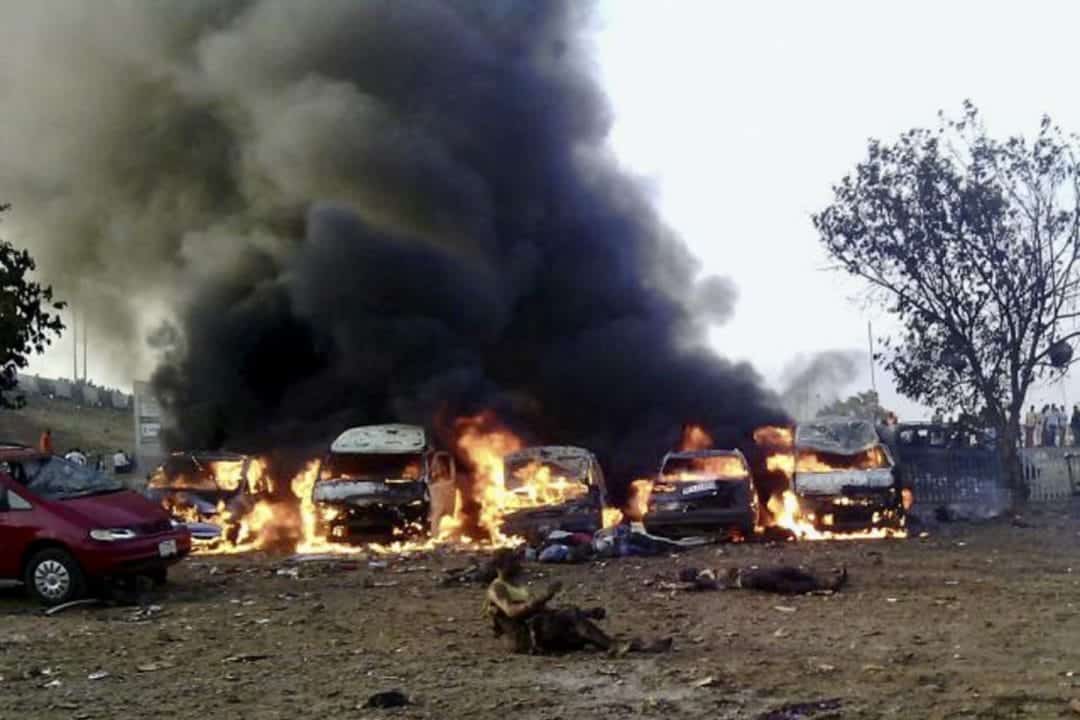
Explore Nigeria’s escalating security crisis, from systemic neglect to bold reforms. Is the nation doomed to fail, or can decisive action save it?
By Mark Olise

Terror Resurgence in Northern Nigeria: Has the Nation Lost Control?
The resurgence of terrorism in Nigeria has once again plunged the country into a vortex of fear, uncertainty, and anger. From the brazen abductions in Katsina to the chilling attacks on vulnerable communities in Borno, the Nigerian state appears to be grappling with a hydra-headed monster it had prematurely declared defeated. This alarming trend not only underscores the fragility of the nation’s security infrastructure but also raises critical questions about the government’s capacity to safeguard its citizens.
The attacks, reminiscent of the darkest days of Boko Haram’s insurgency, have reignited fears that the terror group, alongside its splinter factions, may be regaining strength. Despite years of military campaigns, substantial budget allocations to security, and assurances from the presidency, the escalating violence paints a grim picture of a nation under siege. In this report, we delve into the recent attacks, their implications, and the structural failures that have enabled this resurgence.
Katsina: A State Under Siege
In late December, Katsina State—the home state of President Bola Ahmed Tinubu’s predecessor, Muhammadu Buhari—witnessed a wave of coordinated attacks that left dozens dead and many more displaced. The terrorists, armed with sophisticated weaponry, stormed villages, looting, killing, and abducting residents with impunity. The audacity of these attacks, occurring in broad daylight, highlights the deteriorating security situation in the region.
Local sources reveal that the attackers operated for hours without any meaningful resistance from security forces. Villagers, now refugees in their own land, recounted tales of horror and abandonment. “We called for help, but no one came,” lamented a survivor from one of the affected communities. This sense of helplessness has become a recurring theme in northern Nigeria, where citizens are often left to fend for themselves against well-organised terror networks.
The Katsina attacks have also reignited debates about the government’s approach to security. Critics argue that despite the establishment of various security task forces and community policing initiatives, the lack of a coherent strategy continues to undermine efforts to curb terrorism. The situation in Katsina is a microcosm of a larger national crisis, one that demands urgent and decisive action.
Borno: The Heartland of Insurgency
Meanwhile, in Borno State, the epicentre of Nigeria’s battle against Boko Haram, the situation remains dire. Recent attacks on farming communities and travellers along major highways have left a trail of destruction and despair. The terrorists, emboldened by the apparent weaknesses in security operations, have intensified their campaign of violence, targeting both civilians and military personnel.
In one particularly gruesome incident, dozens of farmers were ambushed and killed as they worked in their fields. This attack, which took place near Maiduguri, the state capital, underscores the precariousness of life in a region that has borne the brunt of Nigeria’s counterterrorism failures. For the people of Borno, the promise of peace has become a distant dream, with many questioning whether the state can ever return to normalcy.
The resurgence of violence in Borno has also exposed the vulnerabilities of Nigeria’s military strategy. Despite years of international support and training, the armed forces have struggled to adapt to the evolving tactics of terrorist groups. Analysts point to poor intelligence gathering, inadequate equipment, and low morale among troops as key factors contributing to the military’s inability to decisively defeat insurgents.
A Nation in Crisis: Broader Implications
The resurgence of terrorism in Nigeria is not just a northern problem; it is a national crisis with far-reaching implications. Beyond the immediate loss of lives and displacement of communities, the attacks have dealt a severe blow to public confidence in the government. Citizens, weary of unfulfilled promises and endless assurances, are demanding accountability.
Economically, the violence has disrupted agricultural activities, exacerbating food insecurity in a country already grappling with soaring inflation and unemployment. The attacks have also deterred foreign investors, further compounding Nigeria’s economic woes. “No investor wants to put money in a country where life is not guaranteed,” remarked a financial analyst.
Politically, the resurgence of terrorism has become a major test for President Bola Ahmed Tinubu’s administration. Having inherited a fractured nation, Tinubu now faces the daunting task of addressing the structural failures that have perpetuated insecurity. However, critics argue that the government’s response so far has been tepid, characterised by rhetoric rather than action.
A Call for Urgent Action
As the nation grapples with this renewed wave of terror, the need for a comprehensive and sustainable security strategy has never been more urgent. The government must go beyond reactionary measures and address the root causes of insecurity, including poverty, unemployment, and corruption. Failure to do so will not only embolden terrorists but also further erode public trust in the state’s ability to govern.
Next, let us delve deeper into the structural and policy issues underpinning Nigeria’s security challenges, and offer critical analysis and potential solutions. The time for action is now; Nigeria cannot afford to lose this battle.
A Legacy of Systemic Neglect: The Root of the Crisis
Nigeria’s security challenges have long been exacerbated by systemic neglect, poor governance, and a lack of strategic foresight. For decades, successive administrations have failed to address the structural deficiencies in the nation and its security architecture. The recent spate of attacks in Katsina and Borno is symptomatic of a deeper rot within the system, where underfunding, corruption, and a lack of accountability have rendered security agencies ill-equipped to handle the growing threats.
Despite Nigeria’s significant military spending—reportedly one of the highest in sub-Saharan Africa—there is little to show for it. Reports of misappropriated defence funds, inflated contracts, and ghost soldiers on payrolls reveal a system plagued by corruption. The funds that should have gone into acquiring modern weaponry, training personnel, and enhancing intelligence gathering are instead siphoned off by powerful actors. This has left the Nigerian Armed Forces struggling with outdated equipment, low morale, and inadequate resources to combat insurgents and bandits effectively.
Flawed Policy Approaches: The Dangers of Reactive Governance
One glaring issue is the government’s reactive approach to security. Rather than adopting proactive measures to prevent attacks, the focus has often been on damage control after the fact. Following the attacks in Katsina and Borno, federal and state authorities issued the usual condemnations, deployed troops to affected areas, and promised to bring perpetrators to justice. However, these measures have proven to be mere stop-gap solutions that fail to address the root causes of insecurity.
Take, for instance, the National Security Strategy (NSS), which was launched with much fanfare in 2019. While it emphasises the need for a multi-stakeholder approach to security, the implementation has been lacklustre at best. Key provisions, such as community policing and the integration of local vigilante groups into formal security structures, remain unfulfilled promises. In the absence of a coherent long-term strategy, insurgents and bandits continue to exploit gaps in the system, operating with impunity in poorly governed areas.
A Fractured Federation: The Challenge of State Security
Nigeria’s federal structure poses another significant challenge. Security is constitutionally the exclusive preserve of the federal government, leaving states with limited powers to address local threats. Governors often lament their inability to deploy police or military forces without federal approval, a delay that has proven costly in many instances.
The recent attacks in Katsina and Borno highlight the limitations of this centralised approach. Both states had issued warnings about increased bandit activity and requested federal intervention weeks before the attacks occurred. Yet, the slow response underscores the inefficiency of a system that fails to empower states to act decisively in times of crisis.
Some critics argue that restructuring Nigeria’s governance framework to allow for state and regional policing could significantly improve security outcomes. However, this proposal has met resistance from the federal government, which fears it could lead to the fragmentation of national unity. This resistance persists despite evidence from other federations, such as the United States and India, where decentralised policing has proven effective in addressing localised security challenges.
The Human Cost of Policy Failures
Beyond the structural and policy failures, the human cost of Nigeria’s security crisis is staggering. Thousands of lives have been lost, millions displaced, and entire communities destroyed. In Katsina, families are mourning the deaths of over 50 people, with many survivors now living in makeshift camps. Similarly, in Borno, the resurgence of Boko Haram has forced thousands to flee their homes, creating a humanitarian crisis that the government appears ill-prepared to handle.
The psychological toll on survivors is immense. Women and children, in particular, bear the brunt of these attacks, with many subjected to unspeakable horrors, including abduction, sexual violence, and forced recruitment into insurgent groups. The failure to protect these vulnerable populations reflects poorly on a nation that aspires to be a regional leader in peace and security.
International Implications: A Threat to Regional Stability
Nigeria’s security challenges also have far-reaching implications for regional stability. As Africa’s most populous nation and largest economy, Nigeria’s inability to contain insurgency and banditry threatens neighbouring countries in the Lake Chad Basin and beyond. The porous borders, coupled with weak regional cooperation, allow insurgents to move freely across countries, spreading violence and destabilising the region.
The African Union (AU) and Economic Community of West African States (ECOWAS) have called for greater collaboration among member states to tackle these threats. However, Nigeria’s leadership in these efforts has been lacklustre, with critics accusing the government of focusing more on domestic political considerations than on fulfilling its regional responsibilities.
Sadly, the security challenges in Katsina and Borno are a stark reminder of the systemic failures that have plagued Nigeria for decades. From corruption and reactive governance to a flawed federal structure and inadequate regional cooperation, the issues are deeply entrenched. Unless these structural and policy deficiencies are addressed with urgency and sincerity, the cycle of violence will continue, leaving ordinary Nigerians to pay the ultimate price.
Learning from International Best Practices
Nigeria’s security challenges are not insurmountable, as global examples demonstrate that proactive reforms can yield significant results. Countries like Colombia and Sri Lanka, which faced prolonged insurgencies, have emerged stronger through concerted efforts in military modernisation, intelligence coordination, and community involvement.
Case Study: Colombia
Colombia’s success in combating the Revolutionary Armed Forces of Colombia (FARC) insurgency was largely due to its holistic approach. The government implemented an integrated strategy that combined military offensives with socioeconomic development programmes. By addressing the root causes of insurgency—poverty, inequality, and lack of access to education—the Colombian government was able to weaken FARC’s influence and reintegrate former combatants into society.
Nigeria can adopt similar measures by channeling resources into the development of insurgency-prone areas like Borno and Katsina. Programmes aimed at education, job creation, and infrastructure development can help win the hearts and minds of local populations, depriving insurgents and bandits of the community support they rely on.
Building a Decentralised Security Architecture
One of the most urgent reforms Nigeria needs is the decentralisation of its security architecture. The establishment of state and regional policing would empower local authorities to respond swiftly and effectively to security threats.
Critics argue that such decentralisation could lead to the abuse of power by state governments or even exacerbate ethnic tensions. However, with proper checks and balances, including independent oversight bodies and clearly defined jurisdictions, these risks can be mitigated.
Proposed Steps:
- Constitutional Reform: End the 1999 Constitution and initiate a transition process to a new constitutional order that allow subnational and local policing while retaining federal oversight in cases of abuse or national security concerns.
- Capacity Building: Invest in training and equipping local police forces to professionalise their operations.
- Community Engagement: Incorporate traditional rulers, religious leaders, and local vigilante groups into the security apparatus to enhance intelligence gathering and trust.
Leveraging Technology for Intelligence and Surveillance
In today’s digital age, technology is a game-changer in combating insecurity. Nigeria must prioritise the use of advanced surveillance systems, drones, and artificial intelligence for intelligence gathering and monitoring. Countries like Israel have demonstrated the effectiveness of technology in neutralising threats before they escalate.
Actionable Recommendations:
- Establish a National Cybersecurity and Intelligence Command to oversee the integration of technology into security operations.
- Partner with private tech firms to develop and deploy innovative solutions tailored to Nigeria’s unique challenges.
- Train security personnel in the use of emerging technologies to improve efficiency and response times.
Strengthening Regional Cooperation
Given the transnational nature of insurgency and banditry, Nigeria cannot tackle these threats in isolation. Regional partnerships, particularly with neighbouring countries in the Lake Chad Basin, are crucial for sealing porous borders and disrupting insurgent supply chains.
Key Actions:
- Revitalise the Multinational Joint Task Force (MNJTF) with increased funding, equipment, and personnel.
- Establish joint intelligence-sharing platforms to enhance coordination among member states.
- Advocate for stronger sanctions against countries or entities that support or harbour insurgent groups.
Addressing Corruption in the Defence Sector
Corruption remains one of the biggest impediments to Nigeria’s security efforts. The government must demonstrate the political will to address this issue head-on by holding those implicated in defence fund embezzlement accountable.
Action Points:
- Establish a Special Anti-Corruption Task Force focused on defence spending.
- Audit all military contracts and payrolls to eliminate ghost soldiers and inflated contracts.
- Implement a transparent procurement process to ensure value for money in defence acquisitions.
Empowering Civil Society and the Media
Civil society organisations (CSOs) and the media play a critical role in holding the government accountable and advocating for reforms. By empowering these groups through funding and legal protections, Nigeria can foster a more inclusive approach to security governance.
Recommendations:
- Provide grants to CSOs working on conflict resolution and peace-building initiatives.
- Strengthen laws protecting journalists and whistleblowers to encourage investigative reporting on security issues.
- Promote public awareness campaigns to educate citizens on their roles in national security.
Conclusion
The security crisis in Katsina and Borno is a wake-up call for Nigeria to address its systemic failures and adopt bold reforms. From decentralising security and leveraging technology to addressing corruption and fostering regional cooperation, the solutions are within reach.
However, without genuine political will and a commitment to transparency, these recommendations risk becoming yet another set of unfulfilled promises.
Mark Olise
Atlantic Post Special Correspondent