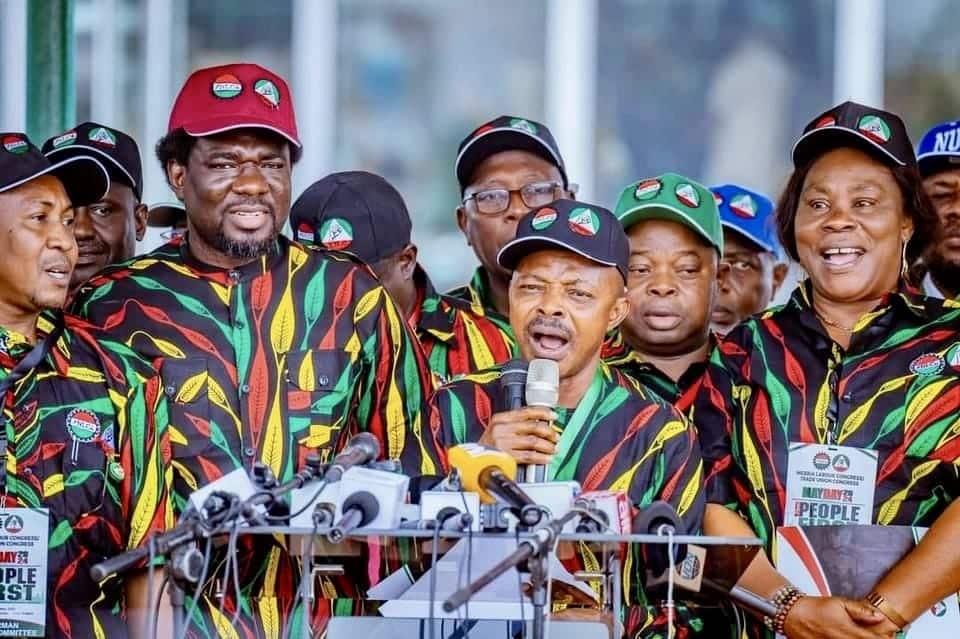
By Taiwo Adebowale
ABUJA, Nigeria — As Nigerian workers brace under an intense economic storm, a new controversy unfolds with the failure of seven states—Zamfara, Sokoto, Osun, Cross River, Imo, Plateau, Taraba—and the Federal Capital Territory (FCT) to approve the N70,000 minimum wage. While 25 states have commenced payments, this delay highlights the growing regional disparity and deepens an existing economic divide. Workers express growing dissatisfaction, with many arguing that N70,000 is an inadequate response to skyrocketing inflation, unmanageable fuel costs, and a sharp rise in living expenses. This report critically analyses the delay in implementing the new minimum wage and the national implications of the withholding states’ stance.

Background: N70,000 Wage Amid Economic Distress
The Nigerian government’s announcement of a new minimum wage in October, set at N70,000, was intended to alleviate workers’ financial burdens. However, skepticism emerged almost immediately, as economists and labour leaders argued that the wage increase barely covered inflation, leaving workers vulnerable. The Nigerian Labour Congress (NLC) reluctantly accepted the wage on the condition that fuel prices would not rise further, a promise President Bola Tinubu allegedly made to secure the wage acceptance. Yet, this “assurance” unravelled in September when fuel prices escalated again, prompting the NLC’s President, Joe Ajaero, to accuse Tinubu of betrayal and using fuel as a “bait” to pacify labour unions temporarily.
Now, nearly a month since its proposed implementation, the new minimum wage faces further obstacles, this time from state governments who seem unwilling—or unable—to shoulder the additional financial load. The economic implications of this delay, both for the affected states and the nation as a whole, could create a new fault line in Nigeria’s economy.
The States Holding Back: Analysis and Worker Testimonies
Each of the seven states and the FCT present unique yet interconnected challenges that influence their delay in approving the N70,000 minimum wage. Despite varying public commitments and promises from governors and labour unions in these regions, implementation remains elusive, pushing workers into a cycle of despair and frustration.
1. Zamfara State: Where Delay is the Norm
Zamfara is still transitioning to the previously set N30,000 minimum wage—a relic of 2019—and has shown no indication of aligning with the current wage standard of N70,000. For Zamfara’s workers, this lag in wage adjustment symbolises the state’s reluctance to prioritise labour welfare amidst its fiscal challenges. This delay casts a spotlight on governance issues in states like Zamfara, where outdated systems and stalled economic policies hold workers back from crucial relief.
A Zamfara civil servant shared anonymously: “Our salary structures remain outdated, and with inflation and fuel prices, this wage is already a decade behind what it should be.”
2. Sokoto State: Broken Promises
Governor Ahmed Aliyu had promised that Sokoto would be among the first to implement the minimum wage, yet implementation has stalled indefinitely. The governor’s delayed action contradicts his earlier commitments, revealing a troubling trend of unfulfilled promises that has come to characterise many state governments’ approach to labour issues.
Workers and labour leaders in Sokoto argue that the administration’s failure has compounded workers’ challenges. “We took the governor’s word seriously, and now we feel deceived,” said a Sokoto worker, adding that their trust in state leadership has been eroded by inaction and economic distress.
3. Osun State: Between Talks and Action
While Governor Ademola Adeleke pledged his administration’s commitment to the minimum wage, labour leaders report that negotiations are only now nearing completion. The protracted deliberations expose the gap between political promises and administrative action.
Chairman of the Trade Union Congress (TUC) in Osun, Bimbo Fasasi, disclosed, “We are in the table-comparing stage, but workers are tired of these endless discussions. Families are hungry, bills are piling, and people are reaching a breaking point.”
4. Cross River State: A State Stuck in Limbo
Governor Bassey Otu of Cross River declared a N40,000 minimum wage on May 1, well below the national standard of N70,000. The governor’s declaration reflects a troubling trend of states independently deciding wage standards, undermining the uniform minimum wage policy that ensures fair worker compensation across Nigeria.
5. Imo State: Promises without Implementation
Governor Hope Uzodimma has promised workers that his administration is committed to the new minimum wage, but negotiations remain unresolved. In Imo, the gap between workers’ expectations and the state’s sluggish pace toward implementation risks fuelling a prolonged crisis. The Vice Chairman of the TUC in Imo, Charles Amaru, expressed frustration, noting, “There is no clear timeline for implementation, leaving workers vulnerable to the harsh economic realities they face daily.”
6. Plateau and Taraba States: A Deafening Silence
The complete lack of transparency on the minimum wage from Plateau and Taraba governments underscores the growing neglect of worker welfare across states. Governor Agbu Kefas of Taraba had previously signalled readiness to implement the wage, but no formal plan has materialised, revealing the limitations of verbal commitments without legislative or policy action.
7. The Federal Capital Territory: Abuja Workers Left in Limbo
Despite being the nation’s capital, workers in the FCT are in the same boat as those in less-resourced states as the FCT authority has yet to speak on the minimum wage implementation as at the time go filing this report. A staff member from the Ministry of Industry, Trade, and Investment shared that “life in Abuja is tough for the average worker,” emphasising that the government’s inaction has intensified worker dissatisfaction and desperation.
Economic Hardship and the Inadequacy of N70,000
Even in states where the minimum wage has been approved, many workers claim that the N70,000 figure is insufficient. Rising costs of essential goods, compounded by inflation, continue to erode purchasing power. A civil servant in Osun’s Ayedire Local Government voiced his frustration: “N70,000 cannot sustain a family for more than two weeks. The reality of survival with these skyrocketing prices is a nightmare.”
Ajaero, the NLC President, has voiced similar concerns, urging the government to address the underlying economic crisis that renders the wage increase inadequate. The hikes in fuel and electricity tariffs, alongside surging food costs, have devastated workers’ finances, making the N70,000 minimum wage seem like a drop in an ocean of expenses.
A Breach of Trust: The Role of the Tinubu Government
For many, the minimum wage controversy underscores a broader issue of mistrust between Nigerian workers and the Tinubu administration. During wage negotiations, Tinubu’s promise to stabilise fuel prices served as a key factor in the NLC’s acceptance of the wage. However, the president’s subsequent decisions to raise fuel prices have left union leaders and workers alike feeling betrayed.
This erosion of trust raises questions about the government’s commitment to addressing the structural economic issues driving inflation and high living costs. Critics argue that Tinubu’s assurances were merely tactical moves to quell potential unrest rather than genuine commitments to workers’ welfare.
The Road Ahead for Nigeria’s Workforce
The reluctance of seven states and the FCT to implement the N70,000 minimum wage exacerbates an already dire situation for Nigerian workers facing unprecedented financial pressure. The growing economic divide between states that have approved the wage and those that have not threatens to deepen regional inequalities, raising significant concerns about the viability of a standardised wage policy across the federation.
For Nigeria’s workers, the current wage debate is more than just a question of numbers; it is a matter of survival. Unless state governments act swiftly to address wage stagnation and the federal government makes concrete efforts to stabilise the economy, Nigeria risks plunging into a new era of labour discontent and economic insecurity. The Tinubu administration, along with state leaders, must confront this challenge head-on or face the potential backlash of a workforce pushed to the brink.



